This site is supported by our readers. We may earn a commission, at no cost to you, if you purchase through links.

You’ve just watched your snake slide out of a perfect, papery shed, and now you’re wondering if a bath belongs in the picture. Here’s the truth: most of the time, it doesn’t. A clean shed needs nothing more than fresh water and normal humidity.
But when skin sticks, the stakes change fast. Retained shed around the tail tip can cut off circulation, and a stuck eye cap left untreated can damage the eye underneath. Old shed hardens as it dries, so timing matters.
This guide walks you through the bathing snake after shedding process, step by step, so you know exactly when to act and how to do it safely.
Table Of Contents
- Key Takeaways
- Know When Post-Shed Bathing is Needed
- Check Eye Caps, Tail, and Skin
- Prepare a Safe Lukewarm Snake Bath
- Bathe and Dry Your Snake Safely
- Monitor Recovery and Seek Veterinary Help
- Frequently Asked Questions (FAQs)
- Do snakes feel better after shedding?
- How long after shedding can I hold my snake?
- What to do after your snake sheds?
- Can snakes see when they’re shedding?
- How soon after shedding can I bathe my snake?
- Why is my snake still dull after shedding?
- Can bathing help a snake start shedding sooner?
- How often should I bathe my snake?
- What water temperature is unsafe for snakes?
- Conclusion
Key Takeaways
- A clean, complete shed needs no bath at all—bathing is only a targeted fix for stuck skin, especially retained eye caps and tail-tip bands that can damage eyes or cut off circulation if left untreated.
- Act quickly when you spot retained shed, since old skin hardens as it dries and becomes harder to remove; check the eyes, body, and tail tip in that order.
- If a bath is needed, use a secure opaque tub with lukewarm water (around 80–85°F) shallow enough to keep nostrils above the surface, and supervise the whole soak, stopping if you see stress or escape attempts.
- Monitor your snake for 24–72 hours afterward—clear eyes, healthy tail tip, normal movement—and see a vet promptly if swelling, wounds, or labored breathing appear, since repeated soaking won’t fix a stubborn retained eye cap.
Know When Post-Shed Bathing is Needed
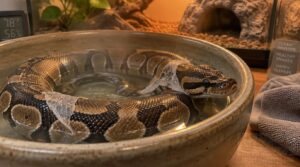
Baths aren’t a standard part of postshedding care. If your snake has shed cleanly and no skin is visibly stuck, you don’t need to add soaking to your regular routine.
Since hydration matters more than soaking, it’s worth knowing that snakes don’t all drink the same way — this guide to snake drinking behavior and water dishes explains what to expect.
Incomplete shedding changes that. Retained material, including retained eye caps, can tighten against the body and cause real harm if it’s not addressed. Water softens the old keratin and lets the stuck layer release naturally. That’s the real purpose of the bath: gentle softening, not deep cleaning.
When shedding is incomplete, a bath gently softens stuck skin so it releases naturally—softening, not deep cleaning
Timing matters here. Older shed stiffens as it dries, making separation harder. Act when you notice retention rather than waiting. If the shed looks even and your snake’s moving normally, skip the bath and focus on hydration before feeding and scale health instead.
Check Eye Caps, Tail, and Skin
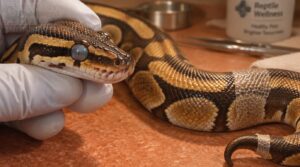
Once you suspect retention, start at the head and check both eyes. A retained eye cap looks like a cloudy, slightly raised film over the spectacle rather than a clear, smooth scale surface. Note any you find before moving on. Eye caps are especially stubborn because they often need moisture and gentle handling rather than peeling, so patience matters here.
Work down the body checking for incomplete skin shedding. Stuck patches usually have a visible boundary where dull retained skin meets the fresh layer underneath. Scale pockets and overlapping edges are where fragments hide, even when the main shed looks complete.
Finish at the tail tip. Distal circulation is slower there, so the tip sheds last and retains skin most often. A tight band there can constrict tissue, so don’t skip this step if the postshed appearance elsewhere looks fine.
If you’re dealing with a stubborn retained band, this guide to helping an incomplete shed walks through safe removal steps without damaging the delicate tissue underneath.
Prepare a Safe Lukewarm Snake Bath
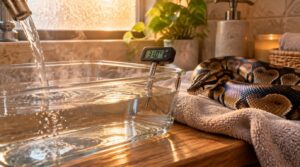
Before you run any water, the right setup matters. You’ll need a container that’s secure, easy to monitor, and appropriately sized for your snake. The two key choices—what you put your snake in and how you fill it—set the foundation for a safe soak.
Choose a Secure Container
Picture a tub too small, your snake pressed against every slick wall with nowhere to settle. A secure container fixes all that.
- Use a BPA-free plastic tub, 1.5 times your snake’s length
- Choose opaque sides to reduce stress
- Make sure the lid locks firmly
- Avoid glass or metal containers
- Rinse with clean water before each use
Set Water Depth and Temperature
With your container ready, fill it with lukewarm water just deep enough to cover your snake’s ventral scales while keeping its nostrils above the surface. Adding a few drops of a reptile water conditioner helps remove chlorine and keeps the soak gentle on your snake’s skin.
If you’re unsure about the right temperature range, this guide to safely removing stuck shed from snakes breaks it down clearly.
Test water temperature on your inner wrist; it should feel comfortably warm, never hot. Too shallow and shed debris won’t loosen evenly. Too deep and your snake risks exhaustion from constant effort to stay afloat.
Bathe and Dry Your Snake Safely
With your bath set up and your snake ready, the actual soak is where careful observation matters most. Two steps carry you through this phase: supervising the soaking period and drying your snake properly before returning it to its enclosure. Here’s what each one involves.
Supervise The Soaking Period
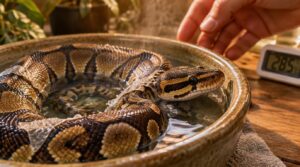
Don’t walk away. Supervise closely throughout, watching for these three cues:
- Eye cap movement signals progress; no loosening after a few minutes means stop.
- Tail limpness beyond mild softening indicates over-soaking.
- Escape attempts mean stress is outweighing the benefit.
Keep temperature monitoring consistent. Lukewarm water in a shallow container won’t accelerate skin breakdown, but cooling water changes the equation fast.
Dry and Return Your Snake
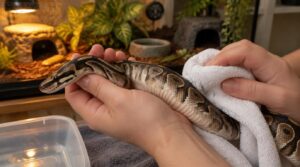
Blot your snake gently with a soft towel, working from head to tail so moisture doesn’t linger under ventral scales or skin folds. Let it finish drying in a draft-free enclosure.
Check both eye caps before handling. If they’re clear and the skin feels dry, return your snake to its normal setup with the usual thermal gradient, clean water, and appropriate humidity.
A reliable reptile thermostat heat mat helps keep that gradient steady while your snake settles back in.
Monitor Recovery and Seek Veterinary Help
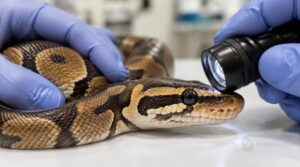
A ball python I advised once had a retained eye cap three days post-shed. Her owner kept soaking her, but the cap wouldn’t budge, and that’s exactly when a vet visit becomes non-negotiable.
After bathing, watch your snake closely for the next 24 to 72 hours. Here’s your checklist:
- Confirm the eye caps are clear and both eyes look glossy, not dull or wrinkled.
- Check the tail tip and any constriction points for darkening or broken scales.
- Offer food once your snake moves normally; appetite usually returns quickly.
- Listen for clicking, gaping, or mouth bubbling, which signal respiratory trouble.
Good outcomes depend on skin health, scale integrity, and infection prevention. If swelling, wounds, or labored breathing appear, seek veterinary care promptly.
Frequently Asked Questions (FAQs)
Do snakes feel better after shedding?
Ironically, the snake that just shed its entire skin often feels worse, not better, until you check the details.
Retained eye caps blur vision, and stuck tail skin creates tightness.
Complete shed, clear spectacles, intact scale integrity: then yes, genuine stress relief.
How long after shedding can I hold my snake?
You can hold your snake as soon as the shed is complete and its eye caps are gone, usually within a day. Wait until behavior normalizes; handling during cloudy eyes raises stress signals and bite risk.
What to do after your snake sheds?
After your snake sheds, inspect it for retained shed, especially eye caps and the tail tip. If the shed came off cleanly, no bath is needed. Keep a shed record, resume normal activity, and only intervene if residue persists.
Can snakes see when they’re shedding?
Yes, partially. During the inblue phase, cloudy blue eyes signal fluid under the ocular spectacle, which distorts rather than blocks sight. Expect reduced vision clarity, impaired depth perception, and reliance on tactile and chemical cues until eye cap clarity returns.
How soon after shedding can I bathe my snake?
Wait until the shed is fully complete: eyes clear, no retained eye caps, and the tail free of stuck skin. If patchy shed persists, fix humidity or use a shedding box first.
Why is my snake still dull after shedding?
You might assume the shed finished the job, but dull or faded coloration usually means incomplete ecdysis. Check for retained eye caps and tail tip skin, then boost your enclosure humidity.
This process, known as ecdysis in snakes, usually takes five to seven days and should result in the entire skin being shed in one complete piece.
Can bathing help a snake start shedding sooner?
A ball python sitting in a lukewarm bath for twenty minutes still sheds on its own schedule. Bathing won’t start shedding sooner; that timing depends on internal cycles, though humidity control and skin elasticity help stuck shed release.
How often should I bathe my snake?
There’s no fixed bathing schedule. Bathe only when you see retained shed or debris; otherwise rely on proper enclosure humidity for hydration support. Since shedding frequency varies, skip routine baths entirely between sheds.
What water temperature is unsafe for snakes?
Water that’s hotter than your snake’s basking temperature or noticeably cooler than its enclosure is unsafe. Aim for lukewarm water around 80–85°F, verified with a reptile safe thermometer, never guessed.
Conclusion
A ball python I once treated lost its tail tip to a week-old retained shed, all because nobody checked. That’s the cost of skipping a quick inspection.
The bathing snake after shedding process isn’t routine hygiene; it’s a targeted fix for stuck eye caps and pinched tail skin. Keep humidity right, check the shed piece by piece, and bathe only when skin clings. Your snake’s next shed will thank you.