This site is supported by our readers. We may earn a commission, at no cost to you, if you purchase through links.

Your snake probably drinks while you sleep. Most snakes dip their snout into the water and pull it down the throat with muscular contractions, usually at night and in short sessions, so you rarely catch the moment.
That’s why many keepers wonder whether a standing bowl actually works. Water dishes do, and for corn snakes, ball pythons, kingsnakes, and boas, the bowl is the main source of hydration. Your snake may also soak in it to loosen old skin before a shed.
So can snakes drink from standing water dishes? Yes, but bowl size, placement, and cleanliness decide whether the setup helps or harms.
Table Of Contents
Key Takeaways
- Your snake most likely drinks at night in short sessions by dipping its snout and pulling water down with throat contractions, so a standing dish works and is the main hydration source for corn snakes, ball pythons, kingsnakes, and boas.
- Choose a heavy, smooth ceramic or stainless-steel bowl that’s wider than it is deep, hold water at 1-2 inches for small snakes (up to 4 for soakers), and place it on the cool side near a hide, never over a heat source.
- Check the bowl daily, change the water at least twice a week or right away if it’s soiled, and scrub then disinfect it with a reptile-safe product, rinsing thoroughly, because dirty standing water breeds bacteria.
- Judge hydration by what you can see, since drinking happens out of sight: soft white urates and complete sheds are good signs, while sunken eyes, tented skin, or chalky urates signal dehydration, and arboreal species like green tree pythons need evening misting instead of relying on a bowl.
Can Snakes Drink From a Water Dish?
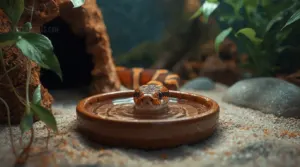
Why do so many snake keepers worry about a plain bowl? Because snakes don’t lap or sip like mammals. Most species dip their snout into the water and pull it in through muscular contractions of their throat, usually at night and in short sessions.
Tree-dwelling species often prefer leaf droplets, so an elevated water bowl designed for arboreal setups near the perch works better than a floor dish.
So yes, a dish works well for most terrestrial snakes. Corn snakes, ball pythons, kingsnakes, and boas use one readily. Fresh water in a bowl is the main hydration route for them, though prey adds a little. Soaking won’t replace drinking.
Snakes also soak in the dish for other reasons, such as to loosen old skin before shedding.
Choosing and Positioning a Safe Water Dish
Your snake can only drink safely if the dish suits its size and sits in the right spot. Two choices shape that setup: the bowl itself and where you put it in the enclosure. The sections below walk through each one so you can set up a dish your snake will actually use.
Bowl Size, Material, and Water Depth
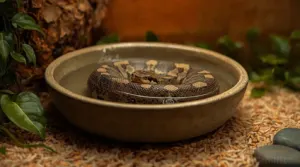
A good dish starts with proportions. Choose one that’s wider than it is deep, so your snake can sip from the rim or soak whenever it needs to.
A heavy, smooth-sided dish is easiest to keep clean and hard to tip, and this guide to choosing the right snake feeding dish size helps you match one to your snake’s length.
Four details matter most:
- Bowl size: wide enough to coil in, roughly 6-8 inches for a 3-foot snake.
- Water depth: 1-2 inches for small or juvenile snakes, up to 4 for soakers like ball pythons.
- Ceramic or stainless-steel bowls resist biofilm better than scratched plastic.
- A heavy shallow bowl won’t tip during long soaks.
Safe Placement and Easy Access
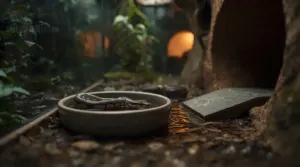
Even a well-sized dish can cause trouble if it’s in the wrong spot. Set it along an enclosure wall, close to a hide, so your snake can drink without crossing open ground. Place it between the warm and cool hides, but never in front of an entrance.
Our guide to reptile water dishes for beginner snake keepers covers how to match dish size and weight to your snake so it stays put once placed.
Keep the bowl on the cool side, since warm water fouls faster. Away from heat sources matters most: never set it over an undertank heater or near wiring. Press it into a level patch of substrate, and add a gentle ramp for hatchlings.
Keeping Standing Water Clean and Safe
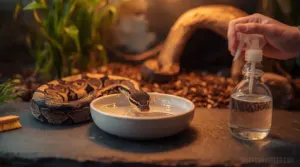
A water dish only helps your snake if the water inside it stays clean.
Standing water picks up waste, bacteria, and debris faster than most keepers expect, and a dirty bowl can cause real health problems.
Here are the two areas to get right: choosing safe water and cleaning the dish properly.
Safe Water Sources and Daily Changes
Picture a ball python that defecates in its bowl overnight. By morning, the water is cloudy, and your snake still needs a drink. That’s why daily water changes matter.
Even before the water looks murky, a few telltale signs your snake’s water dish needs cleaning can help you catch a dirty bowl early.
Check the bowl every day and swap the water at least twice a week, or right away if it’s soiled. Warm standing water breeds bacteria fast.
Tap water considerations matter too: chlorine and fluoride can bother small reptiles, so filtered water alternatives are better. Skip distilled and softened water. Offer room temperature water.
Cleaning and Disinfecting The Dish
Scrub the dish with hot water and dish soap first, because disinfectant can’t work through organic debris. Use an old toothbrush for crevices, and keep your scrub tools only for reptile gear.
Next, apply a disinfectant such as F10 or a 1:32 bleach dilution, and let it sit for the contact time on the label. Rinse thoroughly afterward, since leftover residue can harm your snake.
Let the dish air dry fully, then check it for cracks, scratches, or cloudiness. Replace any damaged bowl.
Species Differences in Drinking and Water Needs
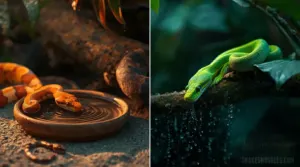
A water dish works well for most snakes, but not all of them use it the same way. Corn snakes, kingsnakes, ball pythons, and boas drink from standing water readily, usually at night. Arid species like hognose snakes need a bowl but not a damp enclosure.
Arboreal vs terrestrial drinking matters most. Green tree pythons and emerald tree boas mostly lap droplets from leaves and their own coils, so mist the enclosure in the evening.
Garter snakes dehydrate faster, and hatchlings need shallow dishes.
Recognizing Normal Drinking and Hydration Problems
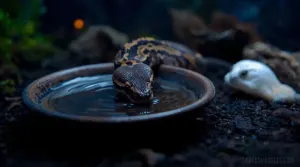
Picture a snake slipping toward the dish at midnight, dipping its head, and sliding back into the dark. You’ll rarely catch it. So judge hydration by what you can see instead. Healthy snakes pass soft, clean white urates and complete their sheds with intact eye caps.
Since snakes drink in secret under cover of darkness, their health shows in their waste and shed rather than at the water bowl
Recognizing dehydration starts with the eyes and skin. Sunken eyes and skin that stays tented when pinched are warning signs, as are dry, chalky urates. Straining at the vent is urgent; call a vet.
Frequently Asked Questions (FAQs)
Why does my snake sit in its water bowl?
Last winter, a keeper found her ball python parked in its dish for six hours straight. The usual culprits are mites, heat, or low humidity, so check the temperatures first.
Do snakes drink more often before shedding?
Your snake can practically turn into a fish before a shed. Yes, they drink more, usually 4 to 7 days before the eyes clear, and they often soak longer too. Keep the bowl full and fresh.
Should water dishes be removed during feeding days?
No, leave the dish in place. Snakes get a good share of their moisture from prey, but they still drink around meals, and moving them or their setup can stress them and raise regurgitation risk.
How long can a snake survive without water?
A ball python can usually go about 12 days without water and be fine. Past 10 to 14 days, most pet snakes face real dehydration risk, and many species die within a month. Desert and sea species last far longer.
Do baby snakes need to drink water daily?
For the first days to weeks after hatching, yolk reserves cover hydration, so baby snakes don’t need to drink daily. Still, keep a fresh, shallow dish filled; drinking varies, and food mostly supplies moisture too.
Can snakes drink too much water at once?
Not in any way that’s likely to hurt them. A snake’s small mouth limits how fast it can take in water, and gulping too much too quickly usually just leads to regurgitation. Healthy snakes don’t drink to the point of overhydration.
Conclusion
Picture a ball python that sat dry and wrinkled for weeks, then perked up the day its owner swapped a tiny saucer for a heavy, wide bowl of fresh water. The snake had been thirsty.
Can snakes drink from standing water dishes? Yes, when the bowl is stable, sized right, and clean. Change it often, disinfect it weekly, and watch your snake’s habits. A clean, steady bowl is simple care that protects your snake’s health.