This site is supported by our readers. We may earn a commission, at no cost to you, if you purchase through links.

A ball python resting calmly across a student’s hands teaches patience, empathy, and biology in ways no worksheet can. Teachers who’ve brought one into the classroom know the shift — kids who barely glance at a textbook suddenly have questions about thermoregulation, prey response, and shedding cycles.
But getting there requires more than enthusiasm. Enclosure security, temperature gradients, hygiene protocols — the details matter, and the wrong kit creates problems fast. A lid that gaps too wide, a thermostat without a safety cutoff, a disinfectant that takes three minutes to work: each one becomes your problem at 7 AM on a Monday.
The right ball python kits for teachers solve these issues before they start.
Table Of Contents
Key Takeaways
- A secure enclosure with escape-proof gaps under 1/8 inch, stainless steel latches, and tempered glass isn’t optional — it’s the baseline for any classroom setup.
- Keeping your ball python healthy means hitting a basking zone of 88–92°F, a cool side of 75–80°F, and 50–80% humidity, all monitored with calibrated digital tools. Once your setup is dialed in, a secure hide on each side helps your snake feel calm, and ball python temperament after feeding explains why that matters most while digesting.
- Sphagnum moss, a veterinary-grade disinfectant like Rescue, and chemical-resistant spray bottles are the three supplies that make daily enclosure care fast, safe, and consistent.
- Student handling needs structure — parental consent forms, gloves, a two-to-five minute time limit, and mandatory 20-second handwashing — to protect both the snake and the kids.
Best Ball Python Kits for Teachers
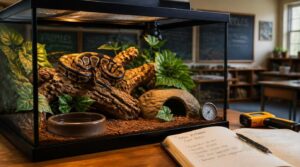
Choosing the right kit makes all the difference when you’re setting up a ball python habitat in a classroom. The options below are built with teachers in mind — covering safety, durability, and ease of use. Here’s what’s worth your attention.
If you’re still narrowing down your options, this guide to ball python kits for small spaces breaks down the key specs that matter most in a classroom setup.
Classroom-ready Kit Features
A ball python starter kit designed for classrooms does the heavy lifting before you even unbox it. Look for integrated cable routing channels that keep heating pads and sensors organized — no trip hazards, no tangled cords mid-lesson.
Key features to prioritize:
- Secure latch durability for daily student use
- Visibility panel design for safe observation
- Smooth interior surfaces for fast sanitization
- All-in-one assembly with locking security
Beginner-friendly Enclosure Bundles
Once your enclosure features check out, a ball python starter kit takes the guesswork out of setup. Bundles come pre-sized for juveniles — usually a 20 to 30-gallon reptile starter habitat — with substrate, a heat mat, and a thermostatic controller included. Most offer printable quick-start guides.
Modular components let you reconfigure the snake enclosure kit as your beginner snake grows.
Safety-focused School Setups
A good starter bundle gets you moving, but a school-ready setup goes further. Your reptile enclosure setup needs a combination lock lid and gaps no wider than 1/8 inch.
Place hand-washing stations within reach of the habitat. Limit ball python handling to teacher-supervised demos only — students observe through glass. That boundary protects both the animal and your classroom’s pathogen prevention protocols.
Budget Versus Premium Kits
Securing the enclosure is step one. Choosing the right kit is step two.
A reptile starter habitat under $50 works, but expect extra sanding and alignment fixes. Premium kits cost $150+ and cut assembly time by up to 30 percent — a real advantage when your prep time is limited.
Budget builds teach troubleshooting. Premium builds teach consistency.
Budget kits teach you to troubleshoot; premium kits teach you to trust the process
Long-term Classroom Value
A well-chosen ball python starter kit pays dividends across multiple school years. Reusable enclosures, washable substrates, and durable components keep replacement costs low.
Rotate student ownership roles — feeding logs, humidity checks, growth tracking — and you build cross-curricular skills in science, math, and writing simultaneously.
Partner with local wildlife clubs to extend the kit’s reach beyond a single class cycle.
Top 3 Classroom Kit Supplies
Once you’ve got your enclosure dialed in, a few key supplies will make day-to-day care much easier. These three items show up on nearly every experienced keeper’s list for good reason. Here’s what you’ll want to have on hand before your ball python arrives.
A substrate blend like cypress mulch and sphagnum moss for humidity control is one of those essentials that experienced keepers swear by for keeping moisture levels stable.
1. Halatool Natural Sphagnum Moss for Plants
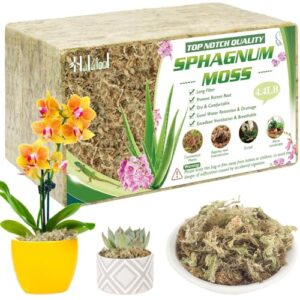
Sphagnum moss pulls double duty in a classroom habitat — it holds up to twenty times its weight in water, keeping your snake’s enclosure at the 50–80% humidity ball pythons need.
One 4.4 lb brick expands to 85 quarts once soaked, so a single purchase stretches far. Pack it into moist hides or layer it over substrate to slow moisture loss between misting sessions. Just soak it fully before use — dry moss won’t help anyone.
| Best For | Reptile keepers, orchid growers, and hobbyists who need a reliable, natural moisture-retaining substrate for plants, terrariums, or propagation setups. |
|---|---|
| Primary Purpose | Humidity & burrowing substrate |
| Enclosure Compatible | Yes – reptile & invertebrate habitats |
| Volume / Capacity | 85 qt expanded |
| Material | Natural Sphagnum Moss |
| Multi-Use | Plants, reptiles, propagation, packaging |
| Form Factor | Compressed dry bricks |
| Additional Features |
|
- Expands massively — one 4.4 lb brick yields 85 quarts of usable moss, making it a great value for the volume you get
- Holds moisture exceptionally well, helping maintain the humidity levels that reptiles and tropical plants need
- Versatile enough to use as a plant substrate, soil amendment, reptile bedding, or even packaging for live animals
- Requires full soaking before use, and the rapid expansion means you’ll need a large container ready to go
- Difficult to portion or cut while still dry and compressed
- Quality can vary — some batches may contain twigs, debris, or strong organic odors
2. Rescue Veterinary Disinfectant Cleaner Deodorizer
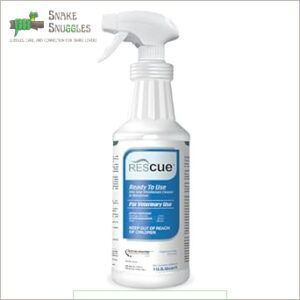
Keeping a classroom enclosure clean isn’t optional — it’s the foundation of safe snake keeping. Rescue uses Accelerated Hydrogen Peroxide technology to eliminate bacteria, viruses, and fungi fast, with some surfaces reaching microbial kill in under 60 seconds.
It’s bleach-free and breaks down into water and oxygen, so you won’t damage enclosure surfaces or harm your snake. One thing to plan for: ventilate the room during use, and note that the spray nozzle isn’t included.
| Best For | Snake keepers, animal shelters, and multi-pet households that need a fast-acting, veterinary-grade disinfectant safe for use around reptiles and other animals. |
|---|---|
| Primary Purpose | Pathogen elimination |
| Enclosure Compatible | Yes – crates, litter boxes & enclosures |
| Volume / Capacity | 32 oz |
| Material | Veterinary-grade chemical solution |
| Multi-Use | Shelters, kennels, foster homes, homes |
| Form Factor | Ready-to-use bottle |
| Additional Features |
|
- Kills a broad range of pathogens — including tough viruses like canine parvovirus — in as little as 60 seconds
- Bleach-free formula breaks down into water and oxygen, making it safer for enclosure surfaces and animals
- Ready-to-use straight out of the bottle, no mixing or diluting required
- Spray nozzle not included, so you’ll need to source one separately before use
- Strong chemical odor requires good ventilation during application
- May leave a visible film on clear surfaces, and effectiveness on soft fabrics isn’t guaranteed
3. JohnBee HDPE Empty Spray Bottles
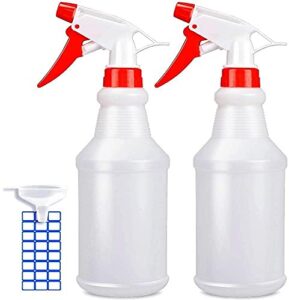
Once you have Rescue Disinfectant, you need a way to apply it. That’s where the JohnBee spray bottles come in.
Each bottle holds 16 oz and is made from BPA-free HDPE — the same chemical-resistant plastic used in commercial cleaning products. The adjustable nozzle switches between fine mist and direct stream, which is exactly what you want when spot-cleaning a basking surface versus misting the substrate.
The 2-pack lets you keep one bottle for disinfectant, one for plain water.
| Best For | Reptile keepers and pet owners who want a reliable, chemical-safe way to apply disinfectants, water, or cleaning solutions around their enclosures and home. |
|---|---|
| Primary Purpose | Liquid misting & dispensing |
| Enclosure Compatible | Yes – misting reptile enclosures |
| Volume / Capacity | 16 oz per bottle (2-pack) |
| Material | HDPE, Polypropylene & Stainless Steel |
| Multi-Use | Cleaning, gardening, pet care, detailing |
| Form Factor | Refillable spray bottle |
| Additional Features |
|
- BPA-free HDPE construction is genuinely chemical-resistant, so it won’t degrade when used with disinfectants like Rescue
- Adjustable nozzle gives you control — switch between a fine mist for substrate or a direct stream for spot-cleaning surfaces
- The 2-pack is a practical bonus, letting you dedicate one bottle to disinfectant and one to plain water
- Not compatible with oils, essential oils, or thick liquids, which limits versatility
- May need repeated priming if the liquid level drops below the suction tube
- Performance can be inconsistent with certain chemical mixtures, including bleach
Classroom Enclosure Requirements
Getting the enclosure right is the foundation of a safe, functional classroom habitat. Size, security, and visibility all matter more than you might expect. Here’s what your setup needs to cover before your ball python ever arrives.
Juvenile Enclosure Sizing
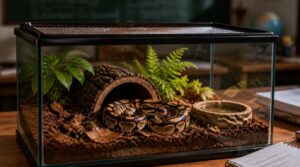
Size matters more than you’d think. A ball python starter kit with a 20–24 inch reptile enclosure works well for juveniles up to 100 grams. Too much space stresses hatchlings and makes student observations harder.
Using larger setups can encourage natural burrowing behaviors in many species.
Keep substrate depth at 1–2 inches to reduce impaction risk. A secure enclosure with escape-proof gaps under 1/4 inch keeps every lesson drama-free.
Adult Habitat Planning
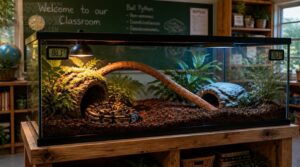
Adult ball pythons need room to move. A 40–75 gallon enclosure gives adults space for proper thermoregulation — meaning they can shift between a warm basking zone of 88–92°F and a cool side around 78–82°F.
Add two secure hides, a climbing branch, and cypress mulch substrate. Clean substrate monthly. This isn’t just animal welfare — it’s your longest classroom commitment.
Locking Lid Security
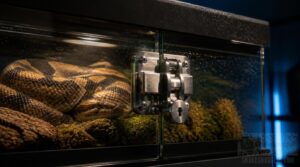
Your ball python enclosure is only as secure as its lid. Check these five lock features:
- Escape-proof latches rated for hundreds of cycles
- Stainless steel components resist material corrosion in humid rooms
- Tamper detection seals show if someone opened it
- Keyed or combo access methods restrict lid entry
- Monthly maintenance inspections catch latch wear early
Failed latches mean missing snakes.
Escape-proof Ventilation Gaps
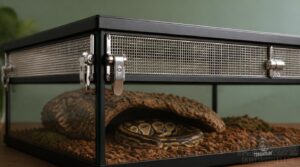
Latches keep the lid shut, but ventilation gaps are where security quietly fails. Any opening wider than 1/8 inch gives a determined juvenile a way out.
Use stainless steel mesh with 1–2 millimeter openings — tight enough to block escape without starving airflow. Place vents high on the enclosure. Check gasket seals monthly; a cracked seal is an open door.
Glass Viewing Safety
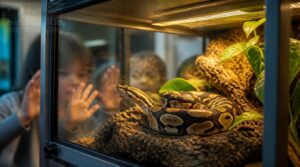
Gaps block escapes — glass covers everything else students can see and touch. Use tempered or laminated glass, minimum 6 mm thick. Tempered fractures into blunt pieces; laminated holds shards together. Both pass standard impact resistance testing for classroom settings.
An anti-glare coating reduces eye strain during observation. Wipe panels weekly with a mild, ammonia-free cleaner to maintain clear sight lines.
Heating, Humidity, and Monitoring
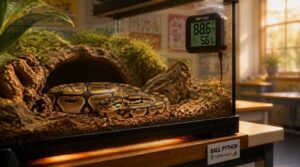
Getting the temperature and humidity right isn’t optional — it’s the difference between a thriving snake and a sick one. Ball pythons need specific conditions to regulate their body temperature, and your classroom setup has to hit those numbers consistently. Here’s what to focus on when evaluating any kit’s environmental controls.
Basking Temperature Range
Your ball python needs a basking zone of 88–92°F to digest meals properly and regulate its body temperature. Without that heat, thermoregulation breaks down — the snake can’t move nutrients through its system efficiently.
Place a thermometer directly on the basking surface. Don’t guess. Juveniles benefit from staying near the upper end of that range to support steady growth.
Cool-side Temperature Range
The cool side should stay between 75–80°F. That cooler zone completes the thermal gradient, giving your snake a place to retreat after basking — that’s thermoregulation in action.
Place your digital thermometer 2–3 inches above substrate on the cool side. Keep daily fluctuations within ±2°F. Abrupt swings stress the animal and disrupt shedding cycles.
Thermostat Safety Control
A thermostat isn’t optional — it’s your first line of defense against overheating. The high-limit switch cuts power when temperatures exceed a safe threshold, and a thermal fuse adds single-use backup protection if components climb too high.
Mount your sensor away from direct heat to avoid false readings. Redundant safety paths and manual reset options confirm safe conditions before power restores — don’t skip that step.
Digital Hygrometer Placement
Where you place your digital hygrometer affects accuracy. Sensor accuracy bias from drafts, vents, or sunlight distorts your humidity control readings. Good placement protects both temperature regulation and microclimate management.
- Mount at the best sensor height: 4–5 feet up
- Keep 3 feet from windows
- Avoid HVAC vents and drafts
- Use data logging for humidity trends
- Verify with calibration verification each term
Humidity Retention Supplies
Keeping humidity stable is half the battle. Cypress mulch substrate and sphagnum moss absorb and release moisture slowly, buffering daily fluctuations naturally.
For tighter control, humidity sachets deploy fast and last 2–6 weeks. A moisture retention mat along enclosure walls adds steady surface-level exchange. Don’t forget a humidity hide — your python will use it during every shed cycle.
Teacher Safety and Care Planning
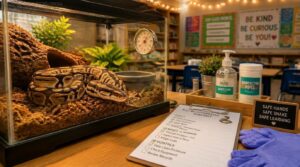
Having a ball python in your classroom is only as good as the care plan behind it. The following guidelines cover what your students need to do, what you need to enforce, and how to keep the snake healthy through weekends and feeding days. Work through each point before your snake arrives.
Student Handling Rules
Before any student touches your captive bred ball python, you need a signed parental consent form on file.
Every session follows these rules:
- Students wear protective gloves and long sleeves
- Handling lasts 2 to 5 minutes per student
- Only one student holds the snake at a time
- Watch for student stress signals like tight gripping or sudden movements
- End the session immediately if the snake hisses or coils defensively
Their docile nature makes ball pythons ideal, but structure keeps everyone safe.
Hand-washing Procedures
Hand contact with any reptile carries real risk. Ball pythons can carry salmonella, so wash hands immediately after every handling session — no exceptions.
Scrub with soap and water for at least 20 seconds, covering fingertips, between fingers, and wrists. Don’t rush this step.
For the full snake mite removal process, wash up before handling your snake or cleaning its enclosure.
Supervise students closely. Dry hands completely with a disposable towel before touching anything else.
Cleaning Schedule Basics
Good hygiene doesn’t stop at your hands. The enclosure needs its own schedule — daily, weekly, and monthly tasks that keep your ball python healthy and your classroom safe.
- Daily hygiene tasks: spot-clean waste and wipe surfaces
- Weekly disinfection routines: sanitize hides and decor
- Monthly deep cleaning: full substrate replacement
- Seasonal maintenance cycles: inspect heating and ventilation
- Shared cleaning calendars: assign staff responsibilities clearly
Post the schedule where everyone sees it.
Feeding Outside Class Time
Once your cleaning schedule runs smoothly, feeding fits into that same rhythm. Schedule prey item meals outside class hours — before school or after dismissal works best. Leave a 10-minute buffer after students leave before offering food.
One trained adult should supervise, and the snake stays in its enclosure during the process. Document each feeding date and food size to track your ball python’s health over time.
Weekend Care Planning
Weekends don’t run themselves. Leave a weekend care folder with feeding records, the last health log entry, and emergency contacts for whoever covers Saturday and Sunday.
A shared digital calendar keeps everyone aligned on tasks. If no colleague can cover, check whether your school’s animal care program offers respite options.
Your reptile care manual belongs in that folder too.
Frequently Asked Questions (FAQs)
Are ball pythons good classroom pets?
Ball pythons are calm, non-venomous snakes that fit classroom life well. Their quiet temperament and predictable routine align naturally with a steady school schedule, making them one of the most manageable reptiles for student environments.
What curriculum standards do ball pythons support?
A snake curled in a glass tank is more than a pet — it’s a living textbook. Ball pythons support vertebrate anatomy, nature’s food webs, observational data collection, thermoregulation studies, and animal welfare ethics across K–8 standards.
How long do ball pythons live in captivity?
In captivity, these snakes routinely live 20 to 30 years — some well beyond that. The oldest documented individual surpassed 50 years. Good husbandry, consistent temperatures, and routine vet care drive that longevity.
If you’re curious how genetics shape that lifespan and appearance, this Enchi ball python care and morph guide breaks down what makes the pattern so distinctive.
Given their long lifespan and budget-friendly price tag, it’s worth reading up on Mojave ball python facts and care essentials before bringing one home.
Which substrate works best for classroom enclosures?
Coconut coir or cypress mulch works best. Both retain humidity naturally and support burrowing. They’re easy to spot-clean and resist mold. Avoid cedar — it’s toxic. For busy classrooms, reptile carpet offers a washable, low-dust alternative.
Can students with snake phobias safely participate?
Yes, they can. Offer opt-out arrangements and parallel activities, non-living replicas, or video demonstrations. Progressive exposure plans let hesitant students build comfort at their own pace without pressure.
Where can teachers borrow snakes for lessons?
Science center loan programs let you borrow classroom-ready snakes for up to two weeks. University outreach offices and reptile rescue organizations also run visits with trained animals and full instructor support.
Conclusion
A snake doesn’t care about test scores. But the student holding one? They’re learning biology through their hands — steady, quiet, real.
The wrong kit turns that moment into a liability. The right ball python kits for teachers turn it into a lesson that sticks long after the bell rings. Get the enclosure secure, the temperatures dialed, the protocols posted.
Do that, and the classroom becomes something most textbooks can’t offer: a place where curiosity actually lives.