This site is supported by our readers. We may earn a commission, at no cost to you, if you purchase through links.
Your snake rubs its face against a rock for the tenth time this hour, and something feels off. Maybe the shed came off in scraps instead of one clean sheet. Maybe those eye caps never fell away.
Most sheds finish without a hitch. But when they don’t, small clues, like a dull patch near the tail or a milky film over one eye, tell you exactly where things went wrong.
Spotting snake skin shedding problems signs early keeps a minor hiccup from turning into a real health risk. Here’s what healthy shedding looks like, what goes wrong, and how you can step in before it becomes urgent.
Table Of Contents
Key Takeaways
- Normal shedding follows a predictable pattern—dull skin, cloudy eyes, hiding, and rubbing—and ends with one clean, single-piece shed.
- Low or unstable humidity is the biggest culprit behind stuck shed, retained eye caps, and fragmented skin, so keeping moisture levels steady matters most.
- Retained eye caps and tail-tip constriction are urgent warning signs since they can cause permanent blindness or cut off circulation if ignored.
- A warm soak and humid hide fix most stuck sheds at home, but persistent eye caps, swelling, sores, or repeated failed sheds call for a vet right away.
What Does Normal Snake Shedding Look Like?

Shedding is a natural process, and most snakes handle it without any trouble. Still, it helps to know what a healthy shed actually looks like before something goes wrong. Here are five signs that tell you your snake is right on track.
A healthy shed often goes hand in hand with a healthy appetite, so it’s worth checking these signs of a healthy snake appetite too.
Dull Skin and Pink Belly
Watch your snake’s belly. About 1-2 days before shedding, skin turns dull and faded, and ventral scales often blush pink. That’s fluid separating old skin from new. Proper humidity makes this translucency visible. If the pink never shows up, suspect dehydration or low humidity, since dry conditions hide this normal, reassuring signal.
This whole process is part of the snake’s natural ecdysis skin renewal cycle, which usually completes within five to seven days.
Cloudy Blue Eyes
Next come the eyes. About 1-2 days before shedding, a fluid layer forms between old and new skin, scattering light into that milky blue haze.
Your snake’s vision is really impaired now, so expect defensiveness. Eyes clear right before the shed completes.
- Cloudiness signals shedding is imminent
- Vision loss is temporary, not harmful
- Persistent cloudiness afterward suggests retained eye caps
Hiding and Appetite Changes
While her eyes clear, your snake will likely vanish from sight. Pre-shed hiding often starts 5-7 days out, with ball pythons and corn snakes staying tucked away and still.
Appetite drops off too. This premolt anorexia matches the hiding timeline and usually resolves within a week after a clean shed.
Rubbing and Soaking Behaviors
Once her eyes cloud over, she’ll start rubbing her face against branches, hides, and enclosure corners, working to tear that outer layer loose. Expect this 2-4 days before shedding.
She’ll also soak, softening old skin in a lukewarm bowl (85-90°F). A quick 10-20 minute dip is normal; longer soaks hint at low humidity or dehydration brewing underneath.
Complete One-Piece Shed
When the old skin finally lets go, you’ll find it lying inside-out, scales reversed, in one long tube. Check for:
- Both eye caps present
- Tail tip intact
- No torn fragments
A single-piece verification confirms proper humidity worked. Fresh skin feels tacky, then dries brittle. Your snake’s new colors will look noticeably brighter than that dull pre-shed look.
Signs Your Snake Has Shedding Problems
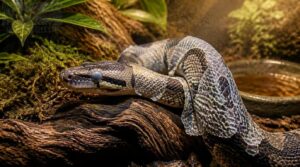
Not every shed goes smoothly, and your snake will show you when something’s off. Dysecdysis (shedding problems) leaves behind clues, from patchy skin to swollen tail tips. Here’s what to watch for.
If you’re unsure whether your ball python’s symptoms point to a bad shed or something more serious, this guide to telling if a ball python is sick breaks down the warning signs worth a vet visit.
Retained eye caps and stubborn tail-tip skin are two of the trickiest signs to catch early, so it helps to know what causes stuck shed in snakes before reaching for the tweezers.
Retained Skin Patches
Dull, matte patches that won’t let go, that’s dysecdysis. Check ventral scales first; adhesion sticks worst there. Buildup adds thickness you can feel by palpating gently.
| Sign | What It Means |
|---|---|
| Matte patches | Incomplete ecdysis |
| Belly stuck | Ventral retention |
| Felt bulge | Layer buildup |
| Tight skin | Circulation risk |
Inspect after every shed, don’t wait.
Fragmented or Stuck Shed
If shed comes off in scraps instead of one clean sheet, that’s fragmented shed, a classic dysecdysis sign. Culprits: low humidity, poor hydration, rough handling mid-shed.
Check your hygrometer at substrate level, not mid-air. Offer a humid hide, verify substrate holds moisture, and assess hydration through soaking.
Below 30% humidity practically guarantees cracked, piecemeal sheds.
Retained Eye Caps
A milky film covering one or both eyes signals retained eye caps, a spectacle that failed to release during shedding.
Low humidity below 40% is usually to blame. Check for wrinkled, bluish patches over the eye.
Try eye cap soaking in warm water first. If it won’t lift, skip forced removal and get veterinary assistance instead of risking permanent eye damage.
Tail-Tip Constriction
A tight ring around your snake’s tail tip is one of the most urgent shedding signs you’ll encounter.
- Dark, swollen tail tip
- Visible dry skin band
- Reluctance to lift tail
- Dragging during movement
Left alone, that retained skin band cuts off circulation. Soak in warm water at 85-90°F for 15-20 minutes. If it won’t loosen, seek veterinary care fast.
Repeated Rubbing and Discomfort
Watch how your snake treats its face. If it’s pressing its nose against rocks or glass over and over, that’s not exploring, it’s stuck shed frustration.
| Cause | What You’ll See |
|---|---|
| No rough surfaces | Repeated nose rubbing |
| Retained eye caps | Face discomfort, eye pawing |
| Smooth enclosure | Reducing rubbing stress fails |
| Stress | Restless, defensive behavior |
| Poor texture needs met | Safe rubbing surfaces ignored |
What Causes Problematic Snake Shedding?
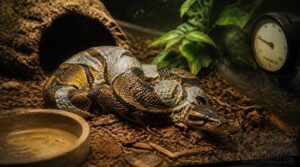
Dysecdysis (shedding problems) rarely comes out of nowhere. Something in your snake’s world usually tipped the balance first. Here are the five culprits you’ll want to check.
Low or Unstable Humidity
If your snake’s shed keeps coming off in pieces, check humidity first. Low or unstable humidity dries shed too fast, causing brittle, stuck skin. Fluctuating levels cause repeated wetting and drying, worsening texture.
Use a humidity hide with damp sphagnum moss, consistent misting techniques, and daily humidity box maintenance. Stable moisture balance beats one good reading.
Preventing dryness issues means committing to steady humidity control, not occasional fixes.
Incorrect Enclosure Temperatures
Humidity isn’t the only culprit. If your enclosure lacks a proper heat gradient, shedding stalls too. A warm side that’s too hot dries and irritates skin, while a cool side that’s too cold keeps skin from softening. Daily temperature swings add thermal stress. Check heat source placement, then verify both zones sit in safe, stable ranges.
Skin Infections or Parasites
Temperature and humidity aren’t always the problem. Sometimes it’s mite infections irritating scales, causing rubbing and dull, uneven skin.
Fungal infections in snakes create patchy discoloration and weakened scales that lift during shedding. Bacterial dermatitis, or scale rot, darkens skin and traps shed pieces underneath.
Left untreated, these parasite infestations and infections cause repeated stuck sheds and secondary skin damage.
Dehydration and Poor Nutrition
Bacteria and mites aren’t the only hidden culprits. Dehydration and malnutrition quietly disrupt shedding too.
- Poor fluid balance stiffens old skin
- Nutrient deficiency weakens new layers
- Weight loss signals malnutrition recovery needs
- Lethargy often follows water loss
- Poor substrate worsens moisture intake
Offer fresh water and proper prey size. Healthy hydration and shedding go hand in hand, and correcting deficiencies prevents repeated stuck sheds.
Stressful Enclosure Conditions
Rarely do keepers realize a bare tank causes real harm. Snakes without enclosure security stay vigilant instead of resting. Full-glass tanks lacking visual barriers trigger stress that disrupts shedding.
Add temperature stability, steady humidity control, rough surfaces access, and enough hides. Skipping these invites improper humidity, temperature stress, inadequate lighting, poor substrate, and inadequate hiding places, all quietly working against a clean shed.
How to Help a Stuck Shed
If your snake has a stuck shed, don’t panic, you can fix this. Most cases respond well to a few simple, safe steps at home. Here’s exactly what to check and do first.
Check Humidity and Temperatures
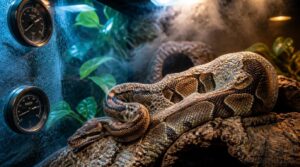
Before anything else, check your setup. Improper humidity and poor thermal regulation cause most stuck sheds.
Verify your temperature gradient with two thermometers, warm and cool side, at your snake’s body level. Use thermostat regulation to prevent swings.
Check humidity where your snake rests, not near water sources. Let readings stabilize before trusting them. Proper humidity levels vary by species, so know your target range.
Offer a Humid Hide
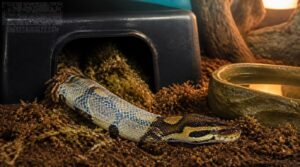
If your snake soaks constantly, that’s a signal. Add a humid hide with damp sphagnum moss, remoisten daily, keep it warm-side but away from direct heat.
Good hide placement matters: within reach of the water bowl, entrance sized for easy access. This balances enclosure humidity without constant misting, and helps prevent retained eye caps during a stuck shed.
Use Safe Lukewarm Soaking
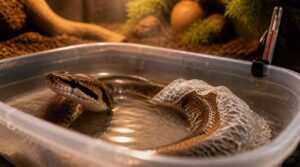
A warm soak can loosen a stubborn shed fast, but only if you get the details right.
- Water temp: 93-98°F (34-37°C)
- Duration: 10-20 minutes, never past 30
- Water: clean, dechlorinated, fresh each session
- Watch for: panic, heavy movement, distress
Skip soaps or additives. Check breathing throughout, and inspect the shed once dry.
Never Peel Retained Skin
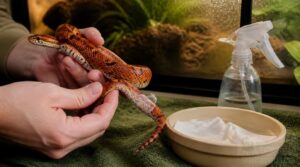
Tempting as it is, don’t pick at that stubborn patch. Never peel retained skin: tearing it damages tissue underneath and opens the door to infection.
Instead, stick with gentle hydration. Rehydrate the area, wait, and let it loosen on its own. If a stuck shed won’t budge after soaking, that’s your cue for professional intervention timing, not more tugging.
Inspect Eyes and Tail
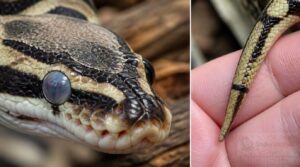
Two spots deserve a close look after every shed: the eyes and the tail tip.
If the shed comes off in pieces around the eyes or tail, soaking your snake to help with shedding can loosen any stubborn skin still clinging on.
Check for cloudy or opaque eyes once the rest of the skin clears, that’s a retained spectacle. Then run your fingers near the tail tip, feeling for a tight band.
- Compare both eyes for evenness
- Look for wrinkled, layered eye caps
- Feel for constriction rings
- Note any dry, darkened tissue
When Shedding Problems Need Veterinary Care
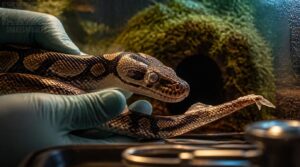
Most shed problems clear up with a little humidity and patience. But some signs mean it’s time to call your vet, not wait it out. Here’s what should send you in for help.
Persistent Retained Eye Caps
If your snake sheds but the eye caps stay put, don’t wait it out. Try one warm water soak and a humid hide first.
Still cloudy after that? Call your vet. Retained eye caps left untreated can cause permanent blindness. Vets remove caps safely with forceps and gel, then help you fix humidity so it doesn’t happen again.
Sores, Blisters, or Scale Rot
Eye caps aren’t the only trouble spot. Check your snake’s belly and sides for blisterlike bumps, sores, or discolored patches, classic signs of scale rot.
This bacterial infection thrives in damp, dirty enclosures. Fluid that’s turned pink or cloudy signals infection, not a simple blister.
Don’t treat this at home. Vets prescribe antibiotics and guide humidity fixes, since enclosure hygiene prevents repeat cases.
Swelling or Dead Tissue
Retained shed around toes or the tail tip can act like a tourniquet. Watch for swelling under skin, scales that look thicker or raised, and any darkening that signals dead tissue.
This isn’t cosmetic. Constriction damage cuts off blood flow, triggers an inflammation response, and can progress fast. Call your vet promptly, since severe cases need surgical intervention to save the tissue.
Retained shed can cut off blood flow fast, so severe swelling needs a vet, not a wait-and-see approach
Lethargy, Stiffness, or Odd Postures
Dead tissue is easy to spot. Pain is not, and your snake can’t tell you where it hurts.
Watch for flattened defensive posture, body pressed against the wall, or a snake that stays motionless in its hide far past normal resting time. Stiffness, reluctance to move, and refusing food beyond five days all point toward a difficult shed needing veterinary attention.
Repeated Incomplete Shedding Cycles
If your snake can’t seem to complete a clean shed cycle after cycle, don’t wait it out. Each failed attempt raises stress hormone levels, alters normal behavior, and feeds an infection feedback loop that worsens with every stuck shed. Left unchecked, this pattern damages long-term health.
A vet can break the cycle before tissue damage becomes permanent.
Frequently Asked Questions (FAQs)
How to tell if a snake is having trouble shedding?
About 1 in 5 pet snakes face dysecdysis at some point. Watch for skin discoloration, eye opacity, hiding increase, appetite loss, rubbing behavior, a stuck shed, retained eye caps, skin lesions, or dehydration.
How often should a healthy snake normally shed?
Young, growing snakes shed every 2 to 4 weeks, while adults settle into a slower 6 to 12 week cycle. Species variation and proper humidity both shape this rhythm, so healthy shedding signs simply track your snake’s growth cycle.
Is it normal for snakes to eat shed skin?
Yes, it’s normal. Eating shed skin is a nutrient recycling behavior, offering trace minerals and keratin. It’s more common when feeding patterns are irregular, and mirrors natural environmental shedding disposal seen in the wild.
Can shedding frequency indicate a snakes age or growth?
Absolutely, shedding frequency tracks growth rate closely. Juvenile shedding often hits every 2-6 weeks during rapid growth, while adult shedding cycles slow considerably.
If your adult snake’s cycle seems off or shed looks dull, boosting enclosure humidity before a shed can make the difference between a clean peel and dangerous retained skin.
Watch for seasonal shifts too, since species-specific patterns and environmental humidity control both influence your snake’s renewal timeline.
Should I bathe my snake outside of shedding time?
Think of it like sipping water between meals, not a survival need but a helpful habit. Soaking once or twice weekly helps hydration and skin health, though a shallow dish often works just as well for voluntary drinking.
How long does a full shedding cycle typically take?
Most snakes finish a shedding cycle in 7 to 14 days. Juveniles often wrap up in 5 to 8 days, adults take longer. Humidity control and temperature gradient regulation both speed things along considerably.
Conclusion
A snake’s skin tells a quiet story, one written in patches, folds, and cloudy eyes. Learning to read snake skin shedding problems signs turns you from a bystander into a caretaker who notices trouble early. Most cases end with a simple soak or humidity fix. Some don’t, and that’s when your vet visit matters most. Trust the small details. Your snake can’t tell you something’s wrong, but its skin always speaks the truth in time.