This site is supported by our readers. We may earn a commission, at no cost to you, if you purchase through links.

You spot a dark fleck near your snake’s eye, and your stomach drops. Then it moves.
That’s the moment a black spots on snake skin problem stops being cosmetic. Some marks are harmless pigment that’s been there since day one. Others are mites feeding on your snake’s blood, or scale rot creeping up from a damp substrate. Wait too long on the wrong one, and a small blemish becomes a vet bill.
You can tell most of them apart at home with a flashlight, a damp towel, and a close look at how each spot behaves. Here’s how to read what you’re seeing.
Table Of Contents
- Key Takeaways
- Are Black Spots on Snake Skin Normal?
- How Can You Recognize Snake Mites?
- When Do Black Spots Signal Infection?
- Can Retained Shed Look Like Black Spots?
- What Should You Do About New Spots?
- Frequently Asked Questions (FAQs)
- What are the black dots on my snake?
- What does skin rot look like on a snake?
- What are the signs that a snake has snake mites?
- What are signs of stress in a snake?
- Can black spots on a snake spread to other snakes?
- How often should I check my snakes skin?
- Can humans catch anything from a snakes black spots?
- Conclusion
Key Takeaways
- Stable pigment stays flat, follows the scale rows, and looks the same from shed to shed, so compare your snake to an older photo to see whether any spot is changing.
- Spots that crawl are mites, and you can confirm it by pressing clear tape on a spot and checking for moving specks, then quarantining the snake right away.
- Blisters, black lifted scales, or crusty patches that spread point to scale rot or a fungal infection from damp conditions, and they need a reptile vet, not a home remedy.
- Flaky specks that lift off after a warm soak are retained shed, but if they don’t come off easily, stop scrubbing, and keep the enclosure clean, dry, and properly heated either way.
Are Black Spots on Snake Skin Normal?
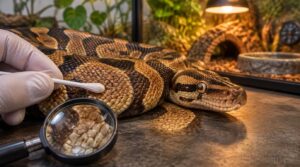
A few dark freckles on your snake can be perfectly normal. Plenty of species carry speckling or mottling, and stable pigment follows the scale rows, stays flat, and looks the same from one shed to the next. If the Black Spots were there when you brought your snake home, relax.
If you’re unsure whether a mark is just pattern, compare it against the signs of a healthy snake, such as clean shedding and smooth, even scales.
Trouble looks different. Watch for spots that appear suddenly, spread, or sit on raised or crusty Skin Lesions. Those can point to Mites, or to Scale Rot, which thrives when Husbandry Practices slip and the substrate stays damp.
Also check for droppings or debris stuck between scales. A damp cotton swab wipes that away. Pigment doesn’t. Compare spots against a photo from last month, so you know whether they’re changing.
How Can You Recognize Snake Mites?
Spots that crawl aren’t pigment. Mites are tiny, and an ectoparasite infestation often hides in plain sight until you know where to look.
Check for these signs:
- Pinhead specks around the eyes, nostrils, and chin that shuffle when you touch them.
- Black grit floating in the water bowl after your snake soaks for hours.
- Ash-like dust on enclosure walls and decor.
- Scale discoloration with raised scales or red bite marks, plus ventral scale discoloration near the vent.
- Tiny specks stuck to the shed skin.
Confirm it with clear tape. Press it on a suspect spot, then stick it to white paper. Moving specks mean mites. Keep in mind that substrate trapped between scales can mimic black dots, so rule it out before treating. If you find them, start your quarantine protocol right away and isolate the snake now.
When Do Black Spots Signal Infection?

Not every dark spot is harmless, and some mean your snake needs help soon. Two infections cause most of the trouble, and you’ll want to know how each one looks before you decide what to do. Here’s what to watch for on your snake’s skin.
If you spot tiny moving specks near the dark patches, mites may be the culprit, and this guide to treating snake mites walks you through getting rid of them.
Scale Rot and Blisters
Picture a bubble of water trapped under a scale, glossy and tight. That’s how Scale Rot often begins. Blisters rise where damp skin sits too long, usually from high Humidity Levels or Substrate Irritation.
Scale rot often begins as a glossy, tight bubble of water trapped under a scale where damp skin sits too long
| Sign | Likely Cause | Action |
|---|---|---|
| Blister | Wet substrate | Dry enclosure |
| Black, lifted scales | Scale Rot | See a vet |
Mites rarely blister skin, so don’t blame them first.
Poor humidity and stress weaken skin and invite mites, and they also explain why a snake stops eating after shedding.
Fungal Lesions and Scabs
Scale rot isn’t the only moisture problem. Fungal lesions look different: gray or black patches that turn powdery, then crusted as they dry. They often spread past a single scale and keep growing, even after a normal shed.
Check your husbandry practices. Damp substrate and poor airflow feed these cutaneous lesions. Mites won’t cause spreading crusts, so call your vet.
Can Retained Shed Look Like Black Spots?
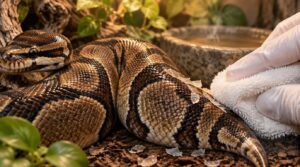
You can mistake retained shed for black spots, especially right after shedding wraps up. Old keratin clings to scale edges, then dries into dark, flaky flecks. Check constricted areas first, like bends and the tail tip, where stuck skin hangs on longest.
If flecks remain after the shed, a step-by-step guide to bathing your snake after shedding shows how to soften stubborn skin safely, starting with the eye caps and tail tip.
Here’s how to tell the difference. Retained shed sits on top of the scales like a film or flake. It stays on the same scales and doesn’t spread. Mites crawl and scatter, while Scale Rot shows up as pits, blisters, or crusty skin lesions in pet snakes.
If you spot anything that looks more like a lesion than leftover shed, this guide to skin lesions in pet snakes shows what to check and when to call a vet.
Use a damp towel or a warm soak to soften the layer, then gently rub. If the specks lift off as flakes, you’ve found retained shed. If they don’t, stop scrubbing.
What Should You Do About New Spots?
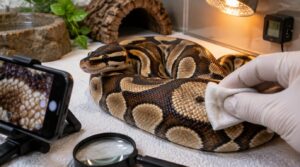
Paper towel bedding lets you inspect your snake without guessing. Swap out the substrate, then photograph every spot so you can track changes over a few days. Wipe a few specks with a damp white cloth. Mites smear or crawl away, while stuck-on crust stays put.
Fix the environment next. Begin enclosure sanitation by disinfecting everything, then rebuild with dry bedding. Check your thermal gradient maintenance too, because cool, damp corners invite Scale Rot. Confirm the warm side hits target and the substrate dries fully between cleanings.
Don’t put a topical antibiotic on unidentified lesions. Blisters, discharge, stuck-on crust, or darkening patches that keep spreading mean you call a reptile vet. Don’t wait. Infections move faster than most keepers expect.
Frequently Asked Questions (FAQs)
What are the black dots on my snake?
Those dots could be a million things, but check your snake for movement first.
Crawling specks mean mites, an ectoparasite infestation. Spreading, crusty, or soft spots point to scale rot, bacterial infection, or fungal infection.
What does skin rot look like on a snake?
It looks like a horror movie, but it starts small. Scale rot means discolored scales turning soft, blistered, and crusty.
These cutaneous lesions point to a bacterial infection or fungal infection. See a vet soon.
What are the signs that a snake has snake mites?
Mites (Ophionyssus natricis) cause an ectoparasitic infestation. Watch for moving pinpoint specks, frequent rubbing, soaking in water bowls, and dull scales around the eyes.
Also rule out scale rot or substrate irritation before treating anything.
What are signs of stress in a snake?
Your snake isn’t grumpy, it’s practically screaming! Watch for anorexia and lethargy, abnormal shed, elevated head posture, and hiding.
Chronic stress invites skin lesions in pet snakes. Try stress reduction techniques: handle less, fix temperatures.
Can black spots on a snake spread to other snakes?
It depends on the cause. Mites and other parasites move between snakes fast, and Scale Rot can pass through shared substrate. Retained shed won’t spread.
For Zoonotic Disease Prevention, follow a strict Habitat Sanitation Protocol.
How often should I check my snakes skin?
Make a routine physical examination part of your daily handling. Do a spot-check, then a full review before and after shedding.
Check more often if humidity levels swing, substrate gets dirty, or parasites worry you.
Can humans catch anything from a snakes black spots?
You won’t keel over from touching a spotted snake, but stay sharp. Scale rot, mite infestations, parasitic freeloaders and bacterial infections can ride your hands.
Wash up after handling, always. That’s simple zoonotic disease prevention.
Conclusion
Better safe than sorry applies to every new mark on your pet. Black spots on snake skin can be harmless pigment, retained shed, or something that needs treatment, and the difference shows up in how they behave. Spots that move, blister, or smell off are your cue to act.
Check your snake weekly, keep the enclosure clean and dry, and call your reptile vet if anything changes. A calm snake and a clear diagnosis beat a panicked guess.