
This site is supported by our readers. We may earn a commission, at no cost to you, if you purchase through links.

Finding a cluster of tiny dark specks moving along your snake’s scales is one of those moments that stops you cold.
Snake mites—Ophionyssus natricis—are small enough to hide in a scale fold but aggressive enough to drain a snake’s blood, compromise its immune response, and turn a healthy animal into a stressed, dysregulated one within weeks.
What makes them particularly stubborn is their life cycle: eggs tucked into enclosure cracks can survive long after you think the problem is gone.
Effective, safe snake mite treatment options target both the animal and the environment simultaneously—and knowing exactly which treatments work at each stage of infestation is what separates a full recovery from a recurring battle.
Table Of Contents
- Key Takeaways
- Recognizing Snake Mite Infestations
- Safe Treatment Options for Mites
- Cleaning The Enclosure Properly
- Biological Control Methods
- Preventing Reinfestation Long-Term
- Frequently Asked Questions (FAQs)
- How do I get rid of mites on my snakes?
- What is the best treatment for snake mites?
- What can I soak my snake in to get rid of mites?
- Can you use Nix to treat snake mites?
- How to quarantine a snake with mites?
- How do snake mites affect other household pets?
- Can mite infestations spread to outdoor environments?
- What environmental factors promote snake mite multiplication?
- Are snake mites resilient to extreme temperature changes?
- Can snake mites spread to humans or pets?
- Conclusion
Key Takeaways
- Snake mites require you to treat both the animal and the enclosure at the same time — targeting one without the other almost guarantees the infestation comes back. For a step-by-step breakdown of what actually works, snake mite treatment and prevention methods walks through both the animal and habitat side of the process together.
- Chemical options like ivermectin and fipronil are effective, but dosing depends on your snake’s exact weight and species, so a reptile vet needs to be involved before you apply anything.
- Biological controls — predatory mites like Hypoaspis miles and nematodes like Steinernema feltiae — offer a residue‑free alternative, but they only work when humidity, temperature, and timing align with the mite life cycle.
- quarantining every new snake for 30 to 90 days, running weekly inspections, and acting immediately when behavior shifts — dull scales, surface rubbing, or excessive shedding are your earliest warning signs.
Recognizing Snake Mite Infestations
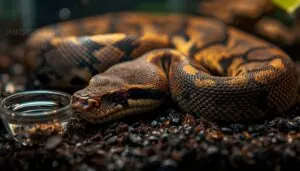
Catching mite infestation early can mean the difference between a quick fix and a weeks-long battle. Snake mites leave behind a surprisingly clear set of clues once you know what you’re looking for.
Before visible skin damage appears, behavioral red flags like soaking and wall-rubbing often tell the real story—explore how snake mites cause skin damage to understand what’s happening beneath the surface.
A weekly snake mite inspection routine trains your eye to catch those early warning signs before a small problem turns into a full-blown infestation.
what to watch for before things get out of hand.
Visible Mites on Scales and Around Eyes
Mite spotting starts at the eyes. Look closely at the eye edge crust, scale swell near heat pits, and any unusual clustering around the vent or armpits.
Here’s what you’re checking for:
- tiny dark specks moving along scale edges
- egg clusters settled in skin folds
- larval movement visible under magnification
- raised or inflamed tissue around the eye rim
Common Skin and Shedding Changes
Skin changes often show up before you spot a single mite. Watch for Color Shift Indicators like unusual dullness or patchy discoloration — these signal Pre-shed Dryness and impaired moisture regulation. Retained Scale Patches, skin lesions, and skin irritation around scale seams are common. Shedding Frequency Patterns also shift; excessive shedding becomes a red flag.
| Skin Sign | What It Looks Like | What It Suggests |
|---|---|---|
| Color Shift Indicators | Dull, cloudy, or uneven tone | Moisture disruption from feeding |
| Retained Scale Patches | Stuck dry skin on body or tail | Incomplete separation during shed |
| Post-shed Skin Texture | Rough, flaky, or crinkled scales | Active infestation or dehydration |
| Pre-shed Dryness | Lifted scale edges, rough feel | Compromised skin barrier function |
Coconut oil and neem oil can temporarily ease skin irritation while treatment begins.
Behavioral Signs of Irritation
Your snake’s behavior often speaks before the skin does. Watch for a Defensive Posture when you approach — a raised, tensed body signals real discomfort, not attitude.
Increased Hissing Frequency, Strike Lunging, and Rapid Retreat into hides all point to persistent irritation.
Surface Rubbing against decor is another tell.
Combined with excessive shedding, skin lesions, or weight loss, these signs demand action.
How to Check Your Snake Safely
Once you’ve spotted those behavioral red flags, a hands-on check confirms what your instincts are telling you. Use quiet handling in a calm space, and always set your snake on a non-slip surface so neither of you is off-balance.
Accurate weight measurement is essential for proper dosing and health monitoring.
- Use protective tools — hook or tongs — to lift from mid-body with minimal pressure.
- Inspect scales closely for tiny moving specks, skin lesions, or excessive shedding debris.
- Check eyes, nostrils, and the vent area where mites cluster most.
- Record every finding in an observation log to track changes week over week.
Safe Treatment Options for Mites

Once you’ve confirmed mites are the problem, the next step is choosing a treatment that’s actually safe for your snake. There’s no single fix that works for every situation, but there are several reliable options — from vet-guided medications to gentler at-home methods.
Your vet may also want to rule out underlying conditions before starting treatment, since some symptoms overlap with neurological issues in snakes that can look surprisingly similar to a mite infestation.
Here’s what you need to know about each one.
Reptile-safe Chemical Treatments
Chemical treatments can be effective, but not all are created equal. Pyrethrin and permethrin-based sprays remain the most commonly used EPA-approved reptile pesticides, though strict dilution ratios and exposure limits matter enormously here.
Always follow labeled application methods precisely, apply in well-ventilated spaces, and rinse thoroughly afterward.
Environmental persistence is real — residues can linger up to six weeks — so safety monitoring throughout treatment isn’t optional.
Ivermectin Under Veterinary Guidance
Ivermectin can eliminate snake mites effectively — but only when a veterinarian determines it’s the right fit. Dose calculation depends on your snake’s exact weight and health status, and species specificity matters because what’s safe for one reptile can harm another.
Administration routes, drug interactions, and monitoring side effects all require reptile veterinary care.
Don’t guess — herpetologist’s advice turns a risky chemical treatment into a reliable one.
Fipronil for Topical Control
Fipronil, a phenylpyrazole insecticide, offers months-long residual activity against mites through spot-on application — making it a practical option in mite infestation management.
Because it’s not an EPA-approved reptile pesticide, dosage guidelines and proper use must come from your vet.
Pay close attention to residue safety and environmental impact, particularly near water. Used correctly under veterinary guidance, it promotes long-term reptile health.
Lufenuron for Breaking The Life Cycle
Lufenuron works differently than most chemical treatments — instead of killing mites on contact, it disrupts the mite life cycle through chitin inhibition mechanism, preventing larvae from completing molting stage, targeting successfully.
That makes timing application strategy critical; it’s most effective when immature stages are active.
Always follow dosage safety guidelines from your vet, and pair it with resistance management plans for lasting reptile health and environmental safety.
Non-chemical Treatments Like Soap Soaks and Oils
Not every situation calls for a prescription. A daily Dawn dish soap soak — one drop in room-temperature water — uses soap surfactant action to break down mite exoskeletons.
After your Post-Soak Rinse, apply coconut or neem oil using the oil smothering method to suffocate survivors.
Keep Soap Soak Timing brief, practice Stress-Minimizing Handling, and watch closely for Skin Irritation Monitoring throughout this nonchemical snake mite treatment.
Cleaning The Enclosure Properly
Treating your snake is only half the battle — the enclosure needs just as much attention. Mites don’t just live on your snake; they hide in every corner, under every decoration, and deep in the substrate.
Treating your snake is only half the battle — mites hide in every corner, decoration, and deep in the substrate
Here’s exactly what you need to do to break the cycle for good.
Removing Décor and Substrate Safely
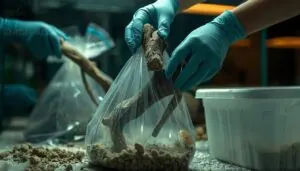
Start by securing your snake in a ventilated temporary tub before touching anything inside the enclosure. Use the Minimal Disturbance Technique — remove décor slowly and drop it directly into a Containment Bag to stop mites from scattering.
Bag the substrate in small portions, then wipe the floor clean. Use Separate Cleaning Tools and follow your Hand Hygiene Protocol immediately after.
Finish with fresh Paper Liner Placement.
Disinfecting Hides, Bowls, and Surfaces

Once the enclosure is empty, cleaning and disinfecting every surface becomes your priority.
Material Compatibility Checks matter here — porous hides need gentler handling than ceramic bowls.
Apply a reptile-safe disinfectant, then honor proper Contact Time Management by keeping surfaces visibly wet before wiping.
Follow Drying Protocols fully, and use Heat Sanitizing Options for tolerant items.
Cross-Contamination Prevention means dedicated tools only.
Using Bleach Solutions and Reptile-safe Cleaners

Now that your hides and bowls are clean, it’s time to disinfect. A bleach solution mixed at 1 part bleach to 32 parts water treats most nonporous surfaces safely. Stick to these decontamination protocols every time:
- Wear gloves and goggles — PPE requirements aren’t optional.
- Open windows; ventilation strategies protect your lungs.
- Apply, then rinse thoroughly using safe rinsing techniques.
- Confirm bleach residue removal by smell — if you detect anything, rinse again.
Skip phenol-based cleaners entirely. For porous items, a reptile-safe disinfectant is safer.
Temperature and Humidity Changes During Treatment

Once disinfection is done, don’t overlook what happens to your enclosure’s climate. Cleaning disrupts both temperature regulation and humidity control.
Probe placement effects matter here — move your thermostat sensor to confirm stable thermal gradients after rearranging décor.
Substrate moisture influence and humid hide dynamics shift quickly post-cleaning, so monitor humidity reduction carefully.
Heating cycle RH impact can cause unexpected swings, so give conditions 24 hours to stabilize.
When to Replace Substrate Completely
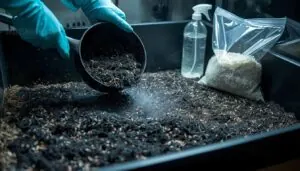
Stabilized climate is only half the equation.
If mites keep reappearing after surface cleaning — especially in porous coconut fiber or densely packed soil blends — that substrate has become an egg reservoir you can’t reach by wiping alone.
Persistent moisture accumulation, mold detection, or reinfestation indicators after your first cleaning round are clear signals: strip everything out and start fresh.
Biological Control Methods
If you’d rather skip the chemicals entirely, biological control is worth a serious look. It works by putting nature’s own pest managers to work inside the enclosure — no residues, no systemic risks.
Here are the main options that actually deliver results.
Predatory Mites for Enclosure Treatment
Predatory mites offer a genuinely chemical-free path to biological control of snake mites — no residues, no systemic risk.
Species matching matters more than most keepers realize: Hypoaspis miles works in substrate layers, while Amblyseius cucumeris targets surface-dwelling stages.
Both ship with carrier material selection built in — usually vermiculite or bran.
Prioritize humidity compatibility before releasing, and track results through consistent, weekly population monitoring.
How Beneficial Mites Target Snake Mites
Beneficial mites don’t wander randomly — they hunt through cue-based hunting, detecting carbon dioxide, heat, and moisture gradient exploitation to zero in on snake mite activity zones. Species like Hypoaspis miles excel at microhabitat penetration, burrowing into the substrate where eggs are laid.
biological control is where biological control of snake mites truly earns its place in integrated pest management. Predator-prey timing determines everything.
Using Nematodes in Substrate
Adding Steinernema feltiae nematodes to your substrate is one of the most practical nonchemical treatments available for mite management. These microscopic organisms require careful moisture management — the substrate should feel damp but never waterlogged.
Application timing matters: release them when temperatures stay within a stable window, and choose a carrier media like vermiculite to distribute them evenly. Substrate depth affects contact rates considerably.
Where Biological Controls Work Best
Biological control thrives in the right conditions — and getting those conditions right is half the battle. Ideal humidity and substrate moisture keep beneficial mites and nematodes active and mobile.
Keep temperatures below 82.5°F to avoid exceeding the heat threshold.
Microzone access matters too: even distribution ensures predatory mites reach mite hotspots.
For integrated pest management success, release beneficial mites when prey timing aligns with active infestation.
Pros and Limits of Chemical-free Control
Chemical-free control is genuinely worth considering — but it’s not the easy road. Nonchemical snake mite treatment and biological control using predatory mites offer reduced toxicity and minimal environmental impact, which matters for your snake and your household. That said, the limits are real:
- Labor intensive: Daily soaks, wipes, and inspections take consistent effort
- No residual effect: Newly hatched mites can bounce back quickly
- Egg elimination challenges: Thermal treatment and natural pest control methods rarely reach every hidden clutch
Integrated pest management works best when you stay ahead of the cycle.
Preventing Reinfestation Long-Term
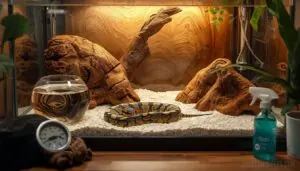
Getting rid of mites is only half the battle — keeping them gone is where most keepers slip up. habits you build after treatment matter just as much as the treatment itself.
Here’s what actually works for staying mite-free long-term.
Quarantine for New Snakes
Every new snake is a potential carrier — even a healthy-looking one. That’s why preventive quarantine isn’t optional; it’s your first line of defense.
Isolate your reptile in a dedicated quarantine enclosure for 30 to 90 days, using paper towel substrate to spot mites easily. Practice strict tool segregation and staff hygiene between animals.
Consistent health monitoring throughout the isolation duration ensures nothing slips through undetected.
Cleaning and Inspection Routines
Quarantine gets you through the door — but a consistent cleaning and inspection routine keeps mites from coming back. Daily Spot Checks remove waste before mites have organic material to hide in.
For Bright Light Inspection, run the beam slowly along scale edges and contact zones.
The Paper Card Test — slipping white card beneath the enclosure — catches moving mites instantly.
Log humidity, map Mite Hotspots, and rotate your environmental cleaning protocols weekly.
Monitoring Treatment Progress Each Week
Once your cleaning routine is locked in, shift your attention to data. Track Mite Count Trends weekly using a flashlight inspection, and keep a Skin Score Tracking log with photos.
Your Feeding Behavior Log, Hydration Patterns, and Activity Level Chart reveal whether mite population dynamics are shifting.
If counts don’t drop after two checks, your monitoring and adjusting mite treatment plans need to change.
Reducing Stress During Recovery
Your tracking data means nothing if stress is quietly derailing recovery. A rattled snake produces cortisol that suppresses immune response — making stress reduction strategies just as important as any treatment.
- Practice gentle handling only when necessary
- Maintain stable temperature and consistent lighting daily
- Keep a quiet environment with minimized disturbances
- Offer water in the same spot consistently
- Observe from outside the enclosure whenever possible
When to Seek Veterinary Follow-up
Even with stress managed well, some situations call for a veterinarian consultation rather than another home remedy.
Seek help if you notice rapid skin deterioration, respiratory distress, severe weight loss, persistent vomiting, or neurological signs like tremors after treatment.
Excessive shedding that won’t resolve, respiratory problems lasting more than a day, or mites still visible after a full cycle all warrant a skin scraping test and professional eyes.
Frequently Asked Questions (FAQs)
How do I get rid of mites on my snakes?
Getting rid of snake mites takes a combined approach: treat the snake directly, apply environmental cleaning protocols for snake enclosures, and maintain post-treatment observation weekly until no live mites appear.
What is the best treatment for snake mites?
The best treatment combines environmental treatment methods with combination therapy for mite eradication — soaks, enclosure disinfection, and targeted chemical or biological pest control.
Dosage precision and follow-up diagnostics determine long-term success.
What can I soak my snake in to get rid of mites?
You can "scale" back the mite population fast with the right soak.
A diluted povidone iodine solution — think Betadine baths at a warm 75–85°F — gives you a reliable, chemical-free mite treatment method.
Can you use Nix to treat snake mites?
Nix is an off-label option some keepers use, but it carries real skin toxicity risks for reptiles. Always follow strict dilution guidelines and consult a reptile vet before applying it.
How to quarantine a snake with mites?
Move your snake into a simple plastic tub with ventilation holes and paper towel substrate immediately.
Use dedicated quarantine tools, wash hands after every interaction, and check for mite movement daily.
How do snake mites affect other household pets?
Snake mites seldom survive on cats or dogs, but cross-species irritation happens. Contact transmission causes transient skin redness and a pet stress response.
Secondary bacterial infection is possible if scratching persists — consult your vet promptly.
Can mite infestations spread to outdoor environments?
Yes, mites can spread outdoors through windborne dispersal, bird vector pathways, and soil litter survival.
Outdoor humidity thresholds and seasonal population spikes influence how far they travel, making quarantine and isolation protocols essential.
What environmental factors promote snake mite multiplication?
Warm stable temperatures between 60–80°F and humidity above 50% RH create ideal breeding conditions. Moist microclimates, poor ventilation, and dense housing accelerate multiplication by supporting every life stage simultaneously.
Are snake mites resilient to extreme temperature changes?
Mites aren’t invincible, but they’re tougher than most people expect. They survive comfortably between 60–80°F.
Push beyond that — above 105°F or below 35°F for several days — and you’ll see real-life cycle disruption.
Can snake mites spread to humans or pets?
Here’s something most reptile owners don’t expect: snake mites can briefly land on you or your dog. Human skin reactions are possible, though true cross-species transmission is rare and temporary.
Conclusion
Think of mite treatment like patching a leaking pipe: fixing only the visible drip while ignoring the corroded joints guarantees another flood.
Your snake can’t tell you when something’s wrong—behavioral shifts and dull scales are the only language available.
Following safe snake mite treatment options means addressing the animal, the enclosure, and the life cycle in parallel, without shortcuts.
Do that consistently, and you’re not just solving today’s problem—you’re building a habitat where mites can’t gain a foothold again.






john Jameson
February 27, 2026 at 01:11 PM
The new stuff by Cloverleaf - snake mite gone in a 10ml dose via injection into food is fantastic. keeps then sorted for up to 30 days. Never seen anything like it.