This site is supported by our readers. We may earn a commission, at no cost to you, if you purchase through links.

I once watched an owner drop an adult mouse into a 40-gram hatchling’s tank. The snake struck out of instinct, then spent ten minutes trying to figure out how to swallow something bigger than its own head.
That mismatch causes real problems: regurgitation, stress, even esophageal injury. Corn snakes don’t judge portion size on their own. Proper size feeder mouse for corn snake feeding depends entirely on you doing the math, weight, girth, and growth stage.
Get the ratios right and feeding becomes simple, predictable, and safe for your snake at every life stage.
Table Of Contents
- Key Takeaways
- What Size Mouse Should a Corn Snake Eat?
- Corn Snake Mouse Size Chart
- How Often to Feed Each Mouse Size
- How to Tell Mouse Size Fits
- How to Adjust Feeder Size Safely
- Frequently Asked Questions (FAQs)
- How do I know what size mouse to feed my corn snake?
- What kind of mouse is good for corn snakes?
- What size mice should I feed my snake?
- Can a corn snake eat small mice?
- Can corn snakes eat other prey besides mice?
- How do I switch feeder mouse brands safely?
- Does prey size change during breeding season?
- Should I feed differently after my snake sheds?
- How does enclosure temperature affect digestion speed?
- Can I feed my corn snake live mice?
- Conclusion
Key Takeaways
- Weigh your snake monthly and feed prey at 10-15% of its body weight to take the guesswork out of portion sizing. For hatchlings especially, a quick look at the right mouse size for hatchling snakes helps you choose prey that’s proportionate before you ever step on a scale.
- Keep mouse girth under 1.5x your snake’s widest body girth to prevent choking, regurgitation, and esophageal injury.
- Base feeder size on weight and girth rather than age, since snakes of the same age can vary widely in size.
- After feeding, look for a modest bulge that resolves within 24-48 hours as confirmation you picked the right size.
What Size Mouse Should a Corn Snake Eat?
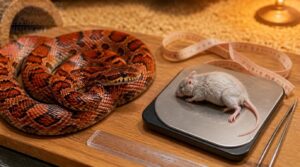
Picking the right mouse isn’t a guessing game, it’s math you can check with a scale and a tape measure. Weight, girth, and a few visual cues tell you almost everything you need to know before feeding day. Here’s exactly what to look for.
If you’re just starting out, this guide on when to start feeding baby corn snakes breaks down how mouse size should scale with your snake’s age and girth.
Follow The 10–15% Weight Rule
Every meal starts with math, not guesswork. Weigh your snake empty, then aim for prey at 10-15% of that number. A 300-gram corn snake needs 30-45 grams of mouse.
- Weigh monthly
- Log each feeding
- Adjust as they grow
Frozen-thawed mice make this easy to measure precisely before feeding. For corn snakes specifically, sticking to large adult mice rather than jumbo sizes helps you follow the snake prey width rule and avoid obesity or scale spread.
Compare Mouse and Snake Girth
Weight math gets you close, but girth confirms fit. Grab a flexible tape and measure your snake’s widest body girth, then compare it to the mouse’s shoulder width, its thickest point.
Shapes differ too. Mice carry a compact, rounded ribcage; snakes stretch skin gradually during swallowing. That flexibility matters for prey alignment and digestive efficiency once the meal’s down.
Stay Below 1.5× Body Girth
Now put a number on it. That girth comparison you just made? Keep prey circumference under 1.5× your snake’s widest body girth. This safe swallowing margin prevents choking and mouth injury while still allowing digestive recovery within 24 hours.
- Measure girth monthly with flexible tape
- Check prey circumference before thawing
- Adjust ratio seasonally for temperature shifts
- Watch body condition scoring for fit
- Compare body width, not just length
Prioritize Weight Over Age
Two hatchlings at 12 weeks can differ by 15 grams. That’s why weight-based feeding beats age charts every time.
Weigh your snake monthly on a kitchen scale. Move to fuzzy mice at 30 grams, hoppers at 50, regardless of birthdate. Track growth rate and body condition together. Weight gain stagnation signals a feeder change is overdue, not the calendar.
Aim for a Modest Bulge
Once your prey-to-snake size ratio is right, you’ll see it: a modest bulge at midbody, not a rigid lump behind the head.
- A gentle swell that eases down the body within 24 hours
- Smooth swallowing, no jaw strain or hesitation
- Steady digestion progress, not a stalled lump
Watch for bulge migration. That’s your fit confirmation.
Corn Snake Mouse Size Chart

Weight tells you everything you need to know about prey size, no guesswork required. Here’s how that translates across five feeder categories, from your snake’s first pinky to its final jump to adult mice. Find your snake’s current weight below and match it to the right mouse size.
If you’re wondering whether frozen options work just as well as live prey, this guide on feeding frozen mice safely to snakes breaks down the benefits.
Pinkies: Snakes Weighing 5–15 Grams
A newly hatched corn snake can’t handle much more than a pinky, and that’s by design. Pinky mice weigh 5–15 grams, matching hatchlings of the same range.
| Detail | Spec |
|---|---|
| Weight | 5–15 g |
| Length | 15–25 mm |
| Feeding frequency | Every 5–7 days |
| Thawing | Warm water, 15–30 min |
Skip undersized prey. Check body weight monthly.
Fuzzies: Snakes Weighing 15–50 Grams
Once your corn snake clears 15 grams, pinkies stop cutting it. Fuzzies (15–50 g) match this stage’s higher energy demand.
| Detail | Spec |
|---|---|
| Weight | 15–50 g |
| Feeding frequency | Every 7–10 days |
| Handling | Thawed, pre-killed |
| Storage temp | Room temperature before feeding |
| Growth check | Monthly weight and bulge review |
Watch shedding quality and activity, both flag sizing issues early.
Hoppers: Snakes Weighing 50–150 Grams
This is where growth really takes off. At 50–150 grams, your snake needs a hopper mouse matched to mid-body girth, fed every 7–10 days.
| Weight | Girth Match | Frequency |
|---|---|---|
| 50 g | Snug, no gaping | 7 days |
| 100 g | Moderate bulge | 8–9 days |
| 150 g | 1.5× girth max | 10 days |
Bulge should fade within 24–48 hours, no exceptions.
Weaned Mice: Snakes Weighing 150–400 Grams
Sub-adults hit their stride here. At 150–400 grams, offer weaned mice (13–18 g), keeping prey weight near 10-15% of body weight, a 200 g snake pairs well with a 20-30 g mouse.
| Weight | Mouse Size | Frequency |
|---|---|---|
| 150 g | 15–20 g | 7 days |
| 300 g | 30–40 g | 8–9 days |
| 400 g | 40–50 g | 10 days |
Watch girth and bulge closely.
Adult Mice: Snakes Weighing 400–800 Grams
Full-grown snakes need serious groceries. At 400-800 grams, offer adult mice (18-35 g), or jumbo mice/small rats for bigger specimens.
| Weight | Mouse Size |
|---|---|
| 400 g | 40-60 g |
| 600 g | 60-90 g |
| 800 g | 90-120 g |
Check girth matching and feeding intervals every 10-14 days. Watch bulge monitoring; digestive recovery time runs 3-5 days.
How Often to Feed Each Mouse Size
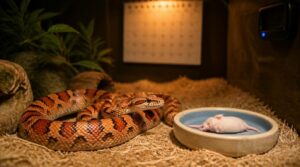
Mouse size only tells half the story. Feeding frequency shifts as your corn snake grows, and getting the timing wrong causes just as many problems as getting the size wrong. Here’s how often to feed at every life stage.
Hatchlings: Every 5–7 Days
Every 5–7 days, offer one pinky to a hatchling in that first 0–6 month window. This rhythm helps rapid weight gain tracking while matching digestion time, roughly 24–48 hours, before the next feeding.
- Weigh weekly for growth trends
- Watch for a modest bulge
- Follow prey size progression closely
Skipped meals happen. Wait a day, then retry.
Juveniles: Every 7–10 Days
By 6–12 months, your snake settles into a 7–10 day feeding schedule. Slower digestion means rushing meals invites regurgitation.
Keep prey at 10–15% of body weight and track it on a feeder mouse weight chart. Steady gains confirm the pace is right, no gains mean it’s time to reassess portion size.
Sub-Adults: Every 7–10 Days
Once your snake settles into the 12–24 month sub-adult stage, that same 7–10 day rhythm holds steady. Weight climbs to 200–475 grams, with 8–12 grams monthly gain marking healthy progress. Weaned mice at 14–20 grams (7–10% of body weight) fit this pace.
Log weight and girth monthly, if gains dip below 5 grams, tighten the interval.
Adults: Every 10–14 Days
Past 40 inches, metabolism drops and so does appetite. Adults settle into 400–800 grams, and that weight range calls for 10–14 day intervals, not the tighter sub-adult pace.
Here’s what proper adult feeding looks like:
- Choose an adult mouse matched to girth, roughly 18–35 grams for standard adults.
- Keep portions at 10–15% of body weight per meal.
- Confirm digestion finishes within 48–72 hours before the next feeding.
- Check the post-feeding bulge resolves in about 24 hours.
- Log weight and girth monthly, adjusting size if condition score drifts from 3–4.
Stretching meals to 14 days keeps blood glucose stable between 70–100 mg/dL and prevents fat gain above 15%. Skip a feeding and the snake’s fine, just try again in a few days. Prey girth matching still beats guessing by appetite.
Adjust for Seasonal Fasting
When November arrives, appetite drops fast. Healthy adults fast 4–6 weeks at 55–65°F without weight loss, so skip meals and downsize to weaned mice.
Weigh monthly, watch for 5% losses, keep water available daily.
Resume feeding 1–2 weeks post-brumation at 72–75°F, restarting at 7–10 day intervals. Refusal isn’t failure, it’s biology.
When a snake refuses food after brumation, that’s not failure, it’s biology
How to Tell Mouse Size Fits
Numbers on a chart only get you so far. Your snake’s feeding response tells the rest of the story, right there in front of you. Here’s what to watch for, from the first bite to the bulge left behind.
Watch The Swallowing Process
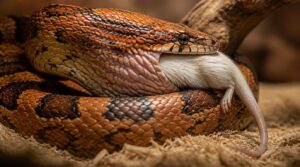
Watching a swallow tells you everything about fit. Correct-sized prey moves smoothly: jaws walk over the mouse, throat muscles drive it back in steady waves, no pause longer than a few seconds.
Snakes coordinate breathing and swallowing automatically, so labored gulping, repeated stops, or gaping mid-swallow signal prey that’s too large for comfortable passage.
Check The Post-Meal Bulge
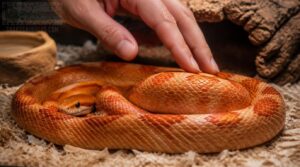
Run your hand along the snake’s midbody right after feeding. A gentle, rounded bulge blending into the natural loaf shape means proper sizing; sharply defined bulges with visible movement suggest oversized prey.
Track bulge visibility daily using consistent lighting and angle. Reduced activity and tongue flicking over the next several days confirm normal digestion is underway.
Confirm The Bulge Disappears

Give it time. A pinky bulge fades within 24–48 hours; fuzzies and hoppers take 48–72 hours to resolve fully.
Palpate gently along the ventral midline, no soft swelling means digestion’s complete. Watch for basking, tongue flicking, and clear eyes returning. Once smooth and active again, your snake’s ready for its next scheduled meal.
Spot Oversized Prey Warning Signs
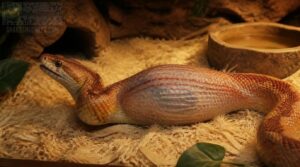
Oversized prey leaves clues fast. Watch for open-mouth breathing or wheezing within 12–24 hours, a stretched "sausage" body shape, and a bulge still visible past 48 hours.
Regurgitation often hits 48–72 hours post-feeding, undigested and tubular. Any of these signal esophageal strain, downsize immediately and skip the next scheduled meal to let recovery happen.
Recognize Chronic Underfeeding Signs
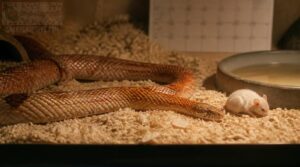
Undersized prey shows up slower, but it’s just as damaging. Watch for these four signs:
- Weight stagnation across feedings
- Reduced body condition, flatter midbody
- Poor muscle tone, less firmness handled
- Delayed growth versus age norms
Track weight monthly. Stalled numbers mean it’s time to size up.
How to Adjust Feeder Size Safely
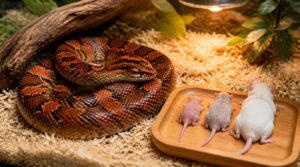
Sizing isn’t a one-time decision. Your snake grows, and its feeder size needs to grow with it. Here’s how to adjust safely, step by step.
Measure Weight and Girth Monthly
Once a month, weigh your snake and measure mid-body girth with a flexible tape, same scale, same spot, same time of day.
Mark the site lightly so you’re measuring the identical spot next time. Record numbers to the nearest 0.1 cm.
This growth trend data tells you exactly when to size up on your feeder mouse weight chart, no guesswork required.
Track Meals and Body Condition
Numbers alone don’t tell the whole story. Keep a feeding log noting date, mouse type, weight, and whether your snake finished it. Score body condition monthly: spine visibility, mid-body width, tail taper.
Watch for:
- Hesitation at feeding time
- Thinner appearance across weeks
- Sluggish post-meal behavior
- Repeated partial refusals
These patterns guide your next sizing decision better than weight alone.
Increase Mouse Size Gradually
That log now tells you when to size up. Bump prey weight by 2–5 grams for hatchlings, up to 10 grams for juveniles, never more. Confirm your snake’s girth against the new mouse first.
Each increase is one small step, not a leap. Consistent, gradual upsizing protects digestion far better than chasing growth spurts.
Downsize After Regurgitation
A gradual build-up still hit a wall, and that’s regurgitation talking. Stop feeding for 7 to 10 days, longer if needed, so digestive chemistry resets.
Offer a recovery meal one size smaller, checked against mid-body girth. Keep the hot spot at 88-92°F and the hide quiet. A second regurgitation after proper downsizing calls for a vet exam.
Check Temperatures Before Feeding
Before any meal goes in, run a substrate temp read at the warm hide, not the air above it. You want 80-85°F there, prey warmed to a live-feel touch, and gradient verified between hot and cool zones.
Skip this step and digestion slows, raising regurgitation risk regardless of proper prey size selection.
Frequently Asked Questions (FAQs)
How do I know what size mouse to feed my corn snake?
Like sizing shoes, not shirts, you match mice to your snake’s exact measurements. Target 10-15% of body weight, keep prey girth under 5x mid-body size, and watch for a modest post-feeding bulge that resolves within 24 hours.
What kind of mouse is good for corn snakes?
Frozen-thawed mice matched to growth stage work best: Pinky, Fuzzy, Hopper, or Weaned Mouse depending on weight. Prioritize prey weight (10-15% of body weight) and girth over age labels for accurate, nutritionally sound sizing.
What size mice should I feed my snake?
Sizing a mouse for your snake is like fitting a belt, too loose and it’s useless, too tight and it hurts. Use the 10-15% prey weight ratio and the girth comparison method: mouse diameter shouldn’t exceed your snake’s widest point.
Can a corn snake eat small mice?
Yes. Pinky, fuzzy, and hopper mice suit hatchlings and juveniles perfectly. Match prey girth to your snake’s mid-body size, staying under 5x, and small mice work fine for smaller corn snakes at every growth stage.
Can corn snakes eat other prey besides mice?
A snake bred to hunt rodents will still take flight before it takes fur. Bird alternatives like quail chicks, plus rat pups, offer nutritional variety, though mice should stay your corn snake’s dietary staple.
How do I switch feeder mouse brands safely?
Confirm the new supplier raises disease-free, reptile-specific rodents, then mix brands gradually across two to four feedings. Match the same size category exactly and watch swallowing response closely. Document any regurgitation and revert immediately if issues appear.
Does prey size change during breeding season?
Old habits die hard, and your snake’s feeding rules are no exception. Prey size stays anchored to body girth, not the calendar.
Breeding season shifts appetite and feeding frequency, energy allocation trade-offs favor smaller, easier meals, but girth still calls the shots.
Should I feed differently after my snake sheds?
Hold off until shedding is fully done, eye caps and all. Then offer the same prey size and schedule as before. No upsizing needed, just confirm normal feeding response and a resolving postmeal bulge.
How does enclosure temperature affect digestion speed?
Warmth speeds your snake’s reptile metabolism, driving faster enzyme activity and gut motility. Cooler temps slow digestion, risking undigested meals. Keep enclosure temps stable, both sides, to support consistent, healthy digestion after every feeding.
A relaxed snake is more likely to digest well, while snake coiling before striking can signal stress or defensiveness.
Can I feed my corn snake live mice?
Technically yes, but don’t. Live mice can bite and claw, causing real injury risk if unsupervised. Frozen-thawed prey removes that danger while still matching proper feeder mouse sizing guidelines for your corn snake’s growth stage.
Conclusion
You might think eyeballing a mouse is good enough. It isn’t.
A proper size feeder mouse for corn snake diet runs on grams and girth, not guesswork. Weigh your snake monthly, match prey to body size before age, and watch for a modest bulge instead of a straining swallow.
Get this right, and feeding stops being a gamble. Ten minutes of measuring now beats an emergency vet visit later. That’s a trade worth making, every single time.