This site is supported by our readers. We may earn a commission, at no cost to you, if you purchase through links.

A soggy tub liner at 2 a.m. tells you everything about your setup’s weak points. Mold blooms fast in a warm rack room, and one missed spot check can cost you a clutch. Breeders learn this the hard way, usually with a hygrometer reading that’s climbed past 60% overnight.
The right substrate liners for breeders aren’t just about tidiness. They control moisture, block bacterial growth, and keep hatchlings from ingesting material that can cause impaction. Get the layering wrong, though, and you’re fighting mold colonies every week instead of watching your animals thrive.
Seven products stand out for reliability, cost, and cleanup speed, and knowing which one fits your rack, terrarium, or quarantine tub changes how much time you spend maintaining versus breeding.
Table Of Contents
Key Takeaways
- Drainage layers like Exo Terra BioDrain, LECA pebbles, and Hydroton clay balls prevent waterlogging and bacterial buildup, but they need a mesh barrier so animals never ingest them directly.
- Matching substrate to species and life stage matters most, since desert snakes need dry, absorbent liners while tropical species and hatchlings require much higher humidity retention.
- Daily spot checks for moisture, odor, and mold, paired with prompt replacement of damp liners, catch problems before they threaten a clutch.
- Installation details like vent clearance, smooth seams, and separating drainage from flooring prevent fire hazards, snagged scales, and moisture creeping back into the enclosure.
Top 7 Substrate Options for Breeders
Every breeding setup lives or dies by drainage, and the substrate you choose decides whether that system works for you or against you. Some options excel at moisture control, others at bacterial colonization, and a few just make cleanup faster on rack systems packed with tubs.
Here are seven substrates worth stocking in your breeding room, starting with the ones built for serious drainage demands.
Getting the substrate right is only half the equation, since dialing in proper temperature and humidity ranges for your species matters just as much for successful breeding.
1. Exo Terra BioDrain Substrate
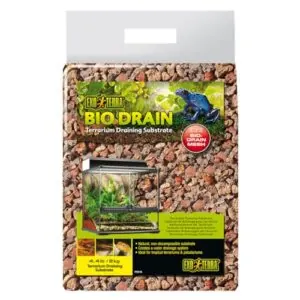
When drainage failure floods a clutch of eggs, you’ll wish you’d built the base layer right the first time. Exo Terra BioDrain solves that: an inorganic, non-decomposable substrate that won’t rot under constant humidity, creating a true drainage layer beneath your soil.
It doubles as biological filtration, hosting nitrifying bacteria that keep water quality stable in paludariums. Pair it with the optional mesh to stop fine particles fouling your drainage zone. Rinse thoroughly before use; dust buildup undermines flow.
| Best For | Reptile and amphibian keepers building tropical terrariums, paludariums, or waterfall/rain systems who need a reliable, long-lasting drainage layer beneath their substrate. |
|---|---|
| Material | Natural volcanic stone |
| Primary Use | Drainage layer |
| Reusable | Yes |
| Rinsing Required | Yes |
| Weight | 2 kg |
| Brand | Exo Terra |
| Additional Features |
|
- Won’t decompose or rot, even under constant humidity
- Doubles as a biological filter, helping keep water quality stable
- Supports healthy plant roots by reducing waterlogging
- Requires thorough rinsing before use to remove dust
- Optional mesh for particle separation is sold separately
- Coarse particle size may not work for setups needing finer substrate
2. LECA False Bottom Pebbles
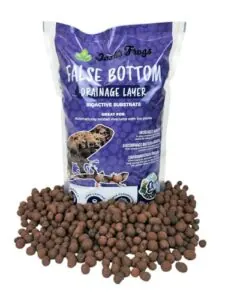
If mesh keeps particles out of BioDrain, LECA gives you the pebbles that fill it. These fired clay balls run 8-16mm, inert and pH neutral, so they won’t leach nutrients or skew your water chemistry.
They’re reusable for years since clay doesn’t break down. Rinse off dust, and porosity keeps air moving beneath your substrate, buffering humidity swings between mistings.
Never let animals contact LECA directly. Add a mesh barrier first, or you’re risking impaction.
| Best For | Keepers building bioactive or misted vivariums for tropical species like dart frogs and geckos that need a reliable humidity reservoir and drainage layer. |
|---|---|
| Material | Expanded clay (LECA) |
| Primary Use | Humidity/drainage layer |
| Reusable | Yes |
| Rinsing Required | Yes |
| Weight | 2.4 oz |
| Brand | Generic |
| Additional Features |
|
- Creates an effective drainage layer while storing excess water to boost humidity
- Lightweight, reusable for years, and pH neutral so it won’t affect water chemistry
- Environmentally friendly — can be reused in the garden once you’re done with it
- Must be separated from animals with a substrate or mesh barrier to prevent impaction
- Can’t be used alone; needs an overlying substrate to function properly
- Requires rinsing with dechlorinated water before use to clear out dust
3. Bio Dude HydroGrow Drainage Layer
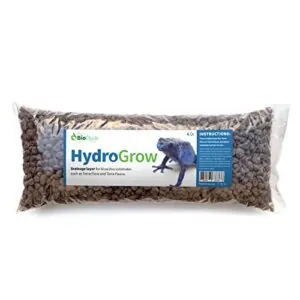
Clay balls work fine as a barrier, but The Bio Dude built HydroGrow for breeders who want organic drainage without a mesh divider at all.
This 100 percent organic layer creates a flat top surface and aerates from top to bottom, cutting anaerobic pockets that breed bacteria in gravid or nesting enclosures. It resists compaction over time, so airflow holds steady between water changes.
Replace it once saturated. Kept dry between uses, it won’t grow mold, a real advantage in humid dart frog or breeding tub setups.
| Best For | Breeders and hobbyists setting up tropical terrariums, paludariums, or dart frog enclosures who want a bioactive drainage layer without a mesh divider. |
|---|---|
| Material | Expanded clay (LECA) |
| Primary Use | Drainage layer |
| Reusable | Yes |
| Rinsing Required | Not specified |
| Weight | Not specified |
| Brand | Generic |
| Additional Features |
|
- Aerates substrate from top to bottom, reducing anaerobic pockets and bacteria buildup
- Resists compaction over time, keeping airflow steady between water changes
- Won’t grow mold when kept dry between uses, ideal for humid breeding setups
- Requires a drainage valve for optimal performance
- Not suitable for tanks with the highest water intake (use HydroGrow V1 instead)
- Capacity limited to 6 quarts, which may not fit larger terrarium designs
4. Hydroton Expanded Clay Pebbles
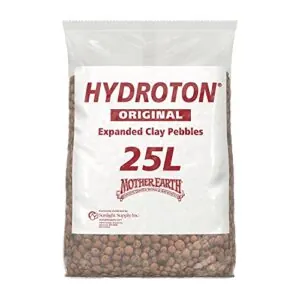
Made in Germany, Hydroton’s kiln-fired pebbles run 8–16mm and stay pH neutral, so they won’t leach into your water column. The semi-porous structure holds moisture in its air pockets while still draining freely, which prevents anaerobic zones from forming under humid nesting layers.
Rinse thoroughly before first use to clear clay dust, and sanitize with heat or hydrogen peroxide between breeding cycles. They’re reusable for years if you avoid contamination.
| Best For | Hydroponic and aquaponic growers, orchid keepers, and reptile owners looking for a reusable, low-maintenance substrate for drainage and aeration. |
|---|---|
| Material | Expanded clay (LECA) |
| Primary Use | Drainage/aeration layer |
| Reusable | Yes |
| Rinsing Required | Yes |
| Weight | 21 kg |
| Brand | Generic |
| Additional Features |
|
- Provides excellent drainage and aeration for plant roots and bioactive setups
- Reusable after cleaning, cutting down on long-term cost and waste
- Semi-porous, kiln-fired clay structure offers balanced moisture retention without waterlogging
- Must be rinsed thoroughly before use to remove clay dust and avoid sludge
- Can develop algae if kept moist under light, requiring water level monitoring
- Contains no nutrients, so fertilizer must be added separately
5. Zoo Med Naturalistic Terrarium Mesh
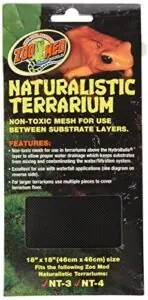
A physical barrier beats guesswork every time, and that’s the appeal here. This nontoxic black mesh sits between substrate and drainage layer, sized to fit NT1 and NT2 tanks (12×12 or 18×18 inches for larger builds). It stops fine particles from clogging your water column while letting roots grow through for stability in bioactive setups.
If you’re still deciding what goes above this barrier, this guide on choosing safe reptile tank substrates breaks down which materials actually work well in bioactive setups.
Trim it to fit custom tubs, lay flat with no creases, and expect years of reuse if you clean it between cycles.
| Best For | Reptile and amphibian keepers building bioactive terrariums in NT3 or NT4 tank sizes who want a clean, defined separation between substrate and drainage layer. |
|---|---|
| Material | Black plastic mesh |
| Primary Use | Substrate separator |
| Reusable | Yes |
| Rinsing Required | No |
| Weight | 0.04 kg |
| Brand | Zoo Med |
| Additional Features |
|
- Keeps substrate from mixing into the drainage layer, protecting water quality and filtration
- Lets plant roots grow through the mesh for a stable, natural bioactive setup
- Nontoxic black plastic construction is durable while staying lightweight at 1.41 ounces
- Very fine substrate particles can still slip through the mesh over time
- Custom or irregularly sized terrariums may require trimming to fit properly
- Costs more than generic mesh alternatives on the market
6. Medium Black Lava Rock Bag
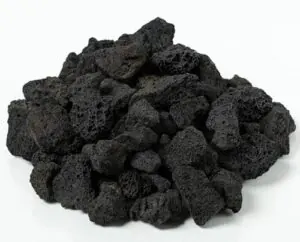
When budget matters more than fancy engineering, this is where breeders turn. Rock fragments between 1 and 4mm stay porous and lightweight, building air pockets that create microtunnels for drainage without waterlogging eggs or hatchlings.
The material’s inert, so it won’t leach odors into your rack. Rinse it, air dry it, reuse it across multiple setups. Bulk pricing beats synthetic liners hands down, and it plays well with under-tank heaters without creating hot spots.
| Best For | Homeowners and outdoor living enthusiasts who want to upgrade the look of their gas fireplace, fire pit, or fire bowl with a natural, low-maintenance decorative media. |
|---|---|
| Material | Volcanic lava rock |
| Primary Use | Fire feature media |
| Reusable | Yes |
| Rinsing Required | No |
| Weight | 10 lb |
| Brand | Generic |
| Additional Features |
|
- Creates even heat distribution and better flame presentation thanks to its porous structure
- Withstands repeated high-temperature cycles without melting or breaking down
- Produces less soot and ash than synthetic fire glass or ceramic media, meaning less cleanup
- Only works with gas-fueled fire features, so it’s not an option for wood-burning setups
- Rocks can shift or settle over time, requiring occasional repositioning for proper airflow
- Some dust comes off the rocks, so gloves are recommended during handling
7. Zilla Reptile Terrarium Bedding
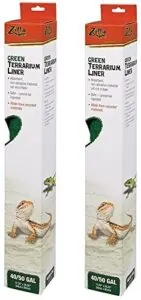
Green or brown, this liner skips the loose-substrate game entirely. It’s cut to size, rinsed with cold water, and rolled out flat, no waterlogged bedding to babysit between clutches.
The biodegradable enzyme treatment knocks down odor without you scrubbing daily, and the surface won’t tear under normal foot traffic. For hatchling tubs where ingestion risk runs high, that’s a real safety edge, though it won’t suit species needing depth for burrowing or nesting.
| Best For | This liner is best suited for bearded dragon owners, python keepers, and reptile rehabbers who want an easy-clean, odor-controlling bedding alternative for tanks up to 50 gallons. |
|---|---|
| Material | Enzyme-treated fabric |
| Primary Use | Reptile carpet substrate |
| Reusable | Yes |
| Rinsing Required | No |
| Weight | 7.04 oz |
| Brand | Generic |
| Additional Features |
|
- Biodegradable enzyme treatment actively fights odor without daily scrubbing
- Soft, non-abrasive surface is gentle on reptile skin and holds up under normal foot traffic
- Machine washable and reusable, cutting down on maintenance time and mess
- Not a true substrate, so it won’t support burrowing or nesting species
- Sized for tanks up to 50 gallons, which may be too large for smaller enclosures
- Needs periodic replacement once heavily soiled to keep odor control effective
How Breeder Substrates Compare
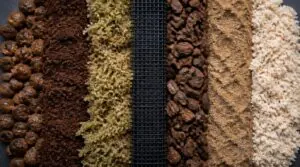
Picking the right substrate isn’t just about what looks good in a tub, it’s about what actually works for your setup. Drainage layers, mesh systems, and bedding materials each solve different problems, and none of them do the same job. Here’s how these seven options stack up against each other where it counts.
If you’re setting up multiple enclosures on a budget, classroom-friendly substrate liners offer an easy, low-mess option for educators managing several tanks at once.
Product Type and Purpose
Not every liner does the same job. Drainage products like BioDrain and LECA pebbles channel moisture away from the surface, while absorbent paper options (paper towels, commercial paper-based liners) soak up waste directly.
- Drainage layers: moisture control beneath substrate
- Absorbent paper: direct waste absorption
- Mesh liners: barrier against migration
- Reusable liners: cleaned between cycles
- Bedding mixes: comfort plus moisture management
Absorbency and Odor Control
How much moisture can a liner actually handle before it turns into a bacterial breeding ground? Absorbency capacity, measured in grams absorbed per square meter, tells you fast.
Look for dust-free, nontoxic materials with high moisture vapor transmission, since surface dryness prevents fungal growth and keeps enclosures genuinely odor-controlling.
Odor-neutralizing agents target ammonia and volatile sulfur compounds directly, not just mask them.
Cleaning and Reusability
Can a liner survive dozens of cage cleaning cycles without breaking down? That’s the real test.
Rinse thoroughly, use a bleach free disinfectant, and dry completely before reuse, since trapped moisture invites bacterial growth. Inspect for tears each cycle.
Woven mesh options prove genuinely easy to clean and low-maintenance, but liner lifespan varies, so keep a spare liner rotation ready for busy racks.
Heating System Compatibility
A spare liner rotation means nothing if heat mats scorch it. Check compatibility before installing substrate liners over any heat mat, since thermostat calibration keeps output steady.
Woven mesh works with radiant panel placement fine, but dense liners trap warmth, throwing off your breeding cage substrate readings.
Use heat mat insulation and dual stage control for energy efficiency gains, LOWMAINTENANCE and safe.
Bulk Cost and Value
Getting heating right protects your investment, and buying smart protects your wallet. Bulk purchase savings hit 15-35% on pallet orders, plus shipping cost reduction as freight drops per pound.
- Inventory financing improves when staggered with breeding cycles
- Durability longevity cuts replacement costs over time
- Reusability benefits favor budgetfriendly, LOWMAINTENANCE, ODORREDUCING substrate liners
Smart breeding cage substrate buying pays for itself within a season.
Choosing Liners for Breeding Snakes

Not every snake in your collection needs the same liner, and treating them like they do sets you up for problems down the road. Your species, your setup, and your breeding goals all change what "safe" actually looks like. Here’s what to weigh before you commit to a product.
Species and Life Stage
No two clutches want the same setup. Desert species need dry, absorbent liners that block moisture buildup and scale rot, while tropical species demand 60-80% humidity retention for proper shedding. Hatchlings need levels 10-15% higher than adults; juveniles need 3+ inches of burrowing depth. Adults tolerate firmer, low-maintenance substrate liners. For desert setups, options like reptile sand for burrowing offer excellent heat conduction while supporting natural digging behavior.
| Life Stage | Substrate Priority |
|---|---|
| Hatchling | High moisture, gentle texture |
| Juvenile | Burrowing depth, aeration |
| Adult | Easy-clean, low ingestion risk |
| Gravid female | Moisture, digging room |
| Desert adult | Dry, non-absorbent |
Racks Versus Terrariums
Once life stage is sorted, housing style decides your liner game. Racks stack tubs for energy efficiency, using shared heating with minimal vertical space. Terrariums prioritize behavioral enrichment and vertical space utilization but need localized heat shielding.
Maintenance frequency differs too: racks favor disposable cage liners, while bioactive terrariums support reusable, biodegradable terrarium liners like Zilla.
Egg-laying and Birthing Needs
Gravid females need a different setup entirely. Nest Box Design matters most here: a secure, private space with paper towels, CareFresh, or Yesterday’s News keeps eggs clean and dry.
- Stable humidity prevents desiccation
- Firm, level substrate avoids cracked shells
- Undisturbed placement reduces breeder stress
Temperature Control and Breeder Nutrition round out the equation for consistent, healthy clutches.
Quarantine Health Monitoring
New arrivals need liners built for watching, not hiding. Plain paper towels or newsprint expose stool color and consistency instantly, backing your Health Observation Protocol during the full 60 to 90-day window.
Swap substrate weekly, log changes daily, and keep gloves and tools quarantine-only. That’s biosecurity gear management in action, and it’s what catches trouble before it spreads.
Ingestion and Snag Risks
Snakes explore with their tongues and mouths, so anything loose becomes a candidate for a swallow. Watch for:
- Bead ingestion mistaken for prey
- Snagged jaws on rough liner edges
- Fiber ingestion during shedding
- Dust inhalation from crumbling substrate
Skip corn cob, scented paper, and toxic wood shavings. Choose nonabrasive liners with a solid grate underneath.
Installing Substrate Liners Safely
Picking the right liner is only half the job; a sloppy install can undo all that careful selection. Gaps around vents, uneven seams, or a mismeasured tub create weak points where heat escapes and moisture collects. Here’s how to get the installation right, step by step.
A sloppy install can undo all the careful work of choosing the right liner
Measure Tubs Before Cutting
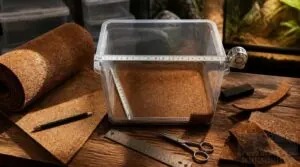
A sloppy cut ruins a liner before it ever hits the tub. Measure length, width, and height at three points each, since tubs taper more than you’d expect. Subtract hinge or lip allowances first, then mark with a fine pencil.
Accurate measurements prevent overflow and wasted terrarium liner, and double-checking before cutting saves you from redoing the whole reptile tank liner.
Protect Vents and Heaters

A liner draped over a heater is a fire waiting to happen. Keep Vent Clearance at 1.5 inches minimum, install a Heater Guard above cords, and route wiring away from moisture.
- Melted liners
- Blocked airflow
- Corroded probes
- Hotspots
- Fire risk
Use Temperature Probes near vents and heaters to confirm safe Airflow Management.
Flatten Edges and Seams
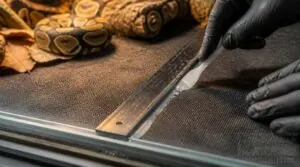
A rough seam is where snakes snag scales, so run Edge Smoothing Methods first, light sanding, soft cloth pass.
Apply Seam Gap Sealing with food-grade silicone for Material Edge Compatibility, wiping excess before curing.
Use Cutting Precision Techniques with a straightedge for flush joins.
Log findings under Maintenance Inspection Protocols, checking daily like you’d paper towel layering in smaller enclosures.
Separate Drainage From Flooring
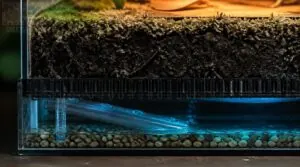
Once seams sit flush, look underneath. A false bottom with mesh separator (Exo Terra BioDrain, Zoo Med Terrarium Substrate Mesh) keeps Water Flow Separation from soaking flooring below.
Route drainage pipes with a slight gradient, match Floor Grate Spacing to prevent foot-catch, and confirm Ventilation fit and Material Compatibility so moisture never wicks upward into the drainage layer.
Test Temperatures After Installation

Drainage sorted, now check heat. Set a thermometer humidity gauge on the liner, take your initial temperature reading, then log again at 15 and 30 minutes for a temperature stability check.
- Place probes in opposite corners for zone variation analysis
- Target 28-32°C depending on species
- Review daily logs for drift
Cleaning and Replacement Schedules
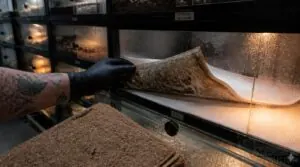
A liner only earns its keep if you replace it on schedule, not just when it looks bad. Waste, humidity, and bacteria build up faster than most breeders expect, especially across multiple racks. Here’s how to keep your cleaning routine tight and your enclosures healthy.
Perform Daily Spot Checks
Every morning, walk each tub before coffee even finishes brewing. Run a quick Moisture Level Inspection, sniff for your Odor Detection Protocol, and eyeball any Substrate Clump Check.
| Check | Tool | Flag |
|---|---|---|
| Temperature | IR thermometer | 2°F drift |
| Humidity | Hygrometer | Mid-tub reading |
| Mold Spot Monitoring | Visual scan | White/green colonies |
Consistent habitat hygiene catches trouble before a soiled liner becomes a real problem.
Replace Damp Soiled Liners
Once dampness shows up, move fast. Damp Liner Removal stops odor, bacterial spread, and hidden wet pockets. Pull the soiled liner, use paper towels on residue, then follow basic Enclosure Sanitizing and Liner Drying Tips before adding dry, absorbent layering or commercial paperbased liners. That rhythm drives Moisture Prevention and Mold Growth Prevention, especially in breeding tubs under steady heat.
Disinfect Between Breeding Pairs
Swap breeding pairs and you introduce new bacterial risks.
Clear debris first, then disinfect with a reptile-safe product, honoring Contact Time Guidelines (5-10 minutes) and Residue Rinsing Procedures. Run Material Compatibility Checks against EVA or silicone liners, verify Odor Reduction Verification afterward, and keep Log Tracking Disinfection current. Dry thoroughly, then change substrate using paper towels or newspaper layering for solid cage hygiene.
Maintain Spare Liner Sets
A smart breeder keeps three spare sets ready per rack, with Spare liner storage in cabinets, Labeling liners by enclosure ID, and Fit testing before stocking.
Build a Rotation schedule quarterly, match Cage liners to heat and seam tolerances, and set Reorder alerts.
Even cage liners, Terrarium Liner, easy clean reptile carpet, and layering fail if spares are mismatched.
Monitor Odors and Mold
Often, odor tells you trouble is building before stains appear.
Use Humidity Monitoring, VOC Detection, Odor Scoring, and Airflow Assessment weekly, especially with odorcontrolling, absorbent, dustfree liners and layering systems.
Keep humidity under 60 percent, dry damp areas within 24 hours, and change substrate fast when musty smells rise, because Mold Prevention starts before growth becomes visible in racks.
Best Options by Breeding Setup
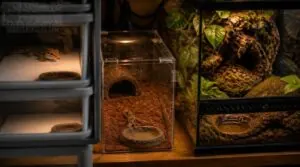
The right liner depends on how the enclosure is used, not just what it costs or how it looks. A rack tub, a hatchling setup, and a planted breeding terrarium each call for a different kind of floor layer. The options below show which liner types make the most sense for each breeding setup.
High-volume Rack Systems
High-volume racks run like assembly lines, so your liner choice must stay dustfree, fast, and cheap to replace.
- paper towels for quick checks
- newspaper for bulk coverage
- Yesterdays News for odor control
- brown kraft paper for roll cutting
- Cable Routing Channels clear
Respect Load Capacity Limits, use Shelf Adjustability Features, trust Interlocking Frame Design, and spread weight evenly across bays daily.
Hatchling and Juvenile Tubs
A hatchling’s whole world fits in 2 to 4 liters. Tub size selection matters: shallow, clear-walled tubs limit climbing risk and let you monitor molts and hydration daily.
Set your heat gradient setup at 28-30°C for two weeks, mat covering under 60% of the floor. For liner material choice, pick sterilizable, tear-resistant options like Zilla Terrarium Liner over paper liner alternatives.
Gravid Female Enclosures
A gravid female needs room to grow, not roam. Size her space at 24x18x12 inches, keep the temperature gradient at 26-30°C, and hold humidity between 70-85%.
Place the nest box in a quiet corner. Line the floor with absorbent paper towels or brown kraft paper for easy monitoring, and feed smaller, more frequent meals.
Quarantine and Hospital Setups
Nesting boxes are one thing, but a sick new arrival calls for a different plan entirely.
Quarantine enclosures stay bare: paper towels or newspaper, a dedicated hide, dedicated tools. Isolate ventilation from your main room, run fecal checks every four weeks, and log gait, appetite, and droppings daily. Hospital cages need daily flooring changes and disinfected grates between uses.
Bioactive Breeding Terrariums
Quarantine calls for bare tubs, but long-term breeding pairs thrive in bioactive terrariums.
Layer a drainage layer (Exo Terra BioDrain or Josh’s Frogs False Bottom) beneath a false bottom, then organic substrate. Add springtails and isopods for microfauna balance, choose low-light plants for humidity control, and track breeding cycles against seasonal misting adjustments.
Frequently Asked Questions (FAQs)
Can substrate liners be used with UVB lighting?
Think of a greenhouse roof panel: clear glass lets sunlight through, frosted glass dims it. Terrarium liners work the same way.
Thin, UVB transparent materials like PVC under 2mm maintain solid UVB transmission rates, while thick natural fiber liners block much of it.
Do liners work for arboreal or climbing breeder species?
Yes, with caveats. Non-ingestible design protects climbers, but smooth liners lack traction. Run surface grip testing first, add cork or coconut matting, and secure branches through mesh for real climbing structure setup.
How do liners affect enclosure humidity levels overall?
Porosity dictates everything. Sponge-like liners raise RH by 8 points in small tubs, moist moss holds 55-65% RH stability, while clay or low-porosity coatings dampen swings, keeping daily drainage-driven fluctuation under 6 percent.
Are liners safe for venomous snake breeding setups?
Only if they pass material toxicity testing and offer solid moisture barrier performance. A Zilla Terrarium Liner provides snake scale compatibility and easy disinfection, meeting regulatory compliance standards for safe, nontoxic bedding in venomous enclosures.
Can multiple liner types be combined in one enclosure?
Like puzzle pieces built for different jobs, liners combine well when each zone earns its place. Use a moisture barrier between a drainage layer and dry mesh separator to prevent cross contamination.
Conclusion
An ounce of prevention beats a pound of cure, and nowhere does that ring truer than in a humid rack room at midnight.
The best substrate liners for breeders won’t fix a sloppy routine, but they’ll buy you critical time when moisture spikes and a clutch hangs in the balance.
Match the liner to your setup, install it correctly, then inspect daily.
That habit, not the label, keeps hatchlings safe.