This site is supported by our readers. We may earn a commission, at no cost to you, if you purchase through links.
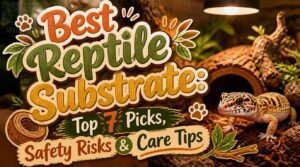
Grab the wrong bag of bedding, and you could send your gecko into emergency surgery. Impaction from loose substrate sends more reptiles to the vet than almost any other husbandry mistake, and it’s entirely preventable. Cedar shavings look cozy in a pet store display, but they release fumes that quietly damage your reptile’s liver over time.
Substrate isn’t just the stuff lining the tank floor, it’s the foundation your reptile’s health, humidity, and natural behaviors depend on. Choosing the best reptile substrate means matching material to species, moisture needs, and how your animal actually lives in the wild.
Get it right, and you’ll spend less time troubleshooting mold or dehydration and more time watching your reptile thrive.
Table Of Contents
- Key Takeaways
- Top 7 Reptile Substrate Products Reviewed
- How to Choose Reptile Substrate
- Best Reptile Substrate by Habitat
- Reptile Substrate Safety Risks
- Cleaning and Bioactive Substrate Care
- Frequently Asked Questions (FAQs)
- What to put in the bottom of a reptile tank?
- What not to use for snake bedding?
- What is the best substrate to use for snakes?
- What is the best soil mix for reptiles?
- What is reptile substrate?
- How do you choose a substrate for a reptile?
- Is reptibark a good substrate?
- What is the best substrate for a terrarium?
- Is wood a good substrate for a reptile?
- Is coconut chip a good substrate for reptiles?
- Conclusion
Key Takeaways
- Loose substrate impaction sends more reptiles to the vet than almost any other husbandry mistake, so match particle size and depth to your species instead of guessing.
- Skip cedar and pine shavings entirely, since they release fumes and resin that quietly damage your reptile’s liver, skin, and lungs over time.
- Match substrate to habitat and behavior: dry sand-soil blends for desert diggers, coconut coir or sphagnum moss for tropical humidity lovers, and plain paper towels for hatchlings and quarantine setups.
- Prevent mold and bacteria with a proper drainage layer, daily spot-cleaning, and a full substrate swap on a schedule that fits your enclosure’s humidity level.
Top 7 Reptile Substrate Products Reviewed
Picking the right substrate shouldn’t feel like guesswork, especially with so many bags and blocks lining pet store shelves.
Knowing which options are safe versus risky makes all the difference, and this guide to the best bedding for boa constrictors breaks down what actually works.
Some products earn their reputation through years of keeper trust, while others solve one specific problem better than the rest.
Here’s a rundown of seven substrates worth knowing before you fill that tank.
1. Reptile Soil Substrate for Terrariums
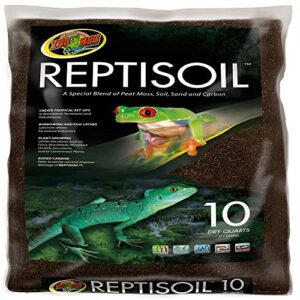
Soil is where terrarium life actually happens, not just where waste lands.
Zoo Med’s ReptiSoil blends peat moss, sand, and coconut carbon, giving tropical lizards, amphibians, and even box turtles a base built for burrowing and egg-laying.
That carbon content helps neutralize odors while supporting bacteria your bioactive setup relies on. It clumps when wet, so spot-cleaning stays simple.
Expect occasional dust or a musty smell on opening, and don’t be surprised if a bag holds stray woodchips. Larger enclosures often need several bags, and humid environments suit it best, arid setups require modification.
| Best For | ReptiSoil is best for keepers of tropical lizards, amphibians, box turtles, and invertebrates who want a bioactive substrate that supports burrowing, egg-laying, and healthy plant growth. |
|---|---|
| Material Type | Peat/Sand/Coconut Carbon |
| Moisture Retention | High |
| Odor Control | Yes |
| Reusable | No |
| Ideal Humidity Setup | Humid |
| Brand | Zoo Med |
| Additional Features |
|
- Coconut carbon content helps control odor and supports beneficial bacteria colonization
- Blend of peat moss, soil, and sand allows natural burrowing and egg-laying behavior
- Retains moisture well, making it ideal for humid and tropical terrarium setups
- May release some dust and a musty smell when the bag is first opened
- Some bags may contain occasional large woodchips
- Not well suited for arid setups unless modified
2. Reptile terrarium bedding substrate liner
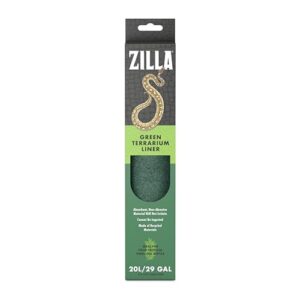
Not every reptile needs dirt underfoot, and that’s exactly where liners earn their keep.
Zilla’s Reptile Terrarium Liner swaps loose particles for a rinse-and-reuse mat made of polyethylene and polypropylene, so accidental ingestion isn’t a worry during feeding.
The enzyme treatment cuts down on lingering odors between washes, and that non-abrasive texture keeps delicate bellies from getting scraped. Cold water and a quick scrub handle most cleanup; tougher, hardened waste takes more effort.
At 2.6 x 13.3 x 2.5 inches, it’s easy to trim for odd tank dimensions.
Burrowers won’t get much use from a flat surface like this, but for bearded dragons or leopard geckos, it’s a low-risk starting point.
| Best For | Beginner reptile owners with juvenile bearded dragons, ball pythons, or leopard geckos who want simple, reusable bedding without the mess of loose substrate. |
|---|---|
| Material Type | Polyethylene/Polypropylene |
| Moisture Retention | None |
| Odor Control | Yes |
| Reusable | Yes |
| Ideal Humidity Setup | Any |
| Brand | Zilla |
| Additional Features |
|
- Rinses clean with cold water for easy, repeated reuse
- Enzyme treatment helps keep odors under control between washes
- Non-abrasive, non-ingestible surface keeps feeding time safe and comfortable
- Not suitable for burrowing species or those needing deep substrate
- Reptiles may crawl underneath if the liner isn’t secured at the edges
- Hardened waste can require extra scrubbing to fully remove
3. Forest Floor Animal Bedding Substrate
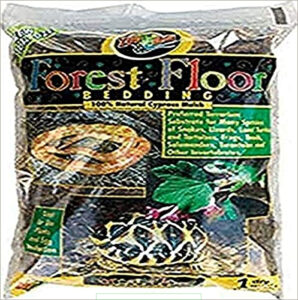
Liners work great for flat-floor species, but anyone keeping tropical snakes or amphibians needs something with real moisture-holding power.
Forest Floor’s cypress mulch bedding fits that bill. Made from 100% natural ground bark, it holds up to three times its weight in water and releases humidity gradually, which suits ball pythons, corn snakes, and other rainforest natives.
A quick daily misting keeps humidity stable for days at a stretch. Its flat, fibrous layer also stops crickets from burrowing and hiding, so feeding time stays simple.
Plan on full replacement every 3 to 6 months.
| Best For | Keepers of tropical snakes, lizards, amphibians, tortoises, and tarantulas who need steady, natural humidity control for their enclosure. |
|---|---|
| Material Type | Cypress Bark |
| Moisture Retention | High |
| Odor Control | No |
| Reusable | No |
| Ideal Humidity Setup | Humid |
| Brand | Forest Floor |
| Additional Features |
|
- Natural cypress mulch holds moisture well and releases humidity gradually for consistent tropical conditions
- Versatile enough for a wide range of species, from snakes and lizards to amphibians and invertebrates
- Flat, fibrous texture gives that natural forest floor look while keeping feeder insects from burrowing out of sight
- Requires regular moisture monitoring to keep humidity levels where they need to be
- Best suited to species with specific humidity needs, so it’s not a one-size-fits-all bedding
- Needs full replacement every 3 to 6 months, adding to ongoing upkeep
4. Alfalfa Meal Reptile Bedding Supply
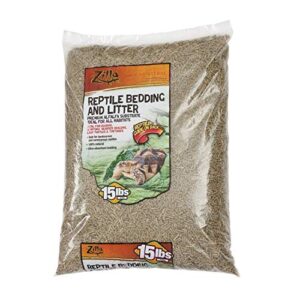
Cypress mulch controls moisture well, but tortoise and iguana owners need something dry that doubles as dinner. That’s where Zilla’s alfalfa meal bedding comes in.
Made from 100% natural alfalfa pellets, this 15-pound bag is genuinely safe if your reptile nibbles on it, since the material is biodegradable and digestible rather than a impaction risk. It clumps when wet, so spot-cleaning takes seconds, and a built-in bacteriostatic agent helps knock down odors.
Keep water bowls off the substrate, though. Moisture triggers mold fast, and the natural alfalfa smell can turn strong in tight enclosures.
| Best For | Tortoise and iguana owners who want a dry, digestible substrate that’s safe even if their reptile takes a nibble. |
|---|---|
| Material Type | Alfalfa Pellets |
| Moisture Retention | Low |
| Odor Control | Yes |
| Reusable | No |
| Ideal Humidity Setup | Arid |
| Brand | Zilla |
| Additional Features |
|
- Safe to ingest, made from 100% natural alfalfa with no impaction risk
- Bacteriostatic agent helps keep odors under control
- Clumps when wet for quick, easy spot-cleaning
- Prone to mold and sogginess if it gets damp
- Strong alfalfa smell can be overwhelming in enclosed spaces
- Not ideal as a sole substrate; often needs mixing with something like Eco Earth
5. Reptile Terrarium Sphagnum Moss Bedding
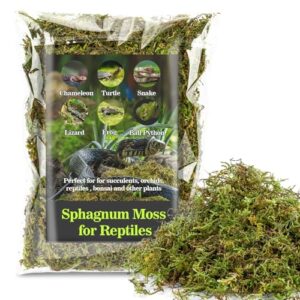
For humidity-hungry species, nothing beats sphagnum moss as a top-layer bedding option. It holds up to 20 times its dry weight in water, releasing moisture gradually instead of drying out in a day like some substrates do.
That’s why it’s a go-to for tropical snakes, frogs, and geckos heading into shed cycles. Line a humid hide with it, or tuck a damp handful into an egg-laying container, and you’ve got a stable microclimate without constant misting.
Don’t treat it as your only substrate, though. Sphagnum moss works best mixed with soil, sand, or bark, since it compacts over time and needs fluffing to fend off mold. Keep it moist, not soggy, and swap it out once it looks tired or soiled.
| Best For | Keepers of humidity-loving reptiles and amphibians—like tropical snakes, frogs, and geckos—who need a reliable way to keep hides, shedding areas, or egg-laying spots consistently moist. |
|---|---|
| Material Type | Sphagnum Moss |
| Moisture Retention | Very High |
| Odor Control | No |
| Reusable | No |
| Ideal Humidity Setup | Humid |
| Brand | Generic |
| Additional Features |
|
- Holds up to 20 times its dry weight in water, releasing moisture slowly for stable humidity
- Soft, natural texture supports burrowing, hiding, nesting, and shedding
- Versatile enough for use in humid hides, egg-laying containers, or even plant cultivation
- Not a standalone substrate—needs to be mixed with soil, sand, or gravel
- Compacts over time and requires regular fluffing to stay effective
- Needs consistent upkeep to stay moist without becoming soggy or moldy
6. Reptile hideout and climbing bridge
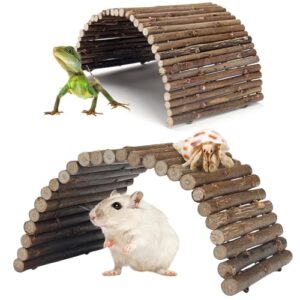
Vertical space matters just as much as floor space, and that’s where QUOZUO’s apple wood bridges earn their spot. Each set includes two 8"×4" pieces with a bendable metal wire center, so you can shape them into arches, tunnels, or ramps to fit your tank’s layout.
Beyond climbing enrichment, these double as hideouts, giving skittish reptiles a place to retreat and feel enclosed. Watch for surface mold in humid setups, and expect a strong wood scent at first. Wipe down regularly and reshape the wire as needed, since it can loosen its hold over time with repeated bending.
| Best For | Reptile and small pet owners looking for a natural, versatile piece of habitat enrichment that works as a climbing bridge, tunnel, or hideout. |
|---|---|
| Material Type | Apple Wood |
| Moisture Retention | Moderate |
| Odor Control | No |
| Reusable | Yes |
| Ideal Humidity Setup | Humid |
| Brand | QUOZUO |
| Additional Features |
|
- Bendable wire core lets you customize the shape into arches, ramps, or tunnels to fit your enclosure
- Doubles as both a climbing structure and a secure hiding spot for reducing stress
- Made from natural apple wood, giving a more authentic look and feel than synthetic decor
- Can develop surface mold in humid tanks, requiring regular cleaning
- Strong natural wood odor at first, which may bother sensitive owners
- Wire may lose its shape retention over time with repeated bending
7. Coconut fiber reptile substrate blocks
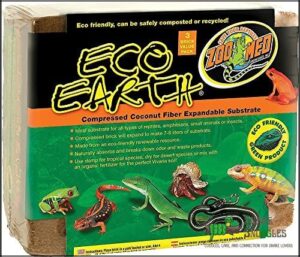
When rounding out your substrate lineup, Zoo Med’s coconut fiber blocks deserve a spot on the shelf. Each compressed brick weighs 3.9 pounds but expands to 7-9 liters once soaked, giving you a huge yield from a small package.
Made entirely from coconut husk pith with no dyes or additives, the fibers stay soft against reptile skin and hold up to 10 times their weight in water. That means steady humidity for tropical species and safer digging for burrowers.
Prep is messy, expect gnats if you oversaturate without stirring, but the payoff is a natural, odor-controlling substrate that outperforms sand for long-term tropical setups.
| Best For | reptile, amphibian, and small animal owners who want a natural, humidity-friendly substrate for tropical or burrowing setups. |
|---|---|
| Material Type | Coconut Husk |
| Moisture Retention | High |
| Odor Control | Yes |
| Reusable | No |
| Ideal Humidity Setup | Humid |
| Brand | Zoo Med |
| Additional Features |
|
- Expands from a compact 3.9-pound brick into 7–8 liters of usable substrate
- Naturally helps absorb odor and waste for a cleaner terrarium
- Great for burrowing species and maintaining humid, naturalistic environments
- Needs to be manually hydrated and broken apart before use
- Can attract gnats if it stays too wet without regular stirring
- Prep process can be messy, involving water and hand-mixing
How to Choose Reptile Substrate
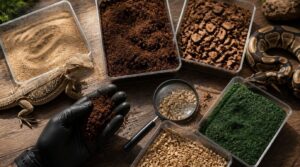
Picking the right substrate isn’t just about looks, it comes down to matching material to your reptile’s real needs. Species, life stage, and enclosure setup all play a role in what works best, and skipping this step often leads to costly do-overs. Here’s what to weigh before you commit to a bag.
Species and Life Stage
Your gecko isn’t your snake, and your hatchling isn’t your adult, so substrate choice starts with knowing exactly who’s living in the tank.
- Desert species hatchlings need paper towel liners, not sand
- Tropical juveniles needs call for coco coir humidity support
- Arboreal adult care favors bark chips over loose fill
- Burrowing breeding females require deeper soil for nesting
Humidity and Moisture Needs
Get the moisture math wrong and you’ll fight mold for months. Track relative humidity with a hygrometer, not guesswork, since warm air holds more vapor than cool air.
Coconut coir and sphagnum moss support substrate moisture retention for tropical reptiles, holding up to 20 times their dry weight. Balance ventilation to avoid condensation soaking your setup.
Burrowing and Natural Behaviors
Watch a leopard gecko dig and you’ll see instinct at work, not random scratching. Reptiles push soil backward with snouts and forelimbs, favoring loose dirt over compacted ground.
Match substrate depth and texture to species needs:
- Loose sand for shallow scrapes
- Friable dirt for tunnel systems
- Leaf litter for scent-driven digging
- Deep mix for thermal retreats
- Soft topsoil for nesting
Heat Retention and Enclosure Type
Digging instincts only matter if the enclosure holds its warmth. Heat retention enclosure design depends on enclosure type: solid walls with real thermal mass beat screen lids, which vent heat fast.
| Enclosure Type | Heat Retention |
|---|---|
| Glass terrarium (covered) | Moderate-high |
| Screen lid, open-top | Low |
| Solid PVC/wood | High |
Desert species need a stable temperature gradient, not drafts.
Cost, Longevity, and Appearance
Once your enclosure holds heat properly, budget becomes the next variable. Coconut fiber runs $1.85 per liter and lasts 12 months, beating reptile soil’s $2.60 per liter and 9-month lifespan. Sphagnum moss costs more upfront but needs replacing every 6 weeks. Bulk bags cut costs 13-33%.
Color options range from earthy browns to alfalfa’s pale green—appearance matters less than safety and longevity.
Best Reptile Substrate by Habitat
Every reptile’s enclosure has its own rules, and matching substrate to habitat is where real husbandry skill shows. What works for a desert-dwelling gecko will fail miserably in a humid rainforest tank, and vice versa. Here’s how substrate needs shift across five common setups, from arid terrariums to hatchling quarantine bins.
Arid and Desert Enclosures
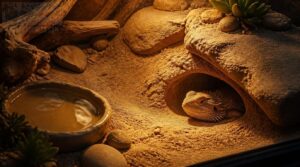
Because desert-dwelling reptiles evolved to dig, your substrate depth should hit 5 cm minimum for proper burrowing behavior support.
Use sandy-soil blends with some clay for firmer tunnels, keep humidity below 50%, and rely on a water dish instead of misting.
Build a strong heat gradient control setup with basking light and stable hardscape—rocks won’t shift when reptiles dig beneath them.
For arid enclosures, aspen substrate is a safe and natural option that helps burrowing without impaction risk. Aspen substrate benefits
Tropical and Rainforest Enclosures
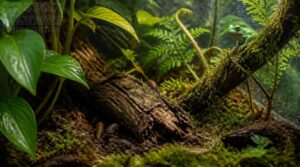
Swap that dry desert setup for something closer to a steamy jungle floor, since tropical and rainforest reptiles thrive at 60–90% humidity.
Mix coconut coir with organic topsoil, orchid bark, and sphagnum moss bedding for moisture retention.
- Coconut coir
- Sphagnum moss
- Drainage layer
- Live plants
- Cleanup crew
Bioactive substrates with springtails and isopods, plus drainage layers, keep humidity stable without waterlogging.
Burrowing Reptile Enclosures
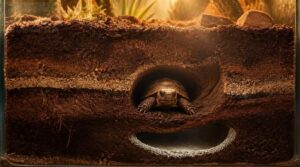
Because tunneling species dig deep to escape heat, give them substrate depth matching 1.5 times their snout-vent length, up to 12–18 inches for tortoises.
| Species | Depth | Moisture |
|---|---|---|
| Desert tortoise | 12 in | 15–20% |
| Spurred tortoise | 18 in | 15–25% |
| Burrowing skink | 6 in | 15–25% |
A ventilation shaft ending 2–3 inches below ground, plus a 5°F gradient per foot, prevents collapse and impaction.
Arboreal Reptile Enclosures
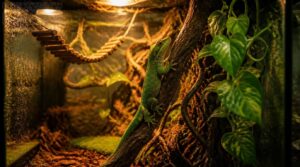
Height beats floor space here. A 48x24x48-inch reptile terrarium gives arboreal reptiles vertical room for secure climbing structures—branches, vines, bridges—without crowding.
Balance ventilation with humidity control: screen tops prevent lingering condensation while misting keeps moisture stable. Mount UVB and heat overhead near perches for proper thermal gradients. On substrate safety, reptile carpet or bark chips below climbing zones prevent slips in this naturalistic setup.
Hatchling and Quarantine Setups
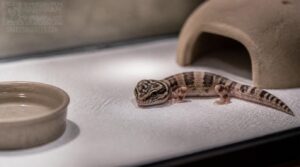
For hatchlings and quarantine setups, plain white paper towels win every time, no exceptions. They make daily health observation logs simple, spotting parasites fast.
- Fragile new life deserving extra care
- Peace of mind through visible waste
- Protection from painful impaction risk
Swap substrate daily, keep enclosures isolated, and skip loose bedding entirely until quarantine ends.
Reptile Substrate Safety Risks
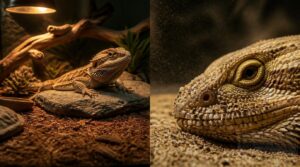
Not every substrate that looks natural is actually safe, and some popular choices send reptiles to the vet more often than you’d think.
Impaction, toxic fumes, and bacterial buildup can turn a cozy enclosure into a health hazard fast.
Here’s what to watch for, and which materials deserve a permanent spot on your avoid list.
Loose Substrate and Impaction
A stray grain of sand seems harmless, until dozens accumulate into a blockage. Particle size safety matters most: anything smaller than your reptile’s mouth risks impaction, especially in juveniles.
Watch for reduced appetite, straining, or a firm belly. Prevention beats treatment, so feed on clean surfaces, keep temperatures ideal for digestion, and monitor droppings closely for early impaction signs.
Toxic Woods and Dyed Bedding
That pretty pink bedding at the pet store? It can poison your reptile slowly. Cedar toxicity damages the liver, while pine releases resin fumes irritating skin and lungs.
That pretty pink bedding can poison your reptile slowly, as cedar damages the liver and pine fumes irritate skin and lungs
Dyed substrates aren’t safer, either: azo dye hazards and chromium leaching cause allergic reactions and lower egg hatch rates.
Skip pine and cedar entirely, and choose undyed, natural substrate options instead.
Dust and Respiratory Irritation
Every time your reptile burrows, fine bedding kicks dust into the air it breathes for hours. Particle size drives the danger: bits under 10 micrometres lodge deep in lungs, while larger ones just irritate nasal passages.
Silica-laden sand dust causes lasting scarring. Choose low-dust substrates, watch air quality, and ditch anything powdery to cut respiratory infection risk fast.
Mold and Bacterial Growth
Dust isn’t the only invisible threat lurking in damp bedding. Mold spores germinate within 24-48 hours of moisture exposure, while bacteria activate once humidity climbs past 95%. Warm, wet substrate is basically a welcome mat for biofilm formation.
Prevent it with strict humidity control, proper drainage, and consistent substrate cleaning frequency, spot-clean daily and swap material before spores get comfortable.
Species-Specific Ingestion Risks
Mold problems affect any setup, but ingestion risk depends entirely on who’s eating.
Ground foragers face real Foraging Behavior Risk, picking up bedding while hunting.
Geophagic species show Calcium Eating Hazard, chewing mineral sand deliberately.
Hatchlings carry Juvenile Feeding Danger from sloppy strikes.
Desert dwellers and arboreal climbers each need species-specific substrate safety, since impaction risk varies wildly by habitat and habit.
Cleaning and Bioactive Substrate Care
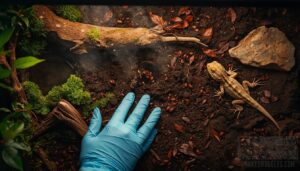
Choosing the right substrate is only half the job, keeping it clean is what actually protects your reptile’s health.
Whether you’re running a simple paper-towel setup or a full bioactive terrarium, your maintenance routine needs to match the system you’ve built.
Here’s what that upkeep looks like, from daily habits to the ratios that keep a bioactive tank thriving.
Daily Spot-Cleaning Routine
Rarely does a habit pay off faster than daily spot-cleaning, done right in minutes.
- Scoop waste with dedicated tongs or paper towel
- Check hides, corners, water bowls
- Pull damp substrate immediately, preventing bacteria
- Scan droppings for health changes
Prompt removal curbs odor, especially in heated tanks. Keep cleaning tools separate from household items, and dry each spot before it invites mold.
Full Replacement Schedules
Spot cleaning buys you time, but it can’t replace a true reset. Full replacement frequency depends on habitat: dry tanks stretch further, humid ones demand more attention.
| Enclosure Type | Replacement Frequency | Waste Buildup Indicator |
|---|---|---|
| Desert Enclosure Replacement | 6–9 months | Rare odor, dry clumping |
| Tropical Enclosure Replacement | 3–6 months | Mold, musty smell |
| Hatchling Tank Swaps | 2–4 weeks | Fast waste concentration |
| Bioactive System Longevity | Months to years | Cleanup crew activity |
Humidity and Drainage Layers
Once your substrate’s chosen, layering makes or breaks humidity control. Build a drainage layer first (expanded clay or lava rock, 1.5–2 inches), then add moisture retention on top.
- Drainage: expanded clay pellets
- Separator: geotextile fabric
- Substrate: species-appropriate mix
- Moisture layer: sphagnum moss
- Monitor: digital hygrometer
This gradient prevents waterlogging while sustaining 60–90% humidity where it counts.
Bioactive Cleanup Crew Basics
Tiny janitors do the real work in bioactive vivariums. Springtails and isopods form your main cleanup crew, eating waste, fungi, and shed skin.
| Species | Role | Microclimate |
|---|---|---|
| Springtails | Suppress mold | Warm, humid |
| Isopods | Break down waste | Damp, sheltered |
Let colonies establish before adding reptiles, population balance keeps your naturalistic terrarium substrate self-sustaining.
Safe Substrate Mixing Ratios
Getting the ratio right beats guessing every time. For burrowing species, a 40% coir, 40% soil, 20% sand mix holds tunnels without collapsing.
- Keep sand as the minority ingredient
- Maintain damp, not soggy, texture
- Separate feeding zones from loose substrate
- Skip perlite and fertilized soils
That balance gives burrow stability while limiting impaction risk during digging and feeding.
Frequently Asked Questions (FAQs)
What to put in the bottom of a reptile tank?
Match it to your reptile: a sand and soil mix for desert diggers, coconut fiber blocks or sphagnum moss for tropical humidity, reptile carpet liner for hatchlings, or slate tile basking spots for heat retention and easy cleaning.
What not to use for snake bedding?
Wouldn’t want your snake breathing in fumes, right? Skip cedar and pine shavings, loose sand, gravel, wood chips, and dyed or treated bedding — all carry impaction, respiratory, and toxic substrate risks your snake doesn’t need.
What is the best substrate to use for snakes?
No single substrate wins for every snake. Match species compatibility first: aspen suits dry-climate burrowers, coconut fiber suits humidity-lovers.
Balance ingestion risk, cost, and cleanup effort against your snake’s natural behavior for real husbandry success.
What is the best soil mix for reptiles?
There’s no single mix, since arid enclosures need topsoil-based blends with coarse sand, while tropical enclosures thrive on coco fiber, sphagnum moss, and bark for moisture retention balance—bioactive setups add drainage layers underneath.
What is reptile substrate?
Reptile substrate is the flooring material lining your terrarium’s base, its composition ranging from sand to coconut coir. Its function goes beyond looks: it regulates humidity, encourages digging behaviors, and keeps your reptile’s habitat safe and stress-free.
How do you choose a substrate for a reptile?
Picking wrong substrate is like building a house on quicksand. Start with habitat matching: desert species need dry sand-soil blends, tropical reptiles need coconut coir. Check moisture retention, burrow depth, and particle safety—avoiding impaction risk—while considering texture for behavioral enrichment.
Is reptibark a good substrate?
Yes, ReptiBark shines for tropical setups: strong Reptibark moisture retention, natural mold resistance, and safe particle size lower impaction risks.
It works well with Reptibark bioactive use, controls humidity effectively, and mimics a real forest floor beautifully.
What is the best substrate for a terrarium?
Dirt on the best pick? There’s no single "best," just the right match. Coconut coir suits humidity-loving species, reptile soil substrate works well for bioactive setups, and reptile carpet keeps things simple, safe, and impaction-free.
Moisture retention is what ties it all together — check out these tropical snake substrate options to see how each choice holds up in a high-humidity environment.
Is wood a good substrate for a reptile?
Wood works well when you pick the right type. Untreated aspen and cypress support climbing and burrowing behavior, but pine and cedar shavings release oils causing respiratory irritation, and damp wood invites mold, so monitor moisture closely.
Is coconut chip a good substrate for reptiles?
Think of a rainforest floor after rain, spongy and damp underfoot. That’s coconut chip, simply put: excellent moisture retention for tropical species, coarse enough to lower impaction risks, and reliable for bioactive setups needing steady humidity control.
Conclusion
A million bags of the wrong bedding won’t kill your gecko as fast as one impaction will. That’s the truth breeders learn the hard way.
The best reptile substrate isn’t the prettiest bag on the shelf, it’s the one matching your species’ humidity, digging habits, and risk tolerance. Match material to biology, and mold, dehydration, and blockages become rare problems, not routine ones.
Your reptile’s enclosure floor is where health quietly begins.