This site is supported by our readers. We may earn a commission, at no cost to you, if you purchase through links.

A branch that snaps under a bearded dragon’s weight doesn’t just ruin a basking spot, it sends an animal crashing into glass, substrate, or worse. Most keepers grab whatever driftwood looks nice at the pet store without checking diameter, moisture content, or how the wood grips daily misting. That gap between "looks good" and "holds up" is where enclosures fail.
Choosing climbing branches for bioactive enclosures means matching material to species, humidity, and load, not just aesthetics. Cork bark shrugs off water while ghost wood rots past 12% moisture. Get the ratings wrong and you’re replacing hardware in six months.
What follows breaks down which branches actually earn their place in a working vivarium.
Table Of Contents
- Key Takeaways
- Top 10 Climbing Branches for Bioactive Enclosures
- 1. Apatal Natural Reptile Climbing Branch
- 2. Fhiny Resin Reptile Climbing Branches
- 3. Natural Reptile Climbing Branches
- 4. Natural Cork Reptile Climbing Branches
- 5. Natural Reptile Climbing Wood Branches
- 6. Resin Reptile Climbing Branch With Hideout Cave
- 7. Exo Terra Forest Branch Small Natural Wood
- 8. Natural Reptile Wood Climbing Branches
- 9. Natural Vine Branch Terrarium Decor for Reptiles
- 10. Resin Reptile Corner Climbing Branch
- Choosing Safe Bioactive Climbing Branches
- Best Branch Materials by Humidity
- Building a Stable Climbing Framework
- Positioning Branches for Natural Behavior
- Integrating Branches With Live Plants
- Preventing Mold and Wood Rot
- Cleaning and Maintaining Climbing Branches
- Frequently Asked Questions (FAQs)
- Conclusion
Key Takeaways
- Match branch material to your enclosure’s humidity level, since cork bark and spider wood handle moisture well while grapewood and ghost wood need drier conditions (8-12% moisture content) to avoid rotting.
- Diameter and weight rating matter more than looks, so branches thinner than 25mm only support light basking, while thicker limbs (40mm+) are needed for real climbing weight.
- A safe climbing network isn’t just one branch but a system of level and diagonal pathways joined at reinforced, anchored intersections that can handle a reptile’s full weight.
- Wood needs proper prep and upkeep, including drying below 12% moisture, sanitizing before use, and checking regularly for mold, softness, or anchor wear to prevent injury.
Top 10 Climbing Branches for Bioactive Enclosures
Not every branch on the market can carry a gecko’s weight, hold its shape in humidity, or survive years of misting cycles.
Since most listings skip weight capacity entirely, it’s worth checking this guide to choosing sturdy wood habitat branches before betting on one for a full-grown gecko.
You need options that balance structural integrity with the natural aesthetic your bioactive setup demands.
Here are ten climbing branches worth your consideration, each suited to different enclosure sizes, budgets, and design goals.
1. Apatal Natural Reptile Climbing Branch
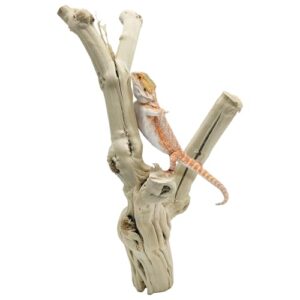
Because the Apatal branch is crafted from durable hardwood with a natural bark texture, it holds up well as a functional foothold rather than mere decoration. At 25 cm long with a 4-6 cm diameter, it suits smaller arboreal species needing secure grip.
Its irregular surface ridges create varied footholds, while the underside hollow allows decor connection for microhabitat enrichment. Built for bioactive setups, it helps naturalistic climbing behavior without the structural weakness plaguing thinner rattan alternatives.
| Best For | Reptile owners seeking natural climbing decor for snakes, bearded dragons, lizards, chameleons, or geckos in low-humidity terrarium setups. |
|---|---|
| Material | Rattan Wood |
| Mounting Style | Freestanding |
| Suitable Pets | Snakes, Dragons, Chameleons |
| Pack Quantity | 1 Piece |
| Humidity Tolerance | Low |
| Primary Use | Climbing Decor |
| Additional Features |
|
- Natural wood texture and polished finish add an authentic forest look to any terrarium
- Encourages climbing, resting, and exercise while helping reptiles naturally wear down claws and teeth
- Simple to maintain, since it just needs a rinse and wipe-dry to stay clean
- Actual size can vary noticeably from the advertised 15-17 inch length
- Susceptible to rotting or mold if used in humid enclosures, making it unsuitable for tree frog habitats
- Some pieces may develop structural weakness or break down after only a few weeks of use
2. Fhiny Resin Reptile Climbing Branches
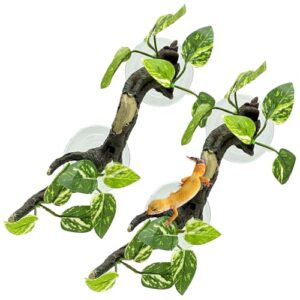
Where hardwood demands weight tolerance testing, resin sidesteps the problem entirely. Fhiny’s branches use suction cups rated for two kilograms, mounting straight to glass without adhesive residue or hardscape drilling.
The molded bark texture isn’t just cosmetic, raised ridges and tapered ends give geckos genuine grip during climbing, not just a decorative perch. At 8.66 inches per branch, two pieces install fast on smooth acrylic or glass surfaces.
Don’t expect hardwood realism, though. Some owners find the leaf detailing a bit soft over time.
| Best For | This product is best for owners of small to medium reptiles like corn snakes, bearded dragons, geckos, frogs, and chameleons who want an easy, natural-looking climbing and basking addition to a glass or acrylic terrarium. |
|---|---|
| Material | Resin/Plastic |
| Mounting Style | Suction Cups |
| Suitable Pets | Snakes, Geckos, Frogs |
| Pack Quantity | 2 Pieces |
| Humidity Tolerance | Moderate |
| Primary Use | Climbing Decor |
| Additional Features |
|
- Lifelike bark texture and soft leaves give reptiles a secure grip while adding shade and natural-looking decor
- Two strong suction cups per branch make installation and cleaning simple on smooth glass or acrylic surfaces
- Made of safe, fade-resistant resin and plastic, so the branches hold up well over time
- May not securely hold larger or heavier reptiles, as suction cups can detach under too much weight
- Requires a perfectly clean, smooth surface for the suction cups to work properly
- Some users feel the leaves and stems could look more realistic and may wear down over time
3. Natural Reptile Climbing Branches
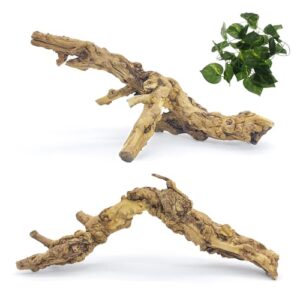
If suction cups solve mounting, pomegranate branches solve authenticity. These come from real trees, each branch running 13.78 to 17.72 inches with grain and texture no mold can replicate.
Sold as a 2-pack, they weigh just over a pound combined, light enough for smaller enclosures but occasionally too short for 50-gallon tanks. Inspect every batch for termites before placement; natural sourcing means natural pests. Sizes vary piece to piece, so buy extra if your build demands uniformity.
| Best For | Reptile owners with small to mid-sized terrariums looking to add a natural, realistic climbing and resting feature for snakes, lizards, chameleons, or geckos. |
|---|---|
| Material | Pomegranate Wood |
| Mounting Style | Freestanding |
| Suitable Pets | Snakes, Lizards, Geckos |
| Pack Quantity | 2 Pieces |
| Humidity Tolerance | Low |
| Primary Use | Climbing Decor |
| Additional Features |
|
- Made from real pomegranate wood, giving each branch authentic grain and texture that molded decor can’t match
- Lightweight 2-pack design makes placement and rearranging easy
- Encourages natural reptile behaviors like climbing, hiding, and resting
- Branches may be too short for larger tanks (50 gallons)
- Natural sourcing means sizes and shapes vary piece to piece
- Requires inspection for pests like termites before use
4. Natural Cork Reptile Climbing Branches
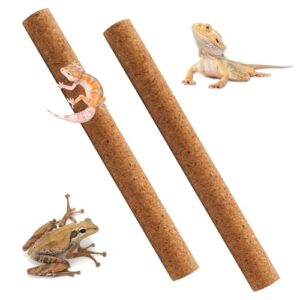
Where pomegranate wood banks on authenticity, cork banks on physics. Model BMY147-L ships as two pieces, each 15.75 inches long and 1.65 inches in diameter, light enough at 4.8 ounces per pack to suit smaller arboreal species without stressing screen mounts.
The granular surface grips claws better than smooth hardwood, but there’s a catch: no pre-drilled holes come included. You’ll wedge or secure pieces yourself, and expect slight shrinkage once humidity climbs.
| Best For | Owners of smaller arboreal pets like geckos, frogs, and young bearded dragons who want a lightweight, natural-looking climbing branch for their terrarium. |
|---|---|
| Material | Natural Cork |
| Mounting Style | Wedge/Freestanding |
| Suitable Pets | Dragons, Geckos, Frogs |
| Pack Quantity | 2 Pieces |
| Humidity Tolerance | Low-Moderate |
| Primary Use | Climbing Decor |
| Additional Features |
|
- Textured cork surface gives claws real grip for natural climbing behavior
- Lightweight design won’t strain screen mounts or enclosure walls
- Can be cut or sawn to custom-fit different tank sizes
- No pre-drilled holes, so you’ll need to secure or wedge pieces yourself
- May shrink slightly over time in high-humidity setups
- Too lightweight for larger enclosures or more active, heavier species
5. Natural Reptile Climbing Wood Branches
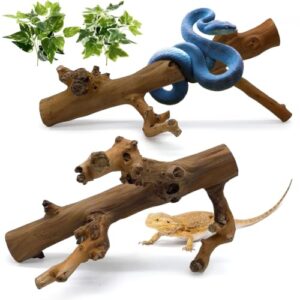
Model GF0276 packs four pieces into one order: two climbing branches at roughly 12 inches long and 1 to 1.5 inches thick, plus two leaf-shaped accents that soften the hardscape look. Suction cups come included, so mounting against glass or backer panels takes minutes.
The catch? These branches skip factory sterilization. Sun-dry and scrub each piece before installation, since mold and odor are common complaints straight out of the box, and the smooth, nub-free surface limits how much true angling you’ll get across tiers.
| Best For | Reptile and amphibian owners looking to add natural-style climbing structures to terrariums housing snakes, bearded dragons, lizards, chameleons, geckos, tree frogs, or spiders. |
|---|---|
| Material | Wood |
| Mounting Style | Suction Cups |
| Suitable Pets | Snakes, Dragons, Spiders |
| Pack Quantity | 2 Branches + Extras |
| Humidity Tolerance | Low |
| Primary Use | Climbing Decor |
| Additional Features |
|
- Includes four total pieces (two branches, two leaf accents) for a complete decor set in one order
- Suction cups are included, making secure mounting to glass quick and easy
- Natural wood texture adds an authentic desert or jungle aesthetic while giving reptiles enrichment space
- Arrives unsterilized, often requiring sun drying and scrubbing to remove mold or odor before use
- Smooth, nub-free branches limit angling options and reduce true vertical climbing versatility
- Not well suited for high-humidity enclosures, which restricts use in some tropical setups
6. Resin Reptile Climbing Branch With Hideout Cave
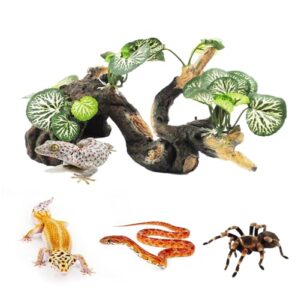
A hollow cave at seven inches in every direction, height, width, and depth, gives this branch dual function that flat climbing pieces can’t match. The non-toxic resin carries smooth edges throughout, so claws and toes never snag entering the shallow interior chamber.
Irregular ridges across the exterior replicate bark friction, resisting slip even when humidity coats the surface. Integrated mounting feet anchor to glass without stressing panels, and the non-porous material wipes clean with reptile-safe disinfectant, resisting cracks under typical thermal swings.
| Best For | This resin climbing branch with hideout is best for owners of small to medium reptiles like crested geckos, bearded dragons, and small lizards looking to add a naturalistic climbing, hiding, and basking feature to their terrarium. |
|---|---|
| Material | Resin |
| Mounting Style | Freestanding |
| Suitable Pets | Geckos, Dragons, Lizards |
| Pack Quantity | 1 Piece |
| Humidity Tolerance | Moderate |
| Primary Use | Climbing/Hiding |
| Additional Features |
|
- Made of safe, durable resin with no sharp edges, so it’s gentle on claws and skin
- Multi-functional design offers a hidden hideout, a water basin, and a rough textured surface for climbing and shedding help
- Naturalistic look with green fabric leaves helps reduce stress and encourages natural reptile behaviors
- May be too small for larger enclosures or bigger reptiles, based on some user feedback
- Fabric leaves can loosen over time and potentially interfere with the water basin
- Lightweight construction may tip over in active enclosures if not secured properly
7. Exo Terra Forest Branch Small Natural Wood
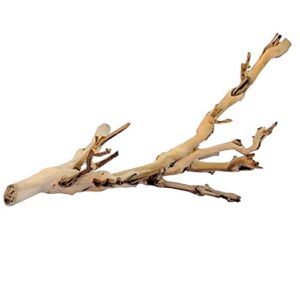
Aged hardwood realism sets this branch apart, with knots and grain patterns that vary piece to piece rather than repeating a molded texture.
Even with such realistic texture, routine care matters, so pair your branch with a climbing branch maintenance and safety guide to keep it clean and sturdy for years.
At 10 x 6 x 5 inches, it suits small reptiles and juveniles, but multiple buyers report it’s smaller than photos suggest and single-branched, not multi-forked as images imply.
Heat treatment reduces moisture content and deters decay, yet you’ll still want periodic inspection.
Fine for compact bioactive builds; larger arboreal species will outgrow it fast.
| Best For | Owners of small reptiles, amphibians, or juvenile pets looking to add a natural climbing and basking accent to compact or bioactive terrarium setups. |
|---|---|
| Material | Heat-Treated Wood |
| Mounting Style | Freestanding |
| Suitable Pets | Geckos, Lizards, Snakes |
| Pack Quantity | 1 Piece |
| Humidity Tolerance | Moderate |
| Primary Use | Climbing/Basking |
| Additional Features |
|
- Made from real heat-treated wood with unique grain and knots for authentic, natural texture
- Encourages climbing and exploration behavior in geckos, lizards, and snakes
- Versatile enough for both rainforest and desert terrarium setups
- Runs smaller than product photos suggest, according to multiple reviewers
- Single-branch design, not the multi-forked shape some images imply
- Too small for larger arboreal reptiles needing more extensive climbing space
8. Natural Reptile Wood Climbing Branches
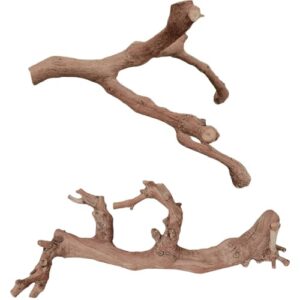
Two twelve-inch branches, bark intact, sold as a pair rather than one isolated piece, which gives you actual routing options when you’re building climbing paths instead of a single dead-end perch.
BNOSDM leaves them untreated and odor-free, but that’s a double-edged setup: no chemical off-gassing, though buyers report mold and wood mite issues after washing and heat treatment.
Shape varies wildly branch to branch, so match dimensions to your enclosure before committing, not after.
| Best For | Reptile owners looking to build varied climbing and basking layouts for bearded dragons, geckos, chameleons, or snakes with a natural, aesthetic look. |
|---|---|
| Material | Natural Wood |
| Mounting Style | Freestanding |
| Suitable Pets | Dragons, Geckos, Snakes |
| Pack Quantity | 2 Branches |
| Humidity Tolerance | Low-Moderate |
| Primary Use | Climbing Decor |
| Additional Features |
|
- Sold as a pair, allowing for more creative and functional climbing path setups
- Untreated and odor-free, avoiding chemical off-gassing in the enclosure
- Natural bark and unique shapes add authentic visual appeal to terrariums
- Some buyers report mold growth or wood mites appearing even after washing and heat treatment
- Branches may arrive dirty, sappy, or with sharp edges that need cleaning first
- Size and shape vary significantly, so they may not fit vertical placement as expected
9. Natural Vine Branch Terrarium Decor for Reptiles
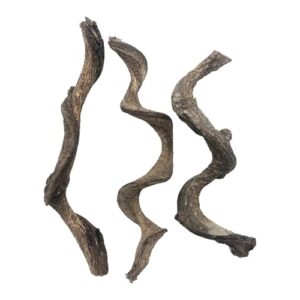
Real vine texture beats carved lookalikes every time, and this is where untreated grapevine or cork oak earns its keep as terrarium decor rather than just a functional perch.
The irregular curves mimic wild growth patterns, giving your gecko or arboreal snake varied grip challenges along a single branch instead of one uniform diameter.
Rinse and bake before introduction. Mount securely with brackets, since a loose vine under body weight during a climb becomes a fall hazard, not decor.
| Best For | Reptile and amphibian keepers who want natural-looking climbing branches for lizards, geckos, snakes, and frogs in desert, tropical, or woodland terrarium setups. |
|---|---|
| Material | Vine Wood |
| Mounting Style | Freestanding |
| Suitable Pets | Lizards, Geckos, Frogs |
| Pack Quantity | 3-Piece Set |
| Humidity Tolerance | Low |
| Primary Use | Climbing Decor |
| Additional Features |
|
- Natural vine texture and irregular shapes offer real enrichment and varied grip challenges compared to carved or uniform decor
- Versatile enough to suit multiple reptile and amphibian species across different terrarium styles
- Compact size (3-piece set) makes it easy to arrange multiple climbing and basking spots within an enclosure
- Thin diameter (0.39–0.79 inches) isn’t ideal as a primary basking spot for larger or heavier reptiles
- Natural variation means branch thickness and curvature aren’t consistent, so results may vary from piece to piece
- Prone to mold in humid environments if not dried and maintained properly between uses
10. Resin Reptile Corner Climbing Branch
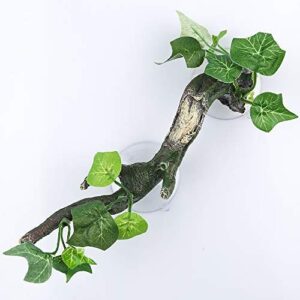
Corners get wasted in most builds, which is exactly why this piece earns its slot. Two suction cups, each 1.75 inches across, lock an 8-inch resin branch onto glass without exposed adhesive or drilled hardware.
The hollow cavity doubles as a hideout, and ridged texture every half inch gives geckos real grip. Rated to hold 6 pounds once mounted, it suits crested geckos, small snakes, and chameleons alike, and quick-release tabs strip it off for cleaning in under 30 seconds.
| Best For | This resin climbing branch is best for reptile and amphibian owners looking to add a naturalistic climbing feature to a glass terrarium for pets like snakes, lizards, bearded dragons, chameleons, or frogs. |
|---|---|
| Material | Resin |
| Mounting Style | Suction Cups |
| Suitable Pets | Snakes, Lizards, Frogs |
| Pack Quantity | 1 Piece |
| Humidity Tolerance | High |
| Primary Use | Climbing Decor |
| Additional Features |
|
- Realistic branch and leaf texture creates a natural-looking habitat accent
- Dual suction cups offer secure attachment to glass without exposed adhesive
- Built to withstand both high and low temperatures with minimal upkeep
- Requires a glass surface, limiting use in non-glass enclosures
- Suction cup stability may weaken over time or with humidity exposure
- Mainly decorative, so it may offer limited functional enrichment beyond climbing
Choosing Safe Bioactive Climbing Branches
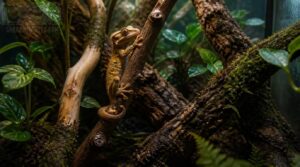
Not every branch on the market belongs in a bioactive vivarium, and picking wrong can cost you a gecko’s tail or a plant’s roots.
You’ll want to weigh material, species compatibility, and structural strength before anything goes in the tank.
The five factors below will help you sort the safe options from the ones to skip.
Natural Versus Resin Branches
Between organic and synthetic, the choice comes down to what your enclosure demands. Natural Grapevines, Cork Bark Branches, and Sandblasted Ghost Wood offer irregular grip and authentic texture, but they absorb moisture and can warp or splinter under humidity swings.
Resin branches resist water entirely, sanitize easily, and hold consistent grip without cracking, though they lack the organic variation natural wood provides.
Reptile-safe Wood Selection
Choosing wood means checking species first. Hardwoods like aspen and beech resist decay better than softwoods, while cedar and pine release oils that harm reptiles.
Verify suppliers guarantee untreated, dye-free stock. Inspect regularly for mold or pest activity.
This wood safety standard protects your bioactive enclosure’s climbing structures and keeps arboreal reptile habitats free of hidden toxins.
For proper wood preparation, baking to kill pathogens is a recommended method to make sure safety before use in enclosures.
Species and Enclosure Compatibility
Wood safety means nothing if the branch doesn’t fit the animal. Crested geckos need thin, springy diameters with alternate heights, while larger species demand thicker limbs rated for real weight.
Match humidity too: Cork Bark and Jungle Wood suit rainforest setups, Grape Wood and Ghost Wood belong in arid tanks. Cholla Wood works well for smaller climbers needing texture and grip.
Weight-bearing Capacity
Diameter matters more than species preference here: a 25mm branch bears light basking, but 40mm+ aids real weight. Static ratings assume dry wood, so humidity softens Cork Bark and Jungle Wood fibers over time.
- Test load before installation
- Calculate safety margins
- Use redundant fasteners
- Favor Ghost Wood or Cholla for density
- Inspect anchors monthly
Texture and Touch Enrichment
Because crested geckos read branches through their feet as much as their eyes, surface grip feedback matters as much as diameter. Felted bark offers high-friction footholds; sanded sections aid rapid grip shifts. Mix textures for real touch enrichment.
| Texture | Best Use |
|---|---|
| Felted bark | Secure footholds |
| Sanded surface | Fast grip shifts |
| Grooved channels | Directional climbing |
Best Branch Materials by Humidity
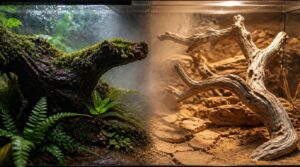
Not every branch belongs in every enclosure, and humidity is the deciding factor most keepers overlook. Wood that thrives in a rainforest setup can rot fast in a desert build, and vice versa. Here’s how five common materials stack up against your enclosure’s moisture levels.
Cork Bark for Humid Habitats
Cork bark earns its place in tropical vivariums through natural suberin protection, the waxy compound resisting water penetration while its honeycomb cells deliver thermal insulation for stable surface temps.
- Tolerates daily misting without warping
- Dries quickly, discouraging mold
- Rough texture aids claw grip
Its elasticity flexes under climbing weight, supporting humidity cycling tolerance essential for arboreal reptile care and vertical enclosure aeration.
Grapewood for Drier Enclosures
Grape Wood suits arid setups at 50% humidity or below, drying 8 to 12 percent moisture content with minimal warping. Its dark reddish-brown finish and low resin keep surfaces clean.
Anchor branches while rigid; ridged bark adds grip and enrichment. Acclimate before installation, then wipe down monthly, since properly cured grapewood resists mold in low-humidity microclimates without added upkeep.
Ghost Wood Moisture Limits
Ghost wood earns its pale, skeletal look but punishes sloppy humidity control. Keep it between 8-12% moisture content; above that threshold, mold and softening set in fast.
- Stable RH near 50%
- Moisture meter checks monthly
- Acclimate before install
- Watch for surface checking
Prolonged misting spikes surface MC past 15%, so let branches dry between sessions.
Spider Wood Versatility
Why does spider wood dominate bioactive builds? Its gnarled, root-ball form gives a humidity-resistant scaffold that won’t warp under constant misting. Irregular textures deliver genuine grip texture benefits, and the rough surface doubles as a moss enrichment surface. It accepts natural or epoxy-safe mounting options for securing hides, making it adaptable Climbing Branches material for any Naturalistic Decor scheme.
Flexible Jungle Wood Vines
Want curved pathways instead of rigid angles? Jungle Wood vines bend under pressure without cracking, tolerating humidity to 85% RH while resisting 30-degree flex fatigue.
- 1.5-4cm graduated thickness
- Up to 2m single-piece length
- Soft-peel bark for natural grip texture
- Screw-eye or silicone mounting
- Six-week chew resistance
This vine flexibility provides genuine active load support across any bioactive enclosure‘s naturalistic decor.
Building a Stable Climbing Framework
A single branch, no matter how well chosen, can’t do the job alone—your gecko needs a network. Building that network means thinking in angles, intersections, and anchor points rather than just picking pretty wood. Here’s what actually goes into a framework that holds up, literally and figuratively.
Horizontal and Diagonal Placement
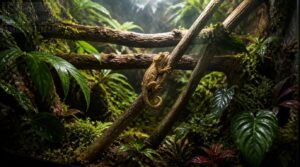
Two angles govern a working framework: run branches level for grip stability, then slice diagonals at 20-60 degrees for reflex climbing.
A Crested Gecko needs both, level pathways to rest its digesting body without floppy tail strain, plus angled routes preventing limb binding.
Vary grip texture between runs; rough bark suits older animals, smoother sections build paw adaptation across your vertical setup.
Multiple Branch Intersections
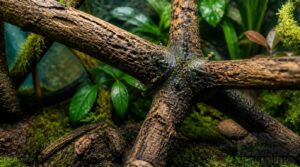
Once level and diagonal runs exist, join them: every stable Geometric Climbing Framework needs three-plus branches meeting at reinforced nodes, not loose crossings.
- Pin joints with stainless dowels or hidden epoxy
- Verify intersection load capacity before loading branches
- Angle grapevine branches for varied climbing trajectories
- Check cork bark structural integrity at each joint
- Monitor stress points for cracking or slippage
Secure Hardscape Anchoring
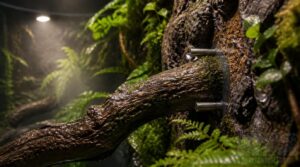
Nodes hold only if the anchors beneath them do. Use stainless steel hardware, resistant to corrosion for 5+ years, rated above 100 newtons.
| Anchor Type | Material | Load Capacity |
|---|---|---|
| Dowel pin | Stainless steel | High |
| Epoxy bond | Sealed compound | Medium-High |
| Zip tie | UV plastic | Light duty |
Seal joints against moisture, allow quick-release access, and inspect monthly for looseness.
Supporting Resting Body Weight
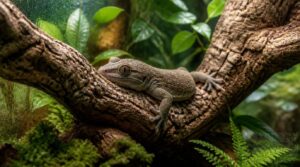
Anchors mean nothing if the branch itself sags under a resting gecko. Diameter matters most: 3 to 4 centimeter thick hardwood branches, cork oak or grapevine, resist bending past 5 degrees under 600 grams.
Look for:
- Wide contact surface (25+ sq cm)
- Rough, grippable bark
- Tight, splinter-resistant grain
- Forked shape for broad-bodied species
- No waterlogging or rot
Filling Unused Vertical Space
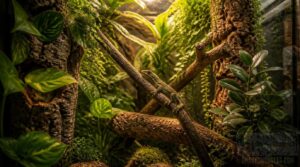
Because geckos exploit every layer of a naturalistic terrarium setup, empty air pockets between branches waste real climbing potential. Fill vertical canopy gaps with diagonal cross-supports linking your main structure, creating mid-level habitat zones geckos actually use.
Overhead branch weaving through upper enclosure layering, paired with elevated plant layering, maximizes vertical space utilization while keeping terrarium wood safety and arboreal reptile care standards intact throughout your climbing structures.
Positioning Branches for Natural Behavior
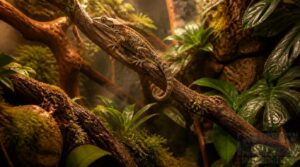
Buying the branch is only half the job; where you place it decides whether your gecko thrives or just survives. Every species has its own climbing logic, and your layout needs to respect that logic instead of fighting it. Here’s what to think about before you commit to a final position.
Species-specific Climbing Habits
Why do crested geckos and larger arboreal species use branches so differently? Claw adaptation patterns, tail usage, and digit grasping methods dictate layout. Match branches to species-specific husbandry:
- Splayed toes need rough bark
- Prehensile tails require wider diameters
- Lighter geckos favor slender, angled climbing structures
Body proportion preferences and natural branch morphology should always guide vertical space utilization decisions.
Elevated Resting Locations
Perching height dictates comfort. Set rests 15-40cm up, with branch height optimization matching species range.
| Height | Spacing | Function |
|---|---|---|
| Low (15cm) | 6-12cm | Juvenile access |
| Mid (25cm) | 10-15cm | Canopy viewing |
| High (40cm) | 15-20cm | Adult resting |
Cross-supports guarantee resting platform stability, while tiered elevated perch spacing builds true vertical space utilization for arboreal comfort.
Secure Movement Pathways
A gecko crossing a poorly planned branch network is a gecko one obstruction away from a dangerous fall. Secure movement pathways demand defined start/end points, Pathway Signage Essentials for direction, and Route Redundancy Planning.
Prioritize:
- Clearance Safety Standards (2.5cm minimum)
- Access Control Measures at junctions
- Maintenance Inspection Cadence for wear
This transforms scattered Climbing Structures into genuine Vertical Space Utilization, respecting Natural Branch Morphology for authentic Arboreal Reptile Care.
Canopy-to-ground Access
Why treat the ground as an afterthought? Canopy-to-ground access needs a continuous path with clear ground clearance standards and monthly access inspections.
| Element | Standard | Purpose |
|---|---|---|
| Branch redundancy | 2+ routes | Arboreal locomotion support |
| Weight limits | Per branch, enforced | Structural safety |
| Inspection | Monthly | Catch loosening early |
Natural branch morphology should guide descent slope, never abrupt drops.
Preventing Dangerous Falls
A fall from an unstable branch can fracture a tail or bruise internal organs, so fall prevention strategies matter more than aesthetics. Prioritize secure branch anchoring, corrosion-resistant fasteners, angled attachment points, and static load testing.
Add surface grip enhancement through natural bark texture, avoid sharp edges, and maintain humidity control safety to prevent warping.
Routine anchor inspection weekly keeps climbing structures and platforms genuinely fall-proof.
Integrating Branches With Live Plants
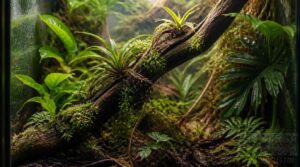
A branch is only half the equation once live plants enter your bioactive build, since roots, moisture, and foliage all compete for the same real estate. Get the setup wrong and you’ll rot your wood or smother your climbing paths within months. Here’s what you need to know before mounting a single epiphyte.
Anchoring Epiphytes to Branches
Bromeliads and bird nest ferns don’t tolerate loose substrate; you must secure them directly to hardscape using non-toxic silicone, black zip ties, or damp sphagnum packed into wood crevices.
Rough bark and moss give roots the surface area needed for genuine root adhesion, letting anchors expand laterally as the plant matures and dries between misting cycles instead of rotting in buried soil.
Using Sphagnum Around Roots
Once anchored, roots need packing material that does more than hold position. Damp sphagnum delivers consistent moisture retention near 60-75% humidity while staying loose enough for oxygen diffusion, preventing suffocation. It buffers root temperature against fluctuations, restrains surface pathogens naturally, and slowly releases minerals, buffering nutrient shocks.
Fluff it periodically; compacted moss traps stagnant water and undermines everything it’s meant to protect.
Creating Leafy Shade Zones
Sphagnum keeps roots hydrated, but geckos also need shade above the canopy. Position Pothos or Monstera adansonii near grow lights to build a multi-tiered shade matrix, filtering harsh radiation onto lower climbing platforms.
Vine canopy shading mimics rainforest light windows, dropping intensity for nocturnal comfort. Rotate placement seasonally as growth thickens, and keep mulch moist to sustain the whole leafy structure.
Protecting Branches From Roots
Once your leafy canopy is thriving, roots will chase that moisture straight toward the wood. Install root barrier installation zones 8 to 12 inches out, and reseal cracks within 7 days.
Use non-toxic sealant on exposed surfaces, favor treated root balls like Spider Wood, and monitor root intrusion quarterly to keep climbing structures sound.
Preserving Climbing Access
Once vines and epiphytes fill the canopy, don’t let growth choke the very branches supporting it.
- Keep escape route clearance open around anchor points
- Re-verify weight-bearing support as foliage adds mass
- Schedule visual checks for hidden bark abrasion
Prune encroaching growth monthly. Secure anchoring points and unobstructed climbing branches remain non-negotiable for true arboreal reptile care.
Preventing Mold and Wood Rot
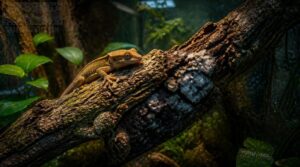
Wood left in the wrong conditions doesn’t just look bad, it quietly rots from the inside while mold colonizes the surface your gecko climbs daily.
Wood in the wrong conditions rots quietly from within while mold spreads across the surface your gecko climbs
The fix isn’t complicated, but it does require matching material, airflow, and drainage decisions with intent rather than guesswork.
Here’s exactly what separates a branch that lasts for years from one you’ll be replacing in months.
Matching Wood to Moisture
Wrong wood in the wrong humidity rots faster than most keepers expect. Match moisture resistance to your enclosure: cork bark or spider wood for humid setups, grapewood or ghost wood below 50% humidity.
This wood moisture balance governs dimensional stability and prevents chronic dampness, since sapwood selection and species mismatches invite mold-friendly conditions that no amount of cleaning fully corrects.
Allowing Branches to Dry
Skipping proper cure time is how green branches rot from the inside. Air drying basics demand weeks to months of shaded airflow before installation, especially for a dried vine meant as climbing platforms.
Track humidity control with a moisture meter, target habitats at 50% or less, and verify with regular maintenance checks.
- Lift branches during drying
- Seal cut ends
- Rotate for even moisture loss
- Avoid direct sun
- Source sustainably
Improving Enclosure Airflow
Stagnant air rots wood as fast as standing water. Place intake vents low and exhaust vents high, creating a convection loop that pulls moisture off branches continuously.
Align branch gaps with the enclosure’s centerline. Avoid dense horizontal clusters behind climbing platforms, they trap humidity and invite decay your ventilation systems can’t reach.
Separating Wood From Drainage
Untreated branches shed splinters into your expanded clay drainage layer, obstructing flow paths over time. Seal wood contact points and rest branches above the fiberglass mesh screen, never through it, to prevent water bypass.
The mesh barrier substrate separation keeps clean-up crews working an aerated reservoir. Cracked seals invite biofilm; inspect junctions where branches meet substrate before each misting cycle.
Monitoring Early Decay Signs
Wood doesn’t rot overnight, it whispers first. Run your fingers along branches weekly: check for surface microcracking, press for spongy softness, sniff for musty odor, and track discoloration spreading from joints.
- Pale fracture lines across bark
- Thread-like fungal filaments
- Center softness under pressure
- Brown-black staining near junctions
Catch these early, before mold compromises enclosure safety.
Cleaning and Maintaining Climbing Branches
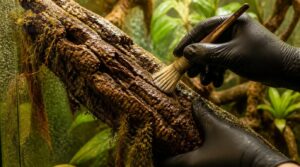
A branch that looks perfect on installation day won’t stay that way once waste, moisture, and root contact go to work on it.
Knowing how to prep, spot-clean, and inspect your climbing structures keeps them safe long after the initial setup phase ends.
Here’s what that ongoing upkeep actually involves.
Preparing Natural Wood Safely
Grab a moisture meter before you grab a sealant.
Branches need moisture testing below 12%, two weeks of ventilated drying, and a pest inspection for boring insects.
Surface preparation means scrubbing debris, checking for cankers, and selecting a reptile-safe, water-based sealant, never solvent-based, applied thin and cured fully before the branch enters your enclosure.
Routine Waste Spot-cleaning
Sealed branches still need daily attention. Crested geckos defecate on elevated perches, so spot clean immediately using color-coded cloths and enzyme-based cleaner, blotting first, then wiping outer edge inward.
Inspect for residue, confirm dryness, and apply minimal moisture on porous wood. Bag waste per disposal protocol. Your cleanup crew of Porcellionides pruinosus controls residual decomposition, keeping mold from colonizing your climbing structures.
Inspecting Anchors Regularly
Once the mess is handled, turn your attention to what’s holding the branch itself in place. Run an anchor corrosion check on every eye bolt and swivel, then confirm the wear gauge measurement stays under 10 percent material loss.
A quick structural integrity test, gentle rocking, tapping welds, catches loosening before it becomes a fall hazard. Log findings for documentation and trending.
Managing Canopy Clean-up Crews
Anchors mean nothing if waste piles up where your gecko actually defecates: on elevated branches. That’s why your arboreal clean up crew needs vertical mobility. Porcellionides pruinosus scales cork and ghost wood readily, processing waste right at the deposition point. Terrestrial isopods and springtails can’t reach the canopy, so gecko elevated defecation zones need dedicated coverage, not just a healthy substrate population below.
Replacing Damaged Climbing Branches
Wood degrades on a schedule, and waiting until a branch snaps under your crested gecko risks injury. Watch for surface cracking or softening within 2 to 6 weeks; that’s your material replacement timing cue.
Match diameter and curvature, run a full branch inspection checklist for cracks, then mount with stainless screws following safety mounting protocols before reassessing enrichment angle matching and humidity impact assessment.
Frequently Asked Questions (FAQs)
How many climbing branches does one enclosure need?
Under 24 inches, plan on three minimum for redundancy. Mid-sized tanks need four to six; anything past 48 inches calls for seven to nine, doubling density once height exceeds 36 inches for true vertical complexity.
Can climbing branches be reused between different reptile species?
Definitely, durable branches can move between species, provided species size matching and weight capacity limits align. Always run branch compatibility testing, apply cross-species sanitation, and inspect surface texture suitability before reuse in any bioactive habitat.
Whats the average lifespan of a bioactive climbing branch?
Natural wood lasts 9 to 24 months depending on humidity and airflow, while resin branches hold up 12 to 24 months. Regular drying and cleanup routines extend lifespan, whereas constant moisture near water features shortens it considerably.
Should new branches be quarantined before adding them in?
Yes, quarantine for 2 to 4 weeks with sanitization checks, moisture testing under 15%, and pest inspections every 3 days is essential before any sandblasted grapevine or natural wood decor joins your climbing structure.
Conclusion
Sturdy branches speak louder than pretty ones ever will. Your bearded dragon doesn’t care about grain patterns, it cares whether the perch holds firm at 3am mid-shed.
Choosing climbing branches for bioactive enclosures means treating moisture ratings, weight capacity, and species behavior as non-negotiable engineering, not decoration.
Get the material right, anchor it properly, and that branch becomes invisible infrastructure. Your reptile climbs, basks, and thrives, never knowing the calculations you made on its behalf.