This site is supported by our readers. We may earn a commission, at no cost to you, if you purchase through links.

Cloudy eyes and a snake that suddenly refuses food can send new keepers into a panic. Don’t worry, your snake isn’t sick. It’s shedding, and the whole process follows a timeline as predictable as a clock.
From that first dulling of the scales to the moment a papery, one-piece shed lands on the enclosure floor, most snakes work through a nine to fourteen day cycle. Humidity, species, and age all nudge that window shorter or longer. A juvenile ball python might blow through it in a week; a sluggish adult in a dry tank could drag it out closer to two.
Understanding this snake shed cycle timeline overview turns a nerve-wracking guessing game into something you can track on a calendar, spot problems early, and adjust husbandry before dysecdysis becomes a real concern.
Table Of Contents
- Key Takeaways
- Snake Shed Cycle Timeline Overview
- Pre-Shed Stage and Early Signs
- Blue Phase and Clear Phase
- How The Actual Shed Happens
- Shedding Frequency by Species and Age
- Factors That Affect Shed Duration
- Shed Problems and Post-Shed Care
- Frequently Asked Questions (FAQs)
- How long after shedding can you handle a snake?
- How long does a snakes shedding process take?
- Do snakes feel better after shedding?
- What time of the year do snakes shed their skin?
- Do garter snakes shed faster than other pet snakes?
- How often do king snakes shed compared to others?
- What surfaces help snakes start shedding successfully?
- Can vitamin deficiencies cause incomplete or failed sheds?
- How quickly does normal coloration return after shedding?
- Conclusion
Key Takeaways
- A full shed cycle runs about nine to fourteen days, moving from dulled scales through cloudy blue eyes to a clean, one-piece peel, though humidity, species, and age can stretch or shrink that window.
- Dull skin, reduced appetite, and extra hiding are all normal pre-shed signs caused by fluid buildup and a slowed metabolism, not signs of illness.
- Steady humidity (roughly 50-70%) and a stable temperature gradient matter more than almost anything else for a smooth, complete shed, while low humidity and stress often cause patchy sheds or retained eye caps.
- Retained eye caps, constricted shed around the tail, or dysecdysis that keeps happening despite good husbandry all call for a vet, since these problems won’t fix themselves and shouldn’t be handled at home.
Snake Shed Cycle Timeline Overview
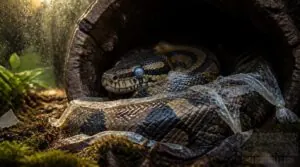
Your snake’s gone dull and disappeared into its hide again, and your first thought is probably "not this again." Take a breath. Here’s what’s actually happening under that cloudy skin, stage by stage.
This dulling is just one phase of a normal cycle, and knowing how often your snake should actually shed helps you tell routine shedding from something worth watching.
Typical Nine-to-Fourteen-Day Cycle
Nine days, sometimes fourteen. That’s the typical timeline your snake follows from the first dull scales to a clean, finished shed.
This cycle duration range depends heavily on humidity control and species. Stable, humid enclosures speed skin renewal; dry, fluctuating ones stretch shedding stages out and invite trouble. Track it on a calendar. Patterns tell you more than panic ever will.
Shedding Versus Shed Frequency
Two different clocks run here.
The nine-to-fourteen-day timeline covers one shed’s stages start to finish. Shedding frequency is how often that whole cycle repeats, weeks apart, driven by growth rate, hydration, temperature stability, and species. Ball pythons cycle every four to six weeks; king snakes, every four to six days. Age shifts the math too, juveniles shed faster than adults.
Actual Skin Removal Duration
Peeling itself is quick. The shed itself, minutes to an hour, with head release first, then a full body pull.
| Snake Size | Skin Peeling Time | Full Shed Exposure |
|---|---|---|
| Juvenile | Up to 90 min | Bare, skin separate |
| Medium-Large | 30-60 min | Complete, smooth |
| Stressed/Dry | 60-90+ min | Patchy, torn |
Pre-Shed Stage and Early Signs
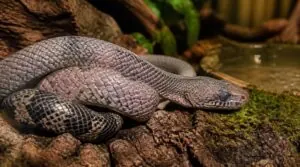
Your snake looks a little off, and that’s your first clue something’s changing. Before the blue eyes show up, the body sends out quieter signals worth catching early. Here’s what to watch for in those first few days.
Dull or Faded Skin
First sign your snake’s about to shed? A wash of grayish-blue creeps over once-vibrant scales. This skin color fading stems from fluid pooling between old and new layers, starting 3-5 days out. Low humidity worsens it, dehydration too.
Species dull patterns vary: ball pythons pink up at the belly, corn snakes fade uniformly. Expect this dull phase duration to run 3-7 days.
Reduced Appetite and Activity
Don’t panic if your snake turns down food this week. Appetite suppression is normal, driven by metabolic slowdown of up to 70%, conserving energy for skin renewal.
- Pre-shed fasting can last days
- Movement often drops noticeably
- Vision is reduced, curbing hunting drive
This activity reduction protects a vulnerable snake mid-cycle. Feeding resumes once shedding completes. If fasting persists well beyond the shed cycle, it’s worth reviewing other causes of food refusal, such as improper temperatures or stress.
Hiding and Defensive Behavior
Watch the hide box more than usual this week. Vulnerable skin means increased hiding, tighter coils, and less willingness to bluff-strike or engage.
| Behavior | Normal Day | Pre-Shed |
|---|---|---|
| Hiding | Occasional | Frequent |
| Defense | Bold hiss | Retreat first |
| Activity | Exploring | Motionless |
Give your snake dense cover. It’s not sulking, it’s smart self-preservation.
If your snake seems extra reclusive right now, check out this guide on how long the shedding process usually takes before you start worrying.
A hiding snake isn’t sulking, it’s practicing smart self-preservation during a vulnerable shed
Typical Pre-Shed Duration
So how long does this stage actually run? Juvenile length sits around 4 to 7 days, while adult length stretches to 7 to 10 days. Species variation matters too. Humidity influence is real: aim for 50–70%. Expect feeding changes alongside other shedding signs before the Blue Phase begins.
Blue Phase and Clear Phase
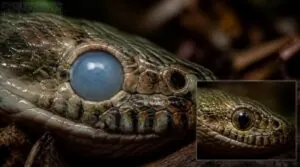
First glance, it looks alarming: your snake’s eyes turn milky, almost opaque. Don’t panic—this is just fluid building up between old and new spectacles, right on schedule. Here’s what to expect as those eyes cloud over, then clear again before the real work begins.
Cloudy Blue Eye Appearance
Milky blue eyes mid-shed? Normal, not injury. Eye fluid accumulation between old and new spectacles causes corneal light scattering, producing that opaque eye phase.
- Uniform milky tint across sclera and iris
- More pronounced in lighter iris pigmentation
- Humidity influences eyes and clouding intensity
- Signals the shedding timeline is progressing
Avoid handling now, and don’t rush the shedding duration.
Typical Blue Phase Duration
Three to seven days, usually. That’s the window most snakes fall into once preshed ends, though species blue variation matters: ball pythons run 3–5 days, boas 4–6, corn snakes shorter still.
Juveniles often finish faster, averaging four days. Humidity above 70% and stable warm temps speed things along; cold snaps or dry air can stretch it well past a week.
Why Eyes Become Clear
The clearing isn’t magic, it’s fluid resorption. That milky lymph between the old eye cap and new spectacle gets reabsorbed, restoring corneal transparency and lens protein clarity underneath.
Tear film stability returns as the new surface settles. Good hydration impact speeds this along, while low humidity drags out the shift from opaque eye phase back to genuine clarity.
Typical Clear Phase Duration
Once resorption finishes, clarity holds. Clear phase timing runs 24 to 72 hours, with most snakes done in three days at proper humidity (60-80%).
- Eyes look normal again
- Colors brighten noticeably
- Scales feel smoother
Low humidity or unstable temperature stretches this window. Watch for these clear phase indicators, they signal the actual shed is close.
Handling During Both Phases
Your snake still needs you during blue and clear phases, just gentler.
Wash hands first. Support the midbody with a loose grip, no sudden moves. Skip handling during actual blue phase eyes, reflexes run hot then.
| Phase | Handling Rule |
|---|---|
| Blue | Avoid, minimal contact |
| Clear | Brief, gentle sessions |
| Both | Wash hands, watch stress |
Check humidity and your temperature gradient too, they speed recovery.
How The Actual Shed Happens
Here’s the moment everything’s been building toward. Once the clear phase ends, the actual mechanics kick in fast, and they follow a clear order. Here’s what to watch for, step by step.
Skin Loosens Around Lips
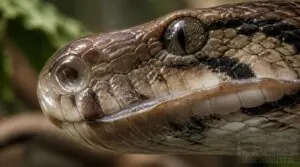
Watch the mouth first. Lip skin loosening starts the whole sequence, with mouth edge separation appearing as a thin, slack ring around the jawline. Lip scale detachment happens before anything else moves.
These pre-shed lip changes come from lip tissue stretching, easing the head skin’s exit without tearing deeper tissue. Humidity above 60% speeds this along nicely.
Rough Surfaces Begin Peeling
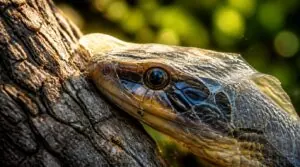
Once lips loosen, the snake rubs its nose rubs, using bark or rock edges for rough texture initiation. This starts scale edge lifting at contact points. Friction peeling accelerates along the midline, where scale margins are sharpest. Moisture softening skin makes old tissue pliable, so abrasion accelerates shedding, prepping the whole body for ecdysis to continue.
Inside-Out Skin Removal
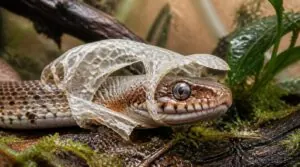
Underneath, something surprising happens: skin peels off inside-out, not outward. The inward peel starts near the mouth, spreading tailward as the old layer detaches along scale seams.
You’ll notice a skin feel shift, taut and dry, plus a subtle eye lip hue change. Minimize handling. Humidity above 60% eases shedding assistance. Species shed variation exists too.
Head-to-Tail Shed Progression
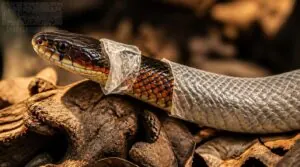
From nose to tail tip, the peel follows a strict order. Head Initiation loosens the lips first, forming a visible Neck Band as scales tighten behind it.
Progressive Loosening and Fluid Accumulation push the shed rearward until it slides off in a onepiece shed, skin peels off inside-out, completing the Snake Shedding Timeline.
Signs of Complete Shedding
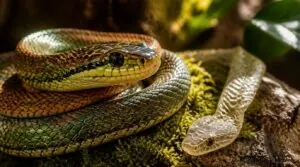
Once the peel drops free, check the results. Clear eyes, no cloudy film, confirm a healthy shed, and eye caps should come off with the rest, not stay behind.
Skin should look smooth, scales flat, colors become noticeably brighter. Normal appetite returns within days, activity often increases. A true onepiece shed means the job’s done right.
Shedding Frequency by Species and Age
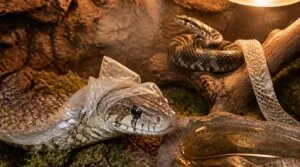
Not every snake sheds on the same clock. Species, age, and even the season all play a role in how often that skin comes off. Here’s what to expect based on what you’re keeping.
Ball Python Shed Frequency
Ball pythons don’t run on a calendar, they run on growth. Juveniles shed every 4 to 6 weeks; adults slow to 6 to 8 weeks once growth levels off.
Once you spot that dulling and eye-clouding, keep an eye on the process itself, since knowing why a ball python sheds in pieces can help you catch trouble before it becomes a real problem.
Feeding schedule matters too, heavy feeders shed more often.
Keep humidity near 50-60% and your enclosure size appropriate, and the shedding cycle stays predictable.
Boa Constrictor Shed Frequency
Boas shed on a slower clock than ball pythons. Expect a 4 to 6 week shedding interval, with juveniles closer to 4 weeks during active growth phase shedding and adults settling near 6 weeks once growth slows.
Warmer, stable seasons keep the cycle regular; cooler or drier stretches stretch it out.
- Juvenile shedding rate: faster, growth-driven
- Adult shedding interval: steadier, longer
- Humidity effect frequency: consistent 60-80% keeps timing predictable
Corn Snake Shed Frequency
Corn snakes run faster than boas. Juvenile shed rate lands near every 4 to 6 weeks; adult shed interval stretches to 2 to 3 months as growth slows.
That’s the growth frequency link at work. Keep humidity near 55-60%, watch temperature swings, and shedding duration stays clean, quick, and complete.
Juvenile Versus Adult Snakes
Age changes everything about shedding math. Hatchlings shed every 2 to 4 weeks; adults slow to monthly or beyond.
Since shedding frequency alone won’t tell you whether a boa is a specific morph, check a boa constrictor color morph identification guide before assuming that flashy pattern means a genetic trait.
- Size comparison: hatchlings are a fraction of adult mass
- Head proportion: juveniles carry oversized heads and eyes
- Feeding behavior drives growth, and growth drives shedding frequency
- Activity levels run higher in curious, bolder juveniles
Watch humidity closely either way.
Seasonal Shedding Patterns
Beyond age, the calendar itself sets the pace. Spring shedding ramps up as warmth and daylight increase, often finishing in just several days under 60–70% humidity.
Fall shedding prep works differently: cooler temps and reduced feeding stretch the timeline out, readying your snake for winter’s slower rhythm before shedding frequency drops.
Factors That Affect Shed Duration
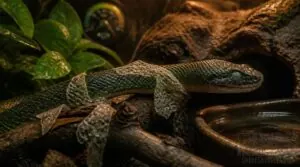
Not every snake sheds on the same schedule, and that’s not always about the species. Small changes in the enclosure can speed things up or stall them out entirely. Here’s what actually moves the needle.
Enclosure Humidity and Hydration
Getting humidity right speeds up shedding duration more than any other single factor. Keep relative humidity between 50 and 60 percent, checked with a calibrated hygrometer at multiple enclosure heights.
Maintain a water dish for proper hydration, add a humidity hide, and mist on a consistent schedule. Steady moisture beats sporadic spikes for clean, complete sheds.
Temperature Gradient Stability
Humidity means nothing if your thermal gradient keeps drifting. Aim for a 6 to 10°C horizontal spread between basking and cool zones.
Check five things:
- Heat mat responsiveness
- Thermostat steps (0.5–1°C)
- Vertical sensor placement
- Edge insulation sealing
- Humidity-temperature interaction
Sloppy vivarium conditions stall thermal regulation, and stalled regulation stalls sheds.
Nutrition and Overall Health
Skinny snakes shed poorly. Protein builds new scales; fatty acids keep them supple; vitamin A prevents dry, flaky skin.
| Nutrient | Role in Shedding | Deficiency Sign |
|---|---|---|
| Protein | Tissue repair | Retained caps |
| Fatty acids | Skin elasticity | Cracked scales |
| Vitamin A | Cell turnover | Dry patches |
| Calcium:Phosphorus | Scale strength | Weak growth |
| Hydration | Metabolic energy | Patchy sheds |
Stress and Excessive Handling
Handle less when blue or clear-phase eyes appear. Stress hormones spike, appetite drops, and shedding stalls. Watch for hissing, head-lifting, or defensive coiling. Keep sessions to 5-10 minutes, spaced 24-48 hours apart.
Poor hydration and cramped hides worsen things. Afterward, offer quiet recovery time and fresh water. Consistency, not avoidance, builds trust and smoother sheds.
Species and Growth Rate
Fast growers shed fast. Hatchlings and juveniles pack on mass monthly, so their growth rate outpaces adults stage for stage.
A ball python inches along compared to a boa constrictor’s steady bulk gain. Species Size Differences and Feeding Frequency Impact both drive the clock. Sexual Dimorphism Growth matters too: larger females often shed slightly more often during Age-Based Growth Spurts than males.
Shed Problems and Post-Shed Care
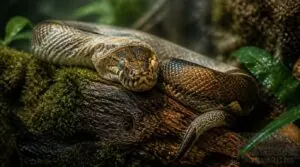
A perfect shed doesn’t always happen, and that’s alright. Snakes leave clues when something’s off, from stubborn patches to cloudy eyes that linger too long. Here’s what to watch for, and how to help.
Patchy or Incomplete Sheds
Fragments clinging to the back? That’s dysecdysis, patchy shedding from humidity imbalance or stress.
Watch for:
- Skin fragments along the spine
- Dull patches masking new color
- Stress indicators like hiding
- Poor nutrition weakening the layer
Fix the enclosure, add rough surfaces, and raise humidity. Don’t force it off.
Retained Eye Caps
Cloudy eyes that never clear? That’s eye cap retention, another face of dysecdysis.
The old spectacle stays fused over the cornea, blocking vision and inviting irritation. Low humidity and poor hydration are usual culprits.
Never attempt eye cap removal yourself. Adjusting humidity helps future sheds, but existing retained caps need veterinary eye care, especially if cloudiness persists past one shed cycle.
Stuck Shed on Tail
Small tail, big risk. The tail tip is the most common site for stuck shed, and retained skin constricts blood flow fast.
Watch for tail constriction signs: dry, translucent banding, a rough feel, darkening.
- Try a warm water soak
- Boost humidity to 60-70%
- Never peel it yourself
Untreated, tail tip necrosis sets in within 48-72 hours.
Post-Shed Appetite and Handling
Once tail issues resolve, shift focus to feeding. Appetite usually returns fast, often within 24-48 hours post-shed. Watch for genuine appetite signs: alert movement toward prey, not just tongue-flicking.
Keep your feeding routine gentle. Handling guidelines still apply, minimal contact first 24 hours. Recovery monitoring matters here. Track feeding response and post-shed activity daily; behavioral changes signal whether stress prevention efforts are working.
When Veterinary Care is Needed
Not every bad shed needs a vet, but some do. Retained eye caps past one cycle, constricted shed bands, purplish belly spots signaling septicemia, wheezing or gaping suggesting respiratory infection, or persistent dysecdysis despite good husbandry all warrant reptile medicine expertise.
Don’t attempt home removal on eyes or tight bands yourself; you’ll risk real damage.
When in doubt, call your herp vet.
Frequently Asked Questions (FAQs)
How long after shedding can you handle a snake?
Patience now buys trust later. Wait 24 to 48 hours after clear eyes and appetite return, watching for stress indicators like hiding or tongue flicking, before resuming normal postshed handling and activity.
How long does a snakes shedding process take?
Full shedding cycle runs 9 to 14 days start to finish. Blue Phase lasts 2 to 4 days, Clear Phase 1 to 3 days. Species shedding speed and humidity affect duration; juveniles shed faster than adults.
Do snakes feel better after shedding?
Yes. Once the shedding cycle ends, vision clarity returns, mobility increases, and stress reduction sets in. Color vibrancy shows immediately, and post-shed activity like hunting resumes fast, proof that hydration and a healthy shedding duration paid off.
What time of the year do snakes shed their skin?
There’s no true "off-season" for this natural wardrobe change. Shedding frequency depends more on growth rate, temperature, and humidity than the calendar. Juveniles shed often, adults less so, and warm, humid setups can trigger sheds any month at all.
Do garter snakes shed faster than other pet snakes?
Not dramatically. Juvenile growth impact drives frequent molts, every four to five weeks, but adult garter snake shedding timeline slows to a few times yearly, roughly matching corn snakes and outpacing ball pythons or boas.
How often do king snakes shed compared to others?
Racing through sheds every 4 to 6 weeks, king snakes outpace ball pythons and adult corn snakes. Growth rate drives the difference, younger snakes shed faster, and stable humidity keeps that shedding cycle predictable rather than problematic.
What surfaces help snakes start shedding successfully?
Rough branches, natural rocks, and coconut husk give your snake the textured substrate it needs. It rubs its nose against these surfaces to catch the loosening skin, kickstarting a clean peel from lips backward.
Can vitamin deficiencies cause incomplete or failed sheds?
Yes. Vitamin C, A, and B1 deficiencies weaken collagen and keratin, causing dysecdysis. Poor hydration compounds this. Multiple deficiencies together produce worse retained patches and eye caps than any single shortfall alone.
How quickly does normal coloration return after shedding?
Expect full color return within 1 to 3 weeks. Corn snakes brighten fastest (5-14 days), boas slowest (up to 21). Good hydration and nutrition speed pigment settling; adults recover quicker than juveniles still stabilizing hue.
Conclusion
Coincidentally, the same week your snake’s eyes clear, its appetite returns, as if the whole cycle resets on cue. That’s the rhythm behind a snake shed cycle timeline overview: predictable, biological, and easy to track once you know the stages.
Watch the blue phase, respect the hiding, check for retained caps. Don’t rush the process. Your snake isn’t broken, it’s just molting on nature’s clock. Trust the timeline, and shedding stops feeling like an emergency.