This site is supported by our readers. We may earn a commission, at no cost to you, if you purchase through links.

A snake’s shed rarely fails on the day it comes off. The trouble often started a week earlier, when a faded coat, pink belly, or blue-gray eyes quietly signaled that the enclosure needed attention.
Many keepers mistake cloudy eyes for illness, or try to peel away stubborn skin by hand. Both moves can create problems. Ecdysis, the technical name for shedding, depends on hydration, temperature, and a calm place to rub free.
This snake shedding cycle guide helps you read each stage, from the first dull scales to the final tail tip, so a clean, complete shed becomes the result.
Table Of Contents
- Key Takeaways
- Learn How The Shedding Cycle Works
- Spot The Earliest Pre-Shed Signs
- Care for Your Snake In-Blue
- Support The Pre-Slough Clearing Stage
- Prepare for Safe Skin Sloughing
- Check Your Snake After Shedding
- Resolve Stuck Shed Without Injury
- Track Frequency and Warning Signs
- Frequently Asked Questions (FAQs)
- How often should my snake be shedding?
- How long after shedding can you handle a snake?
- How long does a snake shedding process take?
- Do snakes feel better after shedding?
- How does a snake shed?
- How long does snake shedding take?
- Do snakes shed a lot in winter?
- Why is my snake shedding so often?
- How do you know if a snake is shedding?
- How does humidity affect a snake’s shedding cycle?
- Conclusion
Key Takeaways
- Snake shedding usually follows a 9–14 day cycle, starting with dull color, a pink belly, and cloudy blue eyes before the skin comes off.
- Stable, species-appropriate heat and humidity, fresh water, a humid hide, and safe rough surfaces give your snake the best chance of a complete shed.
- Leave your snake alone during the blue and clearing stages, since reduced vision commonly causes hiding, defensiveness, and skipped meals.
- After shedding, check for intact eye caps and a clean tail tip, and contact a reptile vet for repeated stuck sheds, swelling, discharge, bleeding, or tail constriction.
Learn How The Shedding Cycle Works

Before you can spot a problem or fix one, you need to understand what’s actually happening inside that shed. The shedding cycle, called ecdysis, follows a predictable sequence of physical changes that play out over roughly 9 to 14 days. Here’s what each stage looks like and why it matters for your snake’s health.
Review these common snake pre-shed behavior changes to recognize the earliest signs before visible changes appear.
Ecdysis and Skin Renewal
Ecdysis, your snake’s skin regeneration process, begins when a fresh epidermal layer forms beneath the old one.
- Enzymes break down the bond between skin layers
- Temporary fluid separates old skin from new
- Keratin restructuring strengthens the emerging layer
- Pigment cell reorganization restores color and pattern
- Barrier integrity restoration completes the renewal cycle
The result is always tighter, more resilient skin. This biological renewal is part of a broader hormonal regulation of molting process coordinated by signals like ecdysone to make sure shedding occurs at the right developmental stage.
Why Snakes Shed Skin
That fresh layer forming underneath isn’t just preparation — it’s the whole point.
Snakes shed because their skin doesn’t grow with them. As your snake’s body lengthens, the old layer becomes a constraint, so new skin forms beneath it before the old one is released. Shedding also strips away worn tissue, micro-damage, and any mites clinging to the old layer, giving your snake a clean, fully restored barrier every cycle.
Typical Nine-to-fourteen-day Timeline
The whole cycle runs nine to fourteen days, start to finish. Days one and two bring dull skin and a faint pink belly. By days three through seven, your snake hits the opaque or "in-blue" phase, with cloudy bluish eyes and faded coloration. Days ten through twelve, the old skin sloughs away. Humidity, age, and species all shift that window.
Inside-out Sloughing Mechanics
Once that timeline plays out, the actual shedding is surprisingly elegant. The old skin inverts like a glove peeling inside out, starting at the lip scales and rolling backward. Scale margins loosen sequentially, while mucus production increases to ease separation along the basement membrane. A coordinated wave moves head to tail, pushing the epidermal layer away cleanly in one complete piece.
Age, Growth, and Species
When young, your snake sheds constantly because growth demands it. Snake shedding frequency by age follows a clear pattern:
- Hatchling and juvenile corn snakes shed every 2-6 weeks
- Adult corn snakes only shed every 3 months
- Adult ball pythons shed every 6-8 weeks
- Illness or slow growth stretches intervals unpredictably
Younger snakes grow faster, and species-specific needs shape the rest.
Spot The Earliest Pre-Shed Signs
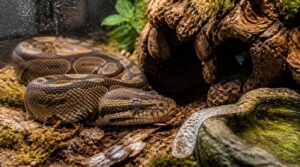
Your snake won’t send you a calendar invite when a shed is coming, but it will drop some pretty clear hints if you know what to look for. The earliest signs show up days before the eyes go blue, and catching them early means you can get the enclosure dialed in before your snake needs it most. Here’s what to watch for.
Dull or Faded Coloration
Before anything else shifts, your snake’s colors start to lie. Dull or faded coloration is often the earliest signal the shedding process has begun, as fluid builds between old and new skin layers, quietly dulling the surface sheen you’re used to seeing.
Poor hydration only speeds this up, making ball python color fading look more dramatic than typical pre-shed dullness.
Pink Belly Warning Sign
Flip your snake over during the dull-skin phase and you might notice a faint rosy tint running along the ventral scales. That’s the pink belly warning sign at work, caused by fluid buildup loosening old skin from beneath.
It appears before cloudy eyes develop, fades naturally after shedding completes, and needs no remedy beyond keeping your enclosure humidity on track.
Darkening or Cloudy Eyes
Those cloudy, blue-tinted eyes are the clearest pre-shed signal you’ll notice, caused by fluid buildup separating the old skin from the new layer directly behind the eye caps. Vision dims noticeably during this phase, which explains why your snake turns defensive and hides more often.
Keep humidity steady and fresh water always available, since proper hydration prevents prolonged eye clouding.
Neck and Throat Wrinkles
Wrinkles along the neck and throat signal low humidity or dehydration entering pre-shed.
Review the ideal humidity range for ball pythons to support healthy shedding without making the enclosure damp.
- Dehydration makes fine wrinkles more pronounced
- Low humidity reduces skin elasticity quickly
- Maintain proper humidity between 50 and 70 percent
- A humid hide helps prevent throat creases
- Fresh water daily aids the skin shedding cycle
Spot them early and adjust your setup before the full shed begins.
Hiding and Defensive Behavior
Your snake disappearing into its hide for long stretches isn’t any cause for alarm.
During pre-shed, reduced vision triggers a strong instinct to stay hidden and avoid all contact. You may notice defensive postures like head-pressing, tight coiling, or brief hissing when disturbed.
Respect this behavior. It’s not aggression, it’s self-preservation. Leave your snake alone and let the process unfold.
A hiding, defensive snake is protecting itself, not acting aggressively—give it space until shedding is complete
Care for Your Snake In-Blue
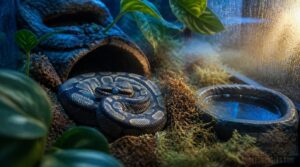
The in-blue phase is when your snake needs you most, even though it looks like it just wants to be left alone. Getting the environment right during these few days makes the difference between a clean shed and a frustrating retained-skin situation. Here’s what to focus on while your snake rides out this stage.
Cloudy Blue Eye Caps
The eye caps turning blue is the clearest sign your snake is fully in-blue. That cloudy blue look forms when hydrating fluid builds beneath the eye barrier before sloughing begins.
Opaque eyes can shift from soft powder blue to deeper slate, and that color intensity often reflects your humidity levels directly. Light still passes through, though eye cap clarity drops.
Reduced Vision and Stress
That cloudy film cuts vision clarity sharply, leaving your visually impaired snake feeling exposed and on edge. Opaque eyes trigger stress cues: tighter body posture, retreating to hides, and defensive postures when approached.
Five ways to reduce stress in-blue:
- Move slowly near the enclosure
- Avoid sudden lighting changes
- Keep the humid hide accessible
- Limit enclosure openings
- Skip handling for now
Feeding and Appetite Changes
Stress and appetite often drop hand-in-hand during the in-blue phase. Your snake’s body is focused on shedding, not on digesting, so refusing meals for days is completely normal.
Juveniles, who usually feed every 5-7 days, may skip 1-2 meals entirely. Don’t panic. Offer a smaller prey item once, and if refused, simply wait until the shed completes before trying again.
Avoiding Unnecessary Handling
Appetite loss usually signals what your snake’s body is already screaming: leave me alone right now. Avoid handling entirely during the in-blue phase. Your snake’s impaired vision makes every movement feel threatening, so even routine contact triggers a defensive response.
Schedule handling for after shedding completes, and rely on quiet observation to check enclosure safety and progress instead.
Maintaining Species-specific Humidity
During the in-blue phase, humidity becomes your most critical lever. Most pet snakes need 50-70% relative humidity, but species-specific targets matter more than averages.
Place your hygrometer at snake level for accurate readings, and refresh the humid hide with damp moss every few days to prevent mold while keeping that essential moisture pocket intact.
Support The Pre-Slough Clearing Stage

The clearing stage — days seven to ten — is when your snake’s eyes start to clear up, but the process isn’t quite finished yet. A few simple adjustments to the enclosure now can make the difference between a clean shed and a frustrating retained piece. Here’s what to focus on during this final stretch.
Eyes Returning to Normal
When that in-blue cloudiness starts lifting, your snake’s eye clarity restoration signals the clearing stage has begun. Cloudy or blue eyes shift to deep, defined color as retained eye caps separate cleanly. Watch for:
- Pupil shape recovery to a round, steady form
- Iris definition returning with crisp edges
- Moisture balance stabilizing
Vision baseline recovery follows within 24 to 72 hours.
Skin Remaining Dull
Don’t mistake the lingering dullness for a problem. Even after your snake’s eyes clear up, the skin stays visibly matte and faded, sometimes showing an uneven tone across the body. That’s normal.
The old skin is still separating from the new layer underneath, and around days 10 to 12 you may notice a slight pink belly tint alongside that dull appearance, signaling sloughing is close.
Refreshing The Humid Hide
Your humid hide needs updating right now. Pull out old moss, check your hygrometer, and target 70 to 90 percent humidity daily.
- Replace moss or towels daily to prevent mold growth
- Pre-saturate fresh moss before placing it inside the hide
- Keep the hide away from direct heat sources
- Rotate between sphagnum moss and damp towels
Providing Clean Drinking Water
A snake in the clearing stage is still working hard beneath the surface, and hydration is part of that work.
Keep a shallow water dish in the enclosure at all times, refilled daily with clean, fresh water. Stagnant water breeds bacteria fast, so rinse the dish before every refill.
Keeping Temperatures Stable
Temperature does more quiet work during clearing than most keepers realize.
Your snake’s metabolism depends on hitting that warm basking zone of 85-90°F to fuel the final separation between old and new skin.
Keep your thermal gradient tight, cool side around 75-80°F, and monitor both zones daily with a digital thermometer.
Dips below 70°F can slow the whole process down.
Prepare for Safe Skin Sloughing

Once your snake’s eyes clear up, the final countdown to sloughing has begun — and your enclosure setup can make or break a clean shed. A few targeted adjustments are all it takes to give the old skin every reason to slide off in one piece. Here’s what to have in place before shedding day arrives.
Monitoring Humidity With Hygrometers
A reliable digital hygrometer, calibrated before use, is your best tool here. Place it at enclosure level, away from heat lamps and corners where stagnant air skews your readings.
Most units hold ±2 to ±5 percent RH accuracy. Aim for 60 to 70 percent RH for most species, and use two sensors in large enclosures to map the humidity gradient.
Adding Damp Moss or Towels
Once your hygrometer confirms the range is right, add a humid hide full of damp moss to boost localized moisture without soaking the enclosure.
Three things to keep in mind:
- Place damp moss or towels near the hide, away from heat sources.
- Rewet cotton towels every few hours to maintain consistent moisture.
- Replace moss if it smells or turns slimy.
Providing Safe Rubbing Surfaces
Moisture alone won’t get the job done. Your snake needs something to rub against to start peeling that old skin back from its snout.
A rough branch texture or cork bark panel works well, offering grip without sharp edges. A synthetic rubber mat or textured ceramic tile are equally solid alternatives. Anchor each piece firmly so it doesn’t shift mid-rub.
Choosing Moisture-supportive Substrate
What you lay at the bottom of the enclosure matters more than most beginners expect. Coconut husk and cypress mulch both hold moisture well without staying soggy, making them reliable choices.
Aspen shavings, though popular, dry out quickly.
Whichever substrate you choose, refresh it regularly to prevent mold from quietly taking hold beneath the surface.
Keeping Enclosure Furnishings Clean
Your furnishings carry bacteria long before you can smell it. Sanitizing decor weekly with diluted vinegar keeps plastic hides fresh and mold-free, while wiping glass surfaces with a microfiber cloth preserves visibility without scratching. Wash substrate accessories at 60°C to kill bacteria properly.
Preventing mold buildup during high-humidity periods means drying everything thoroughly before returning items to the enclosure.
Check Your Snake After Shedding
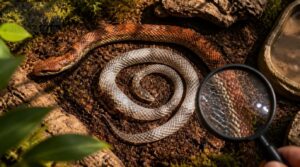
Once the old skin is off, your job isn’t quite done yet. A quick post-shed check tells you everything you need to know about whether the process went smoothly. Run through these five things before you declare victory and move on.
Finding The Intact Shed
The shed tells the whole story. Check hides and enclosure corners first. A complete shed peels away in one inside-out piece, stretching 3 to 4 inches past the tail tip. Sloughs found near hides usually mean everything went well.
Look for:
- Smooth, unbroken surface from head to tail
- Clear eye caps at the head end
- A clean, tapered tail tip
Inspecting Both Eye Caps
The eye caps are two of the most critical details to check. Look for eye cap clarity and integrity, meaning clear caps sitting flush against the cornea with no gaps, crust, or residue.
Clouding can signal snake eye cap retention, a form of incomplete shedding also called dysecdysis.
Eye cap swelling or discharge around the socket warrants immediate veterinary evaluation.
Checking The Tail Tip
After the eye caps check out, work your way to the tail tip next. A smooth, unwrinkled tip that matches the body color is your green light for a complete, healthy shed.
Look for hairlike filaments, tight scales, or sticky patches, since any of those signal incomplete shedding (dysecdysis), which can restrict blood flow if you don’t address it promptly.
Resuming Feeding and Handling
Once the shed checks out, wait 24-48 hours before feeding or handling:
- Offer water first; hydration before feeding reduces regurgitation risk
- Watch for tongue flicking and exploring as post-shed feeding readiness cues
- Ball pythons may skip a meal; corn snakes often eat within 24 hours
- Resume regular handling only after a successful first feeding
Noting Healthy Post-shed Appearance
A truly healthy shed leaves your snake looking almost polished. The skin texture feels smooth, with a consistent scale pattern and no lifted edges.
Check eye clarity first, both should look clear and bright. Don’t forget the tail tip, it should be clean with no dry rings.
Good post-shed appearance confirms skin regeneration is complete, and normal post-shed behavior returns quickly.
Resolve Stuck Shed Without Injury
Stuck shed happens, and it’s usually fixable without a vet visit if you catch it early and stay patient. The key is knowing exactly what to do — and just as importantly, what not to do. Here’s what you need to work through it safely, step by step.
Recognizing Incomplete Shedding

When your snake’s old skin doesn’t come off cleanly, it’s called dysecdysis. Watch for:
A full guide to common reptile skin issues breaks down what each of these problems looks like and when home care isn’t enough.
- Retained eye caps staying blue after the body clears
- Crusty skin rings clinging around bends or the tail tip
- Dull patches persisting on the midsection after partial slough
- Reduced appetite and increased hiding from irritation
Enclosure humidity control failing the 50-70% range is usually the culprit.
Using a Humid Hide
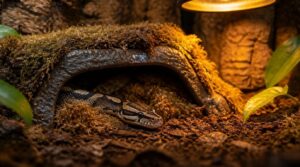
Once you’ve spotted retained skin, a humid hide is your first fix. Place it on the warm side of the enclosure so heat keeps moisture consistently active. Pack it with damp sphagnum moss that feels cool to the touch but not dripping.
Your snake will seek it out, and that added moisture loosens stubborn patches without flooding the entire setup.
Trying Supervised Lukewarm Soaking
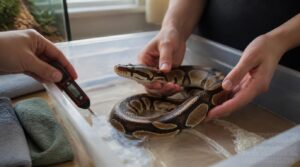
When the humid hide isn’t enough, soaking is your next move. Fill a shallow container with lukewarm water at 85-88°F, confirmed with a thermometer, since water that feels warm to your hand sits near 100°F.
- Keep depth at 1-2 inches, head always above water
- Limit to 15-20 minutes
- Supervise the entire soak
- Gently wipe scales with a damp cloth, then towel-dry
Never Pulling Dry Skin

After the soak, resist the urge to peel loose-looking patches. Never pull dry skin, especially near the eyes, mouth, tail, or vent. It can tear new scales, damage delicate tissue, and turn a minor stuck shed into an injury.
Let your snake use gentle rubbing and natural movement instead. Skin protection during shedding means patience, even when reptile shedding assistance feels tempting.
Correcting Humidity and Hydration

Restore proper humidity for snakes before the next shed: maintain species-specific baseline humidity, often 50–60% for juveniles, 40–60% for adult corn snakes, and 60–70% for ball pythons. Use a hygrometer daily.
Understanding the difference between snake skin and scales helps explain why steady humidity matters so much for a clean, complete shed.
Offer a humid hide at 70–90% with damp sphagnum, plus fresh water changed daily. For hydration soak methods, use supervised lukewarm water briefly. Keep substrate lightly moist, never wet, to balance reptile enclosure humidity control and reptile hydration needs.
Track Frequency and Warning Signs

A shed record helps you see what’s normal for your snake as it grows and matures. Frequency, timing, and shed quality can reveal small husbandry issues before they become bigger problems. Use the following points to track each cycle and recognize when something needs attention.
Juvenile Versus Adult Schedules
Juveniles shed often because rapid growth stretches their skin. Many shed every 4 to 6 weeks, sometimes sooner during strong feeding and growth periods.
- Juveniles follow faster cycles
- Temperature can shorten intervals
- Adults become more consistent
- Some adults only shed every 3 months
Track each reptile shedding timeline. Age-related shedding changes reveal your snake growth cycle.
Corn Snake Shedding Frequency
For keepers, a Corn snake’s shedding frequency is a growth report. Well-hydrated juveniles usually shed every 4–6 weeks, sometimes in three-week spurts; adults only shed every 3 months.
| Age | Typical interval | Watch |
|---|---|---|
| Juvenile | 4–6 weeks | growth |
| Adult | 3–4 months | health |
When humidity is correct, seasonal variation may shift timing by 1–2 weeks. Longer gaps signal slowed growth, dehydration, or illness.
Ball Python Shedding Frequency
Ball python shedding frequency follows growth more than a strict calendar. Young snakes often shed every 3–4 weeks; subadults commonly shift to 4–6 weeks, while stable adults may take 6–8 weeks.
Keep humidity near 55–65%, raising it to 70–80% during shed to protect hydration balance and skin health. Growth spurts can shorten cycles. Repeated shedding problems or unusually long gaps deserve attention.
Recording Shed Dates and Quality
Date logging turns routine shedding into useful care data. Record the start of dull skin, the clearing stage, and the exact date of shed completion, using one consistent format.
Add quality notes: intact skin, both eye caps, tail tip, humidity, and behavior. Link a photo or sketch when possible. A calendar then reveals growth-related frequency changes and makes unusual patterns easier to spot.
When Veterinary Care is Needed
Veterinary care matters when home support stops working. Persistent eye cap retention, tail constriction with darkening or swelling, or a stuck shed around nostrils needs prompt help to protect skin integrity.
Seek care for repeated incomplete sheds, redness, bleeding, discharge, blistering, or lethargy post-shed lasting over a week. These signs may indicate dysecdysis, dehydration, or infection. A reptile vet can remove retained skin safely and guide infection prevention.
Frequently Asked Questions (FAQs)
How often should my snake be shedding?
Most juveniles shed every 4–6 weeks; adults often every 6–12 weeks. Growth rate, species-specific cycles, and environmental influences shift timing. Track each reptile shedding cycle, since changes can flag snake shedding problems.
How long after shedding can you handle a snake?
Wait 24 to 48 hours after shedding. Handle gently only when eyes are fully clear, skin looks smooth, humidity is stable, and your snake moves confidently. Delay handling if it seems defensive, dull, or has retained skin.
How long does a snake shedding process take?
For example, a healthy juvenile corn snake may finish in 7–10 days, while an adult ball python often takes 9–14 days. Species, growth, humidity, temperature, and health affect pre-shed, clearing, and final skin sloughing.
Do snakes feel better after shedding?
Yes, after shedding process and skin sloughing stages, postshed recovery brings improved skin texture, enhanced vision clarity, increased activity levels, better feeding response, and comfortable handling ease.
Track reptile shedding frequency and reptile shedding complications.
How does a snake shed?
During ecdysis, the old epidermis loosens from a new layer beneath. The snake rubs against rough surfaces to start detachment, then crawls free, turning old skin inside out and revealing bright, fresh scales.
Because scales are made of keratin—the same protein as your fingernails—snakes don’t feel through them the way you might expect, as explained in this guide on whether snakes can feel their scales.
How long does snake shedding take?
Shedding isn’t a skin-and-go: most snakes take 9–14 days, with timeline variation from species, age, and proper housing humidity control. Juveniles shed often; adults wait longer. On days 10–12, old skin releases, preventing shedding problems.
Do snakes shed a lot in winter?
Most snakes don’t shed more in winter. Cold weather can slow growth, appetite, activity, and the shedding process. Maintain proper housing, stable thermal regulation, and a 50–70% humidity range; winter delays and behavior changes are common.
Why is my snake shedding so often?
Juvenile growth rate and species metabolism can speed the snake shedding cycle. Check reptile humidity requirements, because environmental stress, illness, or dry air cause shedding problems and stuck shed; provide humid hide with damp moss.
How do you know if a snake is shedding?
Like a fogged window, cloudy eyes and a dull appearance signal shedding. Your snake may prefer hiding spots, eat less, bask more, lose scale smoothness, and show texture changes. Check water bowl, reptile humidity requirements daily.
How does humidity affect a snake’s shedding cycle?
Proper humidity control keeps skin flexible: many species need 60–70%. Measure humidity digitally. A humid hide full of damp moss prevents stuck shed, shedding problems, and reptile dehydration signs; species needs vary. Don’t soak snake.
Conclusion
Young snakes may shed every four to eight weeks, while healthy adults of the same species may need only a few sheds each year, a reminder that growth sets the pace.
Use this snake shedding cycle guide to notice changes before retained skin becomes a problem. Stable heat, correct humidity, fresh water, and rough surfaces do the quiet work. Read the signals, adjust the habitat, then let your snake finish the job without interference safely.