This site is supported by our readers. We may earn a commission, at no cost to you, if you purchase through links.
Most snake owners learn about humidity the hard way: a shed that comes off in dry, brittle fragments instead of one clean piece. That incomplete peel isn’t just ugly to look at. Retained eye caps and tail bands can cut circulation and cause permanent damage if left unaddressed.
The fix isn’t complicated, but it does require a specific tool. A humidity box for shedding snake care creates a moisture-rich microclimate inside the enclosure, giving your snake a place to retreat when its skin starts to loosen. Ball pythons, corn snakes, tropical boas — every species has its own humidity window, and hitting it consistently is the difference between a clean shed and a vet visit.
If your snake tends to refuse a plain hide, a hide box designed for shedding support can hold humidity better and make the retreat feel safer.
Getting it right comes down to setup, substrate, and placement.
Table Of Contents
- Key Takeaways
- Why Humidity Matters During Snake Shedding
- How to Set Up a Snake Humidity Box
- Top 5 Humidity Hide Boxes for Shedding
- How to Measure and Maintain Shed Humidity
- Frequently Asked Questions (FAQs)
- Are humid hides good for snakes?
- How can I make a humidity hide for my snake?
- How to keep a snake cage humid?
- Is 80% humidity too high for ball pythons?
- Can I reuse shed skin to gauge humidity?
- How often should I replace moss substrate entirely?
- Do hatchlings need different humidity than adults?
- Should humidity drops after shedding is complete?
- Conclusion
Key Takeaways
- A humidity box gives your snake a moisture-rich retreat during shedding, preventing the dry, brittle sheds that can leave dangerous retained eye caps and tail bands.
- Species-specific humidity targets matter: ball pythons need 60–70% daily (rising to 75–80% during shed), while corn snakes do fine at 40–60% base with a bump to 70–75% pre-shed. Knowing the difference between snake skin and scales also helps you spot shedding trouble early, such as stuck shed or dull patches. If scales still look rough, discolored, or blistered despite good husbandry, this guide to common reptile scale problems and their causes can help you pinpoint what’s going wrong.
- The best humidity hide setup uses a 60/40 sphagnum moss-to-coconut coir mix, passes the squeeze test (damp but no drips), and sits on the warm side of the enclosure 2–4 inches from the heat source.
- A digital hygrometer (±1–3% accuracy) beats an analog dial every time, and you should calibrate it with the salt test method and replace substrate weekly to keep readings trustworthy and mold out of the hide.
For deeper context, this snake shedding cycle guide explains how humidity supports healthy skin-layer separation.
Why Humidity Matters During Snake Shedding
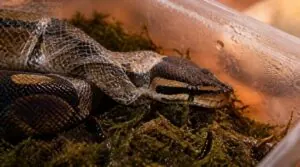
Humidity isn’t just a comfort factor for your snake — it’s what makes the difference between a clean shed and a painful, stuck one. Getting it right means understanding what your specific species needs and when those needs shift. Here’s what you need to know before setting up your humidity box.
If you’re still dialing in your setup, a good starting point is choosing the right snake humidifier for small enclosures — the hardware matters as much as knowing your target levels.
A good starting point is knowing your snake’s baseline requirements — this guide to humidity and healthy shed breaks down exactly what to watch for at each stage.
Humidity doesn’t just keep your snake comfortable — it determines whether each shed is clean or dangerously stuck
How Low Humidity Causes Stuck Shed
Dry skin stiffness hits when humidity drops below the best humidity for shedding. The shed film grips instead of glides, triggering dysecdysis.
Four things break down:
- Enzyme reduction stalls loosening
- Shed adhesion risk spikes
- Retained eye caps form
- Tight shed bands appear at the tail
Your humidity gradient controls the outcome. Shed duration increases when you ignore it. Just as musty odors signal excess moisture in storage spaces, subtle signs in your snake’s enclosure can reveal humidity imbalances before they cause serious shedding problems.
Ball Python Vs Corn Snake Needs
Ball pythons need 60-70% daily humidity, rising to 75-80% during shed. Corn snakes tolerate 40-60%, bumping to 70-75% pre-shed. That gap matters when you’re choosing substrate, hide placement, and misting frequency.
Ball pythons are stockier, calmer, and more prone to retained eye caps when conditions drop. Corn snakes adapt faster but still need a reliable humidity gradient.
Desert Vs Tropical Shedding Differences
The gap between species grows when you factor in their origins. Desert-adapted snakes shed in dry air that desiccates outer skin fast, causing partial sheds. That’s why a humidity box matters even in low-humidity setups.
Tropical species need 70-100% humidity consistently, and any drop risks stuck shed. A solid humidity gradient setup gives both types the localized microclimate they need.
Signs Your Snake is Entering Pre-shed
Once you know the difference between desert and tropical needs, watching your snake becomes the next skill.
Pre-shed signs show up in layers. Eyes turn milky blue first, usually 7-14 days out. Skin goes dull and gray. Your snake eats less, hides more, and lingers near damp spots. These aren’t problems. They’re your setup cue.
- Milky or blue-hazed eyes
- Dull, grayish skin tone
- Skipped or reduced meals
- Extended time inside the hide
- Preference for moist enclosure areas
How to Set Up a Snake Humidity Box
Setting up a humidity box doesn’t require fancy equipment — just the right steps done in the right order. There are five things you need to nail before your snake ever curls up inside. Here’s how to get each one right.
Before diving in, brushing up on how to maintain humidity in a snake tank will help you understand what you’re aiming for and why each step matters.
Choose The Right Hide Size
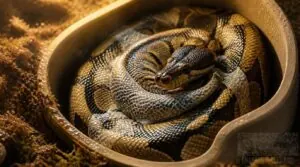
A humid hide should feel secure, not roomy. Your snake must enter, turn, and rest without flattening its body.
| Snake size | Interior target | Best fit |
|---|---|---|
| Juvenile | 2–3 inches | Snug |
| Adult corn snake | 4–6 inches | Turn easily |
| Adult ball python | 4–6 inches | Wider entrance |
Choose smooth plastic or resin with rounded edges and a secure lid. Place it on the warm side, never directly beneath a heat lamp.
Best Substrate for Moisture Retention
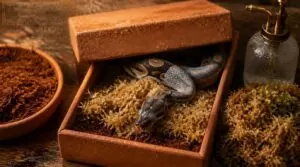
Not all substrates hold moisture the same way. Coconut coir substrate is the go-to choice, holding 600 to 900 percent of its weight in water. Sphagnum moss releases moisture slowly without becoming waterlogged. Mix them in a 60/40 moss-to-coir mix for steady humidity inside your hide.
Moisten Substrate to Correct Dampness
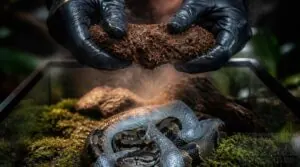
The squeeze test is your best guide to correct dampness. Grab a handful, squeeze it firmly, and check: no drips, but the mix holds its shape.
- Target 60 to 85 percent relative humidity
- Rehydrate dry substrate gradually and evenly
- Always vent excess moisture before placing your snake back
- Soggy substrate grows mold within hours
- Replace damp moss during weekly maintenance
Place Hide on The Warm Side
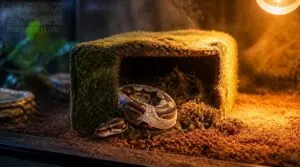
Position the humidity hide box in the warm corner of the enclosure, 2 to 4 inches from the heat source. That distance keeps the interior at 88 to 92°F without cooking the substrate dry. Point the entrance outward so your snake can slip in and out freely during the shedding cycle without resistance.
Weekly Cleaning and Substrate Refresh

Once a week, pull the hide, remove your snake, and swap out all the damp moss substrate. Rinse the hide with reptile-safe disinfectant, dry it fully, then re-moisten fresh substrate to a wrung-sponge feel before replacing it. Skipping this invites mold fast.
After the refresh, check your hygrometer. Confirm 60 to 80 percent humidity is holding before your snake goes back in.
Top 5 Humidity Hide Boxes for Shedding
Picking the right humidity hide makes a real difference when your snake is in shed. There are a few solid options out there that fit different species, enclosure sizes, and budgets. Here are five worth considering.
1. Reptile Humid Cave Viewing Hide
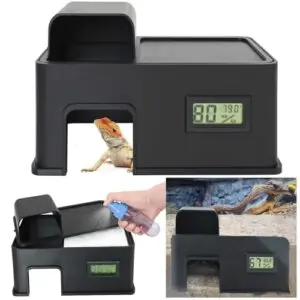
The Reptile Humid Cave Viewing Hide earns its spot here for one simple reason: buryable design with a top opening that lets you monitor humidity without lifting the whole hide. It measures 7.87 x 5.59 x 4.17 inches, fitting corn snakes and leopard geckos comfortably.
The integrated humidity groove with absorbent cotton holds moisture for hours. PLA plastic keeps it moisture-proof and easy to wipe clean. One limitation: the unsealed top means daily moisture top-ups are non-negotiable.
| Best For | Reptile owners keeping small species like leopard geckos, corn snakes, or crested geckos who want a hide that supports natural behaviors while making humidity monitoring easy. |
|---|---|
| Material | PLA Plastic |
| Dimensions | 7.87×5.59×4.17 in |
| Color | Black |
| Humidity Method | Cotton groove + spray |
| Size Category | Small |
| Compatible Species | Geckos, corn snakes |
| Additional Features |
|
- Buryable design with a top opening lets you check on your reptile and manage humidity without disturbing the whole setup
- Integrated humidity groove with absorbent cotton holds moisture for hours, helping your reptile shed and breed more successfully
- Smooth-edged PLA plastic is moisture-proof and easy to wipe down, keeping things clean between uses
- The unsealed top opening means you’ll need to add moisture daily to keep humidity at the right level
- Compact size works well for smaller reptiles but won’t suit larger species or multiple occupants sharing one hide
- PLA plastic can degrade over time under constant heat or moisture, so long-term durability may be a concern
2. Large and Medium Reptile Feeding Box Set
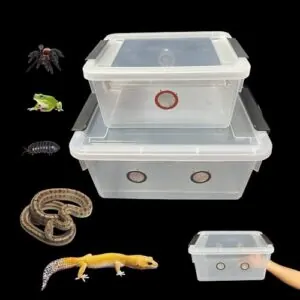
If the Reptile Humid Cave felt purpose-built, the YZHZOM Large and Medium Reptile Box Set takes a different angle. These clear plastic boxes weren’t designed exclusively as humidity hides, but they work well for that role during shedding season.
The large box (31.5 x 23 x 14.5 cm) suits juvenile ball pythons, while the medium (23 x 17 x 10.5 cm) works for hatchlings. Add damp moss, snap the lid, and you’ve got a functional humid microclimate.
| Best For | Reptile keepers who need versatile, multi-purpose enclosures for hatchlings, juvenile snakes, feeder insects, or temporary housing during cleaning and vet visits. |
|---|---|
| Material | High-Quality Plastic |
| Dimensions | 12.4×9.06×5.7 in |
| Color | Clear/Transparent |
| Humidity Method | Horizontal airflow vents |
| Size Category | Small to Medium |
| Compatible Species | Snakes, geckos, frogs |
| Additional Features |
|
- Two sizes in one set give you flexibility for different animals or life stages — the large works well for juvenile ball pythons while the medium handles hatchlings comfortably
- Clear plastic makes it easy to observe your animals without disturbing them
- Vented lids allow fresh airflow, and the boxes double nicely as humid hides when lined with damp moss during shedding season
- Internal vent tabs can protrude into the enclosure and potentially injure small, delicate animals like geckos
- Not suitable for adult or large reptiles — these are strictly short-term or small-animal solutions
- Some customers have reported receiving cracked units, suggesting quality control can be inconsistent
3. Hamiledyi Reptile Humid Hide Kit
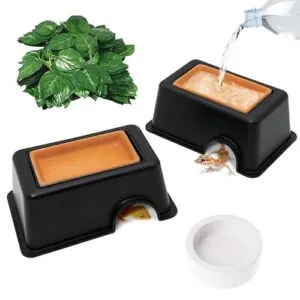
The Hamiledyi kit takes a different approach than a plain box setup. Its standout feature is a removable ceramic sink that slowly releases moisture over 24 to 48 hours, cutting down on how often you need to re-dampen the interior. At 6.89 x 4.33 x 2.75 inches, it’s sized for juvenile reptiles only. The frosted surface and snug fit help your snake feel secure.
One heads-up: the ceramic can arrive chipped, so inspect it before use.
| Best For | Owners of juvenile leopard geckos, small snakes, or similarly sized reptiles who want a low-maintenance way to maintain consistent humidity during shedding. |
|---|---|
| Material | Plastic & Ceramic |
| Dimensions | 6.89×4.33×2.75 in |
| Color | Frosted |
| Humidity Method | Ceramic release sink |
| Size Category | Juvenile/Small |
| Compatible Species | Juvenile snakes, lizards |
| Additional Features |
|
- The ceramic sink releases moisture slowly over 24–48 hours, so you’re not constantly re-wetting the hide
- Doubles as a standard hide when your reptile isn’t shedding — just flip the cutout design
- Comes as a 4-piece kit with hides, a food dish, and a decorative plant for added value
- Too small for adult leopard geckos or any reptile on the larger side
- Ceramic may arrive chipped, which can create sharp edges that need filing before it’s safe to use
- Doesn’t include moss or substrate, so you’ll need to buy moisture-retaining material separately
4. Tfwadmx Reptile Humid Hide Box
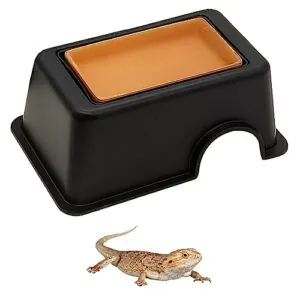
The Tfwadmx takes a simpler, no-frills approach. It’s a compact rectangular hide measuring 6.7 x 4.3 x 2.8 inches, built from smooth, BPA-free plastic with a matte finish that’s easy to wipe down. The removable terracotta bowl sits inside and slowly releases moisture, maintaining 70-90% humidity for up to 48 hours.
It fits hatchlings and small juveniles well. If your snake exceeds 18 inches, the 1.9 x 1.2-inch entrance may be too tight.
| Best For | Small reptiles and hatchlings like leopard geckos, baby snakes, tarantulas, and amphibians that need a cozy, humid hiding spot. |
|---|---|
| Material | Premium Plastic |
| Dimensions | 6.7×4.3×2.8 in |
| Color | Black |
| Humidity Method | Terracotta bowl reservoir |
| Size Category | Small |
| Compatible Species | Geckos, small snakes |
| Additional Features |
|
- The removable terracotta bowl gradually releases moisture, keeping humidity steady for up to 48 hours without constant maintenance
- Smooth matte plastic surface makes cleaning quick and easy — just wipe or rinse
- Lightweight and compact, so it fits neatly into most terrarium setups without taking up too much space
- The small entrance (1.9 x 1.2 inches) makes it a tight squeeze for adult or larger reptiles
- Humidity levels may fall short of expectations in some setups, topping out around 55% rather than the ideal range
- The terracotta bowl can be tricky to remove and may need some fiddling to get in and out cleanly
5. Reptile Humid Hide Cave XL
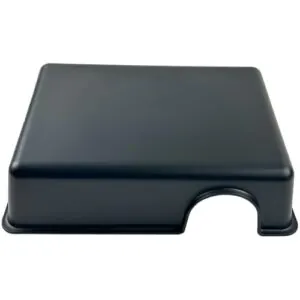
If your snake is closer to 4 feet, the Reptile Humid Hide Cave XL is worth a look. The integrated terracotta water basin on top releases moisture steadily, keeping internal humidity elevated for hours between misting sessions. A removable lid lets you refill without disturbing your snake mid-shed. The viewing window is a practical bonus during pre-shed days.
Best placed on the warm side, it fits standard 20-gallon enclosures without crowding.
| Best For | Reptile owners keeping ball pythons or leopard geckos who need a spacious hide that supports humidity, shedding, and a natural-looking enclosure setup. |
|---|---|
| Material | Polypropylene (PP) |
| Dimensions | 11.5×7.8×2.7 in |
| Color | Black |
| Humidity Method | Open-top reservoir |
| Size Category | Medium |
| Compatible Species | Ball pythons, geckos |
| Additional Features |
|
- Smooth edges and non-toxic, bite-resistant resin keep your reptile safe during everyday use
- Works as a humid hide, basking cave, or shelter, and pairs with any bedding type including bioactive setups
- Rock-textured finish blends naturally into terrarium decor without looking out of place
- May be too roomy for juveniles or smaller reptiles, leaving them feeling exposed rather than secure
- Can be a tight fit in smaller enclosures despite the listed dimensions
- Only available in black, so customizing your tank’s look isn’t really an option
How to Measure and Maintain Shed Humidity
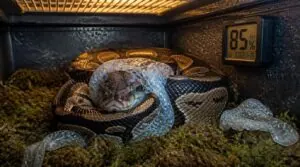
Getting the humidity right is one thing — knowing it’s actually right is another. A good hygrometer and a consistent routine take the guesswork out of shedding season entirely. Here’s what you need to know to measure accurately, maintain the right levels, and catch problems before they turn into stuck sheds.
Digital Vs Analog Hygrometers
A digital hygrometer offers ±1 to ±3% accuracy, while analog dials drift up to ±5% over time. When your ball python needs 75-80% during shed, that difference isn’t small.
Digital units respond within seconds, support humidity logging, and some trigger humidity alarm systems when levels drop. Analog needs no batteries, but serious reptile care demands numbers you can actually trust.
Where to Place Your Hygrometer
Placement is everything. A misread hygrometer wastes every adjustment you make.
Follow these four rules:
- Mid-level, inside the enclosure for true microclimate data
- Away from heat lamps by at least 6 inches
- Clear of vents to avoid airflow spikes skewing readings
- Stable, flat surface away from doorways or high-traffic drafts
Salt Test Calibration Method
Your hygrometer is only as reliable as its last calibration. The salt test gives you a stable, low-cost reference without any special gear.
| Step | Action | Target |
|---|---|---|
| Prepare slurry | Mix table salt with distilled water to a thick paste | No floating water on top |
| Seal and position | Place sensor 2 to 5 cm above slurry, not touching it | Steady, unobstructed airflow |
| Verify reading | Wait 10 minutes, log RH and temperature together | 75% RH at 25°C |
If your reading drifts past 3 percent, repeat with fresh slurry.
Misting Without Soaking Your Snake
Aim the mist at enclosure walls and ceiling, not directly at your snake. Short bursts from 15 to 20 cm away build moisture without soaking the scales.
- Spray burst timing: two misting sessions daily, maximum
- Check substrate dampness: top inch feels damp, not soggy
- Watch for surface droplet pooling, then ventilate briefly
- Keep the humid hide moist between each session
Spotting and Fixing a Stuck Shed
Dry, flaky patches on the tail or eyes signal stuck shed, also called dysecdysis.
Retained eye caps look cloudy and won’t clear on their own.
Tight shed bands on the tail can cut off circulation.
Soak your snake in 85-90°F water for 15-30 minutes, then gently roll a damp Q-tip over each cap.
Two failed soaks means call a vet.
Frequently Asked Questions (FAQs)
Are humid hides good for snakes?
Yes, humid hides genuinely help. They give your snake a localized moisture pocket during shedding, softening the old skin so it slides off cleanly, reducing stuck shed and eye cap retention.
How can I make a humidity hide for my snake?
Grab a clear plastic container 4 to 6 inches tall, cut a smooth entry hole, and fill the base with damp sphagnum moss 1 to 2 inches deep. Place it on the warm side.
How to keep a snake cage humid?
Mist the enclosure twice daily with room-temperature water. Use coconut coir or sphagnum moss as substrate, maintain ventilation after misting, and keep a humid hide on the warm side.
Is 80% humidity too high for ball pythons?
Think of 80% like turning up the heat right before a race — useful for a moment, not sustainable. Spike to 80% briefly during shedding, then drop back to 60-70% to prevent mold and respiratory stress.
Can I reuse shed skin to gauge humidity?
Shed skin can’t reliably gauge ambient humidity. Its texture changes with temperature and stress, not just moisture levels. Place a dedicated hygrometer inside your enclosure for consistent, accurate humidity monitoring across every shed cycle.
How often should I replace moss substrate entirely?
Like a damp cloth sealed in a bag, damp moss doesn’t stay fresh for long. Replace it every week under normal conditions. That keeps bacteria out and helps shedding cycle management each time.
Do hatchlings need different humidity than adults?
Yes, hatchlings need higher humidity than adults, usually 60-70%. They shed far more frequently in early weeks, and dry conditions cause stuck sheds faster on their smaller, thinner skin.
Should humidity drops after shedding is complete?
After shedding, drop humidity gradually — not sharply. A brief reduction prevents mold and skin rot, but don’t go bone-dry. Most species still need stable recovery moisture before returning to normal baseline levels.
Conclusion
Aristotle classified snakes as "cold and dry creatures" and would have completely missed the whole point.
A proper humidity box for shedding snake care works because targeted moisture solves most shed problems before they ever start. Damp substrate, a snug hide, and warm-side placement give your snake exactly what it needs. Check your hygrometer at least twice a week.
A clean, one-piece shed isn’t a happy accident. It’s what happens when the setup is right.