This site is supported by our readers. We may earn a commission, at no cost to you, if you purchase through links.
That stuck, cloudy shed dangling off your snake’s tail isn’t bad luck. It’s a humidity problem, plain and simple. Most keepers chase the wrong fix, cranking up heat or misting randomly, when the real answer sits in a narrow, specific range.
Here’s the thing: your snake’s skin needs moisture to separate cleanly from the new layer underneath. Too dry, and you get retained eye caps or patchy sheds stuck to the spine. Too damp, and you’re inviting mold into the enclosure.
Finding the best humidity for shedding isn’t guesswork. It’s a number, a method, and a routine, and I’ll walk you through all three.
Table Of Contents
- Key Takeaways
- Best Humidity Range for Snake Shedding
- Species-Specific Shedding Humidity Needs
- How to Measure Enclosure Humidity Accurately
- Boosting Humidity During Pre-Shed Phase
- Preventing Low Humidity in Dry Rooms
- Recognizing and Fixing Shedding Problems
- Maintaining Consistent Humidity Year-Round
- Frequently Asked Questions (FAQs)
- Is 70% humidity bad for hair?
- What is the ideal humidity level for ball pythons during shedding?
- Is 70% humidity too high for a house?
- Will mold grow at 50% humidity?
- Can excess moisture from stored items affect enclosures?
- How much water do drying items release indoors?
- Why do desert snakes shed well at lower humidity?
- Conclusion
Key Takeaways
- Most snakes shed cleanly between 50-70% humidity, but each species has its own sweet spot, with tropical species needing much higher levels (up to 100% at night) than desert dwellers.
- A digital hygrometer placed mid-level in the enclosure—calibrated with a simple salt test—gives you far more reliable readings than guessing or relying on drift-prone analog dials.
- Humidity needs to climb noticeably during the actual shedding phase (often 10-20% above baseline) since moist air softens keratin and lets old skin release cleanly, while dry air causes stuck eye caps and torn shedding.
- Retained eye caps and tight shed bands on the tail aren’t just cosmetic issues—they can lead to infection or tissue damage, so they call for prompt attention and sometimes a vet visit.
Best Humidity Range for Snake Shedding
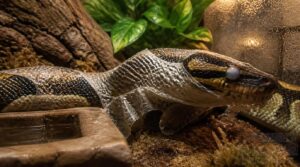
Shedding isn’t just about waiting it out—your snake’s skin needs the right moisture to let go cleanly. Get the humidity wrong, even by a little, and you’re looking at stuck patches or cloudy eye caps. Here’s what that ideal range looks like, and how to spot it before trouble starts.
If you’re noticing dull patches or retained skin around the eyes, this guide to fixing common snake shedding problems walks through the humidity fixes that help.
Why Humidity Affects Shedding
Ever wonder why your snake’s shed comes off in one clean piece some months and shreds apart the next? It comes down to skin hydration. Moist air softens keratin, the tough protein in old skin, letting it slip free easily. Dry air does the opposite, weakening the moisture barrier and causing eye caps to stick or skin to tear during shedding.
Moist air softens keratin so old skin slips free, while dry air stiffens it, causing stuck eye caps and torn shedding
This mirrors how humidity effects coat health in other animals, where moisture levels similarly determine whether shedding goes smoothly or leads to irritation.
General 50–70% Guideline
So where does that leave you? Most snakes shed cleanly somewhere between 50 and 70 percent humidity. Think of it as your baseline humidity, the number you build enclosure stability around before adjusting for species or shedding cycle.
Aim for the middle, around 60 percent. That balance keeps moisture control steady without inviting mold, giving you room for pre-shed monitoring and quick tweaks.
Signs of Correct Humidity
How do you know your humidity control is working? Watch the snake, not just the hygrometer.
Calm behavior, glossy skin, and light glass condensation all point to a healthy range. Eye cap clarity and a smooth shed chamber visit confirm it. Skip the guesswork; these physical cues, paired with humid hide use and steady humidity monitoring, tell you adjustments aren’t needed yet.
Species-Specific Shedding Humidity Needs
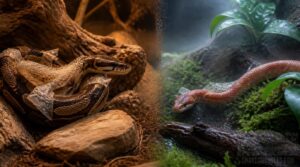
That 50–70% range is a solid starting point, but it’s not one-size-fits-all. Your ball python and your corn snake didn’t develop in the same climate, so why would they shed the same way? Here’s what each species actually needs.
Ball Python Shed Humidity
Ball pythons like it steady: around 60% humidity most days, climbing to 70-80% once shedding starts. That flush helps the old skin come off in one clean piece, not torn chunks.
Watch for shedding stress signs like dull skin or restlessness. Keep a humid hide with damp moss ready, and check daily with a digital hygrometer at snake level during pre-shed monitoring.
Corn Snake Shed Humidity
Corn snakes are forgiving sheeders, but don’t get lazy. Keep humidity 60 to 75 percent, nudging toward 70-75% once shedding starts. A few basics matter most:
- Mid-tank hygrometer placement
- Damp hide always available
- Watch for dull, grayish skin
Stay near the mid-60s daily. Anything past 80% invites mold, so balance moisture, don’t drown it.
Boa Constrictor Shed Humidity
Big-bodied and steady, boa constrictors want 60–70% humidity, climbing to 75–85% mid-shed. A humid hide with damp moss backs up your substrate’s moisture balance.
If you’re wintering your boa, keep in mind that humidity needs shift as metabolism slows, so it’s worth reading up on managing humidity during the snake brumation process before temperatures drop.
| Phase | Humidity Range |
|---|---|
| Baseline | 60–70% |
| Shedding | 75–85% |
| Seasonal shift | ±5% |
| Alert threshold | 55% |
Mist lightly, morning and evening, watching ventilation so humidity doesn’t stagnate.
Tropical Species Needs
When your snake hails from a rainforest, ambient bedroom air just won’t cut it. Rainbow boas and similar tropical species need up to 100% humidity at night, no exceptions. Your enclosure needs true tropical humidity zones: dense moss mats, a snug humid hide, and gradients letting your snake practice natural humidity seeking behavior. Skimp here, and dysecdysis follows fast.
- Mist heavily at dusk
- Layer live sphagnum moss
- Check hide moisture daily
- Watch for pacing (seeking behavior)
- Log nightly humidity readings
How to Measure Enclosure Humidity Accurately
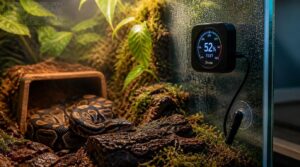
Guessing at humidity gets you nowhere—your snake needs facts, not hunches. The right tools, placed the right way, tell you exactly what’s happening inside that enclosure. Here’s what actually works.
Digital Vs Analog Hygrometers
Guessing humidity gets you nowhere. Digital hygrometers read within 2-3% accuracy, while analog dials drift 5% or more. Digital needs batteries but adds data logging and alarms. Analog skips power entirely, stays rugged, and costs less upfront.
For tracking humidity control through shedding, digital’s precision wins, though analog still works as a reliable backup.
Proper Hygrometer Placement
Where you mount that hygrometer matters as much as which one you buy.
Skip corners and stagnant pockets, mount mid-level, away from drafts, vents, and heat sources. Avoid direct sun or the enclosure’s warm side, both skew readings.
Let it settle 20-30 minutes before trusting the number. Good placement keeps your relative humidity readings honest.
Calibrating With Salt Test
Trust but verify, that’s the rule for any digital hygrometer.
Mix salt with a little distilled water into a damp slurry, not soupy, seal it in a small container with your hygrometer nearby but not touching. Wait 6-8 hours. It should read 75% relative humidity. Off by a few points? Note the offset and adjust future readings accordingly.
Tracking Readings Before Shed
Once your hygrometer is calibrated, put it to work. Start daily humidity logging two weeks before the expected shedding cycle, twice a day.
- Note temperature alongside humidity
- Track peak times against misting
- Compare hide sensor to room sensor
This preshed phase pattern reveals your snake’s stable range, real pre-shed trend analysis you can trust before shedding starts.
Boosting Humidity During Pre-Shed Phase
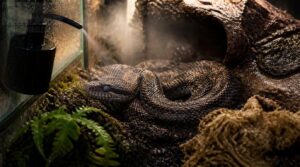
That dull, blue-tinged look means your snake’s shed cycle has started — and now’s the time to act. You don’t need fancy equipment, just a few smart tweaks to your setup. Here’s what actually moves the needle on humidity.
Using a Humid Hide
Think of the humid hide as a private steam room for your snake. Place it on the warm side, near heat, away from vents.
Fill it with damp moss, checked every 24 to 72 hours during shedding. Done right, it holds around 70 percent humidity, softening skin from the inside and easing the whole shedding cycle without soaking the enclosure.
Best Substrate for Moisture
The humid hide works best sitting on the right foundation. Your substrate does the daily work, holding moisture between mistings.
Coconut coir absorbs huge amounts of water, releasing it slowly.
Try layering:
- Coconut coir base for steady moisture retention
- Cypress mulch mixed in for tropical species
- Damp moss on top near the humid hide
That combo keeps substrate moisture balanced without turning soggy.
Safe Misting Techniques
Good substrate controls baseline moisture, but shedding season calls for backup. That’s where misting comes in.
Use a fine spray setting, held 15-20 cm from the enclosure walls, never aimed at your snake. Two mistings daily, max, skipping nighttime sessions.
Let everything dry before handling. Damp moss near the humid hide stretches the effect between sprays.
Preventing Low Humidity in Dry Rooms
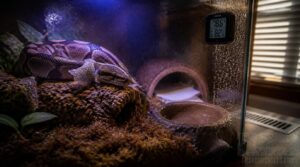
Some rooms just fight you on humidity, no matter how much you mist. The good news? Most dry-air problems come down to a handful of fixable culprits. Here’s what’s likely draining moisture from your snake’s enclosure—and how to stop it.
Common Causes of Dry Air
Your snake’s tank isn’t the only thing drying out. Winter heating systems strip moisture from indoor air, while indoor air sealing traps it without replenishing it.
Culprits include:
- Bathroom exhaust fans running too long
- Top floor dryness from stack effect
- Closed doors heat conservation cutting airflow
Result? Chronic dry air battling your misting schedule and humid hide, no matter how solid your humidity control setup is.
Crossflow Ventilation Basics
Picture two screened vents facing each other, low intake and high exhaust, across your snake room. That’s crossflow ventilation: pressure pushes air from the high side to the low, cycling stale humidity out without a single fan.
Opening placement and size control the volume. Balanced inlets and outlets curb stagnant pockets, keeping your enclosure setup naturally drier between mistings.
Using a Humidistat-Controlled Fan
Some rooms just won’t hold humidity, no matter how many vents you balance. That’s where a humidistat-controlled fan earns its keep, cycling air automatically once RH crosses your setpoint, adjustable in 5% increments.
Pair dual sensor combination for humidity and temperature, place sensors away from drafts, and consider smart home compatibility for remote checks. Energy efficient motors keep costs low while running.
When to Use a Dehumidifier
Sometimes a fan just can’t win against a soggy room. If ambient RH sits above 60% for days, bring in a dehumidifier to protect enclosure humidity.
- Watch for condensation or musty odors
- Check for mold or peeling paint
- Track humidity twice daily
Run it until readings stabilize near 45%, then shut off.
Recognizing and Fixing Shedding Problems
Even with perfect humidity, sheds don’t always go smoothly. Some problems show up as cosmetic quirks, while others are real medical warnings. Here’s what to watch for, and what to do about each one.
Retained Eye Caps
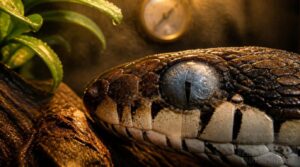
That milky ring around your snake’s eye after a shed? It’s called dysecdysis, and it means the eye cap didn’t come off clean.
Retained eye caps trap debris and moisture, raising skin infection risk fast. Left alone, they can scar the cornea.
Better humidity control during pre-shed prevents most cases. If caps linger past one cycle, veterinary intervention is your safest move.
Tight Shed Bands on Tail
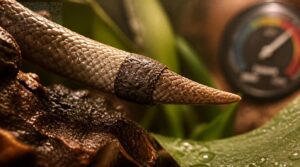
A dark ring near the tail tip? That’s a shed band, old skin clinging where scales meet tightly. Dry air and low humidity during pre-shed cause it, hardening the fold instead of loosening it.
Check tail circulation daily. Feel for swelling or coolness below the band, both signal trouble.
Assess texture, too. Soft usually resolves; rigid, cracking bands risk tail necrosis without intervention.
When to See a Vet
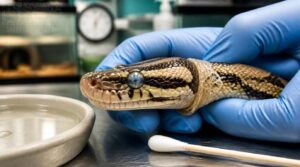
So when does dysecdysis cross into an emergency? If retained eye caps stay put after gentle attempts, or tight shed bands cut circulation, call your vet immediately.
Watch for breathing difficulty or gum discoloration too, both signal real trouble. Stuck shed alone isn’t always urgent, but combined with these signs, it is.
Maintaining Consistent Humidity Year-Round
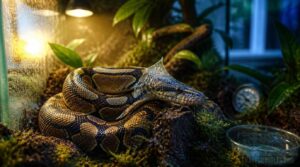
Getting the humidity right once is easy. Keeping it right through every season, every shed, every dry spell? That takes a system, and here’s how to build one.
Seasonal Humidity Adjustments
Rarely does humidity sit still all year, so your setup can’t either. Winter heating can drag levels toward 30-50%, while summer air pushes 40-60%. Adjust humidifier timing and ventilation each season, keep readings within a 10% band, and recalibrate hygrometers at season start.
- Spring: 50-60%
- Summer: 40-60%
- Fall: 50-65%
- Winter: 30-50%
- Recheck monthly
Weekly Hide Maintenance Routine
Seasonal tweaks only work if the hide itself stays clean. Set a weekly hide cleaning schedule: wash with reptile-safe soap, disinfect fully, dry completely before replacing damp moss. Check substrate moisture, it should feel like a wrung-out sponge. Verify airflow around the hide, and inspect eye caps during handling. Skip this routine, and dysecdysis creeps back in.
Balancing Ventilation and Moisture
A clean hide means nothing if airflow fights it. Get crossflow vent positioning right, low intake, high exhaust, opposite sides, and drier air pushes through without stripping your humid hide dry.
Add a humidistat fan activation point, and misting becomes backup, not your main tool. Substrate moisture retention plus steady humidity adjustments keeps enclosure humidity stable, no constant babysitting required.
Frequently Asked Questions (FAQs)
Is 70% humidity bad for hair?
Picture your strands drinking in moisture like a sponge dropped in a bathtub. At 70%, hair swells, cuticles lift, and frizz risk climbs fast, especially for curly or fine, straight types craving smooth moisture balance.
What is the ideal humidity level for ball pythons during shedding?
Aim for 60 to 70 percent daily, climbing to 75 to 80 percent during the blue phase. This range prevents dysecdysis and retained eye caps while supporting a clean, complete shed for your ball python.
Is 70% humidity too high for a house?
Funny how the humidity your snake craves is the same number that’ll rot your windowsills. Yes, 70% is too high for a house: mold growth risk, warped wood, and poor air quality follow fast. Grab a dehumidifier and a hygrometer.
Will mold grow at 50% humidity?
Generally not. Mold needs sustained moisture, and 50% RH sits right at the edge, borderline in warm rooms or poorly ventilated spaces. Watch condensation on walls, run a hygrometer, and keep airflow steady to stay safe.
Can excess moisture from stored items affect enclosures?
An ounce of prevention beats a pound of cure. Yes, damp stored items raise mold growth risk, spark condensation damage, and cause material corrosion, hurting air quality.
Smart storage solutions support real moisture control and steady mold prevention inside your enclosure.
How much water do drying items release indoors?
A full laundry load releases roughly 2 litres of moisture indoors per cycle. Without ventilation, that pushes relative humidity toward 70-80%, rivaling snake enclosure conditions.
Nearby reptile rooms need airflow, substrate balance, or live plant transpiration to offset that rise.
Why do desert snakes shed well at lower humidity?
Nature simply gave arid species a head start. Their skin adaptations limit water loss, while sharp behavioral strategies and smart microhabitat selection, like rock crevices, supply just enough moisture for a clean shedding process at lower relative humidity.
Conclusion
Like Goldilocks choosing the just-right bed, your snake needs conditions that are neither parched nor swampy.
The best humidity for shedding is the level that matches its species, stays stable, and is checked with a reliable digital hygrometer. Watch the whole shed, especially eyes and tail tip, rather than chasing a single reading.
A humid hide, sound ventilation, and veterinary care when trouble persists turn shedding from a gamble into a routine sign of health.
- https://www.consumerreports.org/appliances/humidifiers/why-the-right-home-humidity-matters-a4457720331/
- https://petcarelab.co/blog/ball-python-humidity-setup-to-prevent-stuck-shed
- https://www.ndsu.edu/agriculture/extension/measure-humidity-level-avoid-dry-skin-respiratory-irritations-and-excess-moisture