This site is supported by our readers. We may earn a commission, at no cost to you, if you purchase through links.

A classroom ball python doesn’t hide because it’s shy. It hides because a bare tank feels like open sky to something built to slide under leaf litter, and without cover, that snake stays stressed, off its feed, and slow to trust the dozens of hands reaching toward it each week.
That’s where snake hide boxes for classrooms earn their keep. The right hide does more than offer a place to hunker down. It helps with thermoregulation, shedding, and the low-key confidence that makes a snake safe to handle in front of twenty-five kids.
Picking one means balancing size, material, and safety in ways most product listings never explain. Here’s what actually matters, and ten hides worth your budget.
Table Of Contents
- Key Takeaways
- Top 10 Snake Hide Boxes for Classrooms
- 1. Large Black Reptile Hide Box 2 Pack
- 2. FCALIVV Reptile Hide Box Large
- 3. Leoterra Reptile Hide Medium Size
- 4. LEOTERRA Large Snake Hide Reptile Enclosure
- 5. Reptile Resin Hide Cave for Snakes
- 6. Reptile Hide XL for Snakes and Lizards
- 7. Pangea Reptile Hide Box Large Plastic
- 8. Reptile Hide Box Humidifier Cave
- 9. Tfwadmx Reptile Humid Hide Box
- 10. JIHAQUA Natural Rock Reptile Hide Medium
- Choosing Classroom-Safe Snake Hide Boxes
- Sizing Hides for Classroom Snakes
- Placing Hides for Proper Conditions
- Cleaning Hides With Student Help
- Frequently Asked Questions (FAQs)
- Conclusion
Key Takeaways
- Give your snake at least two hides—one on the warm side and one on the cool side—so it can regulate its body temperature without feeling forced to choose between comfort and cover. Once the hides are in place, you can make the rest of the tank feel safe too, with snake tank decoration ideas like cork bark, foliage, and climbing branches. A third, humid hide on the warm side helps your snake shed cleanly, and safe snake hiding places like snug, heavy, easy-to-clean shelters make it feel even more secure. Once the hides are set, reptile habitat decoration ideas can help you layer in textures and clutter that make the whole enclosure feel secure. If you’re shopping for shelters, our guide to the best caves for corn snakes shows which sizes and materials give your snake a snug, secure fit.
- Match the hide’s size to your snake’s life stage, since a snug, wall-touching fit reduces stress far more than a roomy box, and you’ll need to size up as it grows.
- Stick to non-porous, BPA-free materials like resin or ABS plastic, since they hold up to daily disinfecting and won’t harbor bacteria in a busy classroom setting.
- Build a simple cleaning routine—quick daily spot-checks plus a deeper weekly disinfection—to keep the habitat safe while giving students a hands-on lesson in responsibility.
If you’re not sure which style works best for your setup, beginner-friendly snake hide box options can help you find snug, secure choices your snake will actually use.
Top 10 Snake Hide Boxes for Classrooms
A good hide box can make or break a classroom snake’s sense of security—and not every option on the market gets the sizing or materials right. That’s why we’ve rounded up ten picks that hold up to student handling, daily cleaning, and the wear of busy enclosures.
For a closer look at how each hide performs in a real classroom setting, this guide to classroom snake hides breaks down sizing, cleaning ease, and durability side by side.
Here’s what to look for, starting with our top choices.
1. Large Black Reptile Hide Box 2 Pack
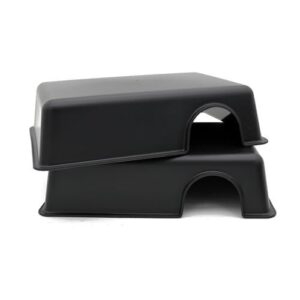
Two black hide boxes, one purchase, zero guesswork for multi-tank classrooms. Each box runs roughly 10 by 9 by 9 inches, built from non-porous black plastic that wipes clean with standard disinfectants in minutes.
The offset door opening isn’t just cosmetic. It gives snakes a den-like entry point that reduces stress, while contoured interior walls let them coil comfortably without feeling cramped or exposed.
Low profile bases resist tipping if bumped during demonstrations, a real plus with curious students nearby.
| Best For | This hide box is best for owners of small to medium snakes and geckos who want an affordable, easy-to-clean shelter for their terrarium setup. |
|---|---|
| Material | Plastic |
| Color | Black |
| Weight | N/A |
| Cleaning Ease | Easy spot cleaning |
| Entrance Size | 2.1×1.5 in |
| Target Reptiles | Snakes, geckos |
| Additional Features |
|
- Made of thick, durable plastic designed for long-term use
- Smooth interior surface makes spot cleaning quick and easy
- Comes as a 2-piece pack, offering good value for multi-tank setups
- May be too small for adult snakes over 400g or larger species
- Some users report a size discrepancy between the listed and actual dimensions
- Plastic construction may retain heat when placed under direct lighting
2. FCALIVV Reptile Hide Box Large
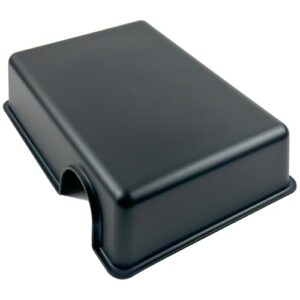
If two hides feel like overkill, the FCALIVV Large scales things down without cutting corners. At 12 by 8 by 6 inches, it gives roughly 96 square inches of floor space, plenty for hatchlings or juveniles sharing a 10-to-20-gallon setup.
BPA-free plastic resists warping under classroom heat mats, and rounded edges keep curious hands safe. The 3.5 by 2.5-inch entrance suits smaller snakes well, though adult ball pythons will outgrow it fast.
| Best For | small to medium reptiles like leopard geckos, young ball pythons, and other small snakes or tarantulas that need a secure, humidity-friendly hideaway. |
|---|---|
| Material | Plastic |
| Color | Black |
| Weight | 5.29 oz |
| Cleaning Ease | Easy cleaning |
| Entrance Size | Not specified |
| Target Reptiles | Ball pythons, geckos |
| Additional Features |
|
- Durable, easy-to-clean plastic construction that holds up well over time
- Compact size fits neatly into smaller enclosures without taking up much space
- Doubles as a humid hide, helping maintain proper moisture levels for shedding reptiles
- Entrance and interior may be too small for adult ball pythons or other larger snakes
- Basic, no-frills design lacks the natural look of decorative hides
- Owners should measure their reptile against the entrance size before buying to avoid a poor fit
3. Leoterra Reptile Hide Medium Size
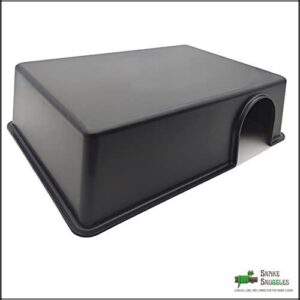
Scaling further down, the Leoterra Medium fits snakes that don’t need a full-sized cave. At roughly 9 by 6 by 4 inches, it’s built for mid-sized snakes like corn snakes or younger ball pythons still settling into a 20-gallon tank.
The smooth, non-porous interior wipes clean fast, and its black shell cuts glare while blending into most terrarium setups, a small but classroom-friendly touch when multiple enclosures line a shelf.
| Best For | The Leoterra Medium Reptile Hide is best for owners of small to medium snakes like corn snakes, king snakes, and younger ball pythons housed in 20-gallon tanks. |
|---|---|
| Material | Plastic |
| Color | Black |
| Weight | 5.11 oz |
| Cleaning Ease | Easy to clean |
| Entrance Size | 2.75×2.36 in |
| Target Reptiles | Ball pythons, corn snakes |
| Additional Features |
|
- Compact entrance and rounded edges make it easy and safe for snakes to access
- Smooth, non-porous surface wipes clean quickly and resists odor buildup
- Top seal design helps retain humidity, and the sleek black shell blends into most terrarium setups
- Some units arrive cracked, suggesting inconsistent quality control
- The lightweight plastic can shift or flip inside the enclosure
- Not suitable for snakes over 200g without confirming size compatibility first
4. LEOTERRA Large Snake Hide Reptile Enclosure

When a classroom snake outgrows that medium hide, the LEOTERRA Large steps in at roughly 16.5 by 10.6 by 4.3 inches, built for adult ball pythons and similarly sized species.
Its hinged lid carries a weather seal that locks in humidity for proper shedding, while rounded edges keep curious student hands safe during handling. The stackable shape fits neatly into standard 20-gallon tanks, so classrooms running multiple enclosures won’t lose shelf space.
| Best For | Owners of adult ball pythons, corn snakes, king snakes, milk snakes, and other sub-adult reptiles who need a secure, humidity-retaining hide for classroom or home enclosures. |
|---|---|
| Material | Plastic |
| Color | Black |
| Weight | 8.78 oz |
| Cleaning Ease | Easy to clean |
| Entrance Size | 2.75×2.55 in |
| Target Reptiles | Ball pythons, corn snakes |
| Additional Features |
|
- Top seal design locks in humidity, helping snakes shed properly
- Durable plastic build with rounded edges keeps hands and animals safe from injury
- Easy to clean, odor-resistant, and sized to fit standard 20-gallon terrariums
- Some units may arrive cracked or damaged during shipping
- Adhesive labels or stickers can be tough to fully remove
- Lightweight design may cause the hide to shift or flip when the snake moves around
5. Reptile Resin Hide Cave for Snakes
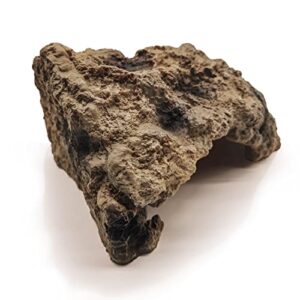
Rock texture meets real function here. This resin cave uses non-toxic, BPA-free material with smooth interior walls that won’t abrade scales during shedding.
With three separate hide zones to choose from, your snake can settle wherever feels right, since whether ball pythons prefer tight or spacious hides often comes down to their individual comfort and confidence level.
Its shatter-resistant build stands up to daily student contact without cracking, and the low profile prevents tipping. The dark cavity aids thermoregulation while retaining ambient heat on the warm side.
Cleanup takes minutes: rinse with lukewarm water, sand light scratches monthly, and wipe with reptile-safe disinfectant between classes. Color holds steady under classroom lighting, too.
| Best For | This resin hide cave is best for reptile and amphibian owners looking for a space-saving corner hide for bearded dragons, snakes, geckos, or turtles. |
|---|---|
| Material | Resin |
| Color | Gray |
| Weight | 1.29 lb |
| Cleaning Ease | Easy to clean |
| Entrance Size | 5.9×2.8 in |
| Target Reptiles | Bearded dragons, snakes |
| Additional Features |
|
- Right-angle design fits neatly into tank corners, maximizing usable space
- Large entrance (5.9" wide, 2.8" high) offers a secure, stress-reducing hideaway
- Made of easy-to-clean resin suitable for reptile and amphibian enclosures
- Some units arrive with sharp edges that need sanding before use
- May not be spacious enough for larger adult bearded dragons
- Lightweight build can shift or float, and paint quality has been criticized as unrealistic
6. Reptile Hide XL for Snakes and Lizards
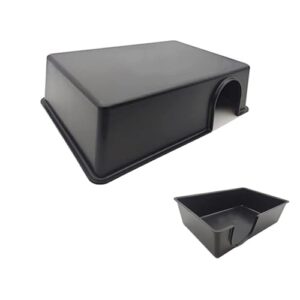
Twelve inches minimum, this hide earns its spot for enclosures housing larger adults. Exterior length runs 12 to 16 inches, with an 8 to 12 inch inner chamber that lets bigger-bodied snakes align comfortably instead of jamming into corners.
The non-toxic molded plastic resists cracking under daily handling, and rounded edges cut down on injury risk during entry and exit. Sealed seams keep substrate out and humidity steady, while a non-slip base prevents shifting during classroom cleaning or accidental bumps.
| Best For | This XL hide is best for owners of juvenile ball pythons, corn snakes, and geckos who want a secure, low-maintenance retreat for their terrarium. |
|---|---|
| Material | Plastic/Resin |
| Color | Black |
| Weight | 9.59 oz |
| Cleaning Ease | Easy wiping |
| Entrance Size | 2.75×2.55 in |
| Target Reptiles | Ball pythons, corn snakes |
| Additional Features |
|
- Generously sized at 13.25" x 8.8" x 3.1", giving smaller reptiles plenty of room to settle in comfortably
- Smooth, non-porous plastic and resin construction makes cleaning quick and easy
- Doubles as a humid hide when moss or substrate is added, helping maintain healthy humidity levels
- Black material can retain heat, so it should be kept away from direct basking light
- The 2.75" x 2.55" entrance may be too small for adult, large-bodied snakes
- Some units may show minor warping or surface scratches from shipping
7. Pangea Reptile Hide Box Large Plastic
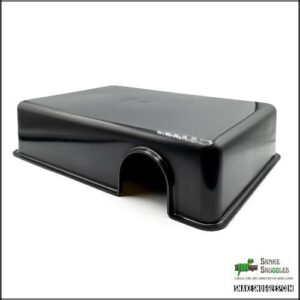
Heavy duty and built to last, this hide withstands years of classroom rotation without cracking. At 13 to 14 inches long with 4 to 5 inch height, it fits large juveniles through adults comfortably.
The off-center door boosts perceived security, and 1/8 inch thick ABS plastic resists impact from daily handling. Non-porous surfaces wipe clean fast, while the stackable design lets you add hides as your collection grows, no tools required.
| Best For | This hide box is best for owners of ball pythons and similarly sized reptiles who want a simple, easy-to-clean hiding spot for either the warm or cool side of the enclosure. |
|---|---|
| Material | Plastic |
| Color | Black |
| Weight | 9.59 oz |
| Cleaning Ease | Easy cleaning |
| Entrance Size | Not specified |
| Target Reptiles | Ball pythons |
| Additional Features |
|
- Smooth, single-piece plastic construction makes cleaning quick and helps prevent bacterial buildup
- Lightweight yet durable design lowers the risk of injury if a pet moves or knocks it around
- Spacious enough for reptiles to fully enter, turn around, and even bask on top
- May need to be weighted down since active snakes can tip it over
- Some users report durability issues when exposed to heat for long periods
- Interior space can feel smaller than the exterior dimensions suggest
8. Reptile Hide Box Humidifier Cave
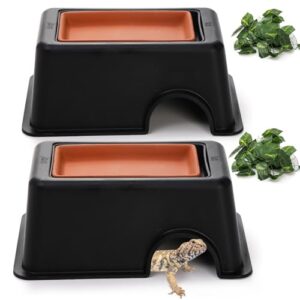
Shedding trouble usually comes down to one thing: not enough moisture where it counts. This hide solves that with a built-in humidifier reservoir at the top, releasing water slowly into the cave below without soaking your substrate.
The directional design pulls humidity straight to the entry point, so your snake gets a true microclimate during ecdysis. Non-porous resin construction resists mold, and the removable lid makes refilling simple. It’s sized to slide into standard classroom tanks without stealing viewing space.
| Best For | This hide is best suited for juvenile snakes, leopard geckos, anoles, house geckos, and other small reptiles or amphibians that need extra humidity support during shedding. |
|---|---|
| Material | Plastic/Ceramic |
| Color | N/A |
| Weight | N/A |
| Cleaning Ease | Easy hygiene |
| Entrance Size | 1.7×1.2 in |
| Target Reptiles | Geckos, snakes |
| Additional Features |
|
- Slow-release sink keeps humidity steady near the entrance for 24-48 hours, supporting a smoother shed
- Two hide box styles plus artificial plant leaves make it easy to set up a secure, decorated space
- Compact size fits neatly into standard tanks without taking up much viewing room
- Entrance opening is too narrow for adult leopard geckos, African fat-tailed geckos, or other larger reptiles
- Some units may arrive with chipped corners or sharp edges that need to be sanded down
- Small, low-ventilation design isn’t a good fit for animals that need larger enclosures or more airflow
9. Tfwadmx Reptile Humid Hide Box
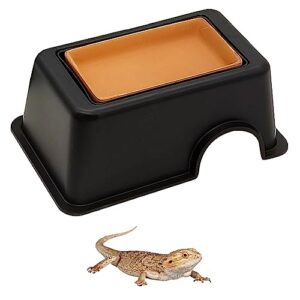
Want a hide that doubles as an observation post? The Tfwadmx unit uses a vented, molded plastic shell to keep condensation off interior walls while a removable liner holds damp substrate for steady humidity. Its entrance fits small to medium snakes without crowding, and a front window lets students check on your snake without lifting the lid, which cuts down on disturbance. These stack neatly, too, making them a practical pick for multi-tank classroom setups.
| Best For | This hide is best suited for owners of small reptiles and amphibians, like leopard geckos, small snakes, and tarantulas, who want an affordable way to support shedding and provide a secure, private hiding spot. |
|---|---|
| Material | Plastic |
| Color | Black |
| Weight | 7.8 oz |
| Cleaning Ease | Easy cleaning |
| Entrance Size | 1.9×1.2 in |
| Target Reptiles | Geckos, snakes |
| Additional Features |
|
- Creates a humid microclimate that helps with shedding and molting
- Lightweight, portable design makes placement and cleaning simple
- Doubles as a hide, water dish, or humidity box depending on your setup
- May not reach ideal humidity levels in every enclosure (some users report a cap around 55%)
- Too small for adult leopard geckos or larger reptiles
- The terracotta bowl can be tricky to remove for cleaning or refilling
10. JIHAQUA Natural Rock Reptile Hide Medium
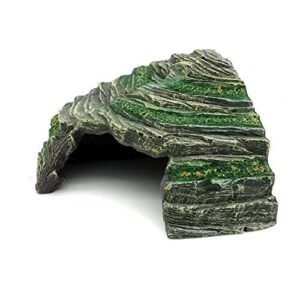
Rounding out the list, the JIHAQUA Natural Rock brings a realistic cave shelter to classroom tanks, blending brown, gray, and tan tones into most substrates. At 6.7 x 6.7 x 4 inches and just over a pound, it suits small to medium snakes needing a snug, low-stress retreat.
Its resin build resists cracking under daily handling, and rounded edges cut bump risks during student interaction. The non-porous surface wipes clean fast, though some users note tighter fits for larger reptiles.
| Best For | This natural rock hide is best for small to medium reptiles, amphibians, and other small pets like hamsters, fish, shrimp, and turtles that need a secure, humid hiding spot. |
|---|---|
| Material | Natural Rock |
| Color | Green |
| Weight | 1.01 lb |
| Cleaning Ease | Easy cleaning |
| Entrance Size | Not specified |
| Target Reptiles | Bearded dragons, geckos |
| Additional Features |
|
- Naturalistic look blends easily into terrestrial or aquatic terrariums
- Sturdy, stable design resists tipping even with larger reptiles around
- Non-porous surface makes cleaning quick and simple
- Some customers have noted sharp edges that could pose a risk to pets
- May run smaller than expected for full-sized adult bearded dragons
- Mixed reviews on whether the size truly fits larger reptiles comfortably
Choosing Classroom-Safe Snake Hide Boxes

A classroom hide box has to hold up to more than one snake’s habits—it’s handling curious hands, daily cleaning, and constant use. That means material, durability, and design all matter just as much as looks. Here’s what to check for before you pick one for your enclosure.
Non-Porous, Student-Safe Materials
Material matters more than looks when thirty kids’ hands touch the same hide daily. Choose nonporous resin or plastic with BPA-free, phthalate-free certification.
- Resists moisture 24 hours
- Cleans with 70% isopropyl
- Blocks mold growth
- Survives hot-water disinfection
Easy-disinfect finishes keep student-safe maintenance simple and chemical-free. Just as classrooms have found that structured, hands-on engagement with materials builds better habits over time, research on data-centered learning approaches shows that consistent, guided interaction improves both skill and confidence.
Durable, Impact-Resistant Construction
Clean surfaces mean little if a hide cracks under a curious tug. Look for heavy 18 thick polypropylene or ABS builds that are nearly unbreakable, with reinforced walls absorbing shocks instead of splitting. Rounded corners and sealed seams add structural reinforcement, while smooth inner and outer surfaces keep impact resistance and moisture proofing working together for a durable reptile habitat that survives daily classroom handling.
Secure, Low-Stress Hide Designs
Toughness only matters if the snake actually wants to go inside. Entrances need rounded entry edges and a low profile entrance, so hatchling snakes push through without pinching or resistance. Smooth interior coating stops scales from snagging mid-retreat.
Pair that with a wide base footprint for stability, and you get secure reptile hiding spots that genuinely lower stress instead of just looking sturdy.
Easy-Access Removable Components
A snug entrance means nothing if you can’t get inside for cleanup. Look for quick latch access and tool-free panels that pop open in seconds.
- Twist-lock ports for one-motion release
- Slide-in panels for fast refilling
- Modular dividers for custom chambers
- Removable bases for full sanitation
- Color-coded parts for easy reassembly
Cost and Long-Term Value
A few extra dollars upfront buys years of peace of mind. Classroom grade hides run 15 to 40 percent higher in initial purchase price, but durable materials and easy to clean surfaces mean less replacement down the road.
Look for warranty coverage and multi pack savings. Replacement parts extend life, cutting long term costs while proving true reptile hide durability for busy classrooms.
Sizing Hides for Classroom Snakes
Size matters more than most people realize for a snake feeling safe in its hide. A box that’s too big leaves your snake exposed and stressed, while one that’s too small just won’t fit. Here’s how to get the dimensions right for every stage of growth.
A hide that’s too big leaves a snake exposed and stressed, while one too small simply won’t fit
Hatchling Hide Dimensions
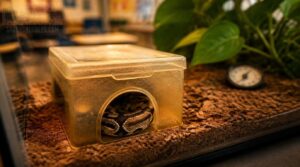
A hatchling ball python needs a snug, cave-like space, not a roomy suite. Aim for 3.5 by 3.5 inch interiors, 2.5 inches tall, with a 0.75 inch entrance. Wall contact on both sides matters most:
- Fits snakes up to 4 inches
- Smooth polymer floor
- Radiused corners
- Curved entry lip
- Snap-lid access
Juvenile Snake Sizing
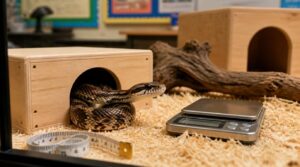
Six months in, that hatchling’s a different animal, literally. Juveniles up to 400mm need 6-8cm interior diameter, with weight benchmarks around 20-150 grams guiding your upsize timing.
| Stage | Length | Interior Size |
|---|---|---|
| Hatchling | 12-24" | 3.5×3.5" |
| Juvenile | up to 400mm | 6-8cm diameter |
| Subadult | growing fast | track monthly |
Growth rate tracking matters here, especially for colubrids maturing quickly.
Adult Snake Floor Space
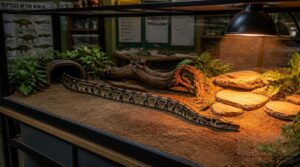
Full-grown ball pythons need real room to move, not just a hide box. Adult snakes require floor area 1.5 to 2 times body length, with a minimum of 4 by 2 feet for medium-sized species.
Your classroom setup should offer:
- Continuous flooring without gaps that trap or stress the snake
- Shallow substrate depth for burrowing without slipping
- Access to warm and cool zones for thermoregulation
Safe Entrance Width
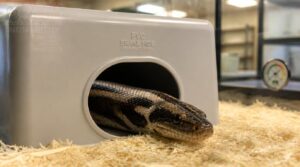
Can your snake slide in without scraping its sides? Entrance width should run 1.5 to 2 times body diameter, keeping edges smooth plastic or nonporous resin.
| Snake Size | Entrance Width | Material |
|---|---|---|
| Hatchling | 1.5–2 in | ABS plastic |
| Juvenile | 3–4 in | HDPE |
| Adult | 6–8 in | PVC |
Rough openings snag scales during handling, risking injury in busy classroom tanks.
Checking for a Snug Fit
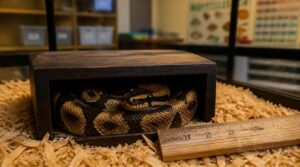
A snug fit means walls touch your snake without gaps for shifting. Measure body width at midsection, then verify:
- Interior width within 5% of body diameter
- Chamber height clears the head when coiled
- Floor area doubles body width in length
Recheck after adding substrate. Hatchling Ball Pythons need Small Hides with true coiled contact comfort, not roomy extra space.
Placing Hides for Proper Conditions
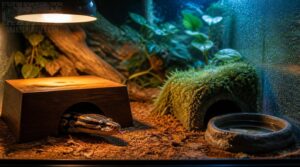
Sizing gets your snake a hide that fits—placement gets it a home that actually works.
Where you put each box shapes your whole enclosure’s microclimate, from basking heat to shaded, humid corners.
Here’s how to position hides across the tank for a setup that helps natural thermoregulation and healthy shedding.
Warm-Side Hide Placement
Right next to the heat source is where this hide belongs, with a 2 to 3 inch buffer so snakes don’t overheat while basking. Good thermal gradient management keeps floor temps between 78 and 90°F.
Choose non-porous materials with real thermal mass, and skip drafty corners. Consistent warmth here helps with shedding, reduces stress, and rounds out your hide placement strategy.
Cool-Side Hide Placement
Now flip to the far end, opposite that heat source, where the cool hide keeps snakes 10-15°F lower for real thermal gradient management.
Back it against a wall for a dead-end retreat, boosting security without blocking student-safe observation.
- Place at max distance from heat
- Keep 70-80°F range
- Avoid secondary heaters nearby
- Match warm-side hide style
- Allow easy front access
Mid-Tank Hide Benefits
For enclosures over 40 gallons, a midtank option fills the gap between hot and cool zones, adding thermal stability when temps swing.
| Benefit | What It Does | Classroom Value |
|---|---|---|
| Stress reduction | Offers instant escape route | Calmer handling demos |
| Observation access | Central viewing angle | Easy behavior tracking |
| Maintenance ease | Simple removable design | Quick between-class cleaning |
Hide entrance design and interior dimensions should match your snake’s size for real security.
Humidity Hide Setup
Shedding season calls for its own setup: a humidity control hide with damp substrate filling one third to half its interior. Coconut coir or sphagnum moss holds moisture without turning soggy. Keep the doorway smooth-edged and ventilation balanced so condensation doesn’t pool.
This reptile humidity hut helps with proper ecdysis while staying sanitary between classroom demos.
Temperature and Humidity Monitoring
Guessing at temperatures wastes a hide’s whole purpose. Use a calibrated sensor with ±0.5°C accuracy near each hide, checking calibration against a known reference yearly.
Wireless transmission logs readings every 60 seconds, with threshold alerts flagging temps above 28°C or RH below 35%. Humidity compensation keeps readings stable during rapid shifts, so your thermal gradient stays trustworthy, not guesswork.
Cleaning Hides With Student Help

A clean hide isn’t just tidy—it’s a safety net against bacteria and stress in a busy classroom. Getting students involved turns routine upkeep into a real lesson in responsibility and hygiene. Here’s how to build a cleaning routine that keeps your hide, and your snake, healthy.
Five-Minute Daily Spot-Cleaning
Set a five-minute timer and rotate students through quick wipe-downs, one minute per hide.
Brush loose debris from entrances, wipe walls with a microfiber cloth, then check for moisture.
This daily spot-cleaning routine keeps classroom reptile tanks sanitary, reduces snake stress, and works fast on easy-clean reptile decor.
Always verify safe handling before students approach any hide.
Weekly Disinfection Routine
Once a week, daily wiping isn’t enough. Start with surface preparation: a general-purpose cleaner strips away soil and organic matter before disinfectant touches anything.
Apply hospital-grade disinfectant with a microfiber cloth, keeping full contact time as labeled. Check disinfectant dilution often, replacing cloudy solutions. Finish with a visual inspection, confirming every surface sits clean and dry.
Student-Safe Cleaning Supplies
Kids handle the cleanup, so your supply cabinet needs fragrance free and low VOC formulas that won’t trigger asthma. Stick to nontoxic, certified green products.
- Fragrance free spray
- Low VOC wipes
- Non porous cloth
- SDS binder on hand
Easyclean decor plus these swaps make daily spotcleaning and weekly disinfection genuinely student-safe.
Classroom Inspection Checklists
A checklist only works if someone owns it. Assign a safety coordinator to run training and keep hazard logging on schedule, with inspection rotation dates tracked for every classroom reptile tank.
Document findings with photos, inspector names, and corrective action tracking for student-safe maintenance. Solid reptile enclosure setup and hide sizing guide compliance both depend on this paper trail.
Observing Natural Snake Behaviors
Cleaning time doubles as a science lesson. Have students log thermal regulation observation (basking near warm-side hides) and shedding behavior tracking (dull skin, hide-seeking). Watch for defensive posture analysis, like coiling or flattening, and scent trail investigation around entrances.
These student observation protocols turn routine care into hands-on reptile behavior observation, reinforcing why safe hide materials for schools and proper hide box sizing guide practices matter daily.
Frequently Asked Questions (FAQs)
How many hide boxes does one snake need?
Two hides, minimum, one warm and one cool, so your snake can thermoregulate without stress. This twohide preference test applies to hatchlings through adults, supporting natural behavior and reducing shutdown-style hiding.
Can hide boxes go directly on heating elements?
No. Direct contact causes thermal damage to plastic or resin, risking burns to your snake. Keep heat source clearance of 1 to 2 inches for airflow, use thermostatically controlled substrate heaters, and check weekly for warping.
What if a snake refuses to use its hide?
Refusal often signals stress reduction needs: check sizing, placement, or humidity first. Adjust entrance width, temperature gradient, or moisture levels. Persistent avoidance paired with poor appetite means it’s time to consult a reptile vet.
How often should hide boxes be replaced entirely?
Even the toughest tires wear thin eventually. Plan on full replacement every 2 to 3 years, or sooner (12 to 18 months) if you spot cracks, warping, or fraying that compromise easy-clean, durable materials.
Conclusion
A good hide works like a quiet room in a loud house, a place where a nervous mind can finally exhale. That’s the real job of snake hide boxes for classrooms: not decoration, but a daily dose of calm for an animal surrounded by curious hands.
Get the size right, keep the materials safe, and clean on schedule, and your snake settles in fast. A settled snake makes a confident, memorable classroom ambassador, one shed and one steady feeding at a time.