This site is supported by our readers. We may earn a commission, at no cost to you, if you purchase through links.
That dull, flaky patch clinging to your snake’s belly isn’t a bad hair day. It’s a signal, and your snake can’t say it any louder.
Most reptile scale problems start small: a ring of stuck shed around the tail tip, a reddish blister, a few black specks near the eyes. Left alone, they can snowball into infections that take weeks of antibiotics to clear. The good news? Scales are honest. They show exactly what’s going wrong with humidity, heat, or hygiene, and you can read them.
Here’s how to spot the trouble early, fix its cause, and know when a vet should step in.
Table Of Contents
- Key Takeaways
- Recognizing Reptile Scale Problems in Your Snake
- Common Reptile Scale Problems
- What Causes Reptile Scale Problems?
- When Scale Problems Need Veterinary Care
- Treating Reptile Scale Problems Safely
- Preventing Scale Problems With Species-Specific Care
- Frequently Asked Questions (FAQs)
- What does scale rot look like?
- My snake is dead. What should I do?
- How long does scale rot take to heal?
- Do scales grow back?
- Can scale problems affect a reptile’s vision?
- Are certain species more prone to scale issues?
- How do environmental parasites impact scale health?
- Do hormonal changes affect reptile scale condition?
- What role does genetics play in scale disorders?
- Do scales grow back after an injury?
- Conclusion
Key Takeaways
- Most snake scale problems trace back to humidity, temperature, and cleanliness, so you can prevent them by matching humidity to your species, offering warm and cool zones, and spot-cleaning daily.
- Stuck shed needs a lukewarm soak and a gentle wipe, never pulling, and it usually means your humidity is off.
- Blisters, red or black belly patches, crusty or yellow scales, and mites can look like shedding trouble, so you’ll need a vet for a proper diagnosis and treatment rather than guessing at home.
- Call your vet if lesions ooze, swell, or smell, if shed or cloudy eye caps stick around after two sheds, or if discoloration worsens after three to five days of home care, since infections can take weeks of antibiotics to clear.
Recognizing Reptile Scale Problems in Your Snake
A healthy snake wears its scales like well-fitted armor, smooth, glossy, and snug. So how do you spot trouble before it snowballs? Start with your snake’s normal shedding frequency. Young snakes shed often, while adults slow down, and knowing that rhythm makes all the difference.
If you notice cloudy eyes, stuck shed, or labored breathing, a guide to diagnosing common snake illnesses at home can help you decide whether it’s a quick fix or a vet visit.
Next, give your snake a weekly once-over, like a tiny skin audit. Look for discolored patches, raised or crusty scales, stuck skin, and anything damp. Catching early skin abnormalities keeps small issues from becoming ulcerative dermatitis, which is nasty and slow to heal.
Watch for dysecdysis, the vet term for a messy shed. Cloudy eyes, leftover skin at the tail tip, or a snake rubbing constantly are all red flags. Spotted something odd? Don’t panic.
Common Reptile Scale Problems
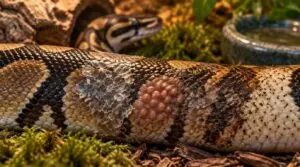
Scales can act up in a handful of ways, and knowing which one you’re dealing with puts you back in the driver’s seat. Below, you’ll find the five most common culprits snake owners run into. Let’s walk through them one at a time so you can spot each one early.
Retained Shed (Dysecdysis)
Dysecdysis, the vet term for retained shed, looks like dull, dry patches clinging to your snake like a stubborn sock. Improper humidity is usually the culprit, and poor hydration piles on.
Spot stuck skin around the eyes or tail tip? Try warm soaking techniques, never pulling. Fix the moisture, and small changes make all the difference. Patience helps, too, honestly.
Low cage temperature, low humidity, and too little cage furniture for rubbing are all common husbandry causes of improper shedding.
Scale Rot and Blisters
Too much moisture is the flip side of that retained shed problem. Damp, dirty bedding can cause scale rot, a bacterial infection that shows up as red, brown, or black patches under your snake’s belly. Blisters mean blister disease.
Don’t guess. Burns look similar, so see a reptile vet. Then tighten enclosure sanitation and humidity control.
Mites and Scale Irritation
Moisture isn’t the only culprit. Sometimes the trouble crawls.
Mites show up as tiny black or red specks around your snake’s eyes, nostrils, and jaw folds, leaving pepper-like droppings behind.
If you spot these signs, check the shed skin and scales too, and compare them against this guide to common ball python skin problems before starting treatment.
Since mites can mimic dysecdysis, ask your vet for skin scrapings. Then treat the snake and your enclosure sanitation together, because mites survive in crevices. Keep up humidity monitoring, too.
Fungal Skin Infections
A crusty, discolored scale isn’t always shed trouble. Fungal skin infections, including snake fungal disease from Ophidiomyces ophidiicola, Nannizziopsis, or Paranannizziopsis, can sneak in fast. Spot them early:
- Yellow or brown scales
- Crusting
- Ulcers
- Swollen skin
- Stubborn damp substrate
Damp moss invites trouble, so dry things out. Why wait? Catch it early, and your vet can make all the difference.
Burns and Injured Scales
A hot spot under your heat lamp can do real damage, can’t it? Burns and injured scales show up as red, dark, or blistered patches, and they often look worse a day later. Don’t pop blisters or attempt wound cleaning on your own.
Debridement and topical antibiotics belong in a vet’s hands. Prompt veterinary care can make all the difference.
What Causes Reptile Scale Problems?
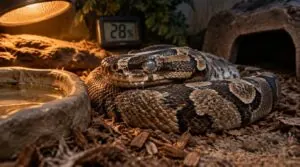
So what’s really behind those dull, wrinkled, or stubborn scales? Most snake skin trouble traces back to a handful of everyday husbandry factors, and you control every one of them. Let’s walk through the five main culprits so you can spot them in your own setup.
Incorrect Humidity Levels
Ever watched your snake shed in sad little patches? Blame humidity. Too dry, and old skin clings like glue. Too wet, and substrate saturation invites bacteria.
Build humidity gradients by dampening one corner, and check a digital hygrometer. Track shedding frequency, and mist more before a shed. Pair enclosure hygiene with steady thermal gradients and it’ll make all the difference.
Improper Enclosure Temperatures
Picture a ball python on a heat mat set to a steady 90°F, wall to wall. Cozy? Not quite. Without a temperature gradient, she can’t choose, and a hot spot can scorch her belly scales.
Offer warm and cool zones instead. Thermal gradients support environmental thermoregulation, so she controls her own thermal regulation. Use a thermostat, then verify surface temperatures.
Poor Enclosure Hygiene
Think your snake’s belly is tougher than it looks? Think again. Poor enclosure hygiene quietly invites trouble.
Damp, soiled bedding keeps skin wet, and bacteria love that. Good substrate management makes all the difference:
- Spot-clean feces and urates daily.
- Scrub bowls, then rinse disinfectant fully.
- Keep tools separate between enclosures.
Skip these, and scales suffer.
Nutritional Imbalances
Could dinner be behind those dull scales? It might be.
Nutritional deficiencies can wreck skin renewal. Vitamin deficiencies, like low vitamin A, affect skin linings, while calcium deficiency and poor calcium-phosphorus balance weaken bone. Feeding whole prey gives your snake a balanced diet. Boneless meat doesn’t.
Don’t guess with supplements. Excess vitamin A is toxic. Let your vet pinpoint it.
Bacterial And Fungal Infections
A weak, underfed snake is an open invitation for germs. Damp substrate, grimy corners and cool temps do the rest.
Bacterial infections like Aeromonas and Pseudomonas cause scale rot, also called ulcerative dermatitis. Fungal infections look crustier. Prolonged dysecdysis can start the mess. Spot blisters or crusts? Don’t play detective at home. Your vet needs a culture and sensitivity test.
When Scale Problems Need Veterinary Care
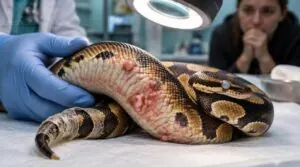
Even with perfect husbandry, things can go sideways. So how do you know when home care isn’t enough?
Picture what a worried keeper might spot:
- A blistered belly with oozing lesions, the kind that signals ulcerative dermatitis
- A stuck shed squeezing the tail tip like a tight rubber band
- Cloudy eye caps that still cling after two shed cycles
- Swelling, spreading discoloration, or a foul smell drifting from the enclosure
- A lethargic snake turning down meal after meal
Any of these means call your vet. Bacterial infections and fungal infections can move fast, and wound cleaning or debridement isn’t a DIY job.
Mild discoloration that worsens after three to five days of home care? Same rule. Trust your gut. Early help makes all the difference.
Treating Reptile Scale Problems Safely
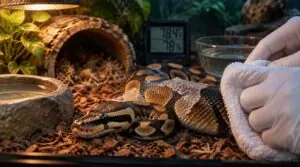
So your snake’s scales look off, and you’re itching to fix it fast, right? Hold that thought, because the safest path is a calm, step-by-step one that can make all the difference. Below, we’ll walk through managing retained shed, getting a proper diagnosis, and supporting your snake while it bounces back.
Managing Retained Shed Safely
Think of stuck shed like a wet sock clinging to your foot. Yank it and you’ll tear something. Soften it first.
Stuck shed is like a wet sock clinging to your foot, so soften it first, because yanking it will only tear something
For retained shed, or dysecdysis, start with a lukewarm soak for 20 to 30 minutes, supervised the whole time. Then wipe gently head to tail with a damp paper towel. That’s safe shedding assistance. Skip shedding aid products and tweezers. Fix humidity with a humid hide, and keep humidity monitoring digital.
Veterinary Diagnosis and Infection Treatment
Soaks fix stuck shed, but blisters? Different game. Your vet reads lesion morphology first, then swabs for bacterial cultures. Culture and sensitivity testing picks the right drug. Expect:
- Physical exam and swabs
- Imaging if abscesses are suspected
- Blood work for spread
- Wound debridement under sedation
- Systemic antibiotics for weeks
Topicals like chlorhexidine help, but they can’t fix deep infections alone.
Supporting Your Snake During Recovery
The recovery phase matters as much as treatment. Expect a month of antibiotics, wound care, and husbandry fixes, plus nutritional support and stress reduction. Ask your reptile veterinary care team about debridement follow-ups.
Watch for one or two complete sheds. They signal real healing, friend.
| Task | Why | Goal |
|---|---|---|
| Fluids | Hydrate | Steady intake |
| Calories | Rebuild | Weight gain |
| Sheds | Track | Full shed |
Preventing Scale Problems With Species-Specific Care

Often, the best scale treatment is the one you never need. That’s where species-specific care pays off. Ball pythons want 50-60% humidity, rising to 65-70% during shedding, while corn snakes do better around 65-75%. Across species, humidity between 40-80% is the working window, so check your species before you set the dial.
Beyond humidity, a well-planned enclosure with enrichment ideas for a stimulating snake habitat can also sharpen feeding response and keep stress low.
Smart reptile enclosure design helps too. Offer warm and cool hides, a humid hide, and a dry substrate. Use digital gauges and a thermostat, not guesswork.
Check UVB lighting requirements with your vet, and do weekly spot checks for scale problem early detection. Spot-clean often. Small habits make all the difference. Why wait for trouble when a quick look keeps your snake’s skin smooth and healthy for years?
Frequently Asked Questions (FAQs)
What does scale rot look like?
Picture small red or pink patches under your snake’s belly.
Check for persistent discoloration, blisters, open wounds, and pusfilled bumps. Do a ventral surface inspection often, because chronic infections hide where scales meet damp substrate.
My snake is dead. What should I do?
Mia’s python lay limp. Dead, or just cold? Check breathing, call a reptile vet. If gone, refrigerate the body for a necropsy, which may reveal septicemia, chronic infections, open wounds, pusfilled bumps, or persistent discoloration.
How long does scale rot take to heal?
Think it’ll fade by itself? Rarely, sadly. Scale rot, or ulcerative dermatitis, takes 3-6 weeks early on, but bacterial infections can need months.
Since the cause could be anything from damp bedding to mites, this guide to crusty scales on a pet snake helps you track down the trigger.
Keep humidity between 40-80, keep bedding dry, and skip topical antifungals alone.
Do scales grow back?
Sometimes. Shallow damage often heals through your snake’s scale shedding cycle and keratin turnover. Deep scale loss usually scars permanently, and scale hyperplasia can follow. Early care makes all the difference.
Can scale problems affect a reptile’s vision?
Scales sit on skin, so vision’s safe, right? Not always. Scale shedding complications can leave a cloudy cap on your snake’s eye; ulcerative dermatitis, bacterial infections, fungal infection, or open wounds near eyelids threaten sight.
Are certain species more prone to scale issues?
Some snakes are drama queens about moisture. Ball pythons lead the pack, since ball python humidity dips cause retained shed and shedding cycle support matters.
Species habitat matching and environmental conditions beat scale infection treatment.
How do environmental parasites impact scale health?
Ever wonder why scales look chewed up? Mites cause the damage. A parasitic infestation leaves open wounds, and soiled enclosures, one of many environmental stressors, invite ulcerative dermatitis. Treat your snake and its habitat together.
Do hormonal changes affect reptile scale condition?
Picture your female ball python refusing food, then shedding badly. Hormonal changes can trigger appetite loss and behavioral changes, but shedding complications usually trace back to humidity. Melanism changes? Don’t blame hormones; see a vet.
What role does genetics play in scale disorders?
Think scale problems are all bad husbandry? Not quite. Genetics shapes scale morphology, and inherited defects can weaken reptile health.
Still, good husbandry practices and infection prevention make all the difference, so don’t blame yourself.
Do scales grow back after an injury?
Does a shed erase damage? Not always. Do scales grow back after an injury depends on depth: superficial scale loss heals through keratin turnover and epidermal turnover, but deep wounds often block true scale regeneration.
Conclusion
Picture a ball python with a stubborn ring of shed around its tail tip. The owner bumps the humidity, mists the hide, and two days later, that ring slides off like a sock.
If the ring doesn’t budge, a few safe ways to handle a snake with stuck shed can help you avoid tearing delicate skin.
Reptile scale problems rarely shout. They whisper through dull patches, blisters, and specks. Dial in species-specific humidity and heat, keep the enclosure clean, and call your vet when something looks off. Your snake can’t ask for help, but its scales already have.