This site is supported by our readers. We may earn a commission, at no cost to you, if you purchase through links.
Your ball python skips a meal. Then another. By week two, she’s hiding in her cave, and you’re staring at the enclosure at midnight, wondering if this is normal.
Snakes hide illness by instinct. In the wild, a weak animal becomes prey, so subtle signs like stargazing, a retained eye cap, or a bubble at the nostril are often all you’ll get. Missing them costs time your snake may not have.
Diagnosing common snake illnesses at home starts with careful observation, not guesswork. Here’s what to check, what to record, and when to call your vet.
Table Of Contents
- Key Takeaways
- Recognize Behavioral and Physical Signs of Illness in Your Snake
- Check Species-Specific Husbandry for Possible Causes of Symptoms
- Compare Symptoms With Common Snake Illnesses Without Self-Diagnosing
- Track Symptoms, Weight, and Feeding to Help Your Reptile Vet
- Know When Your Snake Needs Veterinary Care—and What to Do Meanwhile
- Frequently Asked Questions (FAQs)
- Will a snakes respiratory infection go away on its own?
- What is sepsis in snakes?
- What are the symptoms of nidovirus infection in snakes?
- What are some common diseases that snakes can get?
- What are common snake conditions?
- How do you know if a snake is sick?
- How do you know if a snake is healthy?
- What are common snake diseases?
- How do you know if a snake has a virus?
- How do you care for a snake?
- Conclusion
Key Takeaways
- Snakes hide illness by instinct, so you’ll need to catch subtle signs like stargazing, retained eye caps, nasal bubbles, hiding more than usual, or a two-week refusal to eat before they turn serious.
- Check your husbandry first, since wrong temperature gradients, humidity, prey size, or enclosure hygiene can mimic illness and are often fixable at home.
- Open-mouth breathing, wheezing, nostril bubbles, mouth rot, repeated regurgitation, or a snake that can’t right itself are emergencies, and only a reptile vet can confirm the cause, so don’t self-diagnose or use leftover medications.
- Keep dated records of symptoms, weights, meals, and temperature and humidity readings, and bring them to the vet along with a fresh fecal sample, because trends spotted early give you faster, safer answers.
Recognize Behavioral and Physical Signs of Illness in Your Snake
You know your snake better than anyone, so trust your instincts when something feels off. Snakes hide weakness well, which means subtle changes matter. Behavioral indicators of pain in reptiles include hiding more than usual, defensiveness, and odd postures like stargazing.
If your snake also brings up a meal, it helps to know why snakes vomit undigested food and when it signals a real problem.
If you hear a faint clicking when your snake breathes, why a snake makes clicking sounds explains when it points to a respiratory infection worth a vet visit.
Knowing what a healthy snake looks like, from steady shedding to a clear eye and a good appetite, makes it easier to spot when something is wrong, and these signs of a healthy snake are a useful baseline.
Lethargy is a big one. If your snake stays limp, avoids basking, or soaks in its water dish for long stretches, take note. Loss of appetite lasting two weeks or more, especially with weight loss, deserves attention. So does repeated regurgitation.
Check the body, too. Look for abnormal shedding, such as retained eye caps or patchy sheds, plus crusty skin, discolored belly scales, swellings, or mites. Nasal bubbles, open-mouth breathing, and mouth discharge are urgent. Don’t wait on those. A snake that can’t right itself when placed on its back may be showing signs of Inclusion Body Disease, so contact a vet promptly.
Check Species-Specific Husbandry for Possible Causes of Symptoms
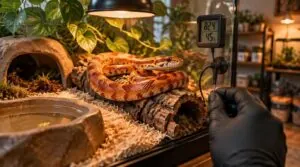
Before you worry about disease, look at how your snake lives. Many symptoms trace back to husbandry mistakes you can fix at home. Here’s what to check, one step at a time.
Verify Species Requirements
You can’t judge your snake’s health until you know what "normal" looks like for its species. Start there.
Identify exactly what you own. A ball python and a kingsnake need very different setups, and species specific care requirements shape everything else. Check enclosure length, humidity, feeding schedule, and climbing needs against a reliable species sheet. Then compare it honestly to your setup.
Check Temperature Gradients
Once you know your species, check the temperature gradient. Thermoregulation for snakes depends on it.
- Place digital probes at snake level, hot and cool sides.
- Skip stick-on dials; they’re inaccurate.
- Compare readings with your species targets.
- Confirm the hot side exceeds the cool by 10°F.
Guard heat sources against thermal burns. Add checks to habitat maintenance and reptile health monitoring.
Measure Humidity Levels
Humidity matters as much as heat, so check it next. Use a digital hygrometer accurate within ±5%. Skip analog dials.
Mount the sensor part-way up the side, away from spray and heat. Measure both warm and cool sides. Log morning, evening, and post-misting readings. Don’t chase numbers by over-wetting. Wild swings may signal poor ventilation or a failing probe.
Review Feeding Practices
You’d be surprised how often feeding mistakes look like illness. Check prey size first. Anything wider than 1.5 times your snake’s thickest point risks regurgitation.
If regurgitation keeps happening, review what snakes eat regularly to match prey type and size to your snake’s age and build.
Skip handling for 48 hours after meals, and avoid overfeeding.
Use frozen-thawed prey and feed on paper, never loose bedding.
Weigh your snake’s meals against its age.
Questions about nutritional management? Ask your vet.
Assess Enclosure Hygiene
Many husbandry problems trace back to poor hygiene. Check these now:
- Spot-clean waste daily.
- Scrub water bowls with reptilesafe disinfectant.
- Confirm substrate safety for reptiles.
- Disinfect hides and decor.
Follow enclosure sanitation tips every week, and don’t skip the hard-to-reach corners. Dirty setups can hide parasites, so ask your vet about fecal exams if your snake’s droppings look off.
Compare Symptoms With Common Snake Illnesses Without Self-Diagnosing

You’ve checked your snake’s setup, so now it’s time to look at the symptoms themselves. The sections below walk through the common warning signs, from mouth and respiratory changes to skin, shedding, and digestive trouble. Use them to understand what you’re seeing, and remember that only a reptile vet can tell you what’s really wrong.
Mouth And Respiratory Signs
Openmouthed breathing at rest is never normal. It signals respiratory distress, so call your vet today.
Respiratory pathophysiology in snakes is simple: mucus clogs the airway. Watch for these signs:
| Sign | Meaning |
|---|---|
| Clicking | Airway mucus |
| Bubbles | Infection |
| Swollen gums | Ulcerative stomatitis |
Cheesy debris suggests mouth rot. Don’t wait, because it spreads fast and your snake can’t tell you it hurts.
Skin And Shedding Changes
A snake’s shed should peel away like a sock turned inside out, in one piece. Check yours after every shed.
Retained spectacles look like dull, wrinkled caps over the eyes. Abnormal shedding, red blisters, or crusted skin lesions point to dermatological issues in reptiles. Don’t mistake ulcerative stomatitis for skin trouble.
See your vet about any spreading sores right away.
Appetite And Digestive Changes
Your snake’s gut tells you a lot. Loss of appetite is the first clue, but don’t stop there. Watch for regurgitation, bloating, and abnormal stool, such as runny, foul-smelling, or undigested waste.
Check gastrointestinal health in snakes by feeling for firm swelling and noting how long since the last dropping. Do a weight loss assessment weekly. Call your vet soon.
Overlapping Illness And Husbandry Signs
Here’s the tricky part: a sick snake and a stressed snake can look identical.
Many signs overlap, so check your setup first:
- Lethargy from poor temperature and humidity
- Loss of appetite after handling
- Abnormal shedding from dry air
- Respiratory issues from stagnant, damp enclosures
Don’t panic, but don’t ignore persistent signs either. Fix husbandry first. Then watch closely for changes.
Veterinary Confirmation
Your eyes can’t confirm what’s wrong. A veterinarian can.
Good symptom recognition helps early disease detection, but diagnostic confirmation needs testing.
| Test | Finds |
|---|---|
| Blood work | Infection, organ trouble |
| Fecal exam | Parasites |
| X-ray | Blockages, egg binding |
Book veterinary care when signs persist. Don’t wait on wheezing, mouth gaping, or repeated regurgitation. Your vet can then tell husbandry trouble from true illness.
Not Self-Diagnosis
Now you know what a vet can confirm. Here’s what you can’t.
Don’t guess at a cause, even when the signs look obvious. Symptom recognition is your job. Veterinary diagnosis isn’t.
- Log what you see, not what you suspect.
- Fix habitat maintenance gaps first.
- Skip online remedies and leftover medications.
- Act early. Early disease detection in reptiles saves lives.
- Call for emergency veterinary care when breathing struggles appear.
Track Symptoms, Weight, and Feeding to Help Your Reptile Vet

Your vet can only work with what you can tell them, so good notes matter. Start keeping simple written records now, before anything gets worse. Here are the five things to track, and why each one helps.
Symptom Timelines
Say your ball python sneezes on Tuesday night, but you only notice the crusty nostril on Saturday. The problem didn’t start Saturday.
Write down the date you first saw something odd, then work backward. Log each episode’s start, length, and recovery. Note feeding, shedding, and handling. Track regurgitation and lethargy too, since trends matter more than single events.
Weight Trends
A single weigh-in tells you little. Weight Trends tell you plenty. Weigh hatchlings weekly and adults every two to three weeks, always on the same scale, in a secure container.
Use a Weight Loss Assessment mindset. If the numbers fall across three weigh-ins, book a vet visit. Log prey weight, not prey count, and note your snake’s body condition too.
Feeding And Regurgitation Records
You’ll want to log every meal. Write down the date, prey type, prey size and whether your snake ate or refused. If regurgitation happens, record the time, what came up and any handling beforehand. Photograph the material first.
Add weights for your weight loss assessment, and bring a fresh stool sample for fecal examination during veterinary care for reptiles.
Temperature And Humidity Logs
A daily log of temperature and humidity tells you what your snake’s enclosure is really doing. Record readings from both the warm and cool sides, plus inside the humid hide. Check temperature gradients at the same times each day.
Flag trends early. Ball pythons below 75°F, or humidity under 50% for over 24 hours, need immediate attention.
Sharing Records With Veterinarians
Last spring, a ball python owner handed me a notebook showing her snake refused two meals and lost 40 grams. That page saved us hours.
Strong sharing records with veterinarians starts with symptom recognition, dated notes, weights, and temperature logs. Include habitat maintenance and quarantine protocols too. Bring everything to your reptile veterinarian. You’ll get faster, safer answers that way.
Know When Your Snake Needs Veterinary Care—and What to Do Meanwhile
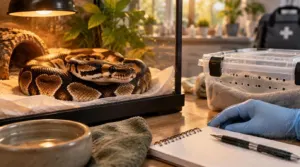
Think of your snake’s symptoms as a smoke alarm. Some beeps mean burnt toast. Others mean a real fire.
Some snake symptoms are just burnt toast, but others signal a real fire, so learn to tell the difference
Call a vet right away for respiratory issues like open-mouth breathing, wheezing, or bubbles at the nostrils. Seizures, stargazing, and trauma need help now too.
Don’t wait on repeated regurgitation, mouth rot, or abnormal stool either. Lethargy with no eating for 48 hours is urgent.
While you arrange the visit, keep your snake warm and quiet. Use paper towels as bedding so you can watch droppings. Never force-feed. Offer a shallow soak if you see sunken eyes.
Bring your notes, a fresh fecal sample, and a ventilated, warm container with a secure lid. You’re doing right by your snake. Stay calm.
Frequently Asked Questions (FAQs)
Will a snakes respiratory infection go away on its own?
Treatment often runs three to four weeks. A respiratory infection rarely clears on its own, so veterinary care for snakes matters.
Fix temperature and humidity, but expect antibiotic therapy. Early intervention can save your snake.
What is sepsis in snakes?
Ever wonder how a small infection becomes deadly? That’s septicemia, a systemic infection where bacteria flood your snake’s bloodstream. Symptom recognition matters, so watch for red bellies. Seek emergency veterinary care immediately.
What are the symptoms of nidovirus infection in snakes?
Watch for respiratory issues first: open-mouth breathing, wheezing, and excess mucus. Lethargy, appetite loss, and regurgitation can follow. Neurological symptoms and shedding cycle abnormalities aren’t reliable signs. Some snakes look fine, so ask your vet.
Quarantining a new snake for a few weeks gives any hidden illness time to show itself, and this guide to quarantining new snakes explains how to set it up safely.
What are some common diseases that snakes can get?
Snakes commonly face respiratory infections, mouth rot (infectious stomatitis), scale rot, and dysecdysis, or bad sheds. Mites and viral diseases like IBD and nidovirus also strike. Don’t ignore early signs. Call your vet.
Since not every clinic treats reptiles, it helps to find a vet who actually treats snakes before an emergency, so your yearly checkup is with someone experienced.
What are common snake conditions?
Ever wonder what’s actually making your snake sick? Watch for mouth rot, respiratory infections, scale rot, parasites, inclusion body disease, septicemia, and shedding problems. Look for regurgitation, skin lesions, swelling, dehydration, and changes in temperament.
How do you know if a snake is sick?
Start your lethargy evaluation by noting hiding, restlessness, or behavioral indicators of pain in reptiles. Check for regurgitation, skin lesions, and abnormal shedding.
Open-mouth breathing or wheezing means you should call your vet right now.
How do you know if a snake is healthy?
Young snakes shed every few weeks. A healthy one has clear eyes, smooth scales, steady breathing, good hydration, and alert movement. Hiding or guarding may signal pain. Keep enclosures clean; trust veterinary diagnosis over guesses.
What are common snake diseases?
Your snake can face respiratory infections, mouth rot, scale rot, parasitic infestations, and nutritional disorders. Watch for wheezing, discharge, blistered scales, weight loss, or regurgitation.
Since healthy scales should look smooth, glossy, and evenly textured, any dullness or raised patches are worth checking against this guide to snake scale health issues and what they mean.
Don’t guess. Your reptile vet should always confirm the cause.
How do you know if a snake has a virus?
Losing over 10% of body mass, especially with regurgitation, points toward a virus.
Watch closely for star-gazing, respiratory infections, and dysecdysis. Inclusion bodies in blood suggest IBD, but only a vet’s PCR test confirms it.
How do you care for a snake?
Picture a corn snake that stops eating after her owner lets the enclosure drift cold. Keep your temperature gradient steady, with a warm side and a cool retreat. Match humidity to your species, offer fresh water, and schedule vet visits.
Conclusion
Picture a corn snake with a faint bubble at her nostril on Monday. By Friday, she’s wheezing. The owner who logged her humidity, weight, and meals caught the pattern early and saved her.
That’s the point of diagnosing common snake illnesses at home. You’re not playing vet. You’re gathering evidence. Watch closely, fix husbandry, and write everything down.
Trust your gut and call your vet. Early action beats perfect certainty, because your snake can’t ask.