This site is supported by our readers. We may earn a commission, at no cost to you, if you purchase through links.

That gorgeous ball python from the expo looks perfect. Clear eyes, great color, hungry to eat. Then, three weeks after you add it to your rack, every snake you own starts wheezing.
Skipping the importance of quarantine for new snakes is how healthy collections crumble. Mites, respiratory infections, and slow-burning illnesses like inclusion body disease can hide behind a perfect first impression for months. As a reptile vet, I’ve watched one rushed introduction wipe out years of careful breeding.
Good news: you control this risk! A smart quarantine plan protects every scale you love, and it starts with knowing how long to wait.
Table Of Contents
- Key Takeaways
- Why is Quarantine Essential for New Snakes?
- How Long Should New Snakes Stay Quarantined?
- Setting Up Safe, Low-Stress Snake Quarantine
- Preventing Cross-Contamination During Snake Quarantine
- Monitoring Snake Health Before Ending Quarantine
- Frequently Asked Questions (FAQs)
- What is the importance of quarantine?
- How long to quarantine snakes?
- How long should you wait to handle a new snake?
- How long should new animals be kept in quarantine?
- Do I need to quarantine a new snake?
- Why quarantine reptiles?
- How long should a new animal be quarantined?
- How long to wait before handling a new snake?
- How Much Does Professional Snake Quarantine Cost?
- Can Different Snake Species Quarantine Together?
- Conclusion
Key Takeaways
- Quarantine every new snake in a separate enclosure, ideally in a different room, because mites, respiratory infections, and slow-onset diseases like inclusion body disease can hide behind a healthy look for months.
- Plan on at least 90 days of quarantine (longer for wild-caught snakes, boas, and pythons), and restart the clock whenever you add another snake, spot mites, see symptoms, or get a worrying vet result.
- Keep your quarantine setup stress-free and contamination-proof by using dedicated tongs, bowls, and tools, tending your healthy snakes first, and disinfecting everything between uses.
- Track weight, feeding, breathing, shedding, and stool in a log, and book a vet visit with fecal testing before quarantine ends so you can confirm the snake is healthy before it joins your collection.
Why is Quarantine Essential for New Snakes?

Quarantine is your collection’s bouncer, and it never takes a night off! New snakes can look glossy, eat like champs, and still carry trouble. Inclusion body disease can hide for months or even years, and boas may carry it silently. A quick visual check simply won’t cut it. Veterinary literature recommends 3 to 6 months of quarantine, since shorter windows can miss slow-onset diseases.
Here’s the payoff. Quarantine prevents disease spread before it starts. Mites, viruses, and parasites hitch rides on shared gear, so a separate enclosure and dedicated equipment keep them out of your main room. Solid hygiene practices finish the job, since pathogens linger on tools and substrate.
If you’re new to this, a step-by-step ball python quarantine tank setup guide shows exactly what to include, from heating and hides to easy-to-clean substrate.
You also gain early disease detection. Moving stress can wake sleeping infections, so symptoms surface where you can manage them safely. Cheap insurance, right? Yes, absolutely!
How Long Should New Snakes Stay Quarantined?

So, how long should new snakes stay quarantined? Think of it as a waiting game that pays off big for your collection! Here are the two points that’ll help you plan your quarantine timeline with confidence.
Standard Timelines and Higher-Risk Arrivals
Usually, 60 to 90 days is your sweet spot for pathogen prevention. Mites show up fast, but sneaky bugs hide for months!
Whichever timeline you follow, keeping a written log of each snake’s quarantine dates will help, and these snake quarantine and health procedures walk through setup and monitoring step by step.
Higher-risk arrivals need extra time:
- Expo or pet store snakes: 90 days
- Wild-caught snakes: 6 to 12 months
- Boas and pythons: longer is often better
Book a veterinary check early, because a single clean test never guarantees freedom.
When to Restart The Quarantine Clock
Here’s the catch: the clock isn’t always a straight line! Knowing when to restart the quarantine clock keeps your whole collection safe.
If a new arrival’s behavior seems off, a snake overall health check can help you spot early warning signs before you decide whether the quarantine period needs to start over.
Reset it when you add a new snake, spot mites, or see symptoms. A positive nidovirus test or any Veterinary Examination concern means day zero again. Careful Symptom Tracking catches trouble early. Skip a step, like cleaning quarantine first? Restart!
Setting Up Safe, Low-Stress Snake Quarantine
Once you’ve mapped out the timeline, it’s time to build the waiting room! A Separate Enclosure in a different room is your starting point.
Keep it snug. A huge, bare tank makes a new snake feel exposed, so size it to the snake and add clutter like cork bark or fake foliage. Offer two hides, one warm and one cool, so your snake can pick its own comfort zone.
For extra inspiration on safe, easy-to-clean décor, browse these reptile habitat decoration ideas that keep your snake’s enclosure both secure and stylish.
Line the floor with paper towels. They make mites and droppings easy to spot, and cleanup takes seconds!
Stock Dedicated Equipment, like labeled tongs and bowls. Keep temperatures steady. Environmental Consistency means fewer surprises, and that means Stress Reduction. Limit handling, and schedule Weekly Health Checks so you catch trouble early.
Preventing Cross-Contamination During Snake Quarantine

A single shared tong can undo weeks of careful quarantine! Think of germs as tiny hitchhikers. They’ll ride on anything you let them. Your job? Keep them stranded.
Germs are tiny hitchhikers that ride on anything you share, so keep your quarantine tools separate and strand them
Start with a separate enclosure in its own room or isolated rack. Then commit to dedicated equipment: hooks, tongs, water bowls, hides, and cleaning supplies that never visit your main collection. That’s tool separation done right, and it’s the heart of cross-contamination prevention.
Follow smart hygiene protocols too. Feed and tend your healthy snakes first, quarantine animals last. Wear fresh disposable gloves for each enclosure, wash your hands before and after, and toss used cloths and uneaten prey. Disinfect with F10SC or chlorhexidine, let it air dry completely, and you’re totally golden!
Monitoring Snake Health Before Ending Quarantine
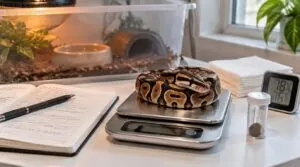
You can’t hear a snake say "I’m not feeling great," so your logbook does the talking! Quarantine is your window to catch trouble early, and symptom tracking keeps you in control. Check your new snake daily and jot down what you see.
Here’s what to log:
- Weight tracking: Weigh weekly on the same scale. Steady drops signal trouble.
- Feeding response: Note whether it eats and keeps meals down.
- Respiratory issues: Watch for wheezing, bubbles at the nose, or open-mouth breathing.
- Shedding and stool: Record stuck skin, mites, and any odd waste.
Book a vet visit for fecal tests and full health assessments before the quarantine ends. Clean logs plus a clear vet report mean you can relax. Want a stress-free introduction? Good notes make it happen!
Frequently Asked Questions (FAQs)
What is the importance of quarantine?
Quarantine is your best disease prevention tool! New snakes can hide serpentovirus or mites for months. biosecurity protocols and pathogen screening keep your collection safe, while health monitoring logs catch trouble early. You’ve got this!
How long to quarantine snakes?
Picked up a ball python at an expo? Great! Your quarantine duration starts now: 30 to 90 days is the common range, six weeks minimum, but at least 90 days matches the vet-recommended quarantine duration.
How long should you wait to handle a new snake?
Itching to hold your new snake? Hang tight! Skip handling until the full 90-day quarantine duration ends, ideally with veterinary consultation first. Handling minimization means less stress, so your scaly newcomer stays healthy!
How long should new animals be kept in quarantine?
Picture a slow-cooker: rush it, trouble boils over! Mandatory durations don’t exist, but 30 to 90 days falls short. The vet-recommended quarantine duration is at least 90 days; risky arrivals need a longer isolation period.
Do I need to quarantine a new snake?
Yes, you absolutely do! Every new snake needs a mandatory quarantine. Think of it as a safety checkpoint for your whole collection. Set up dedicated equipment, follow strict hygiene protocols, and keep an isolation period of at least three months.
Why quarantine reptiles?
Think of quarantine as your disease prevention shield! New reptiles can look perfect while quietly shedding pathogens.
Isolation gives you asymptomatic carrier detection, stress reduction, and tight biosecurity measures, so your whole collection stays safe.
How long should a new animal be quarantined?
Is 30 to 90 days enough? Not quite! Aim for a full 90 as your vet-recommended quarantine duration, longer for boas.
Understanding snake quarantine procedures matters, and import restrictions can add time. Forget 3090 days.
How long to wait before handling a new snake?
Think handling bonds a new snake faster? Nope! Skip it.
Handling snake quarantine rules mean waiting through the acclimation period, roughly 30 to 90 days, for stress reduction and behavioral observation. Patience really pays off!
How Much Does Professional Snake Quarantine Cost?
Quarantine cost runs $10 to $30 daily at boarding facilities or clinics. Over the vet recommended quarantine duration, that adds up! Your reptile veterinarian monitors pathogen shedding, while a reptile quarantine supplies kit costs less.
Can Different Snake Species Quarantine Together?
Mixing species in quarantine is like sharing one umbrella in a hurricane. Don’t! Crossspecies transmission, hidden pathogen shedding, and clashing species-specific needs undermine stress reduction.
Give each species its own separate quarantine area right now.
Conclusion
Picture a breeder who skipped quarantine for one pretty corn snake. Six weeks later, mites had swept through forty enclosures. Ouch!
Don’t let that be your story. The importance of quarantine for new snakes boils down to one simple trade: a few patient weeks for years of healthy animals. Keep newcomers separate, wash up in the right order, and watch closely. Your collection is your life’s work, so guard it like a dragon guards gold!