This site is supported by our readers. We may earn a commission, at no cost to you, if you purchase through links.
Your ball python stops eating for three weeks and you panic. Then you learn adults can skip meals for months without trouble, while a snake wheezing softly in its hide needs a vet within two days. That gap between "normal" and "emergency" trips up even experienced keepers.
Snakes hide illness well. Wild instinct tells them weakness invites predators, so by the time symptoms show, trouble’s often been brewing for a while. A solid snake health checklist closes that gap, teaching you what healthy looks like daily so you catch the subtle shifts before they become vet bills.
From tongue flicks to shed skin, the signs are there. You just need to know where to look.
Table Of Contents
- Key Takeaways
- Daily and Weekly Snake Health Checklist
- Feeding, Weight, and Shedding Health Checks
- Enclosure Checks for a Healthy Snake
- Snake Illness Symptoms to Watch For
- When Your Snake Needs Veterinary Care
- Frequently Asked Questions (FAQs)
- How to check if a snake is healthy?
- What 7 scents do snakes hate?
- What is a good care routine for a snake?
- Do snakes need yearly checkups?
- Why do snakes need regular health checks?
- What do I need to watch for if my child has hydrocephalus?
- How do I know if my snake is healthy?
- What are the signs of illness in snakes?
- How can I tell if my snake is sick?
- What are some specific symptoms of common illnesses in snakes?
- Conclusion
Key Takeaways
- Snakes hide illness well, so daily checks on movement, eyes, breathing, and skin help you catch trouble long before obvious symptoms show up.
- Some signs, like open-mouth breathing, wheezing, stargazing, or a pink mass at the vent, mean you call the vet immediately, not wait and watch.
- Tracking weight, feeding response, and shed quality over time reveals problems days or weeks before they’d otherwise be noticeable.
- Getting your enclosure’s temperature, humidity, cleanliness, and hides right prevents many health issues before they ever start.
Daily and Weekly Snake Health Checklist
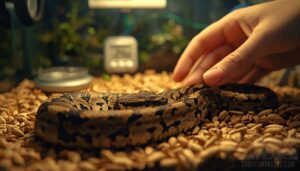
A quick daily glance and a more careful weekly check can tell you a lot about your snake’s health before small problems turn into big ones.
Knowing what’s normal for your snake makes it much easier to catch warning signs early, and this guide on preventing common snake health issues walks through exactly what to watch for.
The goal isn’t to overthink every yawn or nap, but to know what normal looks like for your snake and spot changes early.
Use the checklist below to walk through the signs worth watching each day and week.
Alert Behavior and Smooth Movement
Watch how your snake moves before anything else. Smooth, continuous locomotion with no jerky pauses signals healthy neuromuscular coordination.
Tongue flicking tells a story too: steady rhythm during exploration means calm curiosity, rapid flicks mean something new grabbed attention.
A relaxed body with a slightly raised head shows confident alertness. Track handling tolerance and active behavior patterns weekly, sudden changes often flag trouble early. Learning to read subtle snake stress signals can help you catch health issues before they escalate.
Clear Eyes and Open Nostrils
Once your snake’s moving well, check the face. Eye spectacle clarity should be glass-clean, no film, no discharge. Cloudiness right before a shed is normal, it clears in 2-3 days after.
Nostrils matter just as much:
- Clean and pink, never crusted
- No bubbling or nasal discharge
- Retained eye cap risk after sheds
- Humidity eye balance near 50-60%
Healthy Mouth and Quiet Breathing
While you’re near the face, finish with a mouth inspection. A healthy mouth stays closed, with quiet breathing and clear respiratory passages, no clicking or wheezing.
Check oral tissue health: pink gums, no lesions, no discharge. Open-mouth breathing or persistent mouth breathing signals distress, get it evaluated fast.
Smooth Skin and Intact Scales
Run a hand down the body. Healthy skin condition feels smooth, looks glossy, and shows no dull patches between sheds.
Check scale integrity closely:
- No retained sheds around the tail or eyes
- No red blisters signaling scale rot
- Even scale texture, not rough or flaking
Humidity drives shedding success, so track cycles alongside your husbandry log.
Clean Vent and Normal Waste
Give the tail end a quick look too. Vent inspection should show clean, pink tissue, no swelling, no crust, no smell.
While you’re at it, a quick pinch test on the skin tells you a lot about hydration, and if your snake’s also skipping meals, this guide to snakes that won’t eat can help you figure out why.
Normal waste is firm and brown with white urates attached. Runny stool, straining, or cloacal prolapse means call your vet, not wait it out.
Track waste timing weekly. Hydration effects waste consistency directly, so soak your snake if urates turn chalky or hard.
Feeding, Weight, and Shedding Health Checks
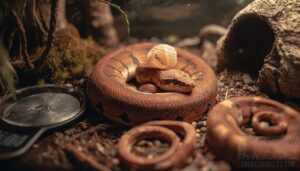
Feeding, weight, and shedding tell you a lot about how well your snake is doing day to day. Small changes here are often the first clue that something needs attention. The quick checks below will help you know what to watch, what looks normal, and when it’s time to act.
Consistent Appetite and Feeding Response
A snake that ignores food night after night is telling you something. Watch for hunger behavioral cues: faster tongue flicks, prowling near dusk, fixating on movement.
- Strikes within 12 seconds
- Relaxed posture after eating
- No hesitation at feeding time
Track weight fluctuations and shedding cycles together. Consistent appetite monitoring catches trouble 7 days before symptoms show.
Species-Appropriate Feeding Schedule
Metabolism drives the clock here. Corn snakes run hot and fast, ball pythons run slow and steady.
| Species/Stage | Feeding Frequency |
|---|---|
| Hatchlings | Every 5-7 days |
| Juvenile corn snakes | Every 5-7 days |
| Adult ball pythons | 1-2 weeks |
| Adult boas | 2-4 weeks |
| Breeding females | 1.5-2x normal |
Match prey width to head width, adjust for season and temperature, and never feed during a shed.
Stable Weight and Body Condition
Weigh your snake every two weeks, same scale, same day, same technique. Stable weight matters more than any single number.
Watch body shape too: even thickness, no jutting spine, no thin tail base. Check hydration by pinching skin gently, it should snap back.
Cool enclosures slow digestion; hot ones stress appetite. Both show up as weight loss.
Complete Sheds Without Retained Skin
A good shed should peel off in one piece, eye caps and tail tip included. Bump humidity to 70-80% during the 5-7 day cycle, add a humid hide with damp moss, and rough bark for rubbing.
Find stuck patches after 48 hours? Soak 15-20 minutes at 85-90°F. Log every shed, humidity, and outcome.
Fresh Water and Hydration Signs
Water isn’t optional decor. Keep a clean bowl on the cool side, away from basking heat, refreshed daily.
Watch drinking frequency and soaking habits, especially during sheds. Dull skin, sunken eyes, or reduced appetite signal dehydration.
Cloudy water breeds bacteria fast, so wash bowls often. Match hydration support to your enclosure’s temperature and humidity gradient for real results.
Enclosure Checks for a Healthy Snake
Your snake’s body tells you a lot, but its enclosure tells you just as much. A healthy snake needs a home that’s set up right, from top to bottom, corner to corner. Here’s exactly what to check.
Proper Enclosure Size and Security

Snakes are escape artists. Give juveniles a 10-gallon tank, adults 30-40 gallons, twice their length in floor space.
- Locking lid with no liftable edges
- Sealed gaps around cables and seams
- Chew-proof vent screens
Loose substrate lets snakes tunnel toward walls, so keep bedding tight against edges. A secure setup isn’t optional, it’s your first line of defense.
Warm and Cool Zone Temperatures

A locked tank means nothing if the heat map is wrong. Use temperature monitoring tools: a probe thermometer on the basking area, another in the cool zone, plus a thermostat with weekly calibration. Aim for basking zone accuracy and cool zone stability, with clear temperature gradients.
That enclosure setup helps with thermal gradient maintenance, feeding, digestion, shedding, and steady thermal regulation.
Species-Appropriate Humidity Levels

Heat gets attention, but humidity quietly makes or breaks sheds, hydration, and breathing. Use a digital hygrometer where your snake rests, and check trends, not guesses.
Ball pythons do well around 55 to 70%, with higher levels during shedding. Too dry invites stuck shed, too wet long term can irritate airways. Adjust substrate, misting, and ventilation together for species balance.
Clean Substrate and Fresh Water
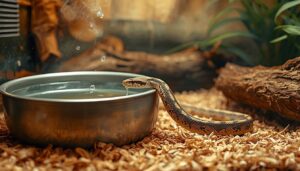
Humidity only works when the floor stays clean and dry. Spot clean substrate daily, use safe materials like aspen or coconut husk, control moisture and let ventilation and enclosure size prevent stale damp pockets.
Keep bowl of fresh water scrubbed, rinsed and refilled routinely. Stop substrate, shed, feeders and waste from contaminating it, and watch hydration through skin and sheds.
Accessible Hides and Safe Enrichment
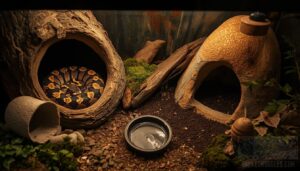
Give your snake at least two hides, one warm, one cool, sized snug to its girth plus an inch or two. Add rotating enrichment like cardboard tubes or ceramic pieces weekly, always heat-safe and non-toxic.
A third hide during shedding rounds out the multi-hide security system snakes actually rely on.
Snake Illness Symptoms to Watch For
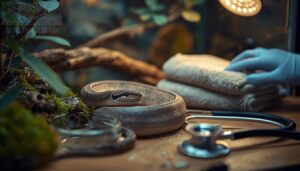
Even with perfect setup, snakes can still get sick, and catching it early makes all the difference. Your snake can’t tell you something’s wrong, but its body will, if you know where to look. Here are the warning signs worth learning by heart.
One of the trickier issues to spot is a retained shed over the eyes — our guide on treating a cloudy snake eye after shedding walks you through safe ways to help without causing harm.
This guide to spotting parasites in snakes early walks through the subtle behavioral and physical cues that often show up long before a diagnosis is confirmed.
Wheezing and Open-Mouth Breathing
A wheezing snake is telling you it can’t breathe right, and that’s never something to wait out. Open-mouth breathing signals real respiratory distress, often from infection, low temps, or even a foreign body obstruction blocking the airway.
Vets diagnose with radiographs or cultures. Act within 24-48 hours, since early treatment dramatically improves prognostic outcomes and prevents lasting respiratory damage.
Nasal Discharge and Mouth Lesions
Crusting around the nostrils, yellow or green discharge, and raw mouth sores are red flags for snake oral health. Check Nasal Discharge Patterns, Mouth Lesion Types, Oral Color Changes, Feeding Behavior Impact, and Breathing Abnormalities.
If you see mouth breathing or wheezing, your snake may be losing clear respiratory passages and sliding into respiratory distress. Get veterinary care promptly today.
Mites, Blisters, or Scale Rot
Think of the skin as your snake’s smoke alarm. Tiny black, red, or gray dots near the eyes or vent suggest mites.
Blisters usually follow overly damp, cramped setups and wet bedding. Early scale rot starts red, then blisters, then ulcers. Use paper towels, correct humidity, Betadine soaks, and veterinary treatment fast, before skin infection spreads through the whole enclosure.
Regurgitation and Abnormal Waste
A snake spitting up its last meal isn’t just messy, it’s a red flag. Temperature regurgitation tops the list: no proper hot spot, no digestion. Close second: handling post-feeding within 48 hours.
Check waste too. Watch fecal color indicators (yellow, green urates) and fecal consistency signs (watery or rock-hard). Parasitic regurgitation and vent health issues need veterinary testing, not guesswork.
Prolapse or Neurological Changes
A pink mass at the vent means stop and call your vet, period. Colon prolapse follows straining or dehydration; hemipenal prolapse traps a hemipenis outside the body. Both need same-day care.
A pink mass at the vent is never wait-and-watch, it’s a same-day call to the vet
Neurological signs matter too: stargazing, tremors, or lost righting reflex point toward IBD, an incurable, fatal disease in boas and pythons. Quarantine new snakes 3-6 months.
When Your Snake Needs Veterinary Care
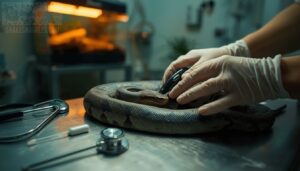
Spotting symptoms is only half the job. The real question is knowing when to act on what you see. Here’s how to sort a true emergency from a wait-and-watch situation, and what to have ready before you call the vet.
Emergency Signs Needing Immediate Care
Some signs can’t wait until morning. Call your vet immediately if you see:
- Open-mouth breathing at rest, wheezing, or regurgitation
- Stargazing, seizures, or failed righting reflex
- Collapse-recovery pattern or pale, blue gums
- Fang punctures, uncontrolled bleeding, or rapid paralysis
- Disorientation after chemical exposure
Cloacal prolapse also demands same-day care. These are emergencies, not wait-and-watch situations.
Persistent Symptoms Needing Evaluation
Not every problem screams for a same-day visit. Some just linger, and that’s your cue.
Nasal discharge past 21 days, wheezing beyond two weeks, mites resisting treatment for a month, weight loss over 5% with normal appetite, or lethargy stretching past two weeks all point to chronic infection or parasite load.
When home care isn’t working, it’s time for bloodwork and cultures.
Preparing Health Records for Appointments
Bloodwork day is booked. Now bring the paper trail: medication history, allergy status, weight logs, shedding dates, and enclosure setup notes. Vets diagnose faster with data, not guesses.
- Medication and supplement doses, dates started/stopped
- Test results and prior lab reports
- Biweekly weight records
- Shedding pattern history
- Known allergies or reactions
Choosing a Reptile-Experienced Veterinarian
That paper trail only helps if the vet reading it knows reptiles. Ask about reptile specialization, ARAV membership, or zoological medicine board certification.
Check for a dedicated reptile room, proper enclosures, and species experience with your snake type specifically.
A calm, unhurried communication style during exams says more than any diploma on the wall.
Annual Wellness and Parasite Screening
A snake that looks perfect can still be hiding trouble. That’s why annual vet visits matter, even for snakes with zero symptoms.
Expect a fecal parasite test, bloodwork panels checking organ function, and body condition scoring. Your vet updates health history records and reviews vaccination protocols.
Preventive medicine catches problems months before you’d ever spot them at home.
Frequently Asked Questions (FAQs)
How to check if a snake is healthy?
Check alert behavior, smooth movement, and clear eyes first.
Review feeding and shedding cycles for consistency, inspect skin condition and hydration levels, and watch closely for respiratory distress, since these combined signs reveal true wellness better than any single check alone.
What 7 scents do snakes hate?
Cinnamon, clove, cedarwood, lemongrass, peppermint, garlic, and citronella top the list. Each triggers avoidance through scent overload, disrupting a snake’s sensory organs. Still, effects stay temporary, so pair any repellent with real habitat and substrate changes for lasting results.
What is a good care routine for a snake?
Think of it like a old-school gym routine crossed with a nightly patrol. Daily checks, weekly monitoring, proper setup, and a steady feeding schedule keep hydration, temperature gradients, and humidity levels on track for lasting health.
Do snakes need yearly checkups?
Yes, annual vet visits matter even for healthy-looking pets. A reptile-experienced veterinarian builds a health baseline, screens for parasites, and catches problems your daily observation might miss. Preventive care beats emergency care every time.
Why do snakes need regular health checks?
Regular checks catch early illness detection before it snowballs, tracking behavioral changes, respiratory distress, skin abnormalities, and digestive issues.
Consistent eating and shedding cycles reveal problems fast, reducing stress and keeping your snake’s long-term health on track.
What do I need to watch for if my child has hydrocephalus?
This is no laughing matter, but keeping your head on straight helps you spot trouble fast. Watch for fast head growth, a bulging fontanelle, balance or vision changes, drowsiness, and shunt failure signs like sudden headaches or vomiting.
How do I know if my snake is healthy?
Watch how your snake moves and reacts. Bright, clear eyes, smooth skin, alert behavior, steady appetite, and well-formed waste all point to good health. Sluggishness, wheezing, or skipped sheds mean it’s time for a closer look.
What are the signs of illness in snakes?
A quiet snake tells its own story before you ever spot a symptom. Lethargy, stiff posture, head tilt, mouth rot, scale discoloration, respiratory distress, and appetite changes all signal trouble brewing beneath the surface.
How can I tell if my snake is sick?
Trust your gut, then check the details. Behavior changes, hiding more, refusing food, or moving stiffly, often show up before anything visible. Add breathing issues, discharge signs, skin abnormalities, or odd waste patterns, and it’s time to call your vet.
What are some specific symptoms of common illnesses in snakes?
Your snake’s body is a warning label written in scales. Clicking breathing sounds, head tilts, reduced tongue flicks, lethargy, and anorexia signal trouble.
Watch skin abnormalities and shifting appetite through shedding cycles too, each clue points toward respiratory or metabolic issues needing quick attention.
Conclusion
One keeper almost missed it. Her ball python’s only symptom was a faint clicking sound at night, easy to blame on the heat mat. Two days later, a vet visit confirmed an early respiratory infection, caught before it turned serious.
That’s the real payoff of a snake health checklist. It won’t replace a vet, but it trains your eye to catch whispers before they become screams. Check daily. Trust what you see.