This site is supported by our readers. We may earn a commission, at no cost to you, if you purchase through links.

Your apartment’s HVAC system runs dry heat through the vents all winter, and that single fact can tank enclosure humidity below 50% before you’ve even noticed your ball python’s skin dulling. Small square footage means less room for error, too — a substrate that molds in a spare bedroom becomes a bigger problem in a 700-square-foot unit with limited airflow.
Picking the right ball python substrates for apartment living isn’t just about aesthetics. It’s about controlling humidity, dust, and odor in a space where you can’t just crack a window in another room to clear the air.
The right bedding solves most of that work for you, quietly, layer by layer.
Table Of Contents
- Key Takeaways
- Top 6 Apartment Substrates
- Choosing Apartment-Friendly Bedding
- Humidity and Substrate Depth
- Substrates to Avoid Indoors
- Cleaning Small-Space Enclosures
- Frequently Asked Questions (FAQs)
- Is 70 degrees too cold for a ball python at night?
- What live plants can I put in my ball python enclosure?
- What bedding can you use for ball pythons?
- What substrate prevents mites in ball pythons?
- How should used substrate be sanitized before reuse or storage?
- What feeding setup prevents substrate ingestion during mealtime?
- Conclusion
Key Takeaways
- Apartment HVAC systems dry out enclosure air fast, so choose moisture-retentive substrates like coconut fiber or cypress mulch to keep humidity in the 60-80% range.
- Maintain substrate depth at 2-4 inches and monitor humidity with a digital hygrometer placed at substrate level to support healthy shedding and prevent stuck shed.
- Avoid cedar, pine, sand, aspen, reptile carpet, and chemically treated substrates, since they pose respiratory, impaction, mold, or toxicity risks.
- Stick to a strict cleaning routine—daily spot-cleaning within 10 minutes and full substrate replacement every 4-8 weeks—to control odor and prevent mold in tight apartment spaces.
Top 6 Apartment Substrates
Apartment enclosures come with real constraints—tight square footage, shared walls, and heating systems that dry the air out fast.
In these snug, dry setups, compact feeding tongs designed for small apartment enclosures make handling feedings simple without crowding your limited space.
Not every substrate holds up under those conditions, so your choice matters more than you’d think.
Here are six options that actually work for small-space setups, starting with the one most keepers reach for first.
1. Organic Coconut Chip Reptile Substrate
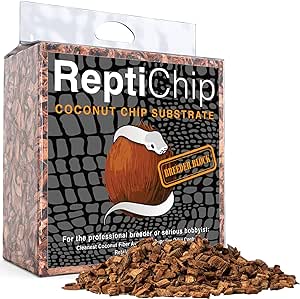
When your apartment’s humidity drops and your ball python needs a real fix, this is where you start. Made from 100% pure coconut husk, this substrate holds moisture without turning sludgy, and chips sized 1-6mm let your snake burrow naturally.
It’s kiln-dried to cut microbial risk, dust-free for sensitive respiratory systems, and controls odor thanks to coconut’s natural compounds. For small spaces where air quality matters, that combination is hard to beat.
| Best For | This coconut husk substrate is best for keepers of ball pythons, geckos, tortoises, and other humidity-loving tropical species who want a natural, burrow-friendly base for bioactive terrariums. |
|---|---|
| Material | Coconut husk |
| Weight | 10 lbs |
| Format | Compressed brick |
| Absorbency | High |
| Primary Use | Reptile bedding |
| Price Level | Mid-range |
| Additional Features |
|
- Holds humidity well without becoming soggy, keeping tropical enclosures at ideal moisture levels
- Dust-free and odor-absorbing, making it safe for sensitive respiratory systems and easy to maintain
- Compressed brick design saves storage space and expands into plenty of usable substrate
- Requires soaking and manual breaking apart before use, adding prep time
- Moisture levels must be manually adjusted to suit each species’ specific needs
- Not ideal for arid-species enclosures, since it’s designed for humidity retention
2. Zoo Med Eco Earth Coconut Fiber
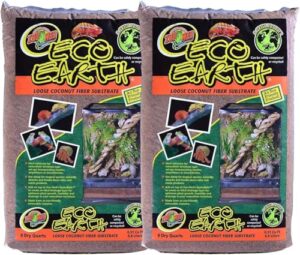
Coconut chips are great for burrowing, but if your snake’s tank runs dry between mistings, Eco Earth’s fibrous texture holds moisture longer and distributes it more evenly across the surface.
Available loose or in compressed bricks, it expands to fill odd-shaped enclosures without gaps. The fiber matrix absorbs waste naturally, cutting down odor between cleanings. Just keep it damp, not soggy — waterlogged fiber invites mold fast in humid apartment setups. Monthly monitoring keeps things balanced.
| Best For | This coconut fiber substrate is best for reptile, amphibian, and invertebrate keepers who need a moisture-retentive, humidity-friendly base for tropical enclosures. |
|---|---|
| Material | Coconut husk |
| Weight | 5.9 lbs |
| Format | Compressed fiber packs |
| Absorbency | High |
| Primary Use | Reptile bedding |
| Price Level | Mid-range |
| Additional Features |
|
- Expands from a compressed brick to fill enclosures of any shape without leaving gaps
- Holds and distributes moisture evenly, keeping humidity steady between mistings
- Naturally absorbs waste and odor while being fully compostable and recyclable
- Moisture content can vary between production batches, so it may arrive drier than expected
- Needs regular monitoring to stay damp without becoming waterlogged, which can lead to mold
- Some users have reported inconsistent pack counts per order
3. Zoo Med Cypress Mulch Bedding
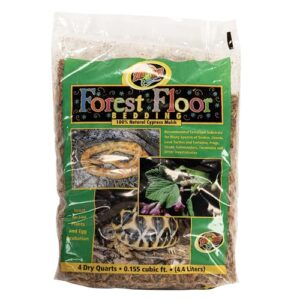
If Eco Earth’s too fibrous for your setup, cypress mulch offers a coarser, more forest-floor feel while matching its moisture retention. This 100% natural bedding absorbs water quickly and releases it slowly, keeping humidity steady through apartment temperature swings.
It lays flat, unlike loose fibers, which reduces prey-hiding spots and simplifies maintenance. Untreated, it holds moisture better than heat-processed alternatives — just watch for pests in natural batches, and consider baking it first for sterilization.
| Best For | reptile and amphibian keepers with tropical species like snakes, lizards, tortoises, and invertebrates that need steady, high humidity. |
|---|---|
| Material | Cypress mulch |
| Weight | 1.95 lbs |
| Format | Loose bag |
| Absorbency | Moderate |
| Primary Use | Reptile bedding |
| Price Level | Higher cost |
| Additional Features |
|
- Absorbs water quickly and releases it slowly, keeping humidity levels stable
- Lays flat for easier maintenance and fewer prey-hiding spots
- Works well in bioactive setups and supports natural burrowing behavior
- Natural material may contain pests and often needs baking to sterilize
- Costs more than many alternative substrate options
- Coarser texture may not suit keepers who prefer a finer, more fibrous bedding
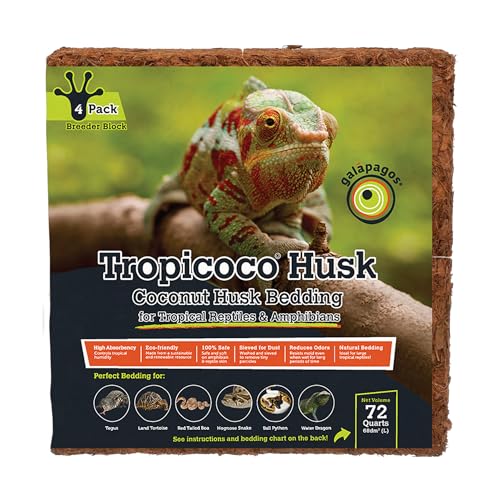
4. Tropicoco Husk Reptile Bedding Block
 View On Amazon
Storage space matters in a studio or one-bedroom, and that’s where this option earns its spot. Tropicoco ships as a compressed brick, taking up a fraction of the shelf space loose substrate demands until you add water.
Just be sure any substrate you choose stays dust-free, since respiratory issues are a real risk—here’s a helpful guide on protecting your snake’s respiratory health.
Once hydrated, it expands several times over into a fibrous, burrow-friendly layer that holds humidity well between mistings. The texture stays relatively dust-free, and it’s free from salts, chemicals, and parasites — a solid pick for respiratory-sensitive ball pythons.
| Best For | Reptile owners in small apartments or studios who want an easy-to-store, humidity-friendly bedding for tropical species like chameleons, boas, and ball pythons. |
|---|---|
| Material | Organic coconut fiber |
| Weight | Not specified |
| Format | Compressed block |
| Absorbency | High |
| Primary Use | Reptile bedding |
| Price Level | Mid-range |
| Additional Features |
|
- Compressed brick format saves shelf and storage space until expanded
- Dust-free and free from salts, chemicals, and parasites, reducing respiratory risks
- Holds humidity well, making it great for tropical and moisture-loving species
- Requires water and time to expand before it’s ready to use
- Humidity needs vary by species, so extra research may be needed
- Not ideal for reptiles that prefer drier, arid enclosures
5. Scott Choose A Sheet Paper Towels
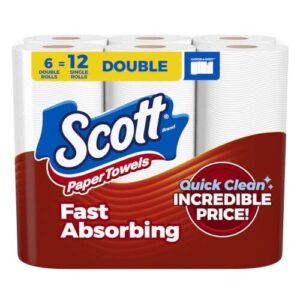
Not every solution needs to look natural — sometimes practical wins. Scott Choose A Sheet works as quarantine or hospital bedding, or a temporary fix during a move. Perforations let you tear exact sizes for spot-cleaning, and the ridged, deep-cleaning texture soaks up waste fast without shredding.
It offers zero humidity retention, though, so it’s not a long-term substrate. Keep a roll on hand for emergencies, not daily housing — your snake still needs real bedding underneath its usual enclosure.
| Best For | Households that want an affordable, absorbent paper towel for everyday kitchen spills, heavy-duty messes, and quick emergency clean-ups. |
|---|---|
| Material | Paper |
| Weight | 2 lbs |
| Format | Perforated roll |
| Absorbency | High |
| Primary Use | Household cleaning |
| Price Level | Cost-effective |
| Additional Features |
|
- Deep-cleaning ridges make spills and messes fast and easy to wipe up
- Choose-A-Sheet perforations let you tear off just the right size for the job
- More sheets per roll means better value and fewer trips to restock
- Disposable and not reusable, so it’s not an eco-friendly long-term option
- Not ideal for delicate or easily scratched surfaces
- Packaging you receive may look different from the product images
6. Medium Coconut Chip Reptile Substrate
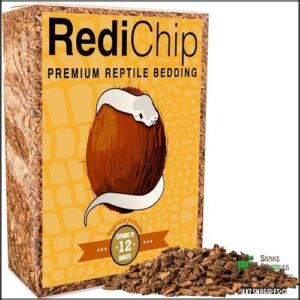
Chunkier than fiber, medium coconut chips give burrowing snakes something to grip while air still moves through the substrate. That airflow keeps mold risk down even at 60-80% humidity.
Spot-cleaning is simple — waste shows up clearly against the light-colored chips, so you’re not digging blind. Expect fewer full changes than dirt-based mixes, though you’ll still rehydrate after cleaning to restore moisture balance.
Just confirm the bag’s free of dust and additives before adding it to your enclosure.
| Best For | Reptile and amphibian keepers—especially those with burrowing snakes, geckos, or tortoises—who want a substrate that balances humidity retention with breathability. |
|---|---|
| Material | Coconut husk |
| Weight | 2.68 lbs |
| Format | Loose bag |
| Absorbency | High |
| Primary Use | Reptile bedding |
| Price Level | Higher cost |
| Additional Features |
|
- Free of dust, dirt, and coco fiber, making waste easy to spot and clean
- Chunky texture gives burrowing species something to grip while still allowing airflow
- Works dry or moistened, offering flexibility for tropical, temperate, or arid setups
- Expands when hydrated, so it’s easy to overestimate how much you need
- Pricier per bag volume than many alternative substrates
- Often needs mixing with bark or moss to fill larger enclosures affordably
Choosing Apartment-Friendly Bedding
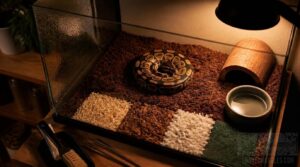
small apartment enclosure
Not every substrate on the market belongs in a small apartment enclosure, and the difference comes down to five specific traits.
Dust, humidity retention, cleaning ease, odor control, and toxicity all determine whether your snake stays healthy in a tighter space with less airflow.
what to check for
Here’s exactly what to check for before you pick a bedding.
Low Dust Levels
Your snake’s lungs are far more sensitive than yours — that visible haze rising off a bag of shavings is a genuine dust inhalation risk.
Particle size matters directly: fine, low-dust substrates settle fast instead of floating. Coconut fiber and compressed paper products shed almost nothing airborne.
Choose nontoxic reptile bedding with clean binders, and cleaning creates minimal dispersion, protecting long-term respiratory health.
Strong Humidity Retention
Ball pythons breathe dry apartment air all day — your substrate does the heavy lifting for humidity.
Coconut fiber buffers moisture best, releasing it steadily over 24-48 hours. Look for:
- Sustained moisture release past one day
- Antimicrobial resistance to mold
- Even substrate moisture without sogginess
- Stable 60-80% humidity support
Hygroscopic additives and smart layering smooth out diurnal swings, cutting evaporation between mistings.
Easy Spot-cleaning
Spills happen fast in a small apartment enclosure, so keep a spill response kit — paper towels, a spray bottle — within arm’s reach.
| Step | Action |
|---|---|
| 1 | Blot, don’t rub |
| 2 | Spot-treat only |
| 3 | Rinse residue |
| 4 | Air dry fully |
| 5 | Recheck at 15 min |
Non-toxic cleaning agents handle greasy stains too: baking soda, blot, vacuum.
Odor Control
Neighbors won’t notice a well-managed enclosure.
Enzyme cleaners digest waste at the source during spot-cleaning, while activated carbon or zeolite mixed into substrate traps airborne compounds. Apply odor neutralizers after cleaning, not as a mask.
Keep airflow steady — cracked windows or slow ventilation beat occasional strong bursts. Daily waste removal paired with proper humidity control keeps odor from ever building up.
Using wet scrubbers capture odorants can further reduce lingering smells.
Safe Non-toxic Materials
Odor control only works if what’s underneath it isn’t fighting your snake’s health. Every bag you buy should be free of cedar, pine, dyes, and fragrances — those phenolic oils cause real respiratory damage.
Check labels for pesticides or fertilizers, too.
Coconut fiber, cypress mulch, and plain paper towels consistently pass this test, giving you peace of mind without guesswork.
Humidity and Substrate Depth
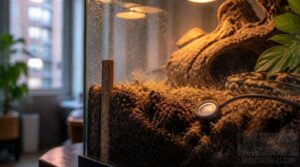
Picking the right bedding is only half the job—your enclosure setup determines whether that substrate actually works.
Humidity and depth work together, and getting either one wrong can undo even the best bedding choice.
Here’s what you need to know to get both dialed in, apartment conditions included.
60–80% Humidity Range
Since your ball python’s home is fixed square footage, hitting 60–80% humidity takes precision, not guesswork. This range slows evaporation, stabilizes your microclimate, and helps hydration and shedding.
Calibrate your hygrometer monthly for accurate readings. Balance airflow against moisture retention — stagnant air invites mold, while too much airflow dries substrate fast. Choose reptile bedding that holds moisture steadily within this window.
2–4 Inch Depth
Depth does the heavy lifting your hygrometer can’t. Keep substrate at 2 to 4 inches — enough for burrowing without swallowing your floor space.
If you’re weighing aspen against other bedding options, our guide to the best substrate for boa constrictors breaks down what holds up best in humid enclosures.
Shallow zones (2") dry fast, easy to spot-clean; deeper pockets (4") hold moisture longer, buffering shed cycles.
This gradient creates natural microhabitats — drier basking corners, damper hide zones — while keeping the whole enclosure stable and manageable in tight apartments.
Winter Heating Challenges
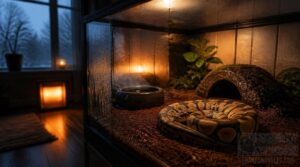
That gradient only works if your heater doesn’t sabotage it. Winter heating drops enclosure humidity below 50% fast, since dry indoor air pulls moisture straight out of your substrate.
Poor enclosure insulation makes it worse — PVC holds humidity far better than glass.
Your thermostat regulation habits directly affect substrate moisture retention, so don’t set-and-forget; check levels as outdoor temps drop.
Misting and Monitoring
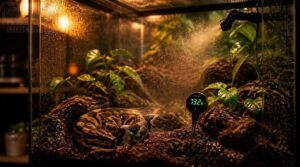
Guessing won’t cut it here — you need a digital hygrometer placed at substrate level, not near the vents, since sensor calibration accuracy drives every decision you make.
Pair it with automated misting schedules for consistent moisture buffering, use filtered or distilled water to protect nozzles, and clean nozzles monthly. This combo keeps humidity monitoring reliable and your enclosure’s humidity control genuinely hands-off.
Shedding Humidity Boosts
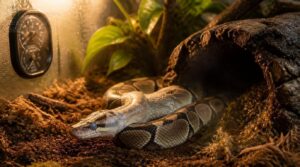
When your ball python enters a shed cycle, bump ambient humidity toward 65-70% — that fluid layer beneath the old skin needs moisture to loosen properly.
Add a humid hide with damp sphagnum moss on the warm side; this microenvironment concentrates moisture where it counts.
Skipping this step risks stuck shed and retained eye caps, so check hygrometer placement near the hide daily.
Substrates to Avoid Indoors
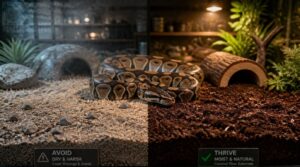
Not every substrate sold at your local pet store belongs in a ball python’s enclosure, especially in the tight, closed‑off air of an apartment. Some options look harmless on the shelf but create real health risks once humidity and warmth come into play.
Here are five substrates you’ll want to keep far away from your snake’s tank.
Cedar and Pine Shavings
Cedar and pine shavings smell great to you — and that’s exactly the problem. Those piney aromatics come from volatile phenolic oils, which cause direct respiratory irritation and can trigger dysecdysis in ball pythons.
Cedar and pine may smell pleasant, but their phenolic oils irritate ball python respiratory systems and can trigger dysecdysis
Three reasons to skip them:
- Toxic wood aromatics stress the respiratory system
- Cedar’s poor absorbency traps humidity poorly
- Pest-deterrent oils volatilize, offering no lasting benefit while risking chronic exposure
Sand Impaction Risks
A single swallowed grain seems harmless, but sand accumulates in the gut with every strike-feeding session, raising impaction risk fast.
Ingestion happens fastest when sand mixes with food or moisture. Watch for vomiting, appetite loss, or abdominal distension — radiographs confirm blockages.
Treatment ranges from fluids and antiemetics to surgery. Skip sand entirely; it offers zero humidity benefit and threatens both digestion and respiratory health.
Mold-prone Aspen
Aspen shavings look cozy, but they’re a mold trap waiting to happen. At the 60–80% humidity your ball python needs, aspen’s wood moisture content climbs fast, and fuzzy gray or green patches can appear within 24–48 hours.
Skip remediation guesswork — toss contaminated bedding immediately. Choose coconut fiber or cypress mulch instead; both resist mold while supporting proper humidity management and protecting your snake’s respiratory health.
Reptile Carpet Issues
That soft green carpet look fools plenty of new owners — it hides bacterial biofilm deep in the fibers within days. Waste soaks in, cleaning barely reaches it, and odor lingers no matter how often you scrub.
Loose threads pose fiber ingestion risks, while damp patches throw off humidity and invite skin issues. Torn edges just make hygiene worse over time.
Chemical-treated Materials
Reptile carpet fails on hygiene, but at least it’s not hiding worse dangers. Chemically treated substrates often are — wood preservatives and mineral stabilizers resist mold but carry wood preservative toxicity risks. Watch for:
- Hydrophobic coatings blocking humidity
- Antimicrobial agents needing verified safety
- pH shifts affecting shedding
- Offgassing from treated shavings
- Volatile oils in cedar or pine
Skip anything unlabeled.
Cleaning Small-Space Enclosures
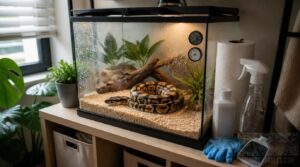
Small enclosures make cleaning routines even more important, since waste and moisture have less room to spread out before causing problems. Apartment living means you don’t get the luxury of a spare room for storage or overflow, so your cleaning schedule has to stay tight and consistent.
Here’s exactly how to keep your setup fresh, dry, and healthy week after week.
Daily Spot-cleaning Routine
Waste removal within 10 minutes keeps ammonia and odor from building up. Scoop soiled substrate, sanitize your tools, and log the time and spot cleaned — this tracking reveals moisture patterns before mold takes hold.
Blot spills fast, wipe rims dry, and stick to a fixed daily schedule. Consistency makes cleaning faster and your enclosure genuinely easier to maintain long-term.
Monthly Substrate Replacement
Daily scooping only goes so far — every 4 to 8 weeks, pull everything and start fresh. Watch for ammonia smell, mold, or sticky texture; those are your cue to act sooner, within 1-2 weeks if shedding or illness hit.
Wash the enclosure, rinse new substrate, and log the date. This keeps waste buildup and contamination in check.
Mold Prevention Tips
Full teardown between cycles isn’t enough on its own — mold thrives in the gaps between cleanings, especially at 60-80% humidity.
Rotate substrate weekly so damp layers surface and dry out.
Sanitize bedding by baking at 250°F for 30 minutes or boiling before reuse.
Check your digital hygrometer’s accuracy monthly, and boost airflow with a fan near the enclosure to keep spores from settling.
Apartment Odor Management
Apartment odor management starts with airflow: run a ventilation fan near the enclosure and check HVAC filters monthly for up to 30% better odor removal.
Sprinkle baking soda on substrate between cleanings, and use an activated carbon filter to adsorb lingering compounds.
Spot clean waste daily; enzymatic cleaners break down odors at the source instead of masking them.
Quarantine Bedding Options
When quarantining a new snake or treating an illness, ditch decor for sterile, disposable bedding—paper towels or newspaper. Both allow instant spot cleaning, easy waste tracking, and cost pennies per sheet.
Layer thickly for moisture control, replace fully at any sign of contamination, and you’ll monitor sick snakes without substrate hiding symptoms—a practical, low-cost setup that keeps recovery enclosures genuinely sanitary.
Frequently Asked Questions (FAQs)
Is 70 degrees too cold for a ball python at night?
Yes — 70°F sits right at the edge. Nocturnal metabolic risks climb below this point, so aim for 75-80°F on the cool side. Use supplemental heat and monitor nightly lows to maintain proper thermal regulation.
What live plants can I put in my ball python enclosure?
Going green doesn’t mean going scaly-crazy: pick safe pothos varieties, non-toxic ferns, or humidity-boosting moss for live plants in terrarium setups.
Always follow plant quarantine protocols, avoid toxic species, and pair with bioactive substrate for a thriving microfauna community and humidity management.
What bedding can you use for ball pythons?
Your safest bets include coco coir for moisture retention, cypress mulch for durability, and paper towels for fast, disposable cleaning.
Aspen shavings work too, offering texture variety without added dust—giving your ball python a natural, non-toxic surface that regulates humidity effectively.
What substrate prevents mites in ball pythons?
Mites need moist, hidden crevices to survive — think of them as tiny squatters looking for damp corners.
Paper towels and reptile carpet offer non-porous, disposable surfaces mites can’t colonize, while regular sanitizing keeps your enclosure’s moisture-controlled environment inhospitable to parasites.
How should used substrate be sanitized before reuse or storage?
Rinse residues, dry evenly, then heat to 180°F for 30 minutes using an oven or pressure cooker with a probe monitoring the center. Cool in a clean, sealed container before storing or reusing.
What feeding setup prevents substrate ingestion during mealtime?
Like a chef using a clean cutting board instead of the counter, keep prey off substrate entirely. Use feeding tongs, a bare-spot zone, or a dedicated feeding enclosure—all proven methods for impaction prevention during mealtime.
Conclusion
Picture your ball python coiled beneath coconut fiber, skin glossy, humidity holding steady even in tight quarters while the radiator hisses outside the tank.
That’s what good ball python substrates for apartment living actually deliver: quiet, invisible control. You won’t wrestle with cracked windows or guesswork.
Choose one of these six options, keep depth at 2–4 inches, and spot-clean daily. Your snake won’t just survive apartment life. It’ll thrive in it, shed after perfect shed.