This site is supported by our readers. We may earn a commission, at no cost to you, if you purchase through links.

Grab a snake by hand, and you’re the predator. Grab it with a hook, and you’re just… furniture. That’s the whole secret behind why keepers swear by this method, and why so many ball pythons go from defensive coils to relaxed, easy handling once they learn the pattern.
Hook training works because it separates "food" from "handling time" in your snake’s mind. Consistency does the heavy lifting here, not force.
The good news: learning how to hook train a ball python takes patience, not skill you don’t already have. Here’s exactly where to start.
Table Of Contents
Key Takeaways
- Hook training works by keeping "food" separate from "handling time" in a ball python’s mind, using consistency rather than force to build trust over time.
- Before any hook training begins, the enclosure needs stable temperatures (26-32°C warm side, no lower than 24°C on the cool side overnight) and 50-60% humidity, plus secure hides and reduced glare to keep the snake calm.
- Training sessions should follow a strict sequence—gently opening the enclosure, touching the lower body, guiding the tail, supporting the mid-body, then lifting slowly—while avoiding handling within 48 hours of feeding or during shedding.
- Progress should be judged by the snake’s body language (calm tongue flicks, loose movement) rather than the calendar, starting with five‑minute sessions and extending them by 30 seconds to a minute weekly, only after two calm sessions in a row.
Prepare a Calm Training Setup

Before you ever pick up a hook, your ball python’s world needs to feel safe and predictable. That starts with the enclosure itself, not the training. Here’s what to check first.
If your snake still seems tense once the setup’s right, it helps to recognize the subtle body language covered in this guide on signs your ball python is stressed or acting aggressive before moving on to handling.
Verify Temperature and Humidity
Before your python ever sees a hook, check the enclosure itself.
Temperature regulation matters most: keep the warm side at 26-32°C, and the cool side dropping no lower than 24°C overnight. Humidity stays at 50-60%.
Verify sensor placement—digital thermometer and hygrometer on both sides—and calibrate monthly.
A stable thermal gradient prevents stress before training even starts.
Offer Snug Secure Hides
Once temperature checks out, give your snake somewhere to retreat.
Two secure hides—one warm side, one cool side—let it thermoregulate without exposure. Solid wood or cork holds heat well and blocks light, preventing mold buildup better than plastic. Pair hides with aspen or coconut husk substrate for burrowing.
Snug fit matters: no gaps, no wasted space. That security fuels calm habitat acclimation before hook work begins.
Reduce Glare and Movement
Hides sorted, next comes the light hitting them. Opaque side panels and indirect lighting cut glare that can spook your snake mid-approach.
Swap glossy decor for matte finishes, keep bulbs diffused, and control substrate moisture—damp, shiny patches reflect too. Move slowly, speak little, and keep the room quiet. Calm surroundings mean calmer responses once hook training starts.
Wait Two Successful Meals
Patience pays off here. Two consecutive meals, accepted without hesitation, tells you the snake’s settled in and digesting normally.
Prey size consistency matters—roughly 80-100% of mid-body girth—paired with steady 7-14 day feeding intervals. Track each feeding date.
- Confidence builder
- Stress reducer
- Trust foundation
Skip meal three temptation. Rushing risks regurgitation and undoes weeks of calm groundwork.
Avoid Shed and Post-feeding
Two windows kill training momentum fast: shedding and digestion. Milky, dulled eye caps mean a shed’s coming—hands off until skin clears.
48 hours post-feeding is non-negotiable; handling too soon risks regurgitation. Keep a steady humidity gradient and offer a microhydration spot for skin elasticity. Read body language before every hook approach—calm snakes shed and digest without setbacks.
Use The Hook Before Pickup

The hook isn’t just a tool—it’s a signal your snake learns to trust before hands ever get involved. Getting this step right sets the tone for every handling session that follows. Here’s what you need to know before you pick one up.
Before that first hook-assisted lift, make sure the enclosure itself feels safe, with a properly zoned thermal gradient setup for pet snakes that gives your snake room to regulate its stress along with its temperature.
Choose a Properly Sized Hook
Not every hook fits every python. Match the hook to your snake’s length, generally 1.5–3 ft, so it never overpowers a hatchling or falls short on an adult.
A paper-towel roll works fine for young snakes. The Zoo Med Reptile Snake Hook, Exo Terra handling hook, or a VCHEETONG telescopic model all offer adjustable, age-appropriate sizing as your python grows.
Use Consistent Visual Cues
Consistency builds trust. Use the same hook color, hand posture, and movement tempo every session—your python learns to read these visual cues like a predictable script.
Steady palm placement and uniform cue timing matter too. Random signals confuse snakes and spike defensive body language, while predictable patterns reduce stress and strengthen calm associations before you even touch the animal.
Approach Slowly From Side
Ever notice how a snake reacts differently when you come at it head-on versus from the side? That’s your cue.
A side angle approach keeps the snake’s head neutral and lets it track your hook without feeling cornered.
- Move slowly, no sudden shifts
- Keep your silhouette stable
- Watch for relaxed tongue flicks
- Support mid-body, not the head
- Retreat if the body stiffens
Keep Movements Calm
Slow, steady motion is what separates confident handling from a startled snake. Move the hook in a continuous arc, never jerky or rushed, keeping chest height steady throughout.
Sudden vibrations spook faster than you’d think. Your snake hook should glide, not jab—smooth strokes signal safety, building the trust low-pressure handling depends on.
Repeat Before Handling Sessions
Your snake doesn’t know today’s session from last week’s—unless you make it obvious. Repeating the same steps each time, same verbal cue, same tactile pressure near the ventral midline, builds routine consistency your python can predict.
Same time daily helps circadian rhythm stability. Log tolerance levels after each rep. This trust building method turns short handling sessions into real stress reduction over weeks, not guesswork.
Follow The Hook Training Steps
Once your snake tolerates the hook itself, it’s time to put the tool to work. This part follows a specific order, and skipping steps is where most keepers run into trouble. Here’s exactly how each session should unfold, from the moment you open the enclosure to the final lift.
Open Enclosure Gently

Smooth, single-motion lid opening keeps vibrations low and your ball python from bolting into defense mode. Crack it just partway first.
Keep your posture low, movements slow, and watch for shifting shadows overhead. If you spot tension or rapid tongue flicks, close the lid and wait. Calm openings build trust for every hook training session that follows.
Rub The Lower Body
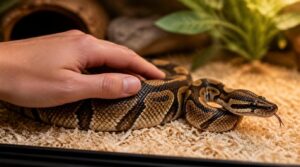
Once the lid’s open and your python stays relaxed, it’s time for ventral scale contact. Lightly rest your hand along the midbody, applying gentle pressure for half a second before easing off.
- Slow back-and-forth motion
- Half to one-second contact
- Head pointed forward
- Watch tongue flicks closely
- Pause if coiling starts
This sensory acclimation builds tolerance before the hook or scoop-and-support method comes into play.
Guide Tail Toward You
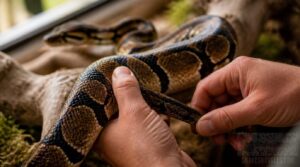
Once the lower body accepts contact without tensing, work toward the tail. Gently pull the tail toward you while keeping the head turned away — this builds handler trust without triggering defensive coiling.
Watch for tongue flicks and loose muscle tone; these signal calm interest. If the tail resists or the body tightens, pause. Rushing this cue invites startle responses and undoes your progress.
Support The Mid-body
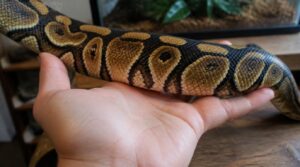
Once the tail comes without resistance, shift your free hand under the mid-body for real support. Thoracic stability matters here — a wobbly midsection invites lateral twisting and stress coiling.
Use your palm, not fingertips. Even palm pressure techniques spread weight across the mid-abdomen, keeping spinal alignment steady. This scoop-and-support method builds handling confidence for both of you before any lift begins.
Lift Slowly and Confidently
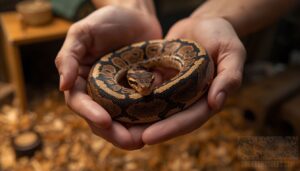
Once your palm cushions the mid-body, commit to the lift. Smooth lifting motions beat quick grabs every time — sudden movements spike stress responses fast.
- A steady rise, not a snatch
- The snake curling naturally into your palm
- Body proximity kept close, never dangling
Keep the snake near your torso throughout. This scoop-and-support method, paired with consistent weight distribution, builds trust session after session.
Increase Time Only When Calm
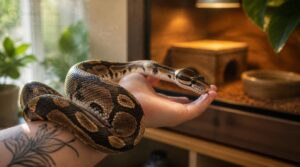
Patience pays off here, and rushing the process only sets you back. Your snake will tell you when it’s ready for more time out of the enclosure, if you know what to look for. Here’s how to read those signals and build handling time the right way.
Calm Tongue Flicks
Calm tongue flicks tell you more than any body posture ever will. That slow, steady rhythm—pause, sample, pause—means your python is checking environmental safety, not sensing threat.
Rapid, erratic flicking signals stress; measured chemical cue sampling signals trust. Watch for this relaxed sampling pace during hook training before extending session time. It’s your green light, not a guess.
Loose Body Movement
Once your snake hangs loosely through your hands, muscle tension eases rather than bunching in tight coils. Relaxed body flow replaces rigid holding, showing genuine comfort with the hook and low-pressure handling.
Watch how it shifts weight naturally between your palms instead of locking against them. This loose, fluid movement—paired with calm tongue flicks—confirms you’re ready to extend session time.
Start With Five Minutes
Five minutes beats zero every time. Set a timer and commit to just that window—no more, no less—so the task feels manageable instead of overwhelming.
Overcoming initial resistance starts small: one calm pickup, one steady breath. This incremental progress habit builds real training momentum without pushing your python past its comfort threshold or triggering stress reduction concerns.
Build Over Several Weeks
Extend lift duration by 30 seconds to a minute weekly, only after two calm sessions in a row. Track calm duration each time, and document any distress signals you spot.
Keep your handling schedule to 2-4 sessions weekly. Adjust timelines based on the snake’s response, not the calendar, and watch for training fatigue.
Stop Before Stress Escalates
Think of every session as a conversation—your python is always answering back through body language. Immediate stop protocol kicks in the moment you spot:
Every session is a conversation—your python always answers back through body language, so stop the moment it signals distress
- Hissing or musking (a foul warning odor)
- Rigid, tense coiling instead of loose movement
- Head bobbing or whipping
Don’t push through it. Return the snake calmly, then reassess husbandry before your next attempt.
Prevent Bites and Training Setbacks

Even with slow progress, setbacks can still happen if you miss the warning signs. Bites usually don’t come out of nowhere; your python gives you clues first. Here’s what to watch for and how to keep every session advancing instead of backward.
Watch Raised Head Posture
Raised head, forward tilt—that’s your first warning sign. The head sits ahead of the shoulders, chin tucked, gaze locked upward, putting real cervical spine load on your ball python.
Watch for stiff neck extensor strain or an S-curve building. That posture reads as body language screaming alertness, not calm. Catch it early, back off the snake hook, and you’ll dodge a strike before it happens.
Stop for Hissing or Musking
Hissing or musking? Stop immediately. These are strong stress signals, not mild annoyance, and pushing forward risks a bite.
Set the snake down, back away, and let it settle undisturbed for several minutes.
Three signs you’re clear to resume:
- Slow, relaxed tongue flicks
- Loosened, evenly curved body
- A full minute of calm posture
Skip these checks, and you’re inviting the same defensive reaction right back.
Avoid Feeding-response Confusion
Timing matters more than technique here. Train too close to a meal, and your snake’s prey response takes over, striking at motion out of hunger, not defense.
| Do | Don’t |
|---|---|
| Train 48+ hrs post-meal | Handle right after feeding |
| Track meal dates | Guess digestion status |
Record intervals, respect the feeding window, and confusion fades fast.
Never Grab Head or Tail
Grabbing the head or tail is the fastest way to turn a calm python defensive. A tail grasp induces panic can raise the chance of a strike. Every restraint technique you use should protect the snake’s center of gravity, not fight it.
- Support mid-body, always
- Skip yanking the tail—fraying happens fast
- Use minimal lever forces when lifting
- Practice the scoop-and-support method for low-pressure handling
Steady hands prevent defensive strikes far better than quick grabs ever will.
Recheck Husbandry After Stress
Once your python calms down, don’t just walk away—check the enclosure. Confirm microclimate stability: temperature within 1°C, humidity within 5% of target. Monitor hydration status and offer small recovery meals within 24-48 hours.
| Check | Timeframe | Target |
|---|---|---|
| Temperature | Immediate | ±0.5-1°C |
| Weight | 72 hours | <2% change |
| Feeding | 24-48 hrs | Resumed |
Log everything—patterns matter.
Frequently Asked Questions (FAQs)
How long does hook training typically take to work?
Most snakes show early progress in 2-4 weeks with consistent sessions. Full pickup readiness often takes 8-12 weeks, though temperament, feeding stability, and husbandry consistency all shape your individual timeline.
Following the three essential steps to hook-train your snake in sequence can help you stay consistent and make the most of that 8–12 week window.
Can hook training work on aggressive or rescue pythons?
Yes, absolutely. Rescue snake patience matters most here: a snake hook helps rehabilitate fearful pythons by managing defensive behaviors safely. Assess temperament baseline first, watch stress signals closely, and progress slower than usual for genuine safety for beginners.
What age should a python be before starting?
Six to twelve months is your target window, once weight hits 300–600 grams and feeding stays consistent. Track growth milestones and individual temperament—hatchlings under six months stress easily, so let the settling period and first 7 days pass before judging readiness.
Conclusion
Rome wasn’t built in a day, and neither is trust with a defensive snake. Learning how to hook train a ball python simply asks you to stay patient and consistent, session after session, week after week.
If you’re just starting out, comparing temperaments across species with this beginner-friendly reptile handling guide can help you set realistic expectations before your first session.
Before that first hook comes out, it helps to slow down and study snake anatomy with this step-by-step guide to drawing a snake’s coils and curves, so you can read your ball python’s body language with confidence.
Watch the tongue flicks, watch the body language, and let calm behavior set the pace, not the calendar.
Master this rhythm, and pickup stops feeling like a gamble. Your snake learns you’re truly safe. That’s the real, lasting win.