This site is supported by our readers. We may earn a commission, at no cost to you, if you purchase through links.

Most first bites happen in the same predictable way: a nervous new owner grabs too fast, the gecko bolts, and trust takes weeks to rebuild. Reptiles don’t read body language the way dogs or cats do. They read pressure, timing, and vibration, which means the difference between a calm bearded dragon and a defensive one often comes down to how you move your hand.
That’s the part most beginners never get taught. Reptile handling for beginners isn’t about bravery, it’s about technique, patience, and knowing what a stressed animal looks like before it ever hisses or strikes.
Get those fundamentals right, and taming becomes less of a gamble and more of a skill you can actually master.
Table Of Contents
- Key Takeaways
- Choose a Beginner-Friendly Reptile to Handle
- Prepare for a Safe Handling Session
- How to Handle Reptiles Step by Step
- Read Reptile Stress Signals and Build Trust
- Prevent Bites, Illness, and Hygiene Risks
- Frequently Asked Questions (FAQs)
- How do you handle a pet snake?
- How do you handle a snake in a cage?
- How do you acclimate a pet snake to being held?
- How do you handle a tame snake?
- How do you handle a snake if you’re nervous?
- How do you train a snake to be a pet?
- How often should beginners handle their reptiles?
- What time of day is best for handling?
- Can reptiles recognize their owners over time?
- How long does it take to tame a nervous reptile?
- Conclusion
Key Takeaways
- Choosing a calm, captive-bred species like a bearded dragon, leopard gecko, or corn snake sets you up for a much smoother start than picking based on looks alone.
- Reading your reptile’s stress signals — rigid posturing, gaping, rapid breathing, or a bolt for cover — matters more than any grip technique, since these cues tell you when to stop before things escalate.
- Proper support technique varies by species, but the core rule stays the same across the board: support the full body, never grab a tail, and move slowly from the side rather than overhead.
- Trust builds through short, consistent sessions — starting at two to three minutes and working up to five or ten — over a timeline of weeks to months, not through any single dramatic breakthrough.
Choose a Beginner-Friendly Reptile to Handle

Every successful handling relationship starts before you ever touch the animal — it starts with choosing the right one. Not every reptile suits a beginner’s hands or patience, and that difference shows up fast once you’re holding one. Here’s what to weigh before you bring a new reptile home.
Species known for their calm temperament, like bearded dragons and leopard geckos, make the learning curve gentler for kids just starting out, as this guide to reptile handling for kids explains in more depth.
Best Starter Species for Handling
Before you ever pick up a reptile, pick the right one. Beginners do best with species known for steady nerves and handling tolerance:
- Leopard geckos stay calm during short sessions
- Bearded dragons enjoy upright sitting
- Corn snakes rarely strike when supported
- Ball pythons move slowly, gently
This species comparison matters more than instinct alone.
Individual Temperament Matters
Species labels only get you so far. That "calm" corn snake might still be a bold explorer or a shy hider, so test temperament early: watch tolerance to touch, exploration pace, and reactivity. Prior handling and daily mood, especially post-feeding or shedding, shift behavior too. Read defensive cues honestly. Trust builds gradually, through repeated, calm exposure, not assumptions based on breed alone. It helps to understand the distinction between temperament and personality, since temperament reflects a single context while personality spans many.
Captive-Bred Versus Wild-Caught Reptiles
Origin matters as much as species when picking a first reptile. Captive-bred animals carry fewer parasites, adapt faster, and show calmer temperaments than wild-caught counterparts, which often need quarantine and vet screening before handling’s even safe. Wild-caught trade also strains conservation efforts. Ask breeders for origin documentation. It’s the ethical, low-risk choice, and it sets up trustworthy handling from day one.
Species-Specific Care Commitments
Good breeding origins only get you so far. Each species carries its own daily contract: leopard geckos need 88–95°F basking spots, corn snakes tolerate looser humidity, bearded dragons demand UVB lighting for bone health. Juveniles eat daily; adults less often.
Gut-loading insects and checking weight weekly catches problems early, before feeding mistakes become medical ones.
Reptiles Beginners Should Avoid
Ambition has limits. Venomous species demand professional training and permits you don’t have yet, while large-bodied constrictors bring enclosure and food costs beyond novice budgets.
Aggressive species can injure first-time handlers and transfer stress right back to you. Wild-caught reptiles harbor parasites tough to diagnose. Escape-prone species need more expert securing, so save these for later.
Prepare for a Safe Handling Session

Bringing your new reptile home is exciting, but the real work happens before it ever arrives. A safe first handling session starts long before you open the enclosure door, with groundwork that protects both you and your new pet. Here’s exactly what you need to have in place first.
Set Up The Enclosure First
Never bring a reptile home to an unfinished habitat. Confirm your temperature gradient, humidity, lighting, and basking spot days ahead.
Getting these conditions wrong from day one is a common trigger for shedding issues and skin lesions in reptiles, so it pays to double-check before your new pet arrives.
Use a stable, non-skid base, elevated 6–12 inches, with smooth substrate like reptile carpet. Add a secure full-length lid, check airflow and ventilation, and verify hides work before transfer.
Create a Calm Handling Space
Once the enclosure’s ready, turn your attention to the room itself. Dim the lights, silence the TV, and clear foot traffic, reptiles read a quiet space as safety.
Add a warm, non-slip mat for a secure grip and a familiar surface.
- Soft, indirect lighting
- Stable ambient temperature
- Non-slip handling mat
- No sudden noises
- Clear, uncluttered space
Let New Reptiles Acclimate
Patience beats enthusiasm here. Follow a no touch rule for the first 30 days, letting your reptile settle into its quarantine setup undisturbed.
Adjust temperature and humidity gradually, place shelters in low-traffic zones, and introduce a feeding schedule. Wait 24-48 hours after meals before any handling. This gradual introduction builds trust without triggering stress responses.
Choose Safe Handling Times
Timing shapes temperament. Handle within two hours of lights-on, when reptiles are alert but not yet heat-driven, or in late afternoon before the basking cycle winds down.
Skip feeding windows entirely, waiting 24-48 hours after meals. Adjust sessions seasonally, and track each animal’s calmer stretches. Quiet observation reveals patterns fast.
Gather Appropriate Handling Tools
A snake hook shouldn’t gather dust in a closet, it’s a working tool. Build your beginner tool checklist: hook, thick gloves, blunt tweezers, and a padded transfer tub. Disposable gloves protect against bites and bacteria alike.
Clean every item with safe disinfectant after each session. When in doubt about fit or use, ask a reptile expert.
How to Handle Reptiles Step by Step
Once your enclosure is ready and the space is calm, the actual moment of contact is where technique matters most. Every species has its own physical rules for how it wants to be held, and getting the mechanics right is what keeps both of you safe and relaxed. Here’s exactly how to approach, support, and hold your reptile the right way, species by species.
Approach Slowly From The Side
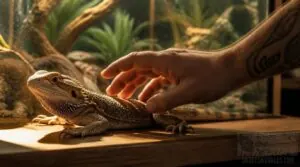
Walk in from the side, not head-on, so your reptile reads you as a curious neighbor, not a predator. Align your shoulders and hips with its body, moving in slow, deliberate steps. Keep hands relaxed, hovering near the midsection before contact.
This calm pace, part of essential safe techniques, respects reptile body language and eases stress reduction from the first second.
Support Snakes Along Their Body

Once your hand makes contact, support the full body length rather than one spot. Slide your palm under the midsection, aligning with the spine, then let a second hand follow near the tail.
Keep the body in a straight line handling posture, avoiding S-curves that strain muscles.
- Distribute weight across both arms
- Use gentle contact, never a tight grip
- Reposition if the snake arches or tenses
Hold Lizards Without Grabbing Tails
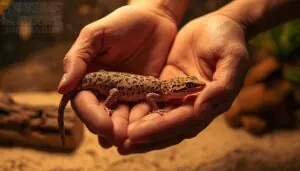
Lizards need a different grip than snakes. Scoop the animal from below, chest first, then slide your other hand under the hind legs. Never grip the tail; species like leopard geckos and anoles can drop it under stress. Keep wrists straight, palms cupped, and hold close to your body for calm handling posture.
Lift Turtles Safely From Sides

Turtles need whole-body support, not a scoop. Use the side lift method: hands behind the shoulders, cupping the hind end for balance, shell held close to your chest. Keep the turtle level, never head-first.
- Cracked shells
- Spinal twisting
- Panicked kicking
- Dropped animals
- Broken trust
Lower slowly, side-first, matching the same controlled path back down.
Keep Handling Sessions Short

Rarely should a first session stretch past a few minutes. Cap handling at five to ten minutes, then return your reptile to its enclosure before stress builds.
Start smaller: two to three minutes for new arrivals, lengthening gradually as trust grows. Skip back-to-back sessions same-day. This gradual exposure builds confidence, keeps injury risk low, and turns handling into a routine your reptile can predict, not dread.
Read Reptile Stress Signals and Build Trust
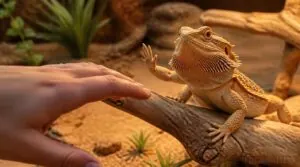
Every reptile has a language, and stress is usually the first phrase it teaches you. Learning to read those signals — before they escalate into a bite or a bolt for cover — is what separates confident handlers from nervous ones. Here’s what to watch for, species by species, and what it means for the trust you’re building.
Common Stress Signals by Species
Every species speaks a different stress language, and learning to read it is non-negotiable. Snakes tighten into rigid coils, hiss, or flick their tongues rapidly. Lizards flatten their bodies or whip their tails. Bearded dragons gape and darken their beards. Watch for these three universal red flags:
- Rapid breathing or gaping
- Rigid, defensive posturing
- Sudden retreat or hiding
Defense Versus Aggression
Here’s a truth that trips up new keepers: a defensive reptile isn’t an aggressive one. It’s scared, not hostile.
A defensive reptile isn’t aggressive, it’s simply scared, not hostile
A snake’s head retraction and coiling, a lizard’s tail thrashing, a turtle hissing while pulling into its shell, these are fear-driven body language cues, aimed at making contact stop, not starting a fight.
Know When to Stop
Rapid breathing, body flattening, or a mouth held open are your stop signals, no exceptions.
Watch tails too: tight curling or repeated twitching means pressure’s too high. Struggling past a few seconds, freezing, or backing into corners all say the same thing.
Return the reptile to its enclosure calmly. Pushing further only erodes trust you haven’t built yet.
Build Trust Through Short Sessions
Trust isn’t earned in one sitting, it’s built in short, repeated doses. Start with two to three minute sessions, working toward five to ten minutes as your reptile relaxes.
Consistency matters more than duration. A calm handler showing up regularly, with gentle positive reinforcement each time, teaches the animal that your hands mean safety, not threat.
Set Realistic Taming Timelines
How long until your gecko stops bolting for cover? Give it 7 to 14 days for basic habituation, then 2 to 4 weeks before short handling feels routine. Track the first 30 days closely:
- Days 1-3: observe only
- Days 4-14: brief presence
- Weeks 2-4: short handling
- Month 2: longer sessions
- Month 3+: routine handling
Stay flexible and log progress weekly.
Prevent Bites, Illness, and Hygiene Risks
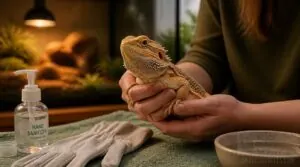
Trust goes a long way with reptiles, but it’s not a substitute for good safety habits. Bites, bacteria, and illness are manageable risks, not reasons for alarm, as long as you know what to watch for. Here’s what every handler, especially beginners and kids, needs to keep in mind.
Supervise Children and New Handlers
When kids handle reptiles, an adult stays within arm’s reach the entire time, ready to step in.
Child Handler Pairing works best when a novice partners with someone experienced. Before starting, run a quick safety briefing covering grip and boundaries. Watch behavior closely, both animal and child, and end the session immediately if stress signs appear.
Wash Hands and Disinfect Equipment
Once that briefing wraps, hygiene takes over as your real defense against illness.
Every session ends the same way: wash hands with soap and warm water for 20 seconds, or use 60% alcohol sanitizer if soap isn’t available.
- Wash hands thoroughly
- Disinfect tools and surfaces
- Store products safely
Careful hygiene, practiced every time, keeps zoonotic risks low.
Prevent and Respond to Bites
Bites happen even to careful handlers, so know your response before you need it.
| Situation | Action |
|---|---|
| Reptile freezes, gapes, hisses | Stop, return to enclosure |
| Skin breaks from a bite | Wash, antibiotic ointment, bandage |
| Deep puncture or heavy bleeding | Seek urgent medical care |
Avoid handling right after feeding or during shed. Check tetanus status if it’s outdated.
Recognize Health Warning Signs
Beyond bite risk, your reptile’s body tells you when something’s wrong. Watch for rapid breathing or open-mouth gasping, dull skin, and cloudy eyes.
- Droppings turning watery or oddly formed
- Appetite dropping off for days
- Retreating from the basking spot repeatedly
These stress signals mean it’s time to observe closely, not handle.
Seek Veterinary or Expert Help
Once you spot those warning signs, don’t wait it out. Find a reptile-experienced vet before you need one, ask about emergency care access, and keep husbandry notes and feeding history handy. Clear, specific communication speeds diagnosis.
If your clinic can’t treat reptiles, they’ll refer you to a specialist. Routine checkups catch trouble early, long before a crisis does.
Frequently Asked Questions (FAQs)
How do you handle a pet snake?
Cradle your corn snake with both hands supporting its full length, moving slowly from the side. Wait 24-48 hours post-feeding, wash hands thoroughly afterward, and end sessions calmly at the first sign of stress.
How do you handle a snake in a cage?
Approach from the side using Side Entry Technique, guiding a snake hook under the mid-body for Hook-Assisted Guidance. Support its full length, watch for defensive posturing, then latch the enclosure and follow proper hand washing protocol immediately after.
How do you acclimate a pet snake to being held?
Rome wasn’t built in a day, and neither is a snake’s trust. Wash scent-free hands, let it approach first with gentle first touches, then build up from short initial sessions to longer holds over several weeks.
Once your snake feels comfortable being handled, try sketching its relaxed poses using this step-by-step guide to drawing a snake’s curves and coils.
Once you’ve got the coils down, add that playful pink tongue with this guide to drawing a cute cartoon snake for a friendlier, more expressive look.
How do you handle a tame snake?
Slide in from the side, never overhead, and let your snake glide across both palms with even body support. Watch for calm tongue flicks, not tight coiling, and cap sessions at five to ten minutes.
How do you handle a snake if you’re nervous?
Nerves throw off your signals to the snake. Slow your breathing, watch its body language from a distance first, and use a hook for early sessions. Gradual exposure builds real confidence as trust develops naturally.
How do you train a snake to be a pet?
You don’t train a snake like a dog. Instead, you build trust through repetition: a consistent handling routine, gentle contact, and calm body language reading. Wash hands before and after each session, especially during that first month of feeding.
How often should beginners handle their reptiles?
Start with one to two short sessions weekly, five to ten minutes each. Watch for calm behavior across two sessions before increasing frequency.
As your snake grows more comfortable, you’ll find helpful guidance on reading those early behavioral cues in this overview of corn snake temperament and handling milestones.
If you’re introducing handling around feeding time, timing sessions carefully matters, so check this corn snake feeding guide for babies before adjusting your schedule.
Ball pythons prefer fewer visits; leopard geckos adapt faster.
Trust builds gradually, never on a rigid schedule.
What time of day is best for handling?
Timing follows your reptile’s clock. Diurnal species like bearded dragons do best with morning or midday sessions, while nocturnal geckos prefer dusk. Keep sessions 5 to 10 minutes, and always wait 24-48 hours after feeding.
Can reptiles recognize their owners over time?
Like Pavlov’s dog, but scalier: your bearded dragon or gecko learns your scent and silhouette. Scent familiarity builds trust, while visual cues aid recognition. Consistent routines and gentle handling turn "stranger" into "safe person" over weeks, not days.
How long does it take to tame a nervous reptile?
Nervous reptiles often need weeks to several months of gradual exposure. A skittish leopard gecko may settle in three weeks; a defensive corn snake could take longer.
Consistent, short sessions and patient observation build trust faster than rushing ever will.
Conclusion
A calm hand is like a slow tide: it never startles the shore, it just invites the water to trust the land again. That patience is the real heart of reptile handling for beginners.
Every hiss, flinch, or stillness is information, not rejection. Learn to read it, and taming stops feeling like luck. It becomes a rhythm you build together, one steady session at a time, until your hands finally speak a language your gecko understands.