This site is supported by our readers. We may earn a commission, at no cost to you, if you purchase through links.

Your hatchling ignores the pinky mouse. You’ve been watching for 20 minutes, and nothing’s happened. That moment catches nearly every new corn snake keeper off guard, and it almost always means the same thing: one small detail is off.
Baby corn snakes (Pantherophis guttatus) don’t forgive sloppy technique the way adults sometimes do. Prey that’s the wrong size, thawed incorrectly, or offered at the wrong temperature can shut down a feeding response for days. The margin for error is narrower than most guides admit.
Nail the basics, and your hatchling will eat reliably from week one.
Table Of Contents
- Key Takeaways
- Choose The Right Prey Size
- Prepare Frozen-Thawed Mice Safely
- Follow a Baby Corn Snake Feeding Schedule
- Feed Your Baby Corn Snake Step-by-Step
- Troubleshoot Refusals and Feeding Problems
- Frequently Asked Questions (FAQs)
- How often should I feed my baby cornsnake?
- What should I feed my baby corn snakes?
- What to feed a 1 year old corn snake?
- How much should I feed my baby corn snake?
- How do I know if my baby corn snake is hungry?
- How do I feed my corn snake for the first time?
- How much to feed a baby snake?
- Will my baby corn snake bite during feeding?
- How do I calm a nervous feeder?
- What if my baby snake vomits?
- Conclusion
Key Takeaways
- Feed your hatchling one frozen-thawed pinky mouse every 5–7 days, sized to about 10% of its body weight and slightly narrower than its widest point.
- Thaw prey completely in sealed bags of lukewarm water, warm it to 95–100°F before offering, and never microwave, refreeze, or leave uneaten prey in the enclosure for more than 2 hours.
- Always use feeding tongs, feed inside the enclosure, and skip handling for 48–72 hours after meals to avoid stress-related regurgitation.
- Most refusals come from fixable issues like shedding, stress, or wrong temperatures—wait 10–14 days after a regurgitation and call a vet if refusal persists past three attempts or neurological signs appear.
Choose The Right Prey Size

Getting prey size right is the single most important feeding decision you’ll make for your baby Pantherophis guttatus. Offer something too big and you risk regurgitation and digestive stress; too small, and your hatchling won’t grow like it should. Here’s how to nail it, step by step.
Once you’ve settled on the right prey size, tracking your hatchling’s weight monthly helps you confirm portions are working—our guide to the best food for baby snakes keeps that steady growth on track.
Start With Frozen-Thawed Pinkies
Start your hatchling on frozen-thawed pinkies, the safest prey for hatchling care. These newborn mice carry no risk of biting your snake, unlike live rodents.
Every solid Corn Snake Feeding Guide for Babies begins here. Keep pinkies in your freezer, thaw only what you need, and never refreeze. Offer nothing else until your hatchling eats pinkies reliably and consistently.
Measure Your Snake’s Width
Grab your digital calipers. Your hatchling’s midbody width decides its prey size. Measure the widest point behind the head, on a flat surface. Record to 0.1 cm, take three readings, and average them. Measure monthly, at the same time daily.
Follow this routine:
- Rest your snake flat
- Measure behind the head
- Record to 0.1 cm
- Repeat three times
- Log monthly
This prey sizing rule keeps hatchling care simple.
Use The Ten-Percent Guideline
Width is a great visual check. Now add numbers. The ten-percent guideline says one prey item should weigh about 10% of your snake’s body weight. Weigh your hatchling monthly, in grams. Match prey to that weight.
Key points:
- Use the snake’s current weight, not the prey’s
- Treat 10% as an upper limit, not a goal
- Weigh prey after thawing, before feeding
Hatchlings grow fast. Recalculate often.
Know When to Offer Fuzzies
So when do you move past pinkies? Most hatchlings are ready for fuzzy mice at 4 to 6 months old, or around 20 to 30 grams. Watch how your snake eats. If it swallows a pinkie in under five minutes and still seems hungry, the next prey size up is likely right.
Signs your snake is ready:
- Swallows pinkies easily, no stretching
- Gains weight steadily between meals
- Shows strong interest at feeding time
Move up one size at a time. Skipping sizes can cause regurgitation. If your snake struggles or takes longer than 15 minutes, drop back to pinkies and try fuzzies again in two to three weeks. Growth isn’t a race.
Avoid Live Rodents
Skip the live rodent debate entirely. Frozen prey is the safe choice for baby corn snakes (Pantherophis guttatus). Live rodents bite, scratch, and can seriously injure a hatchling. A frightened mouse can wound your snake overnight. Injuries from live prey may lead to infections or even death, as detailed in this feeding live vs. frozen guide.
Thawing frozen pinkies properly, then using feeding tongs for prey presentation techniques, keeps feeding predictable. Some regions even restrict live vertebrate feeding. Safe feeding practices protect your snake and your peace of mind.
Getting the prey to the right temperature matters too, since snakes often refuse anything that feels off—this proper snake feeding temperature guide breaks down the details.
Prepare Frozen-Thawed Mice Safely

How you handle frozen prey matters as much as what you feed. Done wrong, it can stress your snake or even make it sick. These five steps will get it right every time.
Thaw Prey Completely
A frozen center can hurt your snake’s digestion. When you thaw frozen rodents, the outside softens first while the inside stays icy. Confirm the prey is thawed all the way through.
- Place prey in a sealed plastic bag
- Submerge in lukewarm water for 30 minutes
- Press the belly to check for cold spots
- Never microwave; it heats unevenly
Warm Prey Before Feeding
Once your prey is fully thawed, it still needs a little more warmth. Corn snakes hunt by sensing heat, so warm prey triggers a stronger feeding response.
Keep the prey in its sealed bag and submerge it in lukewarm water for five minutes. This raises the surface temperature without overheating. Your snake is far more likely to strike warm prey.
Check Temperature Before Offering
Your target is 95–100°F at the thickest part of the mouse. Use an infrared thermometer and aim at the midsection, not the tail, since surface readings can vary widely.
Cold spots inside the prey still suppress your hatchling’s feeding response even when the outside feels warm. A quick check takes ten seconds and keeps your feeding schedule on track.
Prevent Cross-Contamination
One thawing session can spread bacteria across your whole snake room. Keep it contained with these habits:
- Use dedicated feeding tongs for prey only, never for cage cleaning.
- Thaw frozen prey in a separate container, not your kitchen sink.
- Wash hands before touching your hatchling’s enclosure.
Pantherophis guttatus hatchlings stay healthier when you keep these routes closed.
Discard Uneaten Prey Promptly
A leftover pinky left overnight becomes a bacteria factory. Salmonella can double every 20 minutes at room temperature. Remove uneaten prey within 2 hours of offering it.
If your hatchling refuses food, don’t retry the same item. Re-offer only freshly thawed prey later. This habit prevents mold, odors, and pest infestations, keeping your enclosure clean and healthy.
Follow a Baby Corn Snake Feeding Schedule

Now that your pinky is thawed and warmed, you need a game plan for when to offer it. Baby corn snakes (Pantherophis guttatus) thrive on routine, and a consistent feeding schedule keeps their digestion on track. Here’s how to build one that helps steady growth without overdoing it.
Feed Every Five to Seven Days
Usually, a baby corn snake (Pantherophis guttatus) eats once every five to seven days. This feeding frequency gives your hatchling time to fully digest before the next meal arrives.
Keep prey size small, and stick to your feeding schedule. As your hatchling grows, you’ll make a feeding schedule adjustment, but for now, consistency wins.
Adjust for Body Condition
Every snake is different. Your schedule should flex with your hatchling’s body condition and weight.
Look at your snake from above. A healthy baby looks like a loaf of bread, with flat, smooth scales. Check for these warning signs:
- A visible spine means your snake is underweight.
- A triangular body shape calls for a vet visit.
- A round shape with spread scales means overweight.
- Rapid weight gain signals overfeeding.
- Use a gram scale to track growth weekly.
If your snake gains too fast, reduce prey size or stretch feeding intervals. For underweight babies, increase feeding frequency only after a vet rules out health problems. Meet nutritional requirements, don’t exceed them.
Maintain a Feeding Log
A feeding log turns guesswork into data. Write down the date, prey size, prey weight, and your snake’s response at every meal.
Track these details:
- Feeding date to keep 5-7 day intervals consistent
- Prey type and size (pinkie or fuzzy)
- Refusals or regurgitations
- Monthly weight for growth monitoring
Patterns emerge fast. You’ll spot links between refusals and sheds, and know when to switch prey. Vets love this data too.
Avoid Overfeeding Hatchlings
Your log also guards against overfeeding, a real danger for hatchlings. Growth that’s too fast weakens bones and raises obesity risk. A digestive tract with no breaks often regurgitates.
Watch for these warning signs:
- Visible fat deposits
- Bulging sides
- Meals more than twice weekly
Your hatchling should look slender and muscular. If weight gain looks unhealthy, adjust the feeding schedule and prey size right away.
Skip Unnecessary Supplements
Skip the supplement aisle for now. Whole prey gives your Pantherophis guttatus balanced nutrition on its own. Rodents supply bones, organs, and muscle in one package.
That said, feeder rodents from commercial breeders can carry nutritional gaps, especially vitamin D. If you want extra insurance, lightly dust prey with calcium and multivitamins every 8 feedings. More than that risks over-supplementation, so keep it light.
Feed Your Baby Corn Snake Step-by-Step
Now that you’ve picked the right prey and thawed it safely, it’s time for the actual feeding. This is where good technique makes the difference between a calm meal and a stressed-out hatchling. Follow these five simple steps and your baby Pantherophis guttatus will eat like a champ.
Confirm Proper Enclosure Temperatures

A hungry snake needs a warm body first. Before you offer prey, check your basking zone sits at 88–92°F and ambient air stays 78–82°F. Use a digital infrared thermometer on the basking rock, and place thermometers at several points to verify the temperature gradient. Proper thermal regulation powers digestion. Skip feeding if temps drop below 70°F overnight.
Offer Prey With Tongs
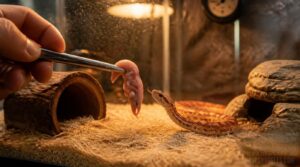
Once temps check out, grab your feeding tongs. Never use your fingers, because a hungry hatchling may strike at anything warm. Grip the thawed prey by the hips, not the head, and hold it at your snake’s eye level.
Keep your technique steady:
- Move tongs slowly toward the hatchling
- Wiggle prey gently to mimic life
- Stay still once your snake strikes
Let your corn snake constrict and swallow naturally.
Feed Inside The Enclosure
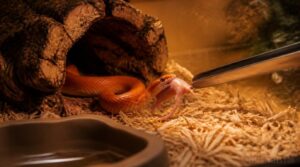
Should you feed in a separate tub? For a hatchling, the answer is no. Feed inside the enclosure whenever possible. Moving your snake before meals adds stress, and stress kills appetite fast. A familiar space with a secure hide helps your hatchling feel safe enough to strike.
One caution: use dedicated feeding tongs and clean surfaces with plain water only. Leftover odors from cleaning sprays can linger on prey and trigger a refusal.
Provide Fresh Drinking Water
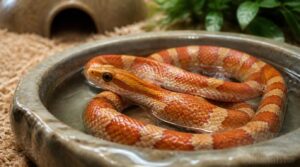
Water matters as much as prey. A fresh water bowl helps hydration and water quality, which directly affect shedding and digestion. Offer these habits:
- Use a shallow, wide bowl the hatchling can coil into
- Place it at the cool end
- Change water twice weekly, or when cloudy
- Treat tap water for chlorine and heavy metals
- Disinfect the bowl regularly
Good hydration needs only minutes of daily attention.
Avoid Handling After Meals
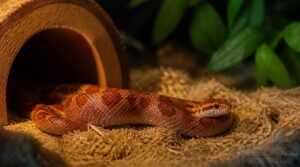
Your snake just ate. Now patience becomes your best handling technique.
Wait 48 to 72 hours before touching your hatchling. Handling after meals stresses Pantherophis guttatus, and stress triggers regurgitation in sensitive babies.
- Skip handling for at least 2 full days
- Let the prey settle and digestion start
- Keep the enclosure calm and quiet
Think of your snake as a full backpack. Jostling it risks everything coming back up.
A freshly fed snake is like a full backpack—too much jostling and everything comes back up
Troubleshoot Refusals and Feeding Problems
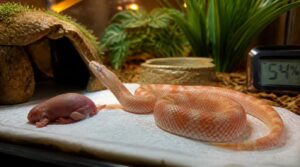
Even the best-kept hatchling Pantherophis guttatus will sometimes turn down a meal, and that’s usually not a crisis. Most refusals trace back to a fixable cause like shedding, stress, or husbandry slips. Here’s how to diagnose the problem, respond safely, and know when it’s time to call your vet.
Check for an Upcoming Shed
Pause before you panic. Food refusal during shedding is normal for baby corn snakes (Pantherophis guttatus).
Watch for cloudy, milky eyes and dull, tight-looking skin. Once eyes clear, the shed usually finishes within 3–7 days.
During the shedding cycle, skip the meal rather than force it. Resume your normal feeding frequency and prey size after the shed completes.
Reduce Stress Before Feeding
Sometimes stress causes refusals just as often as shedding does. A calm feeding environment and careful handling techniques work together.
- Wash your hands before handling to remove food scents that may confuse your snake
- Handle only during active morning or evening hours
- Avoid handling during feeding days and shedding cycles
- Place a warm-side hiding spot inside the enclosure for security
Respond Safely to Regurgitation
Even with the best setup, regurgitation happens. If your corn snake brings up a meal, don’t re-feed immediately. Wait at least 10 to 14 days before the next attempt. This resets the digestion cycle and reduces additional strain.
Also review your prey size and temperatures. A meal that’s too large or offered at incorrect enclosure temps is often the cause.
Monitor Weight and Growth
After a regurgitation, weight monitoring tells you when your snake is truly back on track.
Weigh your hatchling once a month using a digital kitchen scale. Healthy hatchlings gain roughly 1-2 grams monthly. Once in the juvenile stage (30-90g), bump check-ins to twice monthly. If the growth rate stalls, tweak your feeding frequency before assuming something’s wrong.
Know When to Call Vets
Trust your gut when something feels off.
Persistent food refusal beyond three consecutive attempts warrants a vet call. Open-mouth breathing or wheezing needs immediate attention. Neurological signs like falling repeatedly or an inability to right itself are serious red flags.
Your vet can also run parasite screening to catch hidden health issues before they stall your weight monitoring progress.
Frequently Asked Questions (FAQs)
How often should I feed my baby cornsnake?
Feeding frequency matters most for hatchlings. Feed your baby corn snake every five to seven days. This schedule helps steady growth without excess weight. Adjust intervals based on body condition, and track each meal in a log.
What should I feed my baby corn snakes?
Feed your baby corn snakes frozen-thawed pinky mice weighing 1–3 grams. This prey size matches their midsection, helps rapid growth, and provides nutritional completeness without digestion problems.
What to feed a 1 year old corn snake?
A one-year-old Pantherophis guttatus named Pip thrives on one fuzzy mouse weekly. Feed frozen-thawed rodents sized about ten percent of body weight, slightly narrower than your snake’s mid-body width, for complete nutrition.
How much should I feed my baby corn snake?
Your baby corn snake needs one pinky mouse every 5–7 days. Choose prey slightly smaller than its widest body section, roughly 10% of its body weight, for steady, healthy growth.
How do I know if my baby corn snake is hungry?
Watch for active pacing and glass-surfing. Your hatchling Pantherophis guttatus will explore more, flick its tongue rapidly, and perk up when you approach. These feeding cues usually mean it’s mealtime.
How do I feed my corn snake for the first time?
Your first feeding can feel like a big moment, but with the right steps, it’s easier than you think. Here’s how to do it safely.
Start by thawing a frozen pinky completely in cold water, then warming it slightly. Then use feeding tongs to offer the prey head-first, gently wiggling it to trigger your snake’s natural feeding response. Stay calm and let the snake strike.
How much to feed a baby snake?
Feed your hatchling one pinky mouse every 5-7 days. Match prey size ratio to 1-5 times your snake’s widest body width, keeping prey weight near ten percent of body weight.
Will my baby corn snake bite during feeding?
Yes, occasionally. Hatchling corn snakes (Pantherophis guttatus) may strike at scented fingers or movement. Wash hands after handling prey, use tongs, move slowly, and skip handling for 48 hours post-feeding.
How do I calm a nervous feeder?
A nervous Pantherophis guttatus needs low light and silence. Move slowly, use gentle tongs, and skip handling beforehand. This stress reduction approach builds a reliable feeding response. Patience works.
What if my baby snake vomits?
Seeing your baby snake vomit is scary, but true regurgitation is common. It’s undigested prey expelled from the esophagus, not stomach vomiting. Remove it immediately to prevent re-ingestion and contamination. Then wait two full weeks before offering food again.
Conclusion
Rome wasn’t built in a day, and neither is a healthy corn snake. But this corn snake feeding guide for babies gives you everything you need: right prey size, safe thawing, and a steady schedule. When your hatchling strikes and swallows that pinky on cue, you’ll know your patience paid off.
Trust the process, keep your feeding log updated, and stay consistent. Do that, and your tiny hatchling grows into a thriving adult.