This site is supported by our readers. We may earn a commission, at no cost to you, if you purchase through links.

The first boa I ever bought came from a flea market vendor who swore she was "captive bred and healthy." She arrived with mites, a respiratory infection, and zero paperwork. Three vet visits and $400 later, I understood why finding a reputable boa constrictor breeder matters far more than most people expect.
Boas live 25 to 30 years. That’s a long commitment to start on shaky ground.
The right breeder hands you clean records, answers questions without hesitation, and still picks up the phone months after the sale. Knowing exactly what to look for, and what to run from, changes everything.
Table Of Contents
- Key Takeaways
- Best Places to Find Reputable Boa Breeders
- What to Look for in a Boa Breeder
- How to Evaluate Boa Health and Facilities
- Credentials and Ethical Breeding Practices
- Boa Breeder Red Flags Before Buying
- Frequently Asked Questions (FAQs)
- Should I buy a boa constrictor?
- Can a boa constrictor be a pet snake?
- Are boa constrictors native to Texas?
- Where do boa constrictors live?
- How big does a boa constrictor get?
- Are boa constrictors pythons?
- What is the calmest boa constrictor?
- How much does a pet boa constrictor cost?
- What is the most docile boa constrictor?
- What is the lifespan of a boa constrictor in captivity?
- Conclusion
Key Takeaways
- Buy from reputable sources—breeder directories, reptile expos, herpetological societies, and exotic vets—because a bad purchase (like the author’s flea market boa) can cost hundreds in vet bills and months of stress.
- A trustworthy breeder provides full paperwork: lineage and genetic records, written health guarantees, itemized pricing, proper licenses, and post-sale support with defined response times.
- Evaluate the facility in person by checking for clean uncrowded enclosures, correct temperatures (88–92°F warm side) and humidity (60–70%), strict quarantine practices, and documented feeding and health records.
- Walk away from red flags like missing records, sick or poorly housed boas, evasive answers, pressure tactics, inconsistent pricing, or breeders who vanish after the sale.
Best Places to Find Reputable Boa Breeders
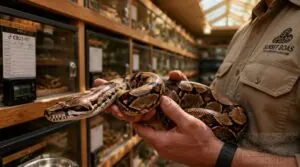
After years of breeding boas myself, I’ve learned that finding a good breeder is a lot like finding a good mechanic: word travels fast, and the trustworthy ones aren’t hiding. You don’t have to guess your way through it, because great breeders leave clear trails. Here are the five places I’d check first.
If you’re still figuring out which snake is right for you, brushing up on beginner-friendly boa constrictor morph types will help you walk into any conversation with a breeder already knowing what you want.
Reputable Reptile Breeder Directories
A good breeder directory is your shortcut past the guesswork. These listings feature verified members with licenses and health guarantees, plus location, species focus, and contact info.
Check that profiles show breeding history with boas and updated photos matching current offerings. Look for vet endorsements and do reviews verification yourself. Trust directories requiring registration numbers and updated quarterly. Skip ones that don’t.
Boa Communities and Referrals
Directories are just the start. Now tap Boa Communities and Referrals. Online owner forums reveal breeder reputations across generations of offspring. Herpetological societies curate vetted breeder lists. Ask your exotic vet, too; they know who quarantines properly.
Attend breeder meetups, ask direct questions, and find new owner mentorship. Real keepers don’t hide. Word-of-mouth is gold here.
Established Reptile Expos
Reptile expos let you meet breeders face to face. You can inspect clean enclosures, ask about breeder transparency, and see animals before paying a cent.
A few tips:
- Visit established expos with vendor codes of conduct.
- Watch how boas are housed on-site.
- Ask about health guarantees and veterinary checkups right at the table.
Skip crowded, chaotic tables. Trust your gut.
Exotic Veterinarian Recommendations
Beyond expos, your exotic vet is a goldmine for breeder referrals. They see which breeders bring animals in for regular veterinary checkups and know who actually cares.
Ask yours:
- Which breeders show vet visit transparency?
- Who backs their animals with a real health guarantee?
- Which sellers follow a vet-recommended diet?
- Who offers honest expert advice after the sale?
Vets talk.
Local Breeders Versus Shipping
A local breeder lets you see the animal before you commit. Watch how it moves, check the enclosure, ask questions face-to-face. Word-of-mouth recommendations and online reviews carry real weight here.
If you’re ready to start your search, browsing a directory of reputable ball python breeders near you can help you find someone local with verified reviews and healthy animals.
Shipping works when local options are thin. Compare total shipping costs against the price difference before committing to out-of-state transactions. Always verify shipping policies and request recent vet records upfront.
What to Look for in a Boa Breeder
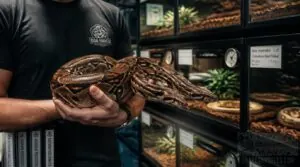
Not every breeder with a website and a few pretty photos is the real deal. Before you hand over your money, there are five things worth checking that separate a trustworthy breeder from one you’ll regret. Here’s what to look for.
Transparent Lineage and Genetics Records
A good breeder keeps receipts. Ask for full lineage documents for both parents, genetic test results with the lab name and test date, and a clear record of any morphs in the bloodline.
If they can’t hand you that complete paper trail without real hesitation, walk. Tamper-evident ancestry records aren’t overkill. They’re proof the breeder truly takes their animals seriously.
Boa Breeding Experience
Since years alone don’t equal skill, a legit boa constrictor breeder can actually prove their breeding experience. Ask them to show you:
- A documented breeding history with litter counts per pair
- Records of proper enclosure conditions across seasons
- Clear genetic information tied to each offspring
Breeders offering solid health guarantees back them up with exactly this paper trail.
Clear Pricing and Sales Terms
A vague price is a red flag, full stop.
| What to Expect | Green Flag | Red Flag |
|---|---|---|
| Total price | Itemized upfront | "We’ll talk later" |
| Deposit terms | Written, refundable policy | No policy given |
| Payment methods | Multiple options listed | Cash only, no receipt |
| Shipping costs | Quoted clearly upfront | Hidden fees surprise you |
Transparency in pricing separates serious breeders from profit-driven sellers fast.
Written Health Guarantees
A real breeder puts their promises in writing. Written health guarantees should spell out covered conditions, the claim window, required documentation, and whether you’ll get a refund, replacement, or credit.
Unwillingness to provide health guarantees is a dealbreaker. It signals low confidence in their animals. A breeder transparent about their breeding practices backs their boas with detailed records and health certifications. No guessing required.
Responsive Post-Sale Support
Buying a boa is just the beginning. Postpurchase support separates great breeders from forgettable ones. The best treat customer education as part of the package, not an afterthought.
Ask about their customer support before buying:
- A defined response window (24–72 hours)
- Proactive health updates for at least 6 months
- A dedicated point of contact
No clear health policy? Hard pass.
How to Evaluate Boa Health and Facilities
Visiting a breeder’s setup is like reading a report card — the facility tells you everything the sales pitch won’t. A healthy operation shows its quality in the small details: the smell of the room, the spacing between enclosures, the way the snakes behave. Here’s what to check before you ever ask about price.
A breeder’s facility tells you everything the sales pitch won’t
Clean, Uncrowded Boa Enclosures
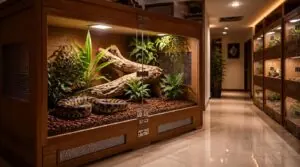
A good enclosure tells you everything. Well-maintained facilities show the breeder actually cares. Look for cleanliness and organization: no waste sitting around, no musty smell, no overcrowded tanks. Keeping things spotless is easier with a dedicated reptile enclosure cleaning kit, so there’s really no excuse for the mess you’ll sometimes see at a careless breeder’s setup.
Each boa needs room to fully stretch out and move naturally. Quality of enclosures matters: secure latches, solid ventilation systems, and non-abrasive substrate. Crowded or dirty setups? That’s your cue to walk away.
Correct Temperature and Humidity

After cleanliness, check the climate closely. Boas need a temperature gradient: 88-92°F on the warm side, 78-82°F on the cool side. Proper humidity levels run 60-70%, bumping higher during shedding season.
A breeder who truly masters humidity control year-round is keeping respiratory issues at bay. Cold or bone-dry enclosures aren’t just uncomfortable for the snake. They’re a clear warning sign.
Quarantine and Biosecurity Practices
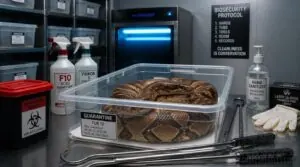
Climate tells you a lot, but biosecurity measures reveal even more. A trustworthy breeder keeps new arrivals in a separate space with dedicated quarantine equipment like individual tongs and tubs. Keeping a dedicated reptile quarantine sterilization kit on hand makes it easy to maintain those strict hygiene standards between every new arrival.
Look for:
- New snakes handled last, never first
- Contained waste disposal after cleaning
- Separate room access for quarantine zones
Strict quarantine procedures protect every animal in the collection. No shortcuts, no outbreaks.
Feeding and Health Records
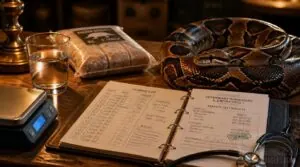
Biosecurity only tells half the story. Ask to see feeding and health records before you commit.
A solid breeder tracks feeding frequency, prey type, and size for every animal. Look for dated feeding schedules and vet records showing parasite testing. No records? Walk away.
Written health guarantees backed by documentation prove the breeder takes their animals seriously.
Healthy Behavior and Body Condition
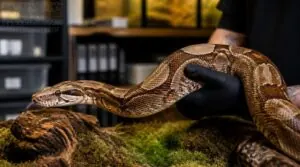
A healthy boa speaks through behavior. Watch for steady movement and alertness during your visit. Ask about the shedding cycle history and growth rate monitoring records.
A proper handling technique from the breeder should calm, not stress, the snake. Do a quick temperament assessment yourself. Labored breathing or a constantly tucked head? That’s your exit cue.
Credentials and Ethical Breeding Practices

A good breeder’s credentials tell you everything about how seriously they take this craft. Before you hand over your money, there are a few key boxes to check that separate the real deal from someone just in it for quick sales. Here’s what to look for.
Captive-Bred Origin Documentation
A real captive-bred boa always comes with a paper trail. Ask for pedigree information tracing multiple generations back, plus breeder contact details you can actually verify.
Good breeders provide genetic lineage records and DNA parentage confirmation when available. If the breeding history feels vague or your CITES documentation is missing, walk away. No paperwork means no real proof of origin.
Required Licenses and Permits
Because exotic pet permitting varies by state, ask upfront what licenses your breeder holds. CITES documentation proves international trade compliance, and some states require additional permits for selling reptiles commercially. Note that boa constrictors fall under state exotic animal permit laws, with Louisiana specifically requiring permits for boa constrictors alongside many other large constricting snakes.
Breeders affiliated with the United States Association of Reptile Keepers or the Association of Reptilian and Amphibian Breeders usually stay on top of this. USDA registration may also apply.
Responsible Genetic Diversity Practices
Good breeders treat genetics like a long game. They track lineages carefully to avoid inbreeding depression, which weakens immune function and fertility over generations.
Ask if they use genetic testing and lineage tracking across breeding cohorts. Reputable breeders publish diversity reports and practice controlled outcrossing. That transparency signals genuine breeding ethics, not just pretty morphs.
Accurate Morph and Species Identification
Misidentified morphs aren’t just frustrating — they cost real money. A breeder who confidently labels a boa without documented morph identification or scale count verification is guessing.
Always request high-resolution photos of the head, pattern, and tail. Cross-check color morphs and bloodlines against two independent sources before committing. If the paperwork doesn’t match the snake, walk away.
Boa Breeder Red Flags Before Buying
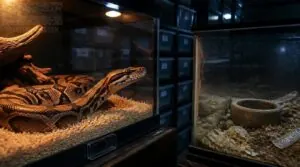
Not every breeder deserves your trust or your money. Knowing the warning signs before you buy can save you from heartbreak, vet bills, and a snake that was never properly cared for. Watch for these red flags.
Missing Health or Lineage Records
No paperwork? Walk away. If a breeder gets vague about lineage records or dodges questions about prior medical history, that’s your signal.
You simply can’t verify genetic lineage without documentation, and you can’t confirm the animal’s health story without written records. Lack of transparency here isn’t a minor oversight. It means you’re flying completely blind on what you’re actually buying.
Sick or Poorly Housed Boas
Beyond the paper trail, sick or poorly housed boas give themselves away fast. Trust your eyes.
- Mucus near the mouth signals active respiratory health issues
- Unsanitary conditions: soiled substrate, waste buildup, strong ammonia odor
- Inadequate ventilation trapping damp, stagnant air that breeds bacteria
- No visible parasite prevention practices or separate quarantine setup
- Lethargy, dull eyes, or stuck shed from humidity mismanagement
Evasive Communication
When a breeder gets squirmy answering basic questions, that’s your gut check moment. Vague answers about feeding schedules or an unwillingness to discuss medical histories are classic warning signs.
Check their social media profiles too. If their online presence doesn’t match what they’re telling you, something’s off. Trustworthy breeders welcome questions and offer full transparency without hesitation.
Pressure Tactics and Suspicious Pricing
Shady communication is often paired with something just as telling: pushy sales tactics. If someone’s rushing you with "last chance" urgency cues or end-of-day deadlines, slow down. Legit breeders don’t pressure you.
Watch for inconsistent price quotes across emails or DMs, and hidden fees that surface after the initial number. That’s a profit-first attitude, not an animal-first one.
No Buyer Support Policies
One more thing worth watching: no post-sale support. A reputable breeder stays reachable after the sale. If they vanish the moment money changes hands, that silence can hide health issues or unanswered lineage questions you’ll regret later. Good customer support isn’t a bonus — it’s the baseline. Word-of-mouth recommendations and online reviews often reveal this fast.
Frequently Asked Questions (FAQs)
Should I buy a boa constrictor?
Boas live 20–30 years and grow massive. They need specialized care, serious space, and real money. If you can’t commit long-term, this isn’t your pet.
Can a boa constrictor be a pet snake?
Yes, but think of it like adopting a dog that never stops growing. Boas can absolutely make rewarding long-term pets, though they need precise habitat conditions and suit experienced keepers far better than complete beginners.
Are boa constrictors native to Texas?
Picture lush jungle, not Texas prairie. Boa constrictors are native to Central and South America, not Texas. Any wild-spotted boa there is almost certainly an escaped or released pet.
Where do boa constrictors live?
Nowhere is truly off-limits, yet everywhere still matters. Central and South America is their home base — rainforests, savannas, grasslands, and rocky crevices. They climb trees, swim rivers, and vanish into leaf litter without a trace.
How big does a boa constrictor get?
Most boa constrictors reach 6 to 12 feet, though some individuals push past Females usually grow noticeably larger than males. That’s a lot of snake, so plan your space carefully before bringing one home!
Before committing to one, explore what to look for when selecting a healthy boa constrictor — from breeder credentials to first-day feeding habits.
Are boa constrictors pythons?
Not at all. Two completely different families share the constrictor lifestyle. Boas give birth to live young, while pythons lay eggs. Pythons also tend to grow much larger overall, making boas the more manageable option.
If you’re deciding between the two, this python vs. boa constrictor comparison breaks down temperament, size, and care needs, and shows why boas often make friendlier handling companions.
What is the calmest boa constrictor?
Ironically, finding the calmest boa constrictor doesn’t require a rare species. Dumeril’s boas consistently win on temperament and behavioral traits. They’re naturally relaxed and thrive with gentle handling and socialization, making stress reduction almost simple.
How much does a pet boa constrictor cost?
Pet boa prices range from $200 to $2,000, depending on morph, age, and breeder. High-demand morphs like albinos or pastels always cost more. Set your budget early — financial planning matters beyond just the purchase price.
What is the most docile boa constrictor?
Central American boas are your best bet. They’re naturally calm, stress less easily, and warm up to handling fast. Captive-bred individuals from stable breeding programs take it even further, showing relaxed body language almost immediately.
What is the lifespan of a boa constrictor in captivity?
Boa constrictors commonly live 20 to 30 years in captivity. With excellent nutrition, the right enclosure, and regular vet visits, some individuals push past Your care choices directly shape how long your boa thrives.
Conclusion
That flea market boa? She recovered, and she taught me everything a good breeder should have told me upfront.
Finding a reputable boa constrictor breeder isn’t luck. It’s patience, questions, and a willingness to walk away. A healthy boa from a trustworthy source costs less heartbreak than any bargain ever could.
Trust your gut, check the records, and demand honesty. Your future boa, healthy and thriving for decades, will thank you.