This site is supported by our readers. We may earn a commission, at no cost to you, if you purchase through links.
A ball python can sit motionless in the same spot for 18 hours, then strike a rat in a fraction of a second. That contrast confuses new keepers, but it makes perfect sense once you understand snake behavior by species. Every flick of the tongue, every coil, every retreat into a hide box carries meaning, and that meaning shifts depending on whether you’re watching a corn snake, a boa, or a hognose staging its dramatic death performance.
The good news? You don’t need a biology degree to read these signals. You need a field guide to the animals in your own home, and that’s exactly what follows.
Table Of Contents
Key Takeaways
- Snake behavior is driven by temperature, instinct, habitat, and temperament, so a snake’s activity, feeding, and defensive responses all shift with warmth, prey availability, and seasonal changes like brumation.
- Species-specific patterns matter: ball pythons hide by day and coil defensively, corn snakes climb and hunt at dawn and dusk, boas bask deliberately and ambush warm prey, while kingsnakes, hognoses, garters, rosy boas, and milk snakes each show distinct feeding, social, burrowing, or escape behaviors.
- You can read your snake’s mood through body language, including tongue-flicking for hunger, hissing or tail shaking as stress warnings, and relaxed breathing plus loose coiling as signs it tolerates handling.
- Trust builds through short, calm, consistent handling sessions, and recognizing early stress or defensive signals lets you respond safely before a strike or defensive display escalates.
Factors That Shape Snake Behavior

Snake behavior isn’t random — it’s shaped by a handful of key forces that every species reacts to in its own way. Once you understand what’s driving the behavior you’re seeing, reading a snake becomes a lot more clear. Here are the main factors worth knowing.
Temperature, prey availability, and habitat — like the riparian zones where many species interact — all shape how snakes behave, and this guide to riparian zone snake species interactions breaks down those dynamics in detail.
Instinct, Habitat, and Temperament
Watching a snake settle into its enclosure tells you a lot about its nature. Instinct, habitat, and temperament each shape how a snake behaves.
Instinct covers the basics, like tongue-flicking toward unfamiliar scents. Habitat determines which behaviors surface daily, since thermoregulation needs and cover availability both matter. Temperament explains why bold and shy individuals can exist within the same species. Research into volitional and egocentric behavioral modes across species highlights how goal-directed and self-focused actions vary noticeably even among distantly related animals.
Heat-Driven Activity Patterns
Temperature controls everything a snake does throughout its day. Heat-driven activity patterns emerge as snakes time movement around warmth, relying on thermoregulation to stay fully functional. A warm snake hunts more, while a cool one retreats.
When you watch your snake basking in the sun, it’s preparing its body, since snake activity patterns shift quickly once ideal heat is reached.
Scent Tracking and Hunting
Once warm enough to move, your snake shifts immediately into scent-tracking mode. Its forked tongue collects chemical particles and carries them to the Jacobson’s organ, which processes smell with surprising precision.
You’ll notice tongue flicking increase when prey is nearby. Snakes follow scent trails left across soil and leaf litter, sometimes for several minutes, until they’re close enough to strike.
Feeding and Defensive Responses
Once your snake locks onto a scent trail, feeding behavior kicks in fast. Head elevation and jaw slack signal a strike is close; ball pythons coil before lunging.
Defensive behavior operates differently. When prey availability drops or a threat feels imminent, snakes hiss, raise the neck, or flatten the body. Recognizing these threat displays early keeps handling safer.
Seasonal and Reproductive Changes
As days shorten, snake seasonal activity drops noticeably. Your snake’s Behavior shifts because snake reproductive cycles respond to light, temperature, and prey availability. Even hibernacula selection and use patterns change.
Three key seasonal shifts to watch:
- Reduced feeding before brumation
- Increased basking during Reproduction periods
- Restlessness that signals mating readiness
Recognizing these signs helps you adjust care before problems arise.
Ball Python Behavior Patterns
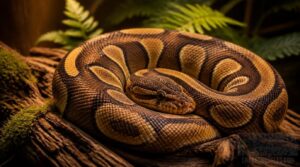
Ball pythons have a reputation for being laid-back, and that reputation is well-earned — but there’s more going on beneath the surface than most people realize. Understanding how they naturally behave helps you recognize what’s normal, what’s a warning sign, and what they’re actually trying to tell you.
Here’s a closer look at the key behavior patterns you’ll notice with this species.
From warning hisses to subtle body language cues, this boa constrictor stress signs guide breaks down what each behavior means and how to respond.
Nocturnal Hiding Habits
Ball pythons are creatures of habit when night falls, retreating instinctively to cool, damp, dark areas like underground dens, crawl spaces, and basements.
In captivity, your python’s nocturnal hiding habits mirror this wild routine. Don’t be alarmed when you rarely see it during daylight hours.
That preference for shadow and shelter isn’t stress. It’s simply how ball pythons are wired.
Ambush Hunting Behavior
When prey wanders close, your ball python doesn’t chase it down. It waits, patient and motionless, relying on camouflage and smart positioning near burrows or vegetation.
That split-second strike covers the gap in a fraction of a second, targeting small rodents with controlled precision. Your pet carries this same instinct, which is why its feeding response can look so sudden and intense.
Defensive Balling Response
When something startles your ball python, it doesn’t strike first. It curls into a tight coil, tucking its head safely inward. This defensive balling response is instinct, not aggression. You may notice mouth gaping or hissing just before the coil tightens. Recognizing this threat display early helps you respond calmly, giving your snake space until it feels safe again.
Hunger and Stress Signals
Hunger looks different from stress. Increased tongue flicking and slow movement near food zones signal low energy in your ball python. Stress shuts appetite down fast. Watch for:
- Deliberate head movements toward prey availability
- Tight coiling away from offered food
- Rapid breathing during or after handling
- Reduced activity following stressful events
Comfortable Handling Cues
When your ball python relaxes its defensive coiling and stops threat perception behaviors like hissing, you’re in good territory.
A snake that lets you cradle its midsection without retreating is tolerating, maybe even trusting, you. Slow tongue flicking and calm repositioning confirm comfort. If it played dead earlier, that defensive response is now gone. Brief, steady sessions build this trust.
Corn Snake Behavior Patterns
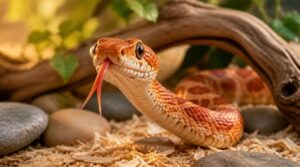
Corn snakes are curious, active snakes that show their personality in ways that are easy to read once you know what to look for. Their behavior covers everything from how they hunt and explore to how they respond to being handled. Here’s a closer look at the key behavior patterns you’ll notice with corn snakes.
Active Climbing and Exploring
Corn snakes are natural climbers, and watching yours scale branches or enclosure walls is a healthy sign.
Their vertical exploration habits mirror wild corn snakes moving through forest edges and rocky outcrops to find shelter.
Watch for these behaviors:
- Gripping rough bark with belly scales for traction
- Pausing on elevated spots to scan surroundings
- Retreating quickly into hides when startled
Crepuscular Hunting Habits
At dusk and dawn, your corn snake enters crepuscular hunting mode. Snake activity patterns peak then because prey availability rises and thermoregulation stays efficient.
| Hunting Type | When It Happens |
|---|---|
| Ambush hunting | Near ground cover |
| Active hunting | Open substrate edges |
| Thermoregulation break | Between pursuits |
Watch for slow, deliberate movement as your snake hunts actively near the enclosure floor at feeding time.
Tail Shaking and Retreating
After active hunting winds down, tail shaking and retreating signal a clear mood shift. Your snake uses this threat display as a warning before pulling back to safety.
Watch for these defensive behavior cues:
- Rapid tail tremor at the tip
- Body coiling tightly inward
- Quick retreat toward cover
- Sudden stillness after shaking
These snake behavior habits reflect stress, not aggression.
Feeding Response Signals
Once the retreat ends, a very different behavior kicks in. Tongue flick frequency spikes as your corn snake picks up prey scent, using olfactory cues to confirm what’s nearby. You’ll notice the head drop low and the body begin to coil tightly.
That’s your signal a feeding response has started, and a rapid ambush strike won’t be far behind.
Handling and Socialization Cues
Picking up a corn snake regularly builds trust on both sides. When your snake moves freely across your hands without coiling defensively, that’s a clear socialization cue worth recognizing.
Keep sessions short, under 15 minutes. A snake that seeks shelter immediately after handling likely feels stressed and needs more gradual exposure. Give it time, and predictable, relaxed movement will follow.
Boa Constrictor Behavior Patterns

Boa constrictors have a presence that’s hard to ignore — slow-moving, deliberate, and surprisingly expressive once you know what to look for. Their behavior tells a clear story about how they’re feeling, from the way they explore their space to how they respond when something makes them uneasy. Here’s what their most common behavioral patterns actually mean.
Slow, Deliberate Exploration
Watch a boa for a few minutes and you’ll notice something almost hypnotic. Their slow, deliberate exploration is less wandering and more strategy. Each pause has a purpose:
- Tongue flicks sample scent trails
- Head position scans for prey
- Body coils prepare ambush sites
- Still posture tracks prey silently
This snake behavior is how boas master both ambush and active hunting.
Heat-Seeking and Basking
Being ectothermic, your boa can’t produce its own body heat, which makes basking in the sun a behavioral necessity, not a luxury. You’ll find it pressed flat on a sun-exposed rock or the warm side of its enclosure.
Thermal regulation in reptiles works entirely through behavior. Watch for flattened posture and slow repositioning as clear thermoregulation cues.
Constriction and Ambush Hunting
Your boa is built for patience. Unlike ophiophagous, piscivorous, or insectivorous snakes with narrower diets, boas rely on ambush hunting to catch warm-bodied prey. Here’s how that sequence works:
- Hold completely still and use natural camouflage
- Strike fast when prey moves within close range
- Apply constriction around the thorax to stop blood flow
That grip only tightens as prey struggles.
Hissing and Defensive Postures
When does a calm boa decide to make noise? Hissing is your boa’s clearest defensive warning, produced by forcing air through a partially open glottis. A defensive posture follows: coiled body, raised head, and fixed gaze at the perceived threat. Louder hisses usually mean you’re too close. If the mouth opens, a defensive strike may come next, so back away slowly and give space.
Calm Handling Signals
How do you know a boa is ready to be held? Slow, shallow breathing and a relaxed jaw are your first clues. Move gently, keep your hands supporting the mid body, and avoid touching the head or neck, since that region triggers snake defensive behavior.
A boa that coils loosely around your arm isn’t constricting; it’s settling in. Short sessions, five to ten minutes, keep handling stress low. If your boa stops moving or seeks shelter, end the session calmly.
Other Popular Pet Snake Behaviors
Ball pythons, corn snakes, and boas get most of the attention, but they’re not the only snakes worth knowing. Kingsnakes, hognose snakes, garter snakes, rosy boas, and milk snakes each bring their own habits to the table. Here’s what you can expect from these popular pets, one species at a time.
Kingsnake Feeding Intensity
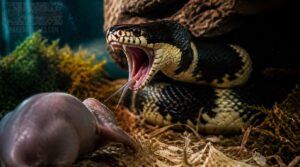
Kingsnakes bring real feeding intensity to the cage, striking fast and swallowing prey with startling speed. They’re also ophiophagous, meaning they eat other snakes in the wild, so cage mates aren’t safe. Watch for these signs:
- Rapid tongue flicking signals prey interest
- Head bobbing precedes a strike
- Prey should stay under 1.5 times mid-body width
- Feed juveniles every 5 to 7 days
Never disturb them within 24 hours after eating, or regurgitation may follow.
Hognose Defensive Displays
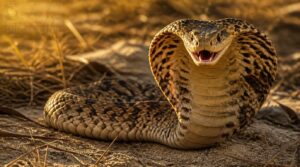
Where kingsnakes bring intensity at feeding time, hognose snakes save their drama for defense. They flatten their necks like tiny cobras, hiss loudly, and bluff strikes without biting. If that fails, they flip onto their backs, mouths open, playing dead convincingly. They may also release foul musk. Once you back away, recovery is quick, and the threat perception passes.
Hognose snakes save their drama for defense, flattening like tiny cobras, hissing, bluffing, and even playing dead convincingly
Garter Snake Social Tendencies
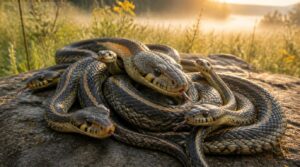
Hognoses bluff; garter snakes actually socialize. Field studies show garter snakes form female-centered communities, where older females act as hubs that hold groups together across seasons.
Their social behavior habits include:
- Stable bonds with preferred companions
- Shared basking and shelter selection
- Collective predator vigilance
- Information transfer about resources
- Age-structured, overlapping networks
Recognizing these tendencies helps with snake species identification and housing decisions.
Rosy Boa Burrowing Habits
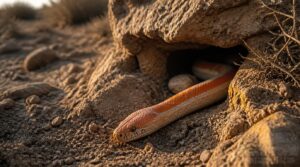
Garter snakes gather in groups; rosy boas dig. In the wild, this species excavates shallow burrows under brush or rock ledges, seeking cool damp dark areas that buffer heat and predators. Loose, sandy soil allows easy digging, and burrow depth rarely exceeds 6 to 12 inches.
Provide 2 to 4 inches of dry, well-drained substrate so your rosy boa can express this natural reptile behavior. Multiple hide boxes mimic burrow entrances, reducing stress and supporting healthy shelter selection.
Milk Snake Escape Behavior
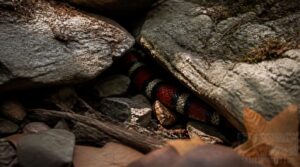
Often, a milk snake’s first move is to vanish, not to fight. This nonvenomous colubrid snake slips into tight crevices, matching its wild habitat preferences under debris and rocks.
When chased, it uses zigzag retreats to gain distance, and it freezes if no corner exists. In captivity, provide escape-proof lids and rear hides, because this escape behavior never rests.
Frequently Asked Questions (FAQs)
How do snakes communicate with each other?
Snakes communicate through pheromone trails, which reveal species, sex, and readiness to breed. Males follow these chemical scent trails to locate mates. They also use coiling postures, hissing, and body language to signal defensive tactics during encounters.
Why do snakes shed their skin so often?
Growth is nature’s way of trading in old clothes. Snake shedding, or ecdysis, happens often because young snakes grow quickly. Since ectothermic thermoregulation depends on healthy skin, they discard the entire old layer, eyes included.
Can snakes recognize their owners over time?
Yes, through scent-based recognition. Snakes learn your smell and routine, so repeated gentle handling builds familiarity. That’s why consistent, calm interactions improve snake temperament and handling safety over time.
How long do pet snakes typically live?
A pet snake is a long-term companion, often outliving dogs and cats by a decade or more. Most captive snakes live 15 to 30 years, with ball pythons reaching 20 to 30 when you provide proper care.
Their famously gentle nature makes that commitment easy to keep — ball pythons are among the most docile snakes you can own, rarely stressed by routine handling.
What signs indicate a snake is preparing to brumate?
Watch for reduced activity, fading appetite, and increased shelter seeking in cooler hides. Slower breathing, paused shedding, and minimal movement all signal brumation approaching as temperatures drop below the snake’s temperature tolerance.
Conclusion
A ball python sitting motionless for eighteen hours might seem like nothing is happening. In truth, your snake is telling you everything.
Understanding snake behavior by species turns confusion into confidence, and silence into conversation.
Watch closely, learn each species on its own terms, and trust what you observe.
Your snake was never a mystery. It was a language waiting for you to finally listen.
- https://biomedicalsciences.unimelb.edu.au/departments/department-of-biochemistry-and-pharmacology/engage/avru/blog/snake-predation-strategies-part-2-venom-and-constriction
- https://biologyinsights.com/exploring-the-fascinating-traits-of-the-hognose-snake
- https://www.pixfra.com/snakes-after-dark-hunting-patterns-and-behaviors-revealed