This site is supported by our readers. We may earn a commission, at no cost to you, if you purchase through links.
Your boa isn’t mad at you. It’s not "being difficult" either. When a snake hisses every time you open the enclosure, refuses meals for weeks, or paces the glass like it’s looking for the exit, it’s telling you something’s wrong with its world, not its personality.
The catch? Most signs of stress in boa constrictor enclosure setup masquerade as attitude problems. That wheeze might not be illness. That food strike might have nothing to do with the feeder mouse. More often than not, the culprit hides in plain sight: a misplaced thermostat probe, a humidity reading taken three feet above the substrate, a hide box big enough to park a car in.
The good news? Boas are honest creatures once you learn their language. Fix the enclosure, and the behavior follows. Here’s how to decode the signals and rebuild a setup your snake actually wants to live in.
Table Of Contents
- Key Takeaways
- Spot Common Boa Stress Signs
- Check Enclosure Size and Security
- Correct Temperature and Humidity Imbalances
- Improve Ventilation, Hides, and Substrate
- Calm Your Boa and Seek Help
- Frequently Asked Questions (FAQs)
- How do I destress my snake?
- What are some signs that a snake is stressed?
- What is the ideal temperature for a boa constrictor cage?
- How do I know if my boa has IBD?
- Can stress cause a boa to stop drinking water?
- How does cage placement affect a boas stress levels?
- Can loud noises or vibrations stress a captive boa?
- Can multiple stressors combine to worsen a boas health?
- How long does it take a stressed boa to recover?
- Can improper lighting cause stress in boa constrictors?
- Conclusion
Key Takeaways
- Most boa "attitude problems" like hissing, food refusal, pacing, and patchy sheds are actually stress signals pointing to enclosure flaws—misplaced thermostat probes, wrong humidity readings, or oversized hides—not a difficult personality.
- Getting conditions right is specific and measurable: a basking surface of 88–92°F, a cool side of 75–80°F, humidity of 60–70% measured at substrate level (75–80% during sheds), and at least two snug hides on both warm and cool sides.
- Troubleshoot by changing one variable at a time, waiting 48 hours to a week to observe results, keeping a written log of temps and behavior, and giving your boa a 7–10 day hands-off recovery period before resuming handling.
- Call a reptile vet if open-mouth breathing or wheezing persists, food refusal lasts three or more weeks, or you see neurologic signs like tremors or head tilt—labored breathing is an emergency, not just stress.
Spot Common Boa Stress Signs
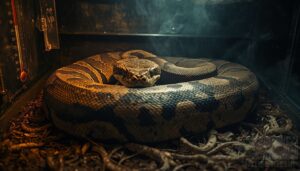
Your boa can’t exactly file a complaint about its living conditions, but it has other ways of getting the message across. Stress signals like hissing, wheezing, food refusal, or patchy sheds are your snake’s version of a strongly worded letter to management.
Learning to read these cues takes practice, but a guide to boa constrictor personality traits can help you decode what those hisses and hiding spells really mean.
Your boa can’t file a complaint, but hissing, wheezing, food refusal, and patchy sheds are its strongly worded letter to management
Let’s walk through the four most common signs and what they’re really telling you about your setup.
Hissing and Defensive Posture
Why is your boa suddenly auditioning for a horror film? Hissing and Scurve posture usually mean perceived threat, not illness. Check hide coverage on both sides, cut vibrations and traffic, and stop mid-acclimation handling. Coiling tight with head raised signals "back off." Fix cover and routine first; persistent defensive striking means stress hasn’t resolved yet.
Wheezing and Open-mouth Breathing
Now for the sign that stops seasoned keepers cold: wheezing or open-mouth breathing. Unlike hissing, this isn’t attitude, it’s airway trouble. Your boa may be compensating for poor ventilation system airflow, dusty substrate, or fumes from scented cleaners. Combine that with humidity control failures above 75% and you’ve built a respiratory infection incubator. Verify temperatures stay steady at 82–90°F; cold boas breathe harder.
Food Refusal and Restless Pacing
After respiratory distress clears, food refusal hits differently. Restless pacing means your boa’s actively searching for comfort it can’t find. Five stress triggers:
If pacing and hunger strikes continue, a consistent feeding routine—like the one detailed in this baby boa feeding schedule guide—can settle their nerves fast.
- Narrow temperature gradient forcing constant movement
- Inadequate enclosure size limiting retreat options
- Excessive handling disrupting feeding rhythms
- Poor hide placement reducing security
- Inconsistent humidity stressing pre-shed boas
Fix your conditions first. Appetite returns when the environment does.
Patchy Sheds and Jerky Movement
When appetite stabilizes, shed quality tells the next honest story.
Patchy, stuck shed means enclosure humidity dropped below 75–80% during the shed cycle, leaving old skin bonded where it should release cleanly. Jerky movement follows: retained patches tighten around toes and tail, making normal locomotion painful and guarded. Check for cold spots and humidity gaps across your temperature gradient.
Check Enclosure Size and Security
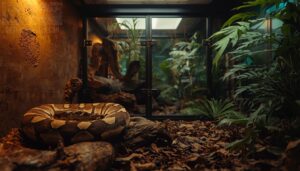
Start by measuring your boa’s enclosure honestly, because enclosure size drives stress more than most keepers admit. A cramped space collapses the temperature gradient, forcing your snake to choose between baking or shivering. Rule of thumb: floor space at least equal to the snake’s length, ideally larger. Modular floor upgrades calm boas even when temps stay identical, simply because movement options multiply.
Since boas stretch out rather than climb, prioritizing length over height matters more than most beginners realize — this breakdown of vertical versus horizontal boa enclosures shows why floor dimensions should anchor your setup.
Now check security. Run your hand along every edge: doors, vents, cable penetrations. Secure locks aren’t optional; dualhinged locking mechanisms beat sliding latches, which misalign with humidity cycles. That warped screen? It’s a variable gap waiting to become an escape route.
Escape prevention also means removing tall, unsupported climbing decor that invites repeated relocation attempts. And place hides away from door edges, so your boa never chooses between shelter and perceived safety. Fewer boundary conflicts, calmer snake.
Correct Temperature and Humidity Imbalances
When your boa’s thermometer and hygrometer disagree with its behavior, trust the snake. A weak temperature gradient is the silent culprit behind most feeding strikes and restless pacing, because boas literally digest by choosing between warm and cool zones. A quality reptile thermostat controller keeps your heat mat steady, so the warm side stays in that 88–92°F sweet spot your boa actually needs.
Fix it in this order:
- Verify the warm-side basking surface reaches 88–92°F with a reliable infrared thermometer.
- Confirm the cool side sits at 75–80°F, creating a usable gradient, not a lukewarm blur.
- Check your thermostat probe placement; if it’s touching substrate or sitting too near the heat source, your thermostat is lying to you.
- Dial humidity levels to 60–70%, measured at substrate level, not on a far wall.
Remember: heat drives evaporation, so warming the basking spot can quietly dry out the enclosure. Adjust one variable, wait 48 hours, and watch your boa’s posture tell you whether you’ve won.
Improve Ventilation, Hides, and Substrate
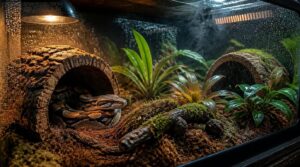
Fix the air before you blame the snake. Cross-ventilation works like a chimney: place intake vents low on one side, exhaust high on the other, so warm, humid air escapes instead of pooling. See condensation on the glass? That’s your enclosure waving a white flag. But don’t overdo it; blasting airflow creates uneven microclimates and dries your boa’s favorite corner into a desert.
Hides matter just as much. Offer two minimum, one warm-side, one cool-side, sized so your boa touches the walls inside. A hide with gaping open space feels like camping in a gymnasium.
Calm Your Boa and Seek Help
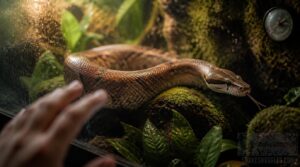
You’ve adjusted the heat, humidity, and hides, so now comes the hardest part: patience. Your boa doesn’t need a helicopter parent right now, just a calm, low-contact recovery period with careful observation. Here’s how to ease off handling, track what’s working, and recognize when it’s time to call in a professional.
Limit Handling During Recovery
Think your boa wants to be held right now? Probably not. Hands-off means stress reduction. Recovery looks like this:
- Skip handling 7–10 days after disruption
- Feed, clean, and observe quietly
- Leave the hiding spot provision untouched
- Watch for calm tongue-flicking
- Never corner or lift defensively
Prioritize enclosure hygiene over interaction. If symptoms persist despite rest, schedule veterinary evaluation rather than repeating manual interventions.
Track Symptoms and Setup Changes
Here’s the truth: your memory is worse than you think.
Track everything in a log—dates, temps at the basking surface, humidity readings, feeding attempts, and any hissing, wheezing, or openmouth breathing you notice. Patterns emerge from records, not recollection.
When fixing enclosure setup issues, change one variable at a time and wait 5–7 days. Otherwise you’re guessing which fix actually worked.
Know When to Call Veterinarians
So you’ve adjusted temps, added hides, and still no improvement. When do you stop troubleshooting and dial the vet?
- Open-mouth breathing or persistent wheezing
- Food refusal lasting 3+ weeks
- Neurologic signs, tremors, or head tilt
Labored breathing is a respiratory emergency, not stress. Watch for patchy shedding with stuck skin, repeated regurgitation, or lethargy with abdominal swelling. Multiple symptoms together? Call immediately.
Frequently Asked Questions (FAQs)
How do I destress my snake?
Before your boa relaxes, you’ll need to spot what’s rattling them. Start with hiding spots on both ends, dial in your temperature gradient, and keep humidity control steady. Then, minimize handling and add gentle enrichment.
What are some signs that a snake is stressed?
Stressed boas show hissing, defensive posturing, food refusal, restless pacing, daytime hiding, patchy shedding, and jerky movements. Watch for wheezing or open-mouth breathing, which signals respiratory distress needing attention.
What is the ideal temperature for a boa constrictor cage?
Getting temperature right is the single most important part of your boa’s enclosure setup. Aim for a basking spot of 88-92°F, warm-side ambient of 80-85°F, and a cool end at 75-80°F. Use a thermostat and two thermometers, checked daily.
Since boas are escape artists that love to hide, secure lids and proper hides matter too, so browse these essential snake terrarium accessories before your first night.
Placing the heat source on one side of the enclosure creates a proper temperature gradient for thermoregulation, allowing your boa to move between warm and cool areas as needed.
How do I know if my boa has IBD?
How do I know if my boa has IBD? Honestly, you can’t confirm it visually. Watch for progressive weight loss, tremors, and stargazing, but only PCR testing by a reptile vet confirms Inclusion Body Disease.
Can stress cause a boa to stop drinking water?
Like a nervous guest at a loud party, a stressed boa simply won’t sip. Yes, stress causes drinking refusal. Fix enclosure size, humidity, and reduce handling so dehydration doesn’t worsen; offer a calm water bowl.
How does cage placement affect a boas stress levels?
Cage placement dramatically shapes your boa’s stress levels. Foot traffic, drafts, and vibrations all matter. Position the enclosure at eye level or below, away from windows, vents, and speakers, ensuring proper temperature gradient establishment and consistent day-night cycles.
Can loud noises or vibrations stress a captive boa?
Yes, absolutely. Your boa "hears" through ground vibrations via its jaw, so subwoofers and foot traffic feel like earthquakes. Watch for hissing, wheezing, daytime hiding, and food refusal—classic vibration stress signals.
Can multiple stressors combine to worsen a boas health?
Yes, absolutely. A boa’s energy budget covers thermoregulation, immunity, and recovery at once. Poor temperature control plus bad humidity management stacks stressors, suppressing appetite and immunity, so fix your enclosure setup gradually.
How long does it take a stressed boa to recover?
Patience plus proper parameters produce progress: expect several days to a few weeks.
Mild stress from handling often resolves within days; chronic enclosure setup problems delay stress reduction, since fixing temperature gradients and humidity levels takes time.
Can improper lighting cause stress in boa constrictors?
Improper lighting absolutely stresses boas. Disrupted circadian rhythm support, wrong photoperiod control, or glare triggers defensive behavior. Use timers, proper UVB lighting where appropriate, and consistent lighting requirements.
Conclusion
Stressed snakes speak in symptoms, not sulks. Every hiss, hunger strike, and ragged shed is a clue, not a complaint. When you recognize the signs of stress in boa constrictor enclosure setup, you stop guessing and start fixing.
Adjust one variable at a time. Watch. Wait. Your boa doesn’t need a perfect keeper, just a patient one. Get the environment right, and the attitude disappears.
That’s the deal these special animals offer, and they always keep their end.