This site is supported by our readers. We may earn a commission, at no cost to you, if you purchase through links.

A crouching gecko puts real weight on its knees and hips every time it settles into a basking spot. Cheap flooring turns that daily habit into a pressure point. Ammonia buildup, slick surfaces, and liners that shred under scissors cause more harm than most keepers realize.
The right reptile substrate liners for small enclosures solve all three problems at once: cushioning, odor control, and a clean fit around corners and doors.
We tested five liners across cutting precision, humidity resistance, and wash-cycle durability to find out which ones actually hold up in daily use.
Table Of Contents
Key Takeaways
- The best liners cover five basics: cushioning for joints, odor control, precise fit, easy cleaning, and humidity resistance.
- Cut liners with a sharp utility knife instead of scissors, keeping snake enclosures within a 2 mm tolerance for a snag-free fit.
- Wash liners in cold water, let them air dry flat for 48 hours, and replace them every 1 to 6 weeks depending on tank conditions and use.
- Match the liner to your setup, using enzyme-treated liners for odor-prone tanks, non-abrasive mats for quarantine, and quick-drying options for low-humidity habitats.
How We Compared Small-Enclosure Liners
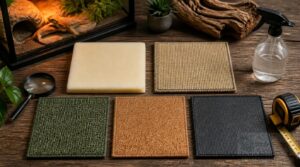
Picking the right liner comes down to five things that matter for your reptile’s daily comfort and safety. You’ll want to know how each one controls cushioning, odor, fit, cleaning, and humidity before trusting it in your tank. Here’s how each liner stacked up against those five factors.
If you’re weighing liners alongside overall enclosure safety, it’s worth also checking that your tank’s secure locking mechanisms for reptile cages keep humidity stable and your pet safely contained.
Reptile Safety and Cushioning
Pick up a liner and press your thumb into it. That give matters, since joint pressure relief keeps crouching reptiles comfortable in basking zones.
Look for non-slip surface texture and soft, high-density cushioning material that won’t compress flat. Beveled edges cut injury risk near tank corners, while even foot support prevents strain during everyday movement.
Odor Control Performance
Comfort matters, but so does what you smell when you walk in the room. We ran an enzyme efficiency comparison across all five liners, tracking odor reduction duration over several days of normal use.
Natural fiber absorption played a role too, along with microbial inhibition effectiveness on bacteria buildup. Liners scored higher when they offered chemical-free neutralization performance, no fragrances needed.
Cutting and Enclosure Fit
Smell is one thing, but fit is what keeps a liner in place day to day. Grid marking guides make precision trimming simple, even around corners and doors.
Snake enclosures need tolerance fit checks within 2 mm. Edge beveling tips cut down on snagging, and a sharp utility knife (not scissors) means cutting tool safety and clean edges every time.
Cleaning and Reusability
A good fit means nothing if the liner falls apart after one wash. Cold water rinsing keeps fibers intact, even on smooth surfaces up to 60°C. Air dry fully first, damp reuse invites bacteria.
- Rinse weekly under normal use
- Check for thinning or fraying edges
- Let liners dry 48 hours flat
- Reuse up to several wash cycles
- Wipe debris before soaking
Humidity Compatibility
Since humidity swings can wreck an enclosure fast, we tested each liner’s moisture absorption rate and drying speed under airflow. Solid vinyl and polypropylene barely absorbed water, staying near ambient humidity. Absorbent fabrics soaked up to four times their weight before saturation, within just a few hours of misting.
We favored liners resisting warping, since saturation prevention keeps cushioning and safety intact long term.
Top 5 Reptile Substrate Liners
Now that you know what to look for, it’s time to see how these liners stack up. Each one brings something different to the table, from cutting ease to odor control. Here are the five that earned a spot on your shortlist.
1. Reptile Tank Liner Mat for Terrariums
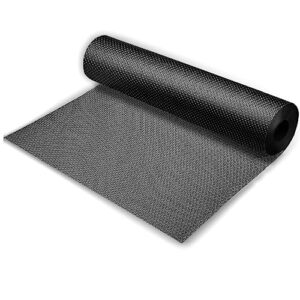
Grip matters more than most keepers realize. The Helidrago mat uses a textured surface that keeps feet steady, cutting down on slipping injuries in bearded dragons and leopard geckos alike.
Pairing solid footing with a reliable hygrometer for reptile enclosures helps you keep humidity locked in that 50-60% sweet spot your dragon or gecko needs to thrive.
At 17.87 x 1.65 x 1.61 inches, it trims easily for 20 to 75 gallon tanks and lays flat without curling at the edges. It’s reusable too, soaking up spilled water while holding up wash after wash.
| Best For | This mat is best for keepers of bearded dragons, leopard geckos, snakes, tortoises, and hermit crabs who want a safer, non-slip surface for enclosures between 20 and 75 gallons. |
|---|---|
| Non-Slip Surface | Textured grip |
| Reusable | Yes, washable |
| Cut To Fit | Yes, multiple tanks |
| Color | Black |
| Burrowing Support | Not primary substrate |
| Target Reptiles | Bearded dragons, geckos, snakes, tortoises |
| Additional Features |
|
- Textured surface improves grip and helps prevent slipping-related joint injuries
- Trims easily to fit various tank sizes and lays flat without curling
- Reusable and washable, cutting down on substrate waste over time
- Calcium residue can build up in the texture and needs extra scrubbing to remove
- Not suitable as a primary substrate for burrowing species
- May shift out of place unless secured with decor or weighted edges
2. Reptile Tank Liner Mat Non Adhesive
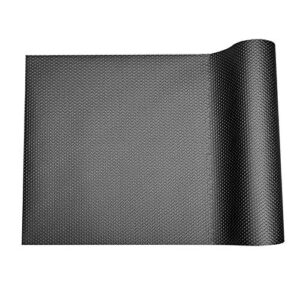
When waste won’t soak in, cleanup gets a whole lot easier. This liner uses a waterproof synthetic surface that resists moisture and waste absorption entirely, so spills wipe away instead of settling in.
Cut it down to fit tanks as small as 12×12 inches, with sizing options up to 36×18. Edges stay smooth after trimming, so you won’t catch a claw or scale on rough spots.
No adhesive means no sticky residue either. It just lies flat and stays put.
| Best For | Reptile owners with small to mid-sized enclosures, like bearded dragon or leopard gecko habitats, who want an easy-to-clean, waste-resistant liner instead of loose substrate. |
|---|---|
| Non-Slip Surface | Textured non-adhesive |
| Reusable | Yes, waterproof |
| Cut To Fit | Yes, various tanks |
| Color | Black |
| Burrowing Support | No |
| Target Reptiles | Bearded dragons, geckos |
| Additional Features |
|
- Waterproof, non-porous surface makes spot cleaning fast and hygienic
- Textured, non-adhesive design offers safe traction without sticky residue
- Easy to cut and customize, making it a cost-effective option for multiple enclosures
- Won’t fully cover larger tanks (like 120-gallon setups) without seaming pieces together
- Still needs regular wiping and occasional deep cleaning to stay sanitary
- Doesn’t support digging or burrowing behaviors for species that need loose substrate
3. Uigidori Reptile Carpet Bedding Liner
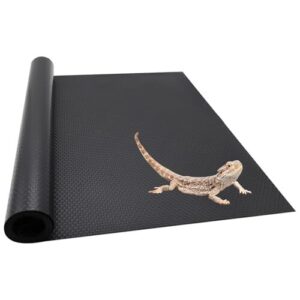
Fabric over foam, that’s the shift here. Uigidori’s carpet liner uses a dense fiber weave for cushioning under light paw pressure, with finished edges that resist fraying and snagging.
It lies flat, so debris won’t hide in folds or creases. The fabric also resists curling when misted, holding its shape in humid corners.
Sized for 10 to 20 gallon tanks, you’ll trim it with household scissors. No adhesive needed, it stays put on a clean, level base.
| Best For | This carpet liner is best for owners of small reptiles in 10 to 20 gallon tanks who want a soft, low-maintenance surface that stays put without adhesive. |
|---|---|
| Non-Slip Surface | Textured non-slip |
| Reusable | Yes, washable |
| Cut To Fit | Yes, various tanks |
| Color | Black |
| Burrowing Support | No |
| Target Reptiles | Bearded dragons, geckos, lizards, snakes, tortoises |
| Additional Features |
|
- Dense fiber weave cushions light paw pressure for a comfortable surface
- Finished edges resist fraying and snagging over time
- Lies flat and holds its shape even in humid conditions
- Only sized for 10 to 20 gallon tanks, limiting use in larger enclosures
- Requires manual trimming with scissors, which may leave uneven edges
- Fabric surface may be harder to fully sanitize than a wipeable material
4. Reptile Carpet Terrarium Liner for Snakes Lizards
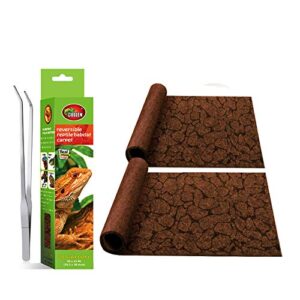
This one’s built for versatility. The MCLANZOO carpet uses a non-abrasive polyester fabric with a printed moss pattern, giving snakes, chameleons, geckos, and turtles a soft surface that still looks natural.
Each pack includes two mats sized 30 x 12 inches, so you can rotate one while the other dries. A pair of stainless steel tweezers comes included, handy for feeding or spot-cleaning debris without touching the enclosure floor directly.
| Best For | Owners of snakes, chameleons, geckos, bearded dragons, turtles, or insects who want an easy-clean, substrate-free liner for tanks up to 20 gallons. |
|---|---|
| Non-Slip Surface | Non-abrasive fabric |
| Reusable | Yes, rinse and dry |
| Cut To Fit | Yes, up to 20 gal |
| Color | Moss print |
| Burrowing Support | Minimal cushioning |
| Target Reptiles | Snakes, chameleons, geckos, dragons, turtles |
| Additional Features |
|
- Non-abrasive moss-print fabric gives reptiles secure footing without risking impaction from loose substrate
- Comes as a two-pack, so one mat can air dry while the other stays in use
- Includes free 12-inch stainless steel tweezers for feeding and spot-cleaning
- Doesn’t conduct heat well, so it’s not ideal for tanks relying on under-tank heaters
- Thin design offers little cushioning for reptiles that like to burrow
- Colors can fade over time with repeated washing and sun exposure
5. Zilla Reptile Terrarium Liner Brown
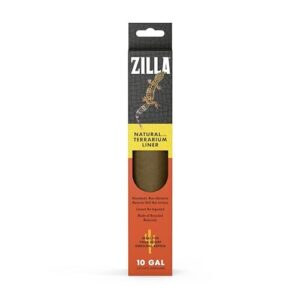
Brown liners hide waste better than light-colored mats, which matters when you’re not cleaning daily. This one measures 9.75 x 19.75 inches, cut from polyethylene and polypropylene for a durable, non-abrasive surface.
The enzyme treatment targets ammonia at the source. It’s safe if a curious juvenile takes a nibble during feeding, and it dries fast after a cold rinse. For odor-prone setups, Zilla recommends monthly replacement to keep hygiene on track.
| Best For | Owners of juvenile reptiles who need a soft, safe, ingestion-free substrate that’s easy to rinse and reuse between cleanings. |
|---|---|
| Non-Slip Surface | Non-abrasive surface |
| Reusable | Yes, rinse and reuse |
| Cut To Fit | Yes, custom sizes |
| Color | Brown |
| Burrowing Support | No |
| Target Reptiles | Juvenile reptiles, general use |
| Additional Features |
|
- Non-abrasive polyethylene and polypropylene surface is gentle and safe if accidentally nibbled during feeding
- Enzyme treatment helps reduce habitat odors, and the liner rinses clean with cold water for repeated use
- Available in rolls that can be cut to fit custom terrarium dimensions
- May arrive curled from the packaging and take time to flatten completely
- Small feeder insects can slip into gaps and become trapped or hide
- Felt-like texture may feel scratchy to some users, especially during initial cleanings
Best Liner for Each Setup
Not every liner works the same way in every setup. Your snake’s tank has different needs than a quarantine bin for a juvenile gecko. Here’s how to match the right liner to your specific enclosure.
Small Snake Enclosures
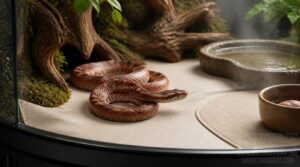
Snakes need a liner that won’t snag their scales, so look for rounded, edge-sealed designs. A non-adhesive mat with semi-flexible folds fits curved wall fitting in oval enclosures better than stiff sheets.
For waste residue cleaning, pick liners with detachable section cleaning near feeding zones. This keeps coils dry, protects scales, and cuts down on spot-cleaning time very much. Pairing the right liner with proper humidity management also helps prevent mold and bacteria growth in the enclosure.
Juvenile Reptile Quarantine
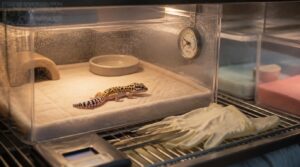
New arrivals need a gentle start, and a soft liner helps that from day one. Choose non-abrasive mats for quarantine bins to protect juveniles during daily health checks.
- Keep separate feeding tools and gloves for biosecurity
- Track weight and appetite against baseline weekly
- Plan gradual shift once vet clearance is confirmed
Quarantine lasts 30 days minimum, so easy-clean liners matter most.
Water Dish Areas
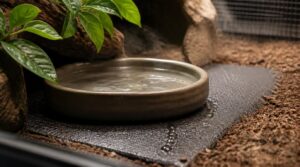
Once quarantine ends, water dishes bring their own challenge: splashes. A good splash guard design keeps water off nearby substrate.
Look for a drainage gap effectiveness of 5mm or more, plus moisture wicking liner material and stain resistant coating for mineral buildup. This water zone lining approach cuts cleanup time by a lot.
Odor-prone Terrariums
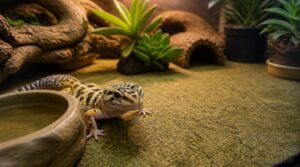
Splashes solved, but what about smell? Odor-prone enclosures need liners with real enzyme treatment, not just fragrance. This has waste-driven ammonia scents at the source.
Pair the liner with steady airflow control and quick waste pickup. Together, moisture balance and odor mitigation keep bearded dragon or leopard gecko tanks smelling like mild forest soil, not a swamp.
Low-humidity Reptile Habitats
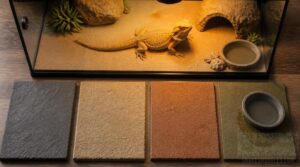
Dry-climate species like bearded dragons need liners built for quick surface drying speed, not moisture retention. Choose non-porous options with strong moisture absorption control and minimal condensation buildup.
The right liner offers a real humidity buffering effect near water dishes while staying dry elsewhere. Balance this with your ventilation interaction, low airflow works fine since these liners resist mold and warping on their own.
Liner Cleaning and Replacement Tips
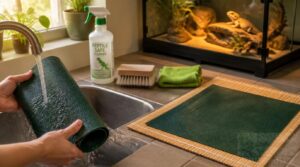
A clean liner keeps your reptile’s home safe and fresh, but it takes a little upkeep. Knowing how to rinse, dry, and check for wear will save you time and money. Here’s exactly what to do, step by step.
Cold-water Rinsing Steps
A quick rinse does more than a splash and a wipe. Set your liner in a basin with good drainage area setup, then use a gentle water stream for even surface wetting.
- Shake off loose debris first
- Rinse 15-30 seconds
- Angle liner top to bottom
- Flush crevices and folds
- Inspect for leftover residue
That contaminant inspection step catches what plain water misses.
Safe Air-drying Methods
Once rinsed, lay the liner flat in a well ventilated area with no overlap. Skip direct sun and keep temps around 65-75°F. A quiet fan speeds evaporation.
| Method | Purpose | Time |
|---|---|---|
| Flat, single layer | Even drying | 4-12 hrs |
| Fan airflow | Faster evaporation | Shortens time |
| Flip midway | Both sides dry | Prevents damp spots |
Preventing Moisture Buildup
Damp liners invite mold fast, especially in tight enclosures. Keep airflow moving with a small fan or cracked vent, and hold temps above 70°F to cut condensation. A moisture barrier underneath stops water from creeping into bedding below.
Check humidity with a hygrometer and aim to stay under 60 percent. Quick-drying liners make this whole process easier to manage.
Signs of Excessive Wear
Your liner tells you when it’s done. Fraying edges and pilling surface mean fibers are breaking down from foot traffic.
Fading color from waste contact, thinning patches, and a flatter feel with loss cushioning all point the same direction.
Once padding stops bouncing back, it’s no longer protecting sensitive feet.
When the cushioning stops bouncing back, it’s stopped protecting your reptile’s feet
When to Replace Liners
So how do you know it’s actually time? Watch the calendar and the enclosure together, not just one or the other.
During heavy shedding or digging phases, plan on swapping liners every 1 to 2 weeks. If odor returns within three days of cleaning, or moisture lingers after air-drying, or stains won’t lift, replace it right away.
Frequently Asked Questions (FAQs)
Can you use multiple liners in one tank?
Think of tiling a floor: pieces must sit flush or gaps trip you up. Yes, you can stack liners if you use non-slip undersides, align edges tightly, and avoid overlaps that trap air pockets.
Do liners work for both lizards and snakes?
Yes. Cross reptile testing shows strong lizard compatibility and snake suitability alike, with cushioned surfaces preventing scale injuries and coil irritation.
Shared enclosure benefits include easier cleanup and moisture control, making dual species use practical for keepers managing multiple habitats.
How long does a single liner typically last?
Like a pair of shoes, wear speeds up with mileage. Expect 2 to 6 weeks in warm tanks, less near water dishes, and 3 to 5 weeks under humid conditions.
Are these liners safe for baby reptiles?
Baby reptile safety comes first here. These liners pass a non-toxic material check, offer gentle cushioning for hatchlings, and keep ingestion risk low. The soft surface protection guards delicate limbs, making them a solid quarantine choice for juveniles.
Can liners be trimmed after initial installation?
Funny how a small snip can make or break a fit. Yes, trim after install, follow the grain alignment, use sharp scissors, work in incremental adjustments, and always check post-trim fit for smooth, snag-free edges.
Conclusion
The old saying holds true: a comfortable gecko is a healthy gecko, and your flooring choice proves it daily. The right reptile substrate liners for small enclosures aren’t a small detail, they’re the foundation of your setup.
Test cutting fit before committing, rinse weekly, and watch for thinning spots. Pick one liner, learn its habits, and stick with it. Your reptile will settle in, and so will you.