This site is supported by our readers. We may earn a commission, at no cost to you, if you purchase through links.

A ball python can exert surprising force against a lid it’s decided to test—and most will test it, usually at 2 a.m. The difference between a keeper who sleeps soundly and one who wakes to a missing snake often hinges on a detail many overlook until disaster strikes: the locking mechanisms on a reptile cage.
Screen clips that bend, padlocks that corrode, and combination locks that rattle loose—each weak point is an invitation your animal will eventually accept. These failures transform curiosity into escape, turning a secure enclosure into a household crisis.
The right hardware doesn’t just contain your reptile; it preserves your household’s calm and spares your neighbors from calling animal control. Investing in robust, corrosion-resistant locks isn’t merely practical—it’s essential for peace of mind.
Table Of Contents
- Key Takeaways
- Top 6 Reptile Cage Locking Items
- Best Lock Types by Enclosure
- Materials That Prevent Escapes
- Choosing The Right Reptile Lock
- Installation and Safety Tips
- Frequently Asked Questions (FAQs)
- What is the locking mechanism called?
- What are the different types of locking mechanisms?
- What is the most secure locking mechanism?
- Can reptiles learn to manipulate certain lock types?
- Do locks affect terrarium temperature or humidity levels?
- Which locks work best for outdoor reptile enclosures?
- Are childproof locks necessary for reptile cage security?
- How do vibrations from locks stress captive reptiles?
- Can reptile locks withstand chemical disinfectants over time?
- Do combination locks work in high-humidity enclosures?
- Conclusion
Key Takeaways
- Match your lock to how your enclosure opens — screen clips for mesh tops, combination locks for front doors, and cabinet locks for glass panels — because the wrong fit is basically an open invitation.
- Material matters more than you’d think: stainless steel and brass handle humidity best, while zinc alloy holds up well on glass doors but won’t survive repeated bleach cleanings.
- Ball pythons and boas aren’t the same security problem — bigger, stronger snakes need locks with a higher force rating, and you should retest after every growth phase.
- A lock only works if it’s installed right — clean the surface first, confirm the door closes flush, and test for resistance after every single cleaning, not just when something feels off.
Top 6 Reptile Cage Locking Items
Not every lock works for every cage — and the wrong one can mean a missing reptile by morning.
The same goes for hides — size, shape, and placement all matter, and choosing the right reptile hiding place can make the difference between a stressed snake and a thriving one.
The wrong cage lock doesn’t just fail — it hands your reptile a one-way ticket to freedom
These six options cover the most common enclosure types, from mesh-top tanks to front-opening glass terrariums. Here’s what’s worth your attention.
1. Zilla Heavy Duty Terrarium Screen Clips
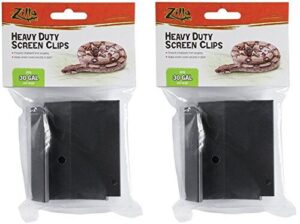
Zilla’s Heavy Duty Terrarium Screen Clips are one of those small purchases that solve a big problem. These all-metal, spring-steel clips snap onto your screen cover and terrarium frame in seconds — no tools, no drilling, no hassle.
They flex to fit enclosures 30 gallons and larger, gripping firmly enough to stop even your most determined escape artist.
You get four clips per order, which means you can double up on larger tanks for extra peace of mind.
| Best For | Reptile owners with 30-gallon or larger top-opening terrariums who need a simple, reliable way to keep escape-prone snakes or lizards securely inside. |
|---|---|
| Material | Metal |
| Package Quantity | 4 clips |
| Installation Type | Clip-on |
| Security Method | Mechanical clip |
| Primary Use | Terrarium lid |
| Warranty/Guarantee | Not stated |
| Additional Features |
|
- Snap on and off in seconds — no tools needed, so feeding and cleaning stays quick and painless.
- Solid metal build holds up over time and won’t bend or break under regular use.
- Four clips per order means you can double up on bigger tanks for extra security.
- Only works with top-opening tanks — won’t do you any good if your enclosure opens from the front or side.
- Metal can corrode if it stays wet, so you’ll want to dry them off after cleaning.
- May feel a bit loose on smaller frames within the compatible range, so the grip might need some adjusting.
2. Master Lock Brass Combination Padlock
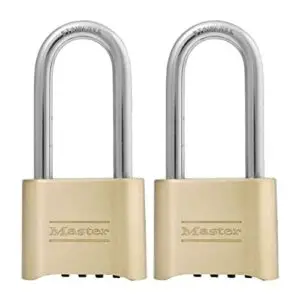
For keyed enclosures or custom cage builds with a hasp, the Master Lock Brass Combination Padlock earns its place. Its solid brass body shrugs off humidity — exactly what you need near a misting system or tropical setup.
You get two locks per pack, a four-digit resettable combination, and a hardened steel shackle long enough to clear most latch styles.
No key to lose, no locksmith to call. Just set your code, press to lock, and your enclosure stays shut.
| Best For | Reptile or exotic pet keepers who need a reliable, weather-resistant lock for outdoor enclosures, sheds, or multi-point setups without the hassle of keys. |
|---|---|
| Material | High-density metal |
| Package Quantity | 1 latch |
| Installation Type | Bolt-mounted |
| Security Method | Keyed latch sensor |
| Primary Use | Vehicle hood |
| Warranty/Guarantee | 1-year unlimited-mileage |
| Additional Features |
|
- Two locks in one pack means you can secure multiple entry points right out of the box.
- Brass body handles humidity and coastal conditions well — great near misters or wet environments.
- Four-digit resettable combo means no lost keys, and you can change the code anytime.
- The reset tool is flimsy and can bend if you’re not gentle with it.
- Pressing up to release (instead of pulling down) trips people up at first — takes some getting used to.
- Build quality can vary since production moved overseas, so you might get a dial that feels a little loose.
3. Exo Terra Terrarium Combination Lock
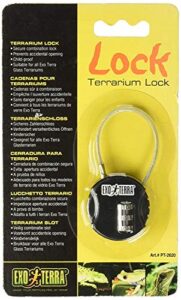
If you own an Exo Terra glass terrarium, this lock was built for it. The combination lock snaps directly into the pre-drilled mounting holes on the front doors — no tools, no guesswork.
You set your own three-digit code using the tumbler system, starting from the factory default of 0-0-0. It’s child-proof enough to stop curious hands without slowing you down during feeding.
Lightweight, humidity-tolerant, and purpose-built for Exo Terra enclosures specifically, the lock ensures security without compromising convenience.
| Best For | Exo Terra terrarium owners who want a simple, no-fuss way to keep kids and curious visitors from opening the enclosure. |
|---|---|
| Material | Alloy steel/brass |
| Package Quantity | 2 padlocks |
| Installation Type | Shackle/hasp |
| Security Method | Combination dial |
| Primary Use | Gate/shed |
| Warranty/Guarantee | Limited lifetime |
| Additional Features |
|
- Snaps in without tools and works with the built-in locking holes on Exo Terra glass terrariums
- Lets you set your own three-digit code, so it’s quick to open when you need it
- Light enough to leave on full-time without adding bulk or affecting ventilation
- Only fits Exo Terra glass terrariums — won’t work with other brands or DIY builds
- Not a serious security lock; a determined person with tools can get past it
- The plastic construction can feel a little cheap compared to metal alternatives
4. Fluker Metal Terrarium Screen Clip
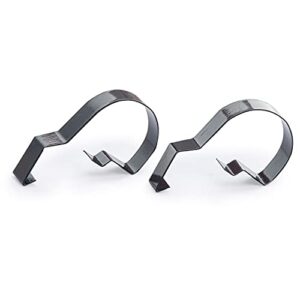
Screen tops are another overlooked escape route for reptiles, but the Fluker Metal Terrarium Screen Clip provides a simple solution. Each pack includes two coated metal clips designed to snap onto your terrarium frame without tools, eliminating the need for drilling or complicated setups.
Built for durability, these clips handle heat lamp exposure without warping; their corrosion-resistant finish ensures longevity even in humid environments.
Suitable for tanks 30 gallons and up, Fluker recommends double-checking sizing for 60–70-gallon enclosures to guarantee a proper fit.
At roughly $7.67 per pack, this affordable upgrade offers essential peace of mind for reptile owners.
| Best For | Reptile hobbyists looking for a quick, no-tools way to keep screen lids locked down without spending a lot. |
|---|---|
| Material | Lightweight plastic |
| Package Quantity | 1 lock |
| Installation Type | Snap-in |
| Security Method | Combination dial |
| Primary Use | Terrarium door |
| Warranty/Guarantee | Not stated |
| Additional Features |
|
- Super easy clip-on setup — no drilling, no fuss
- Works with a wide range of tanks, from 30 gallons all the way up to 100
- At $7.67 a pack, it’s one of the cheapest escape-prevention fixes out there
- The black coating can peel over time, especially in humid setups
- Clip strength is hit or miss — some feel loose and won’t hold heavier lids
- Sizing can be tricky around 60–70-gallon tanks, so measure before you buy
5. Zinc Alloy Glass Cabinet Lock
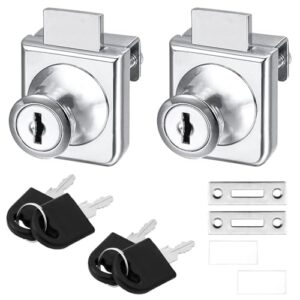
Glass doors need a lock that won’t quit on you. The Zinc Alloy Glass Cabinet Lock delivers exactly that — zinc-alloy construction means it resists rust, corrosion, and wear even inside humid enclosures.
Pair it with a well-designed enclosure using these reptile habitat design ideas to keep your setup both secure and escape-proof.
It fits glass between 5mm and 8mm thick, covering most standard terrariums. No drilling into the door edge; screws and anti-skid pads ensure clean, secure installation.
Each package includes two locks and four keys. Simple, solid, and built to keep curious reptiles exactly where they belong.
| Best For | Reptile keepers and pet owners who want a secure, no-drill lock for standard glass terrariums or display enclosures. |
|---|---|
| Material | Metal |
| Package Quantity | 2 clips |
| Installation Type | Clip-on |
| Security Method | Mechanical clip |
| Primary Use | Terrarium lid |
| Warranty/Guarantee | Not stated |
| Additional Features |
|
- Zinc-alloy build resists rust and corrosion, so it holds up well in humid terrarium environments.
- No-drill installation keeps your glass door intact — just screws and anti-skid pads.
- Comes with two locks and four keys, so you’ve got a backup if one goes missing.
- Only works with glass between 5mm and 8mm thick, so thicker or double-pane doors are out.
- Each lock uses its own unique keys — you can’t use one key across multiple locks.
- You’ll need a screwdriver, and screw-hole placement on your cabinet could limit where it mounts.
6. Repti Zoo 35 Gallon Front Opening Glass Terrarium
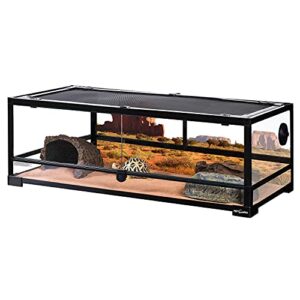
Your enclosure is only as secure as its locking system — and the Repti Zoo 35 Gallon terrarium takes that seriously. Front-opening double hinged doors come with two locking keys right out of the box, so you’re not scrambling for aftermarket hardware.
Tempered glass keeps humidity and heat locked in, while the wire screen top manages ventilation without compromise.
At 36 × 18 × 12 inches, it suits lizards, snakes, and geckos comfortably. Security and practicality, already built in.
| Best For | Reptile owners who want a secure, easy-access enclosure for lizards, geckos, snakes, or frogs in both desert and rainforest setups. |
|---|---|
| Material | Zinc alloy |
| Package Quantity | 2 locks |
| Installation Type | Screw-mount |
| Security Method | Keyed lock |
| Primary Use | Glass cabinet |
| Warranty/Guarantee | Not stated |
| Additional Features |
|
- Front-opening double hinged doors make feeding and cleaning simple without disturbing the whole setup
- Comes with two locking keys and secure buckles, so escapes and accidental openings aren’t a concern
- Six pre-drilled cable holes keep wires tidy and make setting up heat lamps or humidifiers much easier
- At 30 lbs, moving it around once it’s set up is a two-person job
- The single large lid is awkward to remove if you need top access
- Heating, lighting, and background décor are all sold separately, so budget accordingly
Best Lock Types by Enclosure

Not every enclosure is built the same, and neither is every lock.
The right match comes down to how your cage opens, closes, and holds up to your animal’s personality.
Here’s what works best for each setup.
Sliding Glass Door Locks for Vivariums
Sliding glass doors are the most common escape route — and the easiest to fix. A quality vivarium lock uses a ratchet mechanism or edge clamping to pin both panels together firmly. The Vivarium Sliding Glass Door Lock provides an adjustable childproof lock for secure enclosures.
- Vivexotic Sliding Glass Door Lock: £3.80, tool-free
- OIIBO Glass Door Lock: reversible installation, fits left or right
- Quick-release keys for fast access
- Glass gap sealing stops juvenile snakes cold
Screen Cover Clips for Mesh Lids
Mesh lids are only as secure as the clips holding them down. Zilla Screen Cover Clips clamp firmly onto standard mesh-topped tanks, distributing weight evenly across the frame — no single point buckles under pressure. This design ensures a robust physical barrier for cages.
Their quick-release design enables fast access during feeding without fumbling, prioritizing convenience without compromising security.
With solid corrosion resistance and edge compatibility up to 2mm, these clips provide reliable, long-term hardware performance. They serve as essential security components for enclosures requiring dependable containment.
Combination Locks for Terrarium Doors
Combination locks offer full control with no keys to lose or locksmiths to call. The Exo Terra Terrarium lock excels with user-programmable digits, simple installation alignment, and a child-proof design that prevents unauthorized access. Its straightforward code-resetting adapts to changing security needs, ensuring escape-proof reliability.
These reptile cage locks are perfectly suited for front-opening doors, blending practicality with robust security. The system’s design prioritizes both user convenience and safety, making it an ideal choice for terrarium owners seeking peace of mind.
Padlocks for Custom Cage Hasps
Custom DIY cages require serious security hardware — and padlocks deliver. Prioritize shackle clearance of at least 12mm for solid hasp alignment without binding. Weatherproof finishes, such as stainless steel, withstand humidity and misting spray effectively.
The Master Lock combo lock eliminates lost-key headaches entirely. Keyed alike sets simplify management across multi-enclosure setups, ensuring consistent access control.
An anti-pry design paired with a combination padlock provides professional-grade lock mechanism reliability, enhancing your custom build’s security infrastructure.
Glass Cabinet Locks for Display Enclosures
Display enclosures require a different approach than padlocks. Cam lock mechanisms work well on single-hinged glass doors, offering simplicity, reliability, and a low-profile design. Magnetic latch systems integrate cleanly inside frames, while micro-rotation latches provide robust resistance to forced openings.
Additional security features include anti-tamper fasteners to deter prying and audit-trail keypads that track access activity. These solutions prioritize both functionality and discreet integration.
All locks for glass enclosures must feature non-porous finishes to withstand relentless humidity. This is particularly critical for reptile enclosure security solutions, where durability in challenging environments is non-negotiable.
Door Wedges for Sliding Reptile Cages
Sliding glass tanks have one vulnerability that display locks can’t fix — the gap. That’s where cage door wedges earn their keep.
Soft rubber wedge options, like the Internet Reptile Rubber Door Wedge and ProRep Cage Door Rubber Wedges, apply gentle pressure adjustment without scratching glass. Quick release makes cleaning practical, enhancing longevity.
Gap compatibility across most brands means escape prevention starts in seconds, no tools required.
Materials That Prevent Escapes
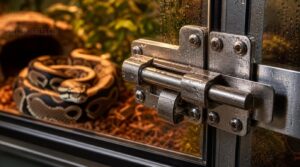
The lock itself is only as good as what it’s made of. In a reptile enclosure, moisture, heat, and determined escape artists put every material to the test.
Here’s what actually holds up.
Stainless Steel for Rust Resistance
Stainless steel earns its place in reptile enclosure security solutions because it genuinely fights back against moisture. The chromium oxide layer self-heals when scratched, while nickel stabilization keeps the structure uniform and corrosion-resistant.
A molybdenum addition manages chloride-heavy environments—think humid tropical setups. After machining, a passivation treatment restores full protection.
Grade selection matters: 316 outperforms 304 anywhere humidity runs high.
Aluminum Locks for Humid Habitats
Aluminum steps in where stainless feels like overkill. Its anodized coating builds a hard oxide shield that withstands daily humidity without complaint. What makes it work for reptile enclosure security solutions:
- Moisture-shedding keyways stop water pooling
- Corrosion-resistant bushings outlast humid conditions
- Humidity-proof seals block internal moisture intrusion
- Lightweight structural strength won’t stress door hinges
Maximum security. Zero rust. Preventing escapes, effortlessly.
Zinc Alloy for Glass-door Security
Zinc alloy punches above its weight for glass door lock applications, offering microstructural hardness that ensures latches withstand daily wear. Its corrosion resistance, derived from natural oxide formation, effectively manages humidity without fuss.
Dimensional stability guarantees a consistent fit, while aesthetic finishes seamlessly blend with diverse setups. These properties collectively enhance both functionality and visual appeal.
Tamper-resistant fasteners further elevate reliability, making zinc alloy ideal for specialized applications like preventing escapes from reptile cage locks—transforming security from a gamble into a guarantee.
Rigid PVC for Lightweight Cage Fittings
Rigid PVC Construction offers a Stiffness Advantage, maintaining shape without added bulk. Its Low Water Absorption prevents warping, even in humid environments, while UV Stability ensures fittings resist yellowing under intense lighting.
Chemical Resistance allows the material to withstand routine cleaning agents effortlessly. Solvent Bonding creates gap-free joints, enhancing structural integrity and supporting a Strong Locking Mechanism.
This design enables Easy installation across most reptile cage lock configurations, ensuring secure and hassle-free setup.
Reinforced Plastic Clips for Screen Tops
When escape prevention comes down to screen tops, reinforced plastic clips are your best bet. Flukers Security Clips use ribbed clamping and adjustable grip to lock mesh enclosure security in place without tools.
UV Stabilization prevents warping under heat lamps, while fatigue resistance withstands thousands of open-close cycles.
The smooth finish makes them a reliable animal escape deterrent for standard mesh-topped tanks.
Non-porous Finishes for Easier Cleaning
Cleaning your reptile lock shouldn’t be a project. Non-porous finishes make it fast and simple.
- Epoxy Coating Benefits — hard surface, scratch-resistant, wipes clean instantly
- Ceramic Enamel Durability — ultra-smooth, won’t stain from organic matter
- Fluorinated Surface Cleaning — liquids bead off, no soaking needed
- Powder-Coated Frame Resistance — UV-stable finish longevity that holds up under heat lamps
Your secure reptile habitat stays hygienic with durable lock hardware built to last.
Choosing The Right Reptile Lock
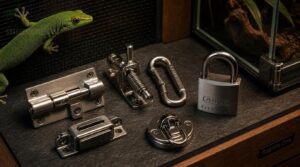
Not every lock works for every cage, and picking the wrong one is how escapes happen. The right choice depends on your enclosure type, your reptile’s size, and how your setup manages heat and airflow.
Here’s what to look for before you buy.
Match The Lock to Door Style
The lock you pick should look like it belongs. A mismatched mechanism stands out — and not in a good way.
| Door Style | Best Lock Match |
|---|---|
| Sliding glass doors | Flush surface latch |
| Front doors | Spring tension mechanism |
| Glass enclosures | Flush cabinet lock |
| Mesh tops | Clip-style screen lock |
| Display cases | Handle-compatible escutcheon |
Match finish harmony, escutcheon shape, and color coordination to keep design line matching clean and intentional.
Consider Snake Size and Strength
A ball python and a boa constrictor are not the same problem. Bigger snakes generate serious muscle pressure against doors — their weight leverage alone can stress a weak cage lock mechanism.
Your reptile enclosure latch needs a strength lock rating matched to your snake’s girth gap ratio. Don’t skip escape force testing after every growth phase.
Secure your reptile enclosure before size wins.
Check Gap Size Around Sliding Doors
Gap size isn’t just a detail — it’s your first defense. Sliding glass doors fail when door tracks drift even slightly.
Check these five clearances:
- Measuring bottom clearance: Keep it 3/16–1/4 inch.
- Side gap uniformity: Match left and right at 1/16–1/8 inch.
- Top gap tolerance: Allow 1/16–1/8 inch for humidity-induced shifts.
- Door alignment: Confirm even contact across the full frame.
- Adjustment tools: Use feeler gauges to verify your cage lock mechanism stays lock-compatible with glass enclosures.
Choose Keyed or Combination Access
Once gaps are sealed, your next call is access style. Keyed locks offer physical key inventory control—ideal when accountability is critical. However, humidity-induced key corrosion is a real concern; aluminum resists it better than brass.
Combination locks eliminate corrosion risk entirely and allow for fast access revocation through code change frequency. This method avoids physical vulnerabilities while maintaining flexibility.
For high-security setups, dual-layer security—combining keyed and combination systems—creates a solid audit trail. This hybrid approach ensures robust protection and traceability.
Prioritize Ventilation-friendly Designs
Ventilation management shouldn’t take a back seat to security. Your lock installation matters little if airflow suffers. Look for reptile enclosure locking solutions that keep vents clear.
- Cross-vent Alignment maintains direct air paths across the enclosure
- Stack Effect Vents draw fresh air upward naturally
- Low-Profile Mesh Clips secure lids without blocking airflow
- Integrated Exhaust Fans coordinate with thermostats seamlessly
- Adjustable Vent Strips fine-tune airflow without compromising reptile enclosure safety
Avoid Locks That Interfere With Heating Equipment
Airflow matters—but so does heat. Maintain clearance standards by keeping locking hardware at least one inch from lamps or pads; these standards exist for a reason. Heat source proximity impacts both non-conductive hardware and thermostat probes.
Locks touching sensor wires throw off readings fast. Prioritize thermostat accessibility and ventilation preservation while securing lids and doors in reptile habitats—because heat lamp displacement and preventing fire hazards from heat lamps starts with smart placement.
Select Tool-free Locks for Temporary Setups
Tool-free locks are your best friend when traveling with reptiles or setting up temporary holds. Clamp‑On Brackets, Magnetic Snap Latch systems, and Adhesive Quick Release options ensure easy installation—no drilling, no damage. A Foam Gasket Seal conforms to irregular gaps up to 6mm, enhancing security.
These Travel‑Ready Locks offer universal compatibility across glass and acrylic enclosures, simplifying DIY lock installation for PVC setups. Their design prioritizes convenience without compromising functionality.
Installation and Safety Tips
Getting a lock installed correctly makes all the difference between a secure enclosure and a close call. Proper installation is vital to keep your reptile exactly where it belongs.
Before mounting anything, there are practical steps that’ll save you headaches — ensuring your reptile stays secure.
Follow these steps every single time to maintain safety.
Clean Glass, Acrylic, or Frame Surfaces First

Before installing locks compatible with glass enclosures, ensure the surface is clean. Use the Microfiber Wipe Method—apply cleaner to the cloth, never directly to the glass, following the Cleaner-On-Cloth Rule. Employ Vertical Streak Prevention to avoid spreading smudges during cleaning.
Inspect Frame Gasket Check points to maintain integrity, and apply Acrylic Anti-Scratch Care for acrylic panels. These steps prevent damage and ensure surfaces remain pristine.
Clean surfaces are critical for successful installation, as they allow reptile locks to adhere securely. Proper preparation guarantees easy installation of reptile locks and long-term functionality.
Make Sure Doors Fully Close Before Locking
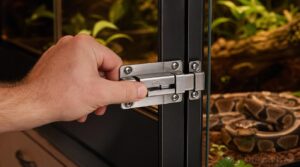
Never skip the Pre-Lock Visual Sweep—it’s your last line of defense before a snake finds the gap you missed.
- Latch Alignment Check – Confirm the reptile enclosure latch meets the Strike Plate Positioning exactly, producing a clear click.
- Hinge Tightening – Loose screws cause door sag, compromising even edge clearance.
- Door Security Sweep – Run your finger around all edges. No gaps. Then lock.
Test Locks After Every Cage Cleaning
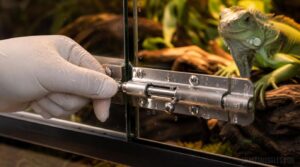
Every cage cleaning resets your risk. After scrubbing down, run a quick Visual Inspection — confirm the latch clicks flush, then check for Residue Check issues where cleaning agents leave slippery buildup on hardware.
Test Force Resistance by pushing the door firmly to ensure structural integrity.
Log it: date, result, anything off. That’s your Log Documentation. Skip it once, and your reptile finds the gap.
Secure Mesh Lids Near Heat Lamps
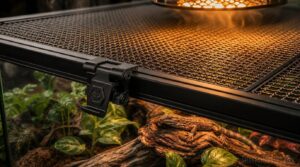
Heat rises fast — and so does escape risk. Keep your heat lamp at least two to three inches above standard mesh-topped tanks to avoid mesh sag mitigation issues and warping.
Use heat-resistant coatings on ceramic or metal lids, and maintain proper lamp-to-lid clearance. Temperature monitoring sensors help you stay ahead of hotspots.
Non-conductive clip design keeps your reptile cage lock and security hardware for cages cool, supporting reliable escape prevention.
Inspect Clips for Bending or Cracking
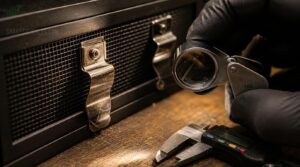
A bent clip is a liability. Your security hardware for cages works only as well as its weakest fastener — so make clip inspection a non-negotiable routine.
- Warp Detection: Check for curvature shifts beyond 0.5 mm — visible warping means uneven door contact and escape gaps.
- Crack Inspection: Use a 10x loupe to spot hairline fractures at bend points before they compromise strength by 30%.
- Clearance Measurement: Confirm 0.2–0.4 mm fit between clip fasteners and the door frame — excess play accelerates fatigue.
Log findings using a Maintenance Log to track product durability trends across your animal enclosure door hardware over time.
Replace Loose Adhesive Locks Immediately
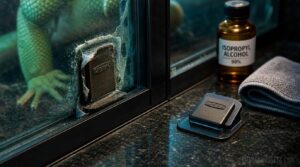
Loose adhesive locks are a quiet threat — humidity degradation risk is real, and once that bond weakens, preventing reptile escapes becomes a race against time.
Your surface cleaning protocol matters here: wipe with isopropyl alcohol, dry fully, then press the replacement firmly for 60 seconds.
Respect the adhesive cure period — 24 hours minimum. Track your replacement batch for smarter long-term reptile enclosure security.
Use Thermostats With Secured Heat Fixtures

Locks keep reptiles in — but thermostats keep temperatures safe. Mount heat fixtures using secure mounting brackets to prevent shifting or falling. Choose a thermostat with overheat protection and auto-shutoff, and add power backup for continuity during outages.
Calibrate your sensors’ calibration baseline against a thermometer, and position sensors away from direct heat to ensure accurate temperature monitoring.
Integrating temperature controllers with cage security is a smart fire prevention strategy.
Frequently Asked Questions (FAQs)
What is the locking mechanism called?
Think of it like a puzzle your brain solves every time you close it.
The main mechanical locks used in reptile enclosure locking solutions include Pin Tumbler, Wafer Disk, Lever Lock, Disc Detainer, and Electronic Hybrid.
What are the different types of locking mechanisms?
From deadbolt mechanisms and magnetic locks to electronic strikes, biometric access, and self‑locking catches, today’s reptile cage lock options cover nearly every terrarium lock system and universal compatible cage lock style imaginable.
What is the most secure locking mechanism?
A chain is only as strong as its weakest link." For maximum security, keyed cylinders with Security Mushroom Pins and Anti-Drill Cylinders win. Add Tamper‑Evident Screws and you’re covered.
Can reptiles learn to manipulate certain lock types?
Yes, some reptiles can. Bearded dragons and curious lizards use visual cues and behavioral reinforcement to crack simple sliding locks over time.
Species’ problem-solving varies, so always choose multi-step mechanisms.
Do locks affect terrarium temperature or humidity levels?
Like a lid on a thermos, a well-fitted lock preserves your terrarium’s microclimate. Seal integrity and gasket sealing directly support thermal inertia, microclimate stability, and temperature control.
Airflow restriction impacts humidity balance, ensuring the system maintains optimal conditions.
Which locks work best for outdoor reptile enclosures?
For outdoor setups, stainless steel and brass options win. Master Lock’s brass padlock withstands humidity well, while Zilla’s heavy-duty screen clips resist wind loads beautifully.
Salt-air durability matters — skip anything that’ll rust overnight.
Are childproof locks necessary for reptile cage security?
Childproof locks aren’t mandatory, but they genuinely help. They block accidental openings and deter curious kids — giving you parental peace without sacrificing household accessibility.
Think of them as one smart layer in your overall reptile habitat security plan.
How do vibrations from locks stress captive reptiles?
Locks keep reptiles in — but ironically, they can stress them out too.
Vibrations trigger startle reflexes, cause corticosterone spikes, and shift thermal zones, disrupting your reptile’s sense of safety and stability.
Can reptile locks withstand chemical disinfectants over time?
Most reptile cage locks handle routine disinfectants well. Stainless steel and aluminum offer strong corrosion resistance, while zinc alloy degrades faster with bleach.
Schedule monthly inspections to protect material longevity and maintain pet habitat safety.
Do combination locks work in high-humidity enclosures?
Combination locks can handle high humidity well — provided seal integrity holds and moisture-resistant springs stay lubricated.
Prioritize corrosion-tested models to ensure durability in humid conditions.
Watch for seal failure signs like stiff dials or visible rust, which indicate compromised functionality.
Conclusion
Test it yourself: press a hand firmly against your reptile’s lid and feel how much give there is. Your snake already knows it’s there—the gap, the flex, the slight rattle.
The right locking mechanisms for your reptile cage don’t just close a door; they eliminate the variable your animal is quietly calculating. Choose hardware that matches your enclosure, your species, and your setup. Secure it properly.
Sleep through the night.
- https://www.zenhabitats.com/blogs/reptile-care-sheets-resources/3-simple-tips-on-keeping-your-pet-snake-secure-in-a-zen-habitats-enclosure?srsltid=AfmBOoojSC3X4H6tzhxpnjb5j8kxeAppNKt6mpOPmkt4miiB0IZz5_s2
- https://www.customcages.com/interlocking-reptile-cage-doors.html?srsltid=AfmBOoo8AN8bOEuOrpOiFW0vX0j4s3hherbUMwJG_i00WAq3SLwyMBnp
- https://www.reptilebasics.com/sliding-door-cages/sliding-door-lock/?srsltid=AfmBOopKWTgwcEEgDeQ3Q6_y2tNIpefWG6sZzuJNiwzr9bWgwKI-LEg5