This site is supported by our readers. We may earn a commission, at no cost to you, if you purchase through links.

A snake can squeeze through a gap the width of its own head. That’s it. That’s the whole escape route it needs, and it will find yours if you give it one.
Good snake enclosure safety features aren’t about paranoia. They’re about outsmarting an animal that’s been perfecting the art of the great escape for millions of years, one pushed-off lid at a time. A magnetic latch here, a sealed seam there, and your living room stays a living room instead of a crime scene.
Here’s how to build an enclosure your snake can’t beat.
Table Of Contents
- Key Takeaways
- Escape-Proof Snake Enclosure Materials and Construction
- Secure Lids, Doors, Locks, and Smart Alarms
- Safe Temperature, Humidity, and Ventilation Controls
- Snake-Safe Interior Layout and Enrichment
- Cleaning, Safety Inspections, and Emergency Readiness
- Frequently Asked Questions (FAQs)
- What should a snake enclosure have?
- How to escape proof snake enclosure?
- What are the legal requirements for snake cages?
- What are common reptile enclosure mistakes?
- Can you build a DIY snake enclosure?
- What is a snake enclosure?
- How to maintain a snake’s enclosure?
- Do snake cages need to be ventilated?
- Do snakes need a vertical enclosure?
- How do you make a snake enclosure more comfortable?
- Conclusion
Key Takeaways
- A snake can escape through any gap the width of its head, so build with rigid materials like aluminum frames and polycarbonate, epoxy-seal every seam, and eliminate pry points entirely.
- Layer your security with magnetic hasp latches, keyed locks, and smart door sensors that send phone alerts, plus weekly lock and seal checks to catch wear before it becomes a jailbreak.
- Protect your snake’s health with thermostat-controlled heating (including a 40–45°C overheat shutoff), dual humidity sensors with alarm thresholds, and gentle ventilation targeting 5–12 air changes per hour.
- Stay ready with a consistent cleaning schedule, quarterly escape and bite drills, and current knowledge of your local permit laws, since requirements vary by state and species.
Escape-Proof Snake Enclosure Materials and Construction

Picture your snake as a tiny Houdini with unlimited patience. That’s the mindset you need when choosing sturdy materials.
For inspiration on escape-proof designs that make the most of vertical space, browse these real-world snake habitat setup examples before you start building.
Treat your snake like a tiny Houdini with unlimited patience when choosing sturdy enclosure materials
Skip flimsy glass-and-plastic combos. Go for aluminum extrusion frames with stainless steel corner brackets. They laugh at humidity and heat cycling. Pair that with a 6–8 mm polycarbonate shell for impact strength and UV resistance. Epoxy-seal every panel seam, because micro-gaps are basically invitations.
Now think joints. Fully bonded panel-to-frame connections stop flexing, and internal corner gussets spread the load when your noodle gets heavy. Keep fasteners off load-bearing edges. No pry points, no problem.
Tolerances matter too. Machine door edges tighter than ±0.5 mm, compress gaskets to 25–30% thickness, and space rivets 30–60 mm apart. Add overlapping tongue-and-groove transitions, and your enclosure integrity becomes genuinely predatorproof construction. Snake: outsmarted. You: victorious!
Secure Lids, Doors, Locks, and Smart Alarms
A solid build means nothing if the top pops off like a soda can. Your escapeproof lid needs teeth. Magnetic hasp latches resist prying and demand a vertical lift to open. Pair them with wire locks or double-bitted keyed locks, since duplicated keys are how snake stories end badly.
Locks stop hands. Alarms stop surprises. A magnetic door alarm catches lids and doors moving when they shouldn’t, and Geeni Smart Door Window Sensors push alerts to your phone within seconds. Tamper-evident seals on the lid? Chef’s kiss for spotting sneaky access.
Layer your defenses. Set user permissions and time-based access windows, keep audit trails logging every access, and route repeated triggers to on-call help. Three alarms in a row means something’s up. Houdini, meet your match!
Safe Temperature, Humidity, and Ventilation Controls

Your snake can’t tell you when it’s too cold, too dry, or gasping for fresh air. That’s your job, and honestly, it’s easier than it sounds. Here are the three climate controls that’ll keep your enclosure running like a well-tuned machine.
Heat matters most, so start with a warm side and a cool side, and this guide to building a thermal gradient in your snake’s habitat shows how.
If you’re still fine-tuning the enclosure itself, our guide to creating a natural snake habitat walks you through the setup basics first. And once humidity control becomes part of the routine, our guide to the best snake humidifiers for small enclosures covers which units actually hold steady levels without constant babysitting.
Thermostat-Protected Heating
is your snake’s cruise control. Set it, and it keeps things smooth.
Place temperature monitoring devices at the basking spot and mid-ambient zone, so your temperature gradient stays honest. Pair heat mats or ceramic heat emitters with a quality thermostat, never raw power.
Overheat shutoff at 40–45°C is non-negotiable. Add a thermal fuse as backup. Two sensors beat one, always!
Humidity Monitoring Systems
Heat’s handled, now let’s talk water in the air.
Good humidity monitoring systems use capacitive sensors, and placement matters: one at substrate level, one mid-enclosure, away from heat sources.
Log readings every few minutes, set alarms at 40% and 70%, and require three consecutive alerts before panicking.
Monthly humidity sensor calibration keeps drift honest.
Pair temperature and humidity control data, and your humidity regulation becomes foolproof environmental monitoring!
Snake-Safe Ventilation
Keep your ventilation grills positioned away from basking zones to stop your snake from getting blasted by a cold draft. That’s key for ventilation-induced draft avoidance.
Proper ventilation with smart airflow management means targeting 5-12 air changes per hour. Run ventilation checks monthly and log your results.
Tuck carbon filters downstream of humid spots to handle odors without toxic buildup.
Snake-Safe Interior Layout and Enrichment

Grab a mental blueprint before you buy a single decor item. Your snake’s enclosure should feel like a tiny adventure park, not an empty shoebox.
Think in layout zones: basking shelf up top, shaded drinking corner, feeding spot off to one side. Separating the feeding area from everything else cuts stress and accidental grabs during handling.
Here’s what a great interior gives you:
- Hiding spots with no gaps bigger than your snake’s head
- Climbing structures with rounded edges and shallow steps
- Substrate selection kept to 5–7 cm deep for young snakes
- A water dish tucked into a low-traffic corner
- Visual barriers from dense, safe plantings
Anchor everything down. A wobbly branch is a tail-snagging disaster waiting to happen. And skip escape tunnels or false bottoms entirely; any opening over 2 cm gets a grate cover.
Cleaning, Safety Inspections, and Emergency Readiness
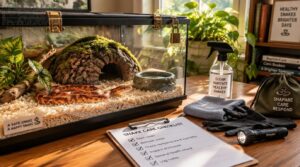
A clean enclosure is a secure enclosure, and yours deserves both. We’ll walk through your cleaning schedule, lock checks, and escape plans so nothing slips through the cracks (literally). Ready to become the responsible snake owner your scaly friend brags about? Let’s go!
Routine Cleaning Schedule
A dirty snake enclosure is a mold factory with a resident. Yuck! Stick to a consistent cleaning schedule: spot-clean weekly, full disinfect every two weeks, and a complete substrate swap every 4–6 weeks. Follow your enclosure sanitation standards, log everything, and always rinse that reptile-safe cleaning solution away before your snake moves back in.
| Task | Frequency | Pro Tip |
|---|---|---|
| Spot-clean waste | Weekly | Scoop fast, sniff often |
| Disinfect surfaces | Biweekly | Gloves on, always |
| Replace substrate | 4–6 weeks | Deep clean day |
| Scrub water bowl | Weekly | Soap, rinse, dry |
Lock and Seal Checks
Picture a jailbreak movie, except the star is four feet of noodle with no legs and endless patience. That’s why your lock and seal checks matter.
Test lock functionality weekly. Latches should click fully into their strikes, no wobble. Run a feeler gauge along the weatherstripping; any gap means seal integrity is compromised, so replace it.
Check tamper caps, security screws, and hardware replacement needs monthly. Sniff for musty air too, since ventilation obstruction often signals a swollen, failing seal.
Escape and Bite Plans
What happens in the first 60 seconds of an escape? That’s when your emergency plan earns its keep. Drill quarterly, and make it real.
- Lid breach drills: assign roles, one person contains, one secures the room.
- Bite response: stock PPE, know your nearest clinic, follow your venomous snake protocol if applicable.
- Power failure scenarios: test backup containment before you need it.
Timestamp every drill. Bite prevention beats treatment, every single time.
Local Laws and Permits
Think your enclosure game is airtight? Your paperwork better be, too. Local laws can trump state rules, so check city ordinances before you buy. Permit requirements vary wildly: Texas wants a RCES permit, Delaware demands one for venomous species. Contact your wildlife agencies, nail regulatory compliance, and keep records handy. Legal ownership compliance isn’t optional. It’s your escape-proof backup plan!
Rules also differ on species, since reptile ownership laws by state determine everything from venomous snake bans in Alabama to California’s permit-only restrictions.
Frequently Asked Questions (FAQs)
What should a snake enclosure have?
Want a Houdini-proof home for your snake? It needs escape prevention systems, secure locking mechanisms, precise heating, humidity control, proper ventilation, hides, climbing branches, and a cleaning log. Safety first, slither second!
How to escape proof snake enclosure?
Start with a seam-free rigid enclosure, mesh gaps under 5 cm. Add welded framing, continuous EPDM gaskets, and secure locking mechanisms like double-bolt latches.
Install screened pressure-relief vents and run regular enclosure wear inspection.
What are the legal requirements for snake cages?
Theory check: are cage rules universal? Nope, they’re state-specific. You’ll need local laws checked, wildlife permit acquisition done, "DANGER" labels displayed, proper ventilation, water, and enclosure size standards. Liability insurance helps too!
What are common reptile enclosure mistakes?
Here’s a sobering stat: roughly 20% of escaped pet snakes are never recovered. Common mistakes? Flimsy lids, unsecured vents, no thermostat, poor ventilation checks, and skipping weekly inspections. Fix those, and your escape prevention game skyrockets!
Can you build a DIY snake enclosure?
Building a DIY snake enclosure is a fun weekend project. Use escapeproof materials like PVC or sealed wood, add secure locking mechanisms, meet ventilation requirements, and nail that temperature gradient.
Check seams often, because Houdini impersonators love loose corners.
What is a snake enclosure?
Funny how a snake’s dream home is basically a prison you’d envy. A snake enclosure is its secure mini-apartment: proper size, ventilation, heat, hides, and habitat mimicry. Good enclosure safety means escape prevention and secure locking mechanisms built in.
How to maintain a snake’s enclosure?
Maintain it with a regular cleaning schedule: spot-clean daily, deep clean monthly. Wipe spills fast, inspect locks and seams weekly, and watch for cracks. Keep your temperature gradient steady, humidity control dialed in, ventilation clear, and water fresh.
Since over-cleaning can strip away the scent markers your snake relies on, this guide to keeping a snake enclosure clean helps you find the right balance.
For more layout ideas that balance security and enrichment, browse these safe and comfortable snake housing ideas before you finalize your enclosure.
Do snake cages need to be ventilated?
Would you live happily in a room with absolutely no airflow? Your snake can’t either.
Proper ventilation helps airflow optimization, humidity control, and a stable temperature gradient. Keep it gentle to avoid ventilation-induced draft discomfort.
Understanding how reptile foggers work helps you fine-tune misting cycles so humidity stays steady without soaking the enclosure.
Do snakes need a vertical enclosure?
Not always. Ground-dwellers do fine in horizontal tanks. But arboreal snakes genuinely benefit from vertical enclosure space. Give tree-lovers sturdy climbing structures, and you’ll see natural behavior, less stress, and better behavioral enrichment overall.
How do you make a snake enclosure more comfortable?
Give your snake cozy hiding spots, like caves or half-logs, on both warm and cool sides. Use moisture-holding substrate, add climbing structures, keep a proper thermal gradient setup, and include a soaking-friendly water dish.
Since snakes use every level of their habitat, from leaf litter to tall oaks, this guide to creating a natural snake habitat shows how to layer your enclosure.
Conclusion
A friend of mine lost a corn snake for three weeks. It turned up coiled inside her boot, smug as anything. Don’t be her.
The best snake enclosure safety features work together: solid construction, locked lids, monitored heat, and a quick weekly check. None of it is hard. All of it matters.
Build it tight, check it often, and your snake stays where it belongs. Safe inside, not supervising your laundry.