This site is supported by our readers. We may earn a commission, at no cost to you, if you purchase through links.

Your fingers are closer to a snake’s strike zone than you think, even with a bare-hand feed. That extra second of hesitation, that flinch when a hungry ball python lunges, causes more dropped rodents and mishandled prey than any other feeding mistake keepers make.
The right snake feeding tongs fix that gap entirely, giving you control over placement, distance, and timing. Length matters more than most buyers realize: a hatchling corn snake needs a different reach than a six-foot boa in a bioactive enclosure.
Get the sizing wrong, and you’re either crowding a defensive snake or fumbling prey at arm’s length. Here’s what separates a tool that builds confidence from one that ends up in a drawer.
Table Of Contents
- Key Takeaways
- 6 Best Snake Feeding Tongs for Home Terrariums
- Choosing The Correct Feeding Tong Length
- Comparing Feeding Tong Jaws and Tips
- Safe Feeding, Cleaning, and Storage
- Which Snake Feeding Tongs Suit You?
- Frequently Asked Questions (FAQs)
- What are the best tongs for snakes?
- Should I feed my snake with tongs?
- Can a snake live in a terrarium?
- What are tongs for feeding snakes?
- How long do feeding tongs typically last?
- Can feeding tongs be used for cleaning tasks?
- Do feeding tongs work for other reptiles too?
- What material coating best resists rust buildup?
- How much should quality feeding tongs cost?
- Conclusion
Key Takeaways
- Match tong length to your snake’s size and enclosure depth—hatchlings need just 6 to 12 inches, medium snakes like ball pythons do best with 40 to 60 inches, and deep bioactive terrariums call for 47-inch reach to keep your hand well outside the strike zone.
- Jaw and tip design matter as much as length: serrated jaws grip prey securely without slipping, while rubber tips protect your snake’s teeth and gums compared to bare metal.
- Cleaning and storage habits directly affect safety—wash tongs in hot soapy water, disinfect with a diluted bleach solution, air dry completely, and use a dedicated tool per enclosure to prevent cross-contamination.
- Reading your snake’s body language before feeding, watching for hissing, gaping, or tight coiling, lets you pause and redirect its attention instead of risking a defensive strike.
6 Best Snake Feeding Tongs for Home Terrariums
Not all feeding tongs earn a spot in your reptile toolkit, especially once you factor in reach, grip, and build quality. The six options below cover different snake sizes, enclosure depths, and handler preferences, so you can match the tool to your actual setup.
Before picking a pair, check our corn snake food size guide to make sure the tongs’ grip width actually matches your snake’s prey.
Here’s a closer look at each one, starting with a heavy-duty pick built for confident, everyday handling.
Midwest Gloves 40 Heavy-Duty Snake Handling Tongs
Forty inches of stainless steel construction puts real distance between your hand and a strike, and the reinforced frame with heat-treated jaws won’t bend under pressure.
The locking mechanism secures prey firmly, while a double-ribbed ergonomic grip design keeps tension consistent even when wet. A rust-resistant coating and precise jaw alignment make this Midwest 40Inch Standard Tong a dependable choice for heavy-duty reptile handling and everyday snake feeding safety. Using proper tools like these helps guarantee safe handling and reduces stress during reptile handling procedures.
1. 47 Inch Stainless Steel Snake Tongs
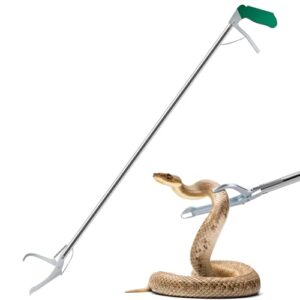
If forty inches felt like enough, wait until you’re reaching into a tall bioactive setup. These 47-inch stainless steel tongs add real margin, roughly 119 centimeters of reach from wrist to tip, ideal for deep terrariums with dense decor.
The rigid shaft holds jaw alignment under load, so you get consistent control even at full extension. Wide serrated jaws grip securely without crushing prey, and the polished stainless finish resists corrosion from repeated washing and disinfecting.
| Best For | Reptile keepers and outdoor enthusiasts who need a safe, humane way to handle snakes in deep terrariums, rocky terrain, or wooded areas. |
|---|---|
| Length | 40 inches |
| Material | Aircraft grade aluminum |
| Grip Type | Wide gentle grip |
| Primary Use | Snake capture and relocation |
| Injury Prevention | Prevents snake injury |
| Color | Blue |
| Additional Features |
|
- 47-inch length offers extra reach and a safe distance from snakes, even in deep bioactive setups
- Wide serrated jaws provide a secure, humane grip without crushing the animal
- Stainless steel construction with a rubber non-slip grip resists corrosion and stands up to repeated washing and disinfecting
- No locking mechanism, so continuous hand pressure is required throughout use
- May be awkward to handle for shorter users or those with limited arm reach
- Larger or heavier snakes typically require two-handed operation to prevent slippage
2. Stainless Steel Reptile Feeding Tongs Set
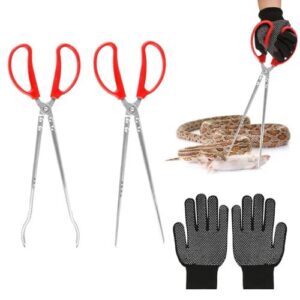
Extra length isn’t always the answer, sometimes what you need is versatility. This stainless steel set pairs straight and curved jaws in one purchase, giving you precise placement for small prey and angled access for tight corners.
Built from 304 or 316 alloy, the mirror finish shrugs off humidity and repeated disinfecting. Serrated jaws with smooth edges grip firmly without risking mouth injuries, and the 12 to 24 inch range covers hatchlings through mid-sized snakes without buying multiple tools.
| Best For | This tong set is best for reptile keepers who need a safe, sturdy tool for handling live or frozen feeder rodents, as well as aquarium owners tending to plants, corals, and tank debris. |
|---|---|
| Length | 47 inches |
| Material | Stainless steel |
| Grip Type | Serrated jaws |
| Primary Use | Snake capture and release |
| Injury Prevention | Enables humane handling |
| Color | Silver |
| Additional Features |
|
- Durable 410 stainless steel resists rust and holds up to repeated use
- 15-inch length keeps hands a safe distance from reptiles during feeding
- Comes with both straight and elbow jaw tweezers plus nylon gloves for extra grip and protection
- No rubber or silicone tips, which can make gripping very slick items harder
- Manual production means slight size variations are possible
- Actual color may look slightly different than shown due to monitor settings
3. Exo Terra Bamboo Feeding Tweezers
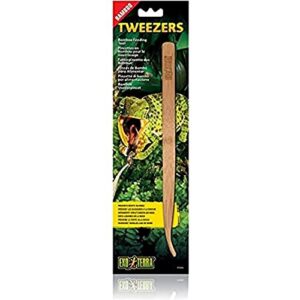
Metal isn’t the only option worth considering. Exo Terra’s bamboo tweezers swap steel for a sustainable, lightweight material that’s flexible enough for precise handling without feeling flimsy in hand.
At just 0.1 pounds and 11 inches, they’re built for smaller feeding jobs, live or canned insects, not full prey items. The bamboo edge reduces mouth injury risk, though moisture and heat can cause splintering over time, so dry storage matters here.
| Best For | Reptile owners who feed live or canned insects and want an eco-friendly, gentle tool for precise, everyday feeding. |
|---|---|
| Length | 15 inches |
| Material | 410 stainless steel |
| Grip Type | Serrated tweezer grip |
| Primary Use | Feeder rodent handling |
| Injury Prevention | Puncture-resistant gloves included |
| Color | Red |
| Additional Features |
|
- Made from sustainable, eco-friendly bamboo instead of plastic or metal
- Lightweight, flexible design allows precise handling and control
- Soft edge helps prevent mouth injuries and reduces feeding stress
- Not strong enough for gripping large prey items
- Bamboo can splinter if exposed to too much moisture or heat
- Comes as a single unit with no replacement tips included
4. IC ICLOVER 47 Inch Heavy Duty Snake Tongs
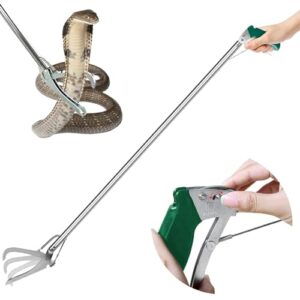
When reach matters more than finesse, this 47 inch model earns its keep. Built from stainless steel tubing, it keeps you well outside strike range even with mid to large snakes.
For a closer look at how tong length affects safety around bigger reptiles, check out this guide on choosing the right snake feeding tong length.
The auto lock design secures the jaw after you release the handle, cutting down on accidental drops during transfer. At 1.5 pounds with a 35 pound load capacity, it’s sturdy but light enough for extended use, and the included repair kit helps offset reports of the lock loosening over time.
| Best For | Snake handlers, reptile pet owners, and outdoor enthusiasts who need a safe, reliable way to capture and release snakes from a distance. |
|---|---|
| Length | 11 inches |
| Material | Bamboo |
| Grip Type | Flexible tip grip |
| Primary Use | Live insect feeding |
| Injury Prevention | Prevents mouth injuries |
| Color | Natural bamboo |
| Additional Features |
|
- 47 inch length keeps hands safely away from strike range
- Auto lock design holds grip securely after handle release
- Lightweight at 1.5 pounds while supporting up to 35 pounds
- Lock mechanism may loosen over time and need maintenance
- Not suited for very large snakes beyond the weight limit
- Some users report inconsistent locking without tightening nuts
5. Stainless Steel Reptile Feeding Tongs
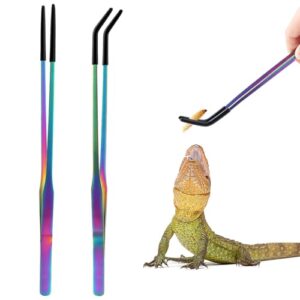
Compact enclosures call for a shorter tool, and this set delivers with two 10.6 inch tongs, one straight and one curved, built for tight terrarium corners.
Rubber-tipped ends grip prey securely without risking tooth or gum damage. Stainless steel construction resists rust in humid setups, though the rubber components mean hand washing only, no dishwasher cycles.
Best suited for bearded dragons, lizards, and smaller feeding tasks rather than large constrictors needing serious reach.
| Best For | Reptile and aquarium keepers who need precise, safe feeding control for bearded dragons, lizards, and turtles in compact terrarium setups. |
|---|---|
| Length | 47 inches |
| Material | Stainless steel |
| Grip Type | Auto lock grip |
| Primary Use | Snake capture and release |
| Injury Prevention | Handles snakes without injury |
| Color | Silver |
| Additional Features |
|
- Rubber-tipped ends grip food securely while protecting pets from bite injuries
- Two-piece set with straight and curved tongs handles different feeding angles and tight corners
- Stainless steel construction resists rust in humid terrarium and aquarium environments
- Rubber tips can degrade over time with heat or chemical exposure
- Not dishwasher safe, requiring hand washing after each use
- Not designed for large prey items or bigger reptiles needing a wider grip
Choosing The Correct Feeding Tong Length
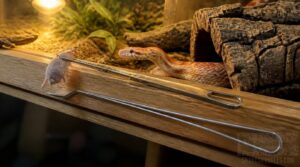
Tong length isn’t a one-size-fits-all decision—it depends on your snake’s size, temperament, and how deep its enclosure runs.
Grab the wrong length and you’re either fumbling too close to a strike zone or struggling to place food where your snake can reach it.
Here’s how to match the tong to the snake, from hatchlings to heavyweights.
Tongs for Hatchling Snakes
A hatchling’s mouth is tiny, so your feeding tongs should be too. Stick to 6 to 12 inches, with rounded, rubber tips and fine serrations for secure, gentle grip.
Keep a 10 to 20 centimeter safety distance, approach from the side, and cradle the head gently. Choose rust-resistant stainless steel and dry it thoroughly after every wash.
Tongs for Medium Snakes
Ball pythons and corn snakes need more room to work with. Go with 40 to 60 inches of stainless steel, keeping a 2 to 3 foot safety distance.
Curved jaws with serrated grip secure mid-body prey without crushing it, while rubberized grips and balanced weight curb wrist fatigue through longer feeding sessions.
Tongs for Large Snakes
Big constrictors demand serious gear. For snakes over five feet, go with 20 to 24 inches of forged stainless steel, a reinforced frame that won’t bend mid-strike, and curved, serrated jaws for grip security.
- Rust resistance in humid tanks
- Rubberized grips curb fatigue
- Wide jaws prevent pinching
- Sturdy joints survive daily use
Strike Distance and Enclosure Depth
Ever notice how a snake in a shallow tub strikes faster than one in a tall enclosure? Enclosure depth changes strike distance, since deeper tanks force longer travel before contact.
Enclosure depth changes strike distance—deeper tanks force longer travel before contact
| Enclosure Type | Effect on Strike Distance |
|---|---|
| Shallow tub | Shorter, faster strikes |
| Deep terrarium | Longer travel, needs longer tongs |
| High substrate | Reduces effective distance |
| Tall enclosure | Vertical escape lowers strike need |
Match tong length to depth, not just body size.
Species-specific Reach Requirements
Depth isn’t the only variable. Species biology matters too: hatchling reach needs run 6 to 8 inches, medium snakes want 18 to 24, and large-bodied species demand 30 to 40 for true strike zone measurement.
Neck flexibility impact matters most with regrowing jaws or flexible-necked species, since erring toward the maximum possible distance protects both your hands and habitat health.
Comparing Feeding Tong Jaws and Tips
Length gets your hand out of strike range, but the jaw and tip design decide what happens the moment your snake connects with the prey.
A curved jaw, a serrated edge, and a rubber-tipped bite guard each solve a different problem you’ll run into at feeding time.
Here’s what actually matters when you’re comparing tongs side by side.
Curved Versus Straight Jaws

Jaw shape comparison comes down to your setup. Curved jaws cradle wriggly prey and follow strike paths around decor, though they add wrist fatigue over long sessions. Straight jaws deliver steadier prey handling and grip security along linear prey, minimizing snagging.
Both support injury prevention when paired with non-slip tips. Choose curved for cluttered enclosures, straight for open tubs.
Serrated Jaw Grip Security

Once jaw shape’s settled, texture decides how well you keep hold of prey mid-strike. Serrated grip security comes from shallow teeth biting the prey without piercing it, distributing pressure evenly so it won’t slip during sudden movement.
That texture also limits sideways twisting and repeat re-grips, keeping your hand well outside the strike zone while preventing tooth damage to the snake.
Rubber Versus Metal Tips
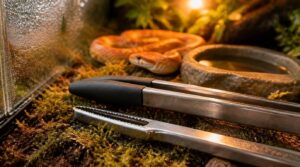
Grip texture solves slippage, but tip material decides comfort. Rubber tips offer a soft bite, decent friction, and heat resistance under lamps, plus easy replacement across durometers. Stainless steel wins on durability and disinfection.
- Rubber cushions delicate mouths
- Metal resists wear longest
- Rubber won’t overheat in light
- Swap rubber tips affordably
Pick rubber for tooth damage prevention; pick steel for longevity.
Wide Jaws for Safer Feeding
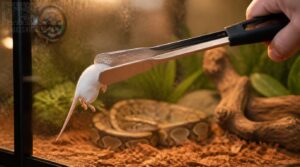
Width matters as much as reach. A widejaw design spreads contact across more surface, giving better jaw pressure distribution and prey grip security on wriggling rodents.
That stability helps with prey stability control, cuts thrashing near the strike zone, and reinforces handling safety consistency session after session, especially paired with an ergonomic design that spares your wrist during longer feedings.
Preventing Mouth and Tooth Injuries

Since a snake’s teeth curve backward and chip easily, tooth protection starts with your tongs, not just technique. Rubber-tipped jaws prevent metal-on-bone impact during fast strikes.
For gentle feeding technique and safe prey handling, prioritize:
- Rubber tips over bare metal
- Head-first prey positioning
- Properly thawed prey
- Debris-free feeding zones
- Regular tip inspection
Poor jaw safety invites mouth infections and eventual tooth loss.
Safe Feeding, Cleaning, and Storage
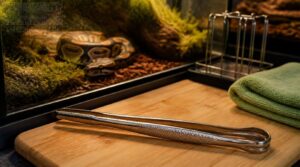
Owning the right tongs is only half the job—how you use, clean, and store them matters just as much. Good technique keeps you safe and keeps your snake’s feeding response sharp instead of jumpy. Here’s what proper care looks like from first strike to final rinse.
If you’re just getting started, feeding tongs sized for smaller hands can make early handling sessions much easier and more controlled.
Proper Tong-feeding Technique
Good feeding technique is really just controlled patience. Angle your feeding tongs slightly, pause between movements, and simulate natural prey motion instead of jabbing near the head.
| Technique Step | Purpose |
|---|---|
| Slow prey movement | Mimics hunting, reduces stress |
| Pause near gape | Encourages swallowing initiation |
| Avoid head area | Minimizes strike reflex |
| Steady pace | Builds feeding technique training |
Preventing Defensive Snake Bites
A defensive strike often starts before the bite: hissing, gaping, or a tight coil are your cues to pause. Spend five to ten minutes on mood observation, approach from the side, and use a brief distraction to redirect attention before the tongs ever enter the strike zone.
Calm, slow movement keeps feeding response predictable and bite risk low.
Washing and Disinfecting Tongs
A five-minute wash beats a ten-minute infection. Scrub tongs in hot soapy water after every session, then disinfect with a diluted bleach solution (1:32) for five to ten minutes. Rinse thoroughly and air dry completely before storage.
Skipping this step invites bacterial buildup that no amount of rubber tips or serrated jaws can offset.
Avoiding Prey Cross-contamination
One dirty tong can turn a single feeding into a colony-wide health scare. Use a dedicated tong per enclosure, color-coded and kept in a labeled bin, to stop cross-contamination cold.
Verify prey sourcing before handling, sanitize between transfers, and check rubber tip integrity often. Daily tool inspection procedures catch fur clumps, saliva residue, and worn tips before they become tomorrow’s outbreak.
Inspecting and Storing Feeding Tools
Before every feeding session, run a quick visual inspection checklist: check jaws for alignment, grips for wobble, and tips for rust or cracks. Weekly, dig deeper into joints and rubber wear.
After disinfecting, air dry completely, then store tongs on a labeled rack in low humidity, away from feed, preventing contamination and keeping ergonomic grips ready for your next handling session.
It’s also worth reviewing this venomous snake handling safety guide so your emergency response plan stays as sharp as your equipment routine.
Which Snake Feeding Tongs Suit You?
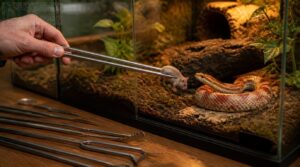
No single pair of tongs works for every setup, and that’s fine—your enclosure, your snake, and your routine all shape what "best" actually means.
Maybe you’re just starting out and want something forgiving, or maybe you’re juggling five feeding sessions a night and need speed over anything else.
Here’s how to match the right tongs to your specific situation.
Best Choice for Beginners
New keepers don’t need the biggest tongs on the shelf, just the right ones. A 24 to 30 inch length with a straight or slightly curved jaw hits the sweet spot for control.
Look for secure grip, a nonslip handle, and stainless steel construction that’s easy to clean. That’s your budget friendly, lightweight starting point.
Best for Deep Terrariums
Bioactive setups with tall backgrounds and heavy decor call for serious deep terrarium reach. A 47 inch length gets you past branches and foliage without leaning in.
Curved jaw access lets you loop around substrate and prey during longreach feeding techniques, avoiding snags while keeping hands well outside the strike zone.
Best for Humid Enclosures
Tropical setups punish cheap metal fast. Reach for 316 stainless steel tongs with rust prevention coatings and sealed joints, since condensation breeds corrosion overnight.
- Non-porous surfaces resist mold buildup
- Serrated grip holds slippery prey securely
- Non-slip grips stay steady when damp
- Polished finishes deter bacteria growth
- Waterproof storage keeps humidity out between feedings
That corrosion resistance is what separates a two-year tool from one you’re replacing every season.
Best for Multiple Snakes
When feeding rooms full of enclosures, a 47 inch tong cuts repositioning to zero, reaching five snakes in a row from one stance.
| Feature | Benefit | Result |
|---|---|---|
| 47" reach | No repositioning | Faster rounds |
| Serrated jaws | Secure grip | Safe delivery |
| Color-coded grips | Prevents cross-contamination | Cleaner feeding |
Simultaneous prey delivery keeps handling calm and efficient across your whole collection.
Balancing Comfort, Durability, and Cost
Since no single tool wins on every front, weigh comfort vs durability against your budget. Stainless steel jaws with rubberized grips cost more but resist humid-enclosure corrosion for years. Bamboo or resin options save money upfront yet wear faster under bite pressure.
Ergonomic grip design reduces fatigue during long feeding sessions, making it worth the investment for consistent feeding accuracy and lasting value.
Frequently Asked Questions (FAQs)
What are the best tongs for snakes?
The hunt for a perfect tong could take a lifetime. Really, the best options balance stainless steel durability, rubber-tipped jaw alignment, and ergonomic grip design, keeping your hand safely outside the strike zone during every feeding.
Should I feed my snake with tongs?
Yes. Tongs give you safety distance benefits, better grip effectiveness, and precise prey placement, reducing stress for beginners while keeping fingers clear of strikes during everyday reptile feeding routines.
Can a snake live in a terrarium?
Absolutely, provided you nail terrarium size requirements, a proper temperature gradient, suitable substrate, and humidity control. Add escape prevention measures and consistent enclosure hygiene practices, and your snake thrives long-term with minimal stress or health issues.
What are tongs for feeding snakes?
Think of them as a knight’s jousting lance for mealtime: snake feeding tongs grip prey securely, keep your hand outside strike range, and let you guide prey placement with steady, calm precision every single feeding.
How long do feeding tongs typically last?
Stainless steel tongs usually last 6 to 12 months with daily use, sometimes stretching past 2,000 feeding cycles. Rubber tips crack sooner in humid enclosures, while consistent cleaning and dry storage can extend durability by 20 to 40%.
Can feeding tongs be used for cleaning tasks?
Like a Swiss Army knife with a single blade, tongs handle one job at a time, but that job extends well: glass surface cleaning, debris scooping, and precise wipe placement in deep terrariums, provided you avoid cross-contamination with feeding tools.
Do feeding tongs work for other reptiles too?
Yes, most reptile keepers use these tools across species.
Lizards feeding compatibility works well, monitor lizard reach benefits from longer tongs, turtle prey handling stays gentle, and amphibian jaw safety improves with blunt, smooth tips for cross-species feeding.
What material coating best resists rust buildup?
A ship hull survives decades at sea coated in zinc, sacrificing itself layer by layer. That’s the logic here: forged stainless steel with sacrificial zinc or ceramic sealing outperforms basic coatings, keeping tongs rust-free through repeated washing and disinfection.
How much should quality feeding tongs cost?
Budget for $8 to $25 on basic tongs, $20 to $40 for mid-range stainless steel with better reach, and $40 to $70 for premium builds. Rubber tips and longer tong length each nudge price up slightly.
Conclusion
Nobody brags at parties about their tong collection, but ask any keeper who’s chased a loose rat pinky under a water bowl at midnight, and you’ll hear real enthusiasm.
The right snake feeding tongs for home terrariums turn that chaos into a two-second routine. Match length to reach, jaws to grip, and you’ve solved feeding for good. Buy once, buy correctly, and let your snake do the striking, not your fingers.