This site is supported by our readers. We may earn a commission, at no cost to you, if you purchase through links.
A copperhead strikes in under half a second, faster than you can flinch. That single fact separates people who walk away from a snake encounter and people who end up in an ambulance. Most bites happen not because a snake hunted someone down, but because a hand got too close, a boot landed wrong, or curiosity beat caution.
Handling a venomous snake safely comes down to distance, discipline, and gear built for the job, not bravado. Whether you’re a homeowner facing a rattlesnake on the porch or a trainee eyeing certification, the steps ahead cover exactly what keeps you, and the snake, alive.
Table Of Contents
- Key Takeaways
- Handling a Venomous Snake: Immediate Safety Steps
- Protective Equipment for Trained Snake Handlers
- How Professionals Handle Venomous Snakes Safely
- Snakebite Prevention and Emergency Response
- Training, Legal, and Ethical Requirements
- Frequently Asked Questions (FAQs)
- Can you handle a venomous snake?
- How to handle venomous snakes safely?
- How to handle a non-venomous snake safely?
- Is there a venomous snake safety training?
- What equipment do you need to handle venomous snakes?
- How do you handle a venomous snake?
- Can you touch a venomous snake?
- What are 3 things you should do if you are bitten by a venomous snake?
- Can you survive a venomous snake bite without treatment?
- How do snakes differ by habitat?
- Conclusion
Key Takeaways
- The moment you spot a venomous snake, staying calm and backing away slowly (keeping at least three body lengths of distance) matters far more than any quick reaction, since these snakes can strike in under half a second.
- Never attempt to touch, corner, or move a venomous snake yourself—always call a licensed snake removal service and monitor from a safe distance until trained help arrives.
- If a bite happens, skip the old myths like suction, tourniquets, or ice, and instead call emergency services right away while keeping the bitten limb still and below heart level.
- Legally and safely handling venomous snakes requires accredited certification, hundreds of hours of supervised training, and proper protective gear like snake hooks, tongs, and puncture-resistant clothing—it’s never a job for untrained hands.
Handling a Venomous Snake: Immediate Safety Steps
When you spot a venomous snake, what you do in the first sixty seconds matters more than anything else that follows.
Staying calm and moving away slowly gives you time to spot early snake bite warning signs before they escalate.
Panic leads to bad decisions, and bad decisions near a venomous snake can turn a close call into an emergency room visit.
Here are the five steps you need to follow right now, in order, to keep everyone safe until trained help arrives.
Keep People and Pets Away
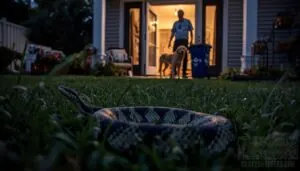
A coiled body in the grass demands one instinct: clear the area first. Corral dogs indoors, usher kids back, and establish a safe perimeter using whatever’s handy, patio furniture, trash cans, even rope.
That’s snake safety 101. Standing 6-foot fences and locked gates already do this work for you, which is why proper barrier setup pays off long before an encounter happens. Research into human-wildlife interaction patterns shows that most people who encounter wildlife report primarily positive emotional responses, though direct encounters like these still call for caution and preparation.
Maintain a Safe Distance
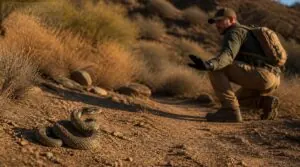
Once the perimeter’s set, distance becomes your real safety margin. Stay at least three body lengths away, positioned at a 45 to 90 degree angle rather than head-on. This angled stance cuts frontal exposure and keeps an escape path open for both of you.
Watch for coiling or hissing. Those signal a defensive posture, not curiosity.
Never Touch or Corner It
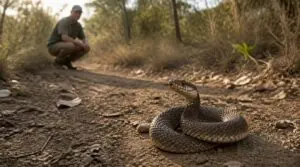
That distance you’ve established isn’t a suggestion, it’s your lifeline, so don’t close the gap. Never block its retreat route with your body, gear, or a well-meaning nudge toward a container. Cornering triggers defensive strikes fast.
Let the animal choose its own path. Yield if it changes direction. Sudden movements provoke exactly what you’re trying to avoid.
Call a Qualified Snake Rescuer
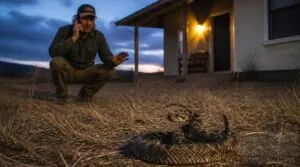
Yielding ground bought you time, now spend it on the phone. Call a licensed snake removal service or wildlife organization trained in venomous handling, not a general pest company.
Give your location, landmarks, and how long ago you spotted it. Confirm your availability, stay reachable for dispatch coordination, and follow their handover guidance until trained help arrives.
Monitor From a Secure Location
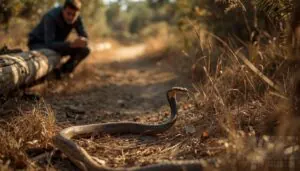
Once help is en route, retreat to a spot 15-20 feet back and settle into pure observation mode. Track its posture, coiling, tongue flicks, for defensive cues, but don’t approach for a better look.
This safe distance from snakes protects you while giving responders accurate, real-time details when they arrive.
Protective Equipment for Trained Snake Handlers
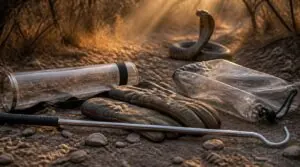
Once you’ve called in the professionals, the real work of staying safe falls on the gear they carry. Trained handlers don’t rely on quick hands or good luck—they rely on equipment built to keep every strike at a safe distance. Here’s what belongs in your kit before you ever approach a venomous snake.
Snake Hooks and Handling Tongs
Your hook and tongs are extensions of your own arms, keeping you 18 to 24 inches from striking range.
Even with that safe distance, knowing exactly what you’re handling matters, so brush up on this venomous snake identification guide before you ever pick up the hook.
Choose stainless steel for corrosion resistance, with a rounded head and deep cup to prevent slipping.
Match hook length, 4 to 6 feet, to habitat. Padded tong jaws grip without injury.
Inspect edges before every session.
Snake-Proof Boots and Gaiters
Your feet and shins sit closest to strike range, so sturdy boots built from 1000D Cordura or layered Kevlar matter as much as any tong. Snake gaiters should extend knee to boot, sealed snug against gaps.
Look for puncture protection tested against real fang force, water management that sheds moisture, and protective clothing (snake-proof pants included) that survives repeated wear without losing rigidity.
Eye and Face Protection
A defensive strike aims for the nearest exposed target, and that’s often your face. Face shields, running from eyebrows to chin, guard against spitting species; goggles alone leave cheeks exposed. Look for:
- ANSI/ISEA Z87.1-2015 impact resistance
- Anti-fog coatings with UV protection
- Ventilation design balancing airflow and sealing
Compatibility standards matter too, especially over prescription glasses.
Protective Clothing Requirements
Your gear is only as strong as its weakest layer. Choose long-sleeve coveralls with high-strength, tear-resistant fabric, breathable and moisture-wicking to keep you cool.
| Feature | Purpose | Spec |
|---|---|---|
| Fabric | Tear resistance | Multi-layer, abrasion-rated |
| Color | Visibility | Fluorescent panels |
| Weave | Cooling | Breathable, moisture-wicking |
| Coating | Water resistance | Treated outer layer |
| Fit | Coverage | Overlaps gloves, boots |
Pair with sturdy boots and snake handling gloves for full coverage.
Handling Tool Inspection and Maintenance
A worn joint or a hairline crack on your snake hook can cost you milliseconds you don’t have. Inspect every tool before use, checking pivots, locks, and shafts for wear.
Wash tongs with hot water and disinfectant after each use, then store them dry on labeled racks.
Log inspections, cleanings, and glove puncture resistance checks religiously.
How Professionals Handle Venomous Snakes Safely
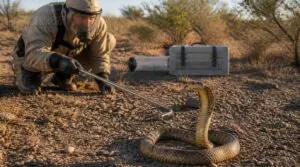
Owning the right gear means nothing if your technique falls apart under pressure, when a coiled body and a flicking tongue demand instant, correct decisions.
Professionals rely on a repeatable sequence—identify, plan, approach, contain—that turns a high-stakes encounter into routine procedure.
Here’s how that sequence breaks down in practice.
Species Identification and Risk Assessment
Under pressure and against the clock, correct species identification determines everything that follows: scale counts, head shape, and pupil form narrow genus fast.
Cross-reference geographic range check data with habitat risk mapping and behavioral threat cues like hooding or tail rattling.
Skipping this step, professionals warn, invites the deadliest mistake in venomous snake training.
Planning Safe Movement Routes
Once you’ve confirmed species and threat level, route planning takes over: trail visibility assessment cuts surprise encounters, while den buffer zones and known hotspot avoidance keep you clear of rock piles and dense brush.
- Mark escape points every 50-100 meters
- Flag safe stopping markers for regrouping
- Choose sightlines over shortcuts, always
Using Distance-Based Handling Methods
With routes mapped, distance becomes your working principle. Keep a 2.5 meter gap minimum, using snake hooks or handling tongs at 18-24 inches beyond strike range.
Place visual markers every 3 meters, deploy rigid barriers, and step laterally, never forward, when repositioning.
Watch for defensive posture: coiling and tongue flicking signal when to hold your line.
Securing Approved Transport Containers
Once the snake holds still, transfer becomes the priority. Use a ventilated containment box with intact security seal tracking and tamper-evident documentation matching handover logs.
- Verify seal serial numbers on arrival
- Inspect latches, drainage, and structural integrity before loading
- Confirm compliance labeling is visible
Complete vehicle loading inspections last, then log any discrepancy immediately.
Snakebite Prevention and Emergency Response
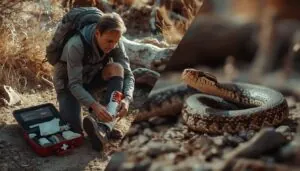
Even with every precaution in place, bites happen, and when they do, what you do in the first few minutes matters more than almost anything else.
Choosing a calmer, more predictable species from the start, guided by this beginner-friendly guide to safe snake species and handling, can make those rare bites far less likely to happen in the first place.
Your response has to be fast, controlled, and grounded in what actually works—not outdated advice passed down from movies or old field manuals.
Here’s what you need to know, step by step, to protect yourself or someone else until real medical help arrives.
Recognizing Possible Envenomation Symptoms
Envenomation rarely stays quiet. Watch for pain progression at the site, spreading swelling, redness, or blistering. Bleeding from gums or puncture wounds signals coagulopathy.
Neurologic symptoms, drooping eyelids, slurred speech, weakness, demand urgent attention. Toxicity escalates fast, so don’t wait for every symptom before acting, since early recognition shapes how well antivenom administration works.
Calling Emergency Services Immediately
Once symptoms surface, don’t hesitate. Call emergency services immediately, dialing 911 (US) or 000 (Australia), even before every sign appears.
Give dispatchers your location, snake description, and bite time. They’ll alert poison control for antivenom dosing guidance and select an ambulance destination stocking appropriate antivenom, since not every hospital carries species-specific treatment.
Keeping The Bitten Limb Still
While waiting on responders, immobilize the affected limb at or below heart level using a pressure immobilization technique:
- Wrap a firm bandage from the bite site upward
- Splint the limb with any rigid object
- Leave fingers or toes exposed for circulation checks
Keep the patient calm and completely still until help arrives.
Avoiding Harmful First-Aid Myths
Old cures kill faster than the venom itself.
Outdated first-aid myths can harm a snakebite victim faster than the venom itself
Skip venom suction entirely, since toxins hit your bloodstream in seconds and mouth contact only invites infection.
Never apply a tourniquet or ice; both concentrate tissue damage and can cost a limb.
Alcohol speeds absorption, and hunting the snake for identification wastes precious minutes doctors don’t need anyway.
Preparing an Emergency Response Plan
A written emergency response plan turns panic into procedure. Post an emergency contact list (911, Poison Control at 1-800-222-1222, nearest antivenom-stocked hospital) where every handler can see it.
Require first aid training and monthly drills covering snakebite first aid, signs monitoring, and equipment checks. Document every incident within 24 hours. Practiced responders save limbs, and lives, when seconds count.
Training, Legal, and Ethical Requirements
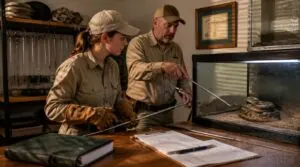
Mastering technique and gear only gets you halfway there—the law decides whether you’re allowed to hold that snake in the first place. Before you ever slip on a glove or reach for a hook, you need to understand the framework of permits, training, and mentorship that legitimizes your handling. Here’s what that path actually requires.
Venomous Snake Ownership Laws
Think owning a venomous snake is just an exotic pet upgrade? Think again. Local ownership bans, species permit restrictions, and strict enclosure security standards vary wildly by state and county.
Before you even consider it:
- Check state and local laws for banned species
- Confirm enclosure meets escape-proof standards
- Verify permit requirements per animal
Skipping legal compliance risks fines, seizure, or worse.
Permits and Certification Requirements
Once your enclosures pass legal muster, the paperwork gets personal. Permits demand documented experience hours, often 500-1000 logged over a full year, plus references verifying your safety record.
You’ll also need proof of insurance and, in many jurisdictions, a Level 1 Venomous Manipulation Certification, awarded only after passing written and hands-on evaluations through accredited bodies like Save The Snakes.
Supervised Hands-on Handler Training
That certification exam doesn’t test theory alone. Progressive exposure training starts you with calm, nonvenomous specimens before you ever approach a hot snake, building tool use proficiency with hooks and tongs under direct supervision.
Hands-on practice sessions layer in emergency drill participation, so supervised skill assessments confirm you can execute handling techniques and don protective gear correctly, every single time, before instructors sign off.
Qualified Mentors and Accredited Programs
Who’s teaching you matters as much as what you’re taught. Vet mentors for verifiable field credentials, years of hands-on experience, and clean safety record verification before enrolling.
Legitimate Venomous Snake Training Programs operate under recognized accrediting bodies, with published curricula reviewed annually and instructors who’ve completed standardized mentor training. Certification renewal, usually every five years, keeps everyone’s skills current.
Ethical Care and Conservation Practices
Certification renewed, your next duty is the snake itself. Ethical snake ownership means husbandry meeting welfare standards, habitat preservation, and conservation education.
- Watching a rehabilitated snake return home
- Supporting species protection through local programs
- Honoring Indigenous knowledge in habitat restoration
Community engagement and transparent welfare reporting strengthen wildlife conservation, proving your expertise contributes to something larger than yourself.
Frequently Asked Questions (FAQs)
Can you handle a venomous snake?
Most venomous snakes strike within three to five feet, faster than you can react. No, without accredited training and certification, you shouldn’t handle one. Legal, ethical, and safety demands require professional tools, permits, and supervised experience first.
How to handle venomous snakes safely?
Safety hinges on safe approach angles, correct tool grip, and reading defensive posture early. Use snake hooks, maintain distance, and let slow, deliberate movement pacing keep you clear of the strike zone at every stage.
How to handle a non-venomous snake safely?
Ironically, non-venomous species deserve the same care: approach from the side, offer gentle body support near head and tail, move slowly, and wash your hands before and after handling.
Is there a venomous snake safety training?
Yes, don’t jump in blind. Programs like the Level 1 Management Certification Course teach species ID, defensive posture recognition, protective gear use, and emergency response, with regional access varying and refresher training required to keep skills sharp.
What equipment do you need to handle venomous snakes?
Your kit hinges on puncture-resistant gloves, a curved-shaft snake hook, padded tongs, sealed goggles or face shields, and reinforced boots, plus regular tool inspection and lubrication to keep every piece reliable.
How do you handle a venomous snake?
Approach from behind, move slowly, and let a snake hook do the work. Support body weight evenly, keep hands clear of striking range, and read defensive postures like coiling or hissing before ever attempting restraint.
Can you touch a venomous snake?
Only trained professionals should ever attempt this, and even then, tools do the touching. Snake hooks and puncture-resistant gloves maintain a safe distance, so no direct contact happens. Skin exposure invites disaster, plain and simple.
What are 3 things you should do if you are bitten by a venomous snake?
Think of every second as antivenom in the bank: call emergency services immediately, keep the bitten limb still below heart level, and remove rings or tight clothing before swelling steals your window for treatment.
Can you survive a venomous snake bite without treatment?
Survival hinges on venom potency, bite location, and whether it’s a true envenoming or a dry bite. Neurotoxic and hemotoxic venoms progress fast, so untreated bites risk paralysis, hemorrhage, or death within hours without antivenom administration.
How do snakes differ by habitat?
A desert kingsnake burrows at noon while a cottonmouth waits in still water nearby. Desert Adaptations favor heat dissipation, forest species climb for cover, and grassland traits plus aquatic features shape hunting, camouflage, and survival strategies.
Conclusion
You might think confidence alone beats caution, but instinct fails where training holds steady.
Handling a venomous snake safely isn’t about courage, it’s about respect for distance, discipline, and equipment engineered for the exact moment fangs meet flesh.
Every hook, every boot, every certification exists because half a second decides outcomes.
Master the fundamentals, trust the protocol, and that porch encounter becomes routine instead of tragedy.
The snake survives.
So do you.