This site is supported by our readers. We may earn a commission, at no cost to you, if you purchase through links.

A snake basking on a rock at 68°F looks lazy, almost harmless. Raise that rock’s surface to 85°F, and the same animal can strike, digest a meal, and hunt within the hour. That’s the reality of ectothermic biology: your body temperature doesn’t run the show, the environment does.
Knowing when do snakes become active isn’t just trivia for hikers and homeowners. It’s a practical safety tool, one built on measurable thresholds, seasonal patterns, and daily rhythms that shift with sun angle and rainfall.
From the 70°F sweet spot that fuels peak foraging to the brumation dens where winter slows everything down, the patterns ahead explain exactly what to expect and when.
Table Of Contents
- Key Takeaways
- What Triggers Snake Activity?
- Snakes Become Active Above 60°F
- When is Snake Season?
- What Time Snakes Come Out
- Climate Shapes Snake Activity
- Frequently Asked Questions (FAQs)
- When do snakes become active?
- What time of day do snakes come out?
- When do snakes go nocturnal?
- When is snake season?
- Do communal brumation groups vary by snake region?
- Can snakes store sperm for delayed fertilization later?
- Do hatchling snakes need parental care after birth?
- What role does shedding play in mating readiness?
- Do male snakes compete aggressively over mating access?
- Conclusion
Key Takeaways
- Snakes are ectothermic, meaning their body temperature and activity level depend entirely on external heat sources like sun and rock surfaces rather than internal metabolism.
- Activity follows clear temperature thresholds: snakes stay sluggish below 60°F, become dormant below 50°F, reach peak activity between 70-90°F, and risk fatal overheating above 95°F.
- Snake season typically runs March through November, moving through spring emergence, summer heat-driven timing shifts, fall feeding for fat storage, and winter brumation (a dormant state similar to hibernation).
- Daily activity timing varies by species and conditions, with diurnal snakes active by day, nocturnal ones after dark, crepuscular species at dawn/dusk, and all types shifting patterns during extreme heat.
What Triggers Snake Activity?
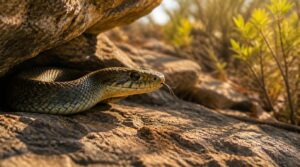
Snakes don’t just wake up and start moving because the calendar says spring. Several biological and environmental factors work together behind the scenes, from body temperature to hunger to the pull of mating season. Here’s what actually gets a snake moving.
Once temperatures climb enough to rouse them, snakes often waste no time seeking a mate, a process explained in detail in this guide on how snakes mate and reproduce.
Ectothermic Body Temperature
Crack open a snake’s biology and you’ll find no internal furnace — it’s ectothermic, pulling heat from the sun, rocks, and soil instead of burning calories to generate it.
- Basking absorbs solar radiation directly
- Conductive surfaces transfer ambient heat
- Microhabitat selection fine-tunes body temperature
This thermal exchange dictates everything: movement, digestion, even whether a snake can react to danger at all. Because they rely on external heat sources, their metabolic rates remain much lower than endotherms.
Warmth and Metabolism
Warmth doesn’t just wake a snake up — it recalibrates its whole engine. As ambient temperature climbs, metabolic rate shifts upward, speeding cellular energy turnover throughout every tissue.
Reptile thermoregulation depends on this: enzymes work faster, oxygen consumption rises, and mitochondrial heat production kicks in. Unlike mammals, snakes lack thermogenic fat activity or hormonal heat regulation to self-warm — their metabolic processes stay entirely borrowed from the environment.
Basking Before Movement
Before a snake moves with any real speed, it basks. This is behavioral thermoregulation in action, not idle sunning.
Flattening its body maximizes surface area, absorbing heat through substrate contact and exposed ventral scales. Dark rock or bare soil intensifies this via substrate heat absorption. Postural thermoregulation, tilting to catch direct rays, fine-tunes the process. Once body temperature climbs, digestion support benefits follow, and movement finally becomes efficient.
Prey Availability
Once basking raises body temperature, a snake still needs a reason to move. Prey availability provides that reason: rodent population cycles peak after wet springs, amphibian emergence follows rain events, and insect abundance surges on warm days. Urban prey patterns (rats, geckos) alter foraging too.
Seasonal drought cuts prey numbers, forcing wider searches—predator-prey relationships that define each snake’s ecological niche and seasonal behavior.
Breeding Season Signals
That reproductive urgency doesn’t happen in isolation—it’s tied to shedding, or molting, which releases chemical cues signaling mating readiness.
- Male competitive aggression during territorial disputes
- Females capable of sperm storage for later fertilization
- Long-distance travel across roads and fields
- Reproductive cycles synced to seasonal warmth
- Neonates independent from birth, requiring no parental care
Snakes Become Active Above 60°F
Temperature isn’t just a comfort setting for snakes, it’s the switch that turns their whole body on or off. Once you know where that switch sits, you can predict how a snake will behave in almost any condition. Here’s how the thermometer breaks down, degree by degree.
Temperature isn’t a comfort setting for snakes, it’s the switch that turns their whole body on or off
Ideal 70°F to 90°F Range
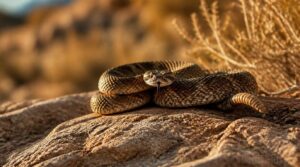
Between 70°F and 90°F, a snake’s body hits peak thermoregulation, converting ambient warmth into sustained energy for hunting and digestion.
Since digestion speeds up in this optimal range, adjusting how often you feed your snake throughout the year is key—this seasonal snake feeding schedule guide breaks down exactly when to shift your routine.
| Temperature | Behavior | Benefit |
|---|---|---|
| 70-75°F | Morning movement | Metabolic efficiency |
| 80-85°F | Peak foraging | Hunting success |
| 85-90°F | Active digestion | Digestive optimization |
| 90°F+ | Shade-seeking | Energy conservation |
That gradient explains why sunlit rocks pull snakes in like magnets.
Sluggish Below 60°F
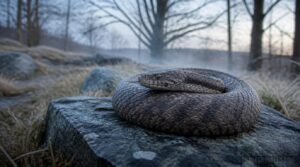
Below 60°F, ectotherms lose their thermal edge fast: metabolic rate drops by a third to half, bringing slowed digestive processes and reduced strike reflexes.
- Shorter, deliberate movements
- Frequent coiling for energy conservation behaviors
- Weaker tongue-flicking response
This temperature-driven lethargy makes snake activity easy to spot once you know body temperature governs nearly everything an ectotherm does.
Inactive Below 50°F

Below 50°F, an ectothermic body simply gives up trying. Metabolic rate drops sharply, muscular coordination declines, and snakes retreat to thermal refuges like burrows or leaf-litter for insulation.
| Temperature | Snake Behavior |
|---|---|
| Above 50°F | Gradual arousal |
| At 50°F | Sheltering begins |
| Below 50°F | Dormant, minimal movement |
| Prolonged cold | Weeks-long dormancy |
| Sustained warmth | Return to activity |
Overheating Above 95°F
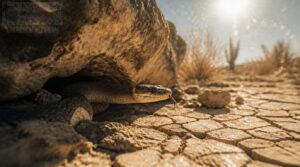
Too much heat kills just as fast as too little. Once ambient temperatures climb past 95°F, snakes face lethal heat thresholds, not just discomfort. Thermal stress overwhelms their thermoregulation strategies, forcing immediate shade-seeking behavior.
Without escape, body temperature spikes dangerously, risking fatal overheating within minutes. That’s why extreme heat survival depends entirely on quick access to cooler microhabitats when environmental temperatures peak.
Safe Pet Snake Temperatures

Captive snakes don’t brumate the way wild ones do, so your job is replicating a stable thermal gradient year-round. Keep the warm side at 85-90°F, cool side 75-80°F, and basking zones at 90-95°F depending on species. Nighttime temps shouldn’t drop below 70°F.
Use calibrated thermometers on both ends—accurate monitoring prevents metabolic stress and helps with healthy thermoregulation.
When is Snake Season?

Snake season isn’t one fixed date on a calendar; it shifts with the year’s own rhythm, tracking temperature and daylight as they change month to month. Your snake’s behavior follows a predictable arc, from first emergence to final retreat underground. Here’s how that cycle unfolds, season by season.
Spring Emergence
How do you know spring’s arrived if you’re a snake? Timing hinges on the last frost date, when soil and air warm consistently. Rising sunlight intensity accelerates the shift out of brumation.
- Frost passes
- Ground warms
- Prey surges (worms, amphibians)
- Foraging resumes
Urban heat islands and sunny microclimates can nudge emergence earlier than surrounding rural areas.
Late Spring Peak Activity
By late May, activity peaks: basking sessions stretch longer, then shift into active foraging across sunlit margins before canopy shade thickens overhead.
Reproductive signaling cues drive courtship movement, while juvenile dispersal sends young snakes toward new hedgerows and rock-warmed edges. Spring prey spikes—amphibians, insects—fuel the hunt.
This is snake season at full tilt, temperature regulation working in your favor.
Summer Heat Adjustments
Peak summer sun forces a shift: once ambient temperature climbs past 95°F, snakes abandon open ground for cooler microhabitats like burrows and shaded rock crevices. Diurnal hunters often flip toward crepuscular behavior, foraging at dawn and dusk instead.
Key adjustments:
- Seek shade or shelter during peak heat
- Hunt when prey metabolism rises (dawn/dusk)
- Prioritize hydration near damp ground or streams
Fall Feeding Period
As dusk foraging fades, snakes turn to intense feeding, building fat reserves before brumation. Environmental cues like cooling temperatures signal this shift, regulating metabolism for dormancy.
| Season | Activity |
|---|---|
| Fall | Intense feeding |
| Fall | Fat storage |
| Fall | Metabolic slowdown begins |
| Fall | Seeking shelter sites |
| Fall | Reduced daily movement |
Winter Brumation
Where do snakes go once the cold sets in? By late fall, dropping temperatures and shorter daylight hours trigger brumation, a winter dormancy where metabolic rate decline slows heart rate, respiration, and digestion.
Sheltered in burrows or leaf litter, called hibernacula, they conserve energy while retaining moisture. Occasional waking allows hydration during dormancy, before gradual emergence resumes normal seasonal activity patterns.
What Time Snakes Come Out

Knowing the season is only half the picture; the clock matters just as much as the calendar. Snakes split into distinct activity groups based on when they hunt, bask, and move, and your own schedule for spotting them—or avoiding them—depends on which type you’re dealing with. Here’s how those daily patterns break down.
Daytime Active Species
Sunlight is a hunting tool for diurnal snakes, powering both eyesight and digestion. Ambient temperature between 70-90°F drives basking behavior patterns and solar digestion benefits.
- Sharp color vision for visual hunting tactics
- Diurnal prey selection: lizards, birds, mammals
- Basking 20-60 minutes before foraging
Sunlight exposure risks force pauses when temperatures climb too high.
Nighttime Active Species
Why do some snakes wait for darkness before they hunt? Heat avoidance drives it. Nocturnal species rely on nighttime scent tracking instead of vision.
| Species Type | Active Hours | Primary Cue |
|---|---|---|
| Night snakes | After dusk | Scent/heat |
| Cave-dwellers | Late night | Temperature |
| Urban colubrids | 9pm–3am | Prey scent |
Moonlight foraging benefits improve navigation without raising predation risk.
Dawn and Dusk Activity
Twilight is the sweet spot between two extremes, and many snakes know it. Crepuscular species, including copperheads and water snakes, time their diel activity pattern around dawn and dusk when temperatures hover near 60–75°F.
This window balances hunting efficiency with safety, since prey emergence overlaps with cooler, moist microhabitats that retain heat without the risk of overheating.
Hot Weather Pattern Shifts
Rigid daily routines don’t survive a heatwave. When blocking highs trap hot air for days, snakes abandon fixed diurnal, nocturnal, or crepuscular patterns for whatever timing keeps their thermal regulation intact.
- Urban heat islands push activity later into darkness
- Nighttime warming erodes the cool recovery window
- Prolonged dry spells force earlier dawn movement
- Heatwave expansion extends this shift across more territory
Pet Snake Activity Cues
Your captive snake’s basking spot tells you more than any calendar. Watch tongue flicking frequency — it rises with warmth and hunger, signaling active scent-driven exploration. Pacing and head elevation mean feeding time approaches; expect post-meal rest afterward as metabolism shifts toward digestion.
Habitat complexity encourages climbing and movement across levels. Cooling temperatures naturally slow behavior, even indoors, mimicking seasonal brumation cues your snake’s body still recognizes.
Climate Shapes Snake Activity
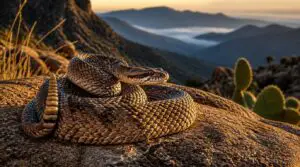
Where you live changes everything about when you’ll see snakes. Latitude, elevation, rainfall, and even the angle of a sun-warmed rock all shift the timeline. Here’s how your local climate sets the schedule.
Northern Shorter Seasons
Winters here don’t just chill the air—they shut the whole system down.
In temperate climates, shortened active windows mean snakes emerge later, often waiting until soils warm consistently in April or May, then retreat again by October.
Autumn refuge preparation kicks in fast, driving snakes toward hibernacula—shared underground dens—for northern brumation patterns that stretch active seasons thin compared to their southern counterparts.
Southern Year-Round Activity
Head south, and the seasonal clock nearly disappears. Daytime highs often hold above 65°F even in winter, letting snakes bask, hunt, and regulate body temperature almost continuously.
Year-round basking spots stay warm, unfrozen water sources persist, and southern prey abundance—paired with human landscape foraging in gardens and yards—keeps activity steady, showing how climatic influence shapes behavior far more than the calendar does.
Rain and Humidity
Rain does more than cool the air—it triggers prey availability shifts as amphibians and insects surface, drawing snakes out to hunt.
Post-rain moisture keeps humidity elevated for hours, and this humidity and metabolism connection matters: moist air reduces water loss during activity, letting snakes forage longer without dehydration risk from evaporation rate impacts.
Sunny Microclimates
South-facing slopes and sun-exposed rocks form their own thermal landscape, often running 10–20°C warmer than shaded soil nearby. That extra solar radiation impact speeds soil warming, so snakes bask longer and regulate body temperature efficiently.
These microclimates also boost plant growth, drawing prey. Faster moisture evaporation means drier basking spots—prime real estate for reptiles seeking steady ambient temperature control.
Elevation and Cool Weather
Why do mountain snakes vanish weeks before their lowland cousins? Altitude thermal gradients drop temperatures roughly 3.5°F per 1,000 feet, delaying emergence from brumation and shortening active seasons.
- Cooler ridgelines
- Wind chill impact
- Sparse basking sites
- Late frost dates
- Compressed feeding windows
Mountainous microrefugia—sun-warmed crevices—offer critical relief, while orographic rainfall effects shape which slopes stay livable through these climatic variations.
Frequently Asked Questions (FAQs)
When do snakes become active?
Frozen stillness gives way to sudden motion: snakes shift from dormant to active once ambient temperature consistently climbs past 60°F, triggering their ectothermic metabolism and prompting basking, hunting, and mating behaviors driven by warmth and seasonal prey surges.
What time of day do snakes come out?
Timing depends on temperature and species: diurnal snakes sun themselves by day, nocturnal ones avoid heat after dark, and crepuscular hunters favor dawn’s temperature rise and twilight, tracking natural circadian rhythms tied to daily animal behavior patterns.
When do snakes go nocturnal?
Picture a rattlesnake trading sun-warmed rocks for cool midnight trails—pure heat stress avoidance.
Snakes shift nocturnal once summer surface temps climb past 95°F, relying on scent-based hunting and behavioral plasticity to track prey after dark, when cooler air and moonlight aid safer, energy-efficient movement.
When is snake season?
Snake season runs March through November, peaking with post-brumation foraging in spring, seasonal mating migrations in early summer, and autumn fat accumulation before winter dormancy—each phase driven by temperature and daylight shifts across regional climates.
Do communal brumation groups vary by snake region?
Solitary in the south, crowded together up north — regional denning patterns shift with latitude.
Cold climates force communal brumation in scarce hibernacula, while warmer regions favor solitary rock outcrops, though shelter type and density still shape pathogen transmission risks.
Can snakes store sperm for delayed fertilization later?
Yes — females use specialized reproductive tract tubules for long-term sperm viability, sometimes years. Genetic lineage analysis confirms delayed fertilization, giving snakes an evolutionary mating advantage: reproducing even when mates are scarce during a given breeding season.
Do hatchling snakes need parental care after birth?
No. Most hatchlings and neonates rely on instinctual hunting skills and rapid dispersal immediately after birth, achieving post-hatching independence without maternal input.
Only rare maternal guarding exceptions, like some pythons, involve brief protection—hardly the norm in typical snake lifecycle events.
What role does shedding play in mating readiness?
It’s not just cosmetic: hormonal shedding cues trigger fresh pheromone scent markers, signaling mating readiness while improved skin flexibility aids courtship.
This drives post-shed vigor, often synchronizing the mating window so reptile pairs connect precisely when reproductive success is most likely.
Do male snakes compete aggressively over mating access?
Rival males often rely on ritualized combat displays, wrestling and posturing rather than biting, to establish dominance hierarchies. Energy trade-offs matter, too, since prolonged bouts drain resources needed elsewhere.
Subordinates sometimes use sneak copulation tactics, though female choice still shapes actual mating access.
Conclusion
Think of a snake as a solar-powered machine: no sunlight, no engine, no movement whatsoever. That’s the whole story behind when do snakes become active.
Below 60°F, the gears stall. Between 70°F and 90°F, the engine runs hot and hungry.
You don’t need to fear the woods; you need to read the thermometer and the calendar closely. Respect the season, respect the hour, and you’ll walk trails knowing exactly what’s stirring beneath that sun-warmed rock.