This site is supported by our readers. We may earn a commission, at no cost to you, if you purchase through links.

Your snake balls up the second you open the enclosure. Strikes at the glass when you walk by. Won’t eat, won’t settle, won’t give you a break. You start wondering if you did something wrong, or if the snake just hates you.
Here’s the truth: most of that behavior isn’t aggression. It’s fear, and fear in reptiles has clear, fixable causes, wrong temps, too much handling, no place to hide.
Learning how to calm a nervous snake starts with reading its body language and rebuilding trust, one small, predictable step at a time.
Table Of Contents
- Key Takeaways
- How to Calm a Nervous Snake
- Recognize Nervous Snake Body Language
- Create a Calm, Secure Enclosure
- Build Trust With Gentle Handling
- Seek Help for Persistent Stress
- Frequently Asked Questions (FAQs)
- How to calm down a stressed snake?
- What smells calm snakes?
- How to pick up a nervous snake?
- What do snakes do when they’re nervous?
- How long does it take to calm a nervous snake?
- Can nervous snake behavior be a sign of illness?
- Do certain snake species get anxious more easily?
- Will a new snake always seem nervous at first?
- Can cage mates cause ongoing stress in snakes?
- Conclusion
Key Takeaways
- Most "aggressive" snake behavior—balling up, striking at glass, refusing food—is actually fear caused by fixable issues like wrong temps, too much handling, or no place to hide.
- A calm setup matters more than any handling trick: keep noise and vibration low, maintain 22-30°C with 40-60% humidity, and give your snake secure hides on both warm and cool ends.
- Build trust gradually with short, predictable handling sessions (2-4 times a week, just a few minutes each), always supporting the snake’s body fully and never gripping or restraining it.
- Watch for red flags that need a vet—like going 3-4 weeks without eating, prolonged open-mouth breathing, or sudden aggression—since these point to illness rather than simple stress.
How to Calm a Nervous Snake

A stressed snake isn’t being dramatic—it’s telling you something’s wrong. The good news? Most fixes are simple and don’t take long to make a difference. Here are five practical steps you can start with today.
Start by learning to recognize signs of discomfort during snake handling, so you can end sessions early and give your snake the recovery time it needs.
If climbing enrichment is part of the fix, it helps to know which species are actually built for it—this guide on why slender snakes climb walls more easily than bulkier ones breaks down what your snake’s body type can realistically handle.
Once you know the common stress triggers, you can work through this guide on how to calm a nervous snake down to build a routine your snake actually responds to.
Reduce Noise and Movement
Before you touch your snake, quiet the room around it. Vibrations and sudden noise read as danger, so:
- Keep voices low and steady
- Set enclosures on stable, wobble-free surfaces
- Add vibration pads underneath to block floor tremors
Even footsteps count. A calm room builds trust faster than any handling trick ever could. Consider using vibration isolation techniques to further minimize disturbances that could stress your snake.
Pause Handling Temporarily
Sometimes the kindest move is to stop. If your snake retreats into its hide mid-session, pause 60 to 120 seconds, hands still, no sudden shifts. This observation window builds trust: watch for calmer breathing before resuming, softer and slower. Give it retreat access always. Log these moments; behavior tracking reveals what actually helps.
Check Temperature and Humidity
While you’re waiting for calmer breathing, check the enclosure itself. Grab a digital hygrometer thermometer combo and place it at snake level, center of the enclosure, away from heat sources.
Target ranges run 22-30°C for most species, humidity around 40-60%. Recheck readings 2-3 hours after any adjustment. A shaky thermal gradient stresses snakes as much as noise does.
Provide Secure Hiding Spaces
Once temps check out, look at hiding options. Every snake needs a secure hiding space on both warm and cool ends, snug enough to feel pressure on all sides.
Good setups include:
- Enclosed retreat areas like cork bark or plastic hides
- Natural substrate for burrowing, coconut fiber works well
- Elevated sheltered platforms for arboreal species
This environmental enrichment turns a bare box into somewhere your snake actually wants to rest.
Allow Quiet Decompression Time
Give your snake a true settling period, no handling, no fussing, just time. Newly stressed or new arrivals need up to two weeks of a quiet recovery period in a secure enclosure with hiding spots.
Keep noise control essentials in mind: no loud sounds for 72 hours. Watch for observation timing cues like calm tongue flicks and normal feeding schedule before resuming handling.
Recognize Nervous Snake Body Language
Your snake can’t tell you it’s stressed, but its body sure can. Every twitch, coil, and freeze is a message, and once you learn to read them, you’ll catch trouble early. Here are the five signs worth watching for.
Since a snake’s stress ceiling varies with age and temperament, it helps to know how much handling your snake can realistically tolerate before those warning signs appear.
A defensive coil paired with a hissing sound, for instance, often means your snake feels threatened rather than simply curious, and knowing how to read defensive snake posture and what it really means can help you back off before things escalate.
A snake can’t say it’s stressed, but every twitch, coil, and freeze speaks for it
Frantic Escape Attempts

A panicked snake acts like it’s testing every seam in a locked room. You’ll see rapid strikes toward gaps, sometimes squeezing through openings just a third of its own girth. Sudden noise or a shadow crossing the tank can trigger this within seconds.
That frantic, body-flexing escape attempt means it’s time to check your enclosure’s security and cut the stimuli.
Defensive Coiling

When your snake pulls into a tight ball with its head tucked under, that’s defensive posturing, not aggression. This coil body language shrinks exposed skin and blocks easy strikes to the head.
Coil triggers include fast hands or sudden noise. Give space, move slowly, and let the coil unwind on its own.
Forcing a handling response now only deepens the stress signal.
Freezing and Hypervigilance

Ever watch your snake go statue-still mid-glide? That’s freezing, a brief pause built to dodge detection while its senses work overtime.
Signs of hypervigilance: rigid muscles, fixed stare, zero response to your voice. This lasts seconds to a minute, then movement resumes, slower and more cautious as it reassesses the room.
What triggers it:
- Sudden shadows
- Loud noises
- Fast movement
- New scents
Tail Thrashing

A thumping tail against the enclosure wall isn’t random, it’s a warning shot.
| Sign | Meaning |
|---|---|
| Rapid thumping | High stress reduction need |
| Rattling motion | Defensive body language |
| Repeated strikes | Insecure enclosure trigger |
Watch for tail thrashing behavior after handling. Gentle handling and trust building calm it fast.
Tense Body Posture

A stiff, coiled body is your snake’s way of saying "back off." Look for neck tension, a shortened, tight neck with the head tilted up, plus body elevation in the front third and rigid coiling with locked segments. You might also see weight shifting toward the tail and tail tightening.
This is a defensive posture, so slow your handling technique down.
Create a Calm, Secure Enclosure

Your snake’s enclosure is her whole world, so it needs to feel safe from every angle. Think of it like childproofing a house, but for a creature that reads the environment through vibration and instinct. Here’s what actually makes a tank feel like a safe den instead of a fishbowl.
Cover Three Enclosure Sides
Think of it as a den, not a fish tank. Covering three sides with matte panels cuts down glare and stray movement, giving your snake real visual security instead of a glass box feeling exposed on every side.
You’ll also notice steadier warmth, tighter humidity control, and less draft, all while leaving the front open for you to watch and enjoy.
Add Warm and Cool Hides
Once the walls feel safer, give your snake somewhere to actually retreat. You need two hides: a warm one near 88-92°F and a cool one closer to 78°F, both sized so they can coil up fully.
This thermal gradient lets your snake self-regulate, choosing warmth or shade whenever stress hits. Check both zones daily with a reliable thermometer.
Match Species Climate Needs
Those hide temps are just a starting point, not gospel. A ball python and a corn snake don’t share the same wild climate, so match your setup to species origin.
If your snake suddenly turns down meals, common signs a snake won’t eat often point back to temperature problems, so catching them early keeps you in control.
Tropical species often want 60-80% humidity, arid ones do fine at 30-50%. Check care sheets, adjust substrate and gradient accordingly, and you’ll support proper thermoregulation instead of guessing.
Minimize Vibrations and Foot Traffic
Snakes feel every footstep through their belly, so vibration matters as much as temperature.
- Route foot traffic away from the enclosure
- Add rubber flooring underlayment beneath stands
- Use vibration isolation pads under the tank
- Skip placing enclosures near speakers or doors
- Try sound-absorbing wall panels in busy rooms
Smart enclosure placement plus real noise minimization keeps your snake’s world calm and predictable.
Avoid Strong Scents
Your snake’s nose is way more sensitive than yours, so that lavender candle isn’t relaxing, it’s a red alert.
| Do | Avoid |
|---|---|
| Fragrance-free substrate | Scented soaps or lotions |
| Natural ventilation | Air fresheners near tank |
| Odor-free cleaning | Perfume before handling |
Watch for gaping or retreating after cleaning, these signal olfactory stress and call for gentler enrichment choices.
Build Trust With Gentle Handling
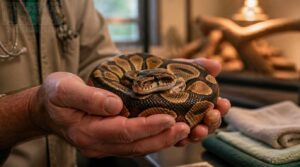
Trust isn’t something a snake hands over freely—you earn it one careful session at a time. Every touch, cue, and hold either builds confidence or chips away at it. Here’s how to handle your snake in a way that says "you’re safe with me.
Approach Slowly From The Side
Coming straight at a snake’s face is like someone charging you head-on: startling. Instead, use the Lateral Approach Technique. Move slowly from the side, keeping motions calm and steady.
- Keep your hand along the body, behind the head
- Minimize eye contact
- Move at an angular, unhurried pace
- Watch for tongue flicks or tightening coils
This Gentle Side Guidance builds trust fast.
Use a Consistent Handling Cue
Before you ever touch your snake, give a soft one-syllable word like "up," paired with slow side contact. This consistent handling cue preps her nervous system for what’s coming.
Use it every session, never during feeding. Track calm responses in a log; that’s cue effectiveness tracking. Once she settles reliably, cue fading can begin.
Support The Snake’s Body
Think of your snake’s spine like a rope bridge: unsupported sections sway and stress her out. Always start with a mid body lift, then let your other hand catch the rest.
- Support the middle first
- Add full length support next
- Never dangle head or tail
Big-bodied snakes deserve two-handed, hand over hand support, gentle handling that builds real trust.
Keep Sessions Short
Five minutes is plenty. Nervous snakes do best with short handling windows, 2 to 4 times weekly, so keep gentle handling brief and predictable.
Same time daily builds trust through consistent session timing. Watch for retreat or relaxing within 2 minutes, then end there.
Brief observation checks between sessions catch stress early, supporting gradual exposure increase without overwhelming her.
Never Squeeze or Restrain
Grip is the enemy of trust. Never pin the head or wrap tight, just cup her with an open palm and let her move through your hands.
- Support, don’t squeeze
- Hands off head and neck
- Loose, guiding grip
- Let her explore your palm
- Stop if she tenses
Nonrestrictive handling builds real confidence, not fear.
Seek Help for Persistent Stress

Most nervous snakes settle down once you’ve made these changes at home. But sometimes stress runs deeper than a hide box or a quieter room can fix. Here are the signs that mean it’s time to call in a vet.
Prolonged Appetite Loss
If your snake skips a meal now and then, that’s normal. But when an adult goes 3-4 weeks without eating, it’s time for a vet visit.
Causes range from stress-induced anorexia to temperature fluctuations or parasites. Track weight loss closely, and set up a quiet recovery environment. Fecal exams and careful monitoring guide the fix.
Open-Mouth Breathing
A gaping mouth isn’t always trouble. If your enclosure runs above 85°F, brief gaping cools your snake down, no other stress signs present.
But persistent open-mouth breathing lasting hours, paired with wheezing, discharge, or elevated head posture, points to respiratory infection or mouth rot. Rule out dehydration too. Anything beyond four weeks needs a reptile vet, don’t wait it out.
Repeated Nose Rubbing
That nose-pressing habit deserves a closer look too. Some rubbing ties to environmental stress, wrong humidity, shallow substrate, or a too-small enclosure pushing your snake to seek an exit.
But once you see clogged nostrils, swelling, or a crinkly rostral scale, that’s real nose damage. Try silver sulfadiazine short-term, then call your vet if it persists past a few weeks.
Sudden Aggression or Self-Injury
A once-calm snake suddenly striking, or biting itself, is a behavioral red flag you can’t ignore. Enclosure changes, pain, or neurological issues can all be medical causes.
Don’t try to sort this out yourself. Separate the snake, dim the lights, and call your reptile vet right away, this needs professional eyes fast.
Finding a Reptile Veterinarian
Trust matters, and not every vet has it with reptiles. Search "reptile veterinarian near me" or check ARAV’s Find-A-Vet directory. Look for board certification (ABVP or ACEPM), in-house labs, and digital radiography.
Ask about emergency referral options too. A good reptile vet provides both crisis care and preventative care, keeping your snake’s stress, and yours, manageable long term.
Frequently Asked Questions (FAQs)
How to calm down a stressed snake?
Picture a snake wound tighter than a coiled spring. Dim the lights, kill the noise, and let it sit still. Reduce sensory triggers, offer a hide, and give quiet decompression time to reset.
What smells calm snakes?
Honestly, no scent truly relaxes a snake, since their olfactory sensitivity picks up danger, not comfort. Skip fragrances near your enclosure entirely and focus on quiet, dim, predictable surroundings instead, that’s what actually eases reptile stress.
How to pick up a nervous snake?
It’s not about grabbing quickly, that only spooks her more. Use a slow side approach, then support her body fully with a gentle grip. A snake hook offers extra distance and control if she’s especially jumpy.
What do snakes do when they’re nervous?
A nervous snake shows clear stress signals: fleeing behavior, defensive coiling, freezing, tail thumping, hissing, and erratic movements. You’ll notice appetite suppression too. Their body language tells you they’re overwhelmed, not aggressive, and need space to settle.
How long does it take to calm a nervous snake?
Give it 2 to 5 minutes for that first session, then watch for real progress over 1 to 2 weeks. Stable temps settle stress in 15 minutes; consistent routines build lasting trust within 7 to 14 days.
Can nervous snake behavior be a sign of illness?
Sometimes, yes. Stress usually fades with habitat fixes, but prolonged appetite loss, tremors, or limp unresponsiveness point to illness. Track behavior patterns closely, and if signs persist beyond a few weeks, get a vet consultation right away.
Do certain snake species get anxious more easily?
Calm on the outside can still mean panic underneath: yes, species anxiety differences are real. Arboreal snakes startle faster overhead, colubrids adapt quicker than big constrictors, and juveniles show heightened stress signals during routine handling techniques.
Will a new snake always seem nervous at first?
Not always. Temperament by species and prior experiences shape that settling period, some snakes relax within days with a stable enclosure, others need weeks of gradual acclimation and low handling frequency before trusting a calm approach.
Can cage mates cause ongoing stress in snakes?
Yes, absolutely. Cage mates trigger territorial marking stress, hiding spot competition, and scent confusion anxiety. Overcrowding and dominance fights, especially between males, keep cortisol high. Most snakes do best solo, given proper space and species compatibility.
Conclusion
Picture your snake finally uncoiling in its hide, tongue flicking slow instead of frantic, body loose against the warm substrate. That’s the goal.
Learning how to calm a nervous snake isn’t about forcing trust, it’s about earning it, one quiet day at a time. Watch the signals, fix the enclosure, and let your hands move slower than your patience. Give it weeks, not minutes.
One day you’ll open that lid, and nothing will flinch. That’s real trust.