This site is supported by our readers. We may earn a commission, at no cost to you, if you purchase through links.

A snake that can’t find the right hide won’t settle, and a stressed snake stops eating. Pick one a size too tight and you’ll see scrapes along its sides. Pick one a size too loose and it never feels secure.
In a bioactive enclosure, the stakes climb higher. Your hide has to survive constant moisture, hold humidity, and welcome the isopods and springtails working your substrate. The wrong material molds, swells, or sells out the week you need it.
Get this choice right, and you control the whole setup. Hide boxes for bioactive habitats start with fit, then material, then placement.
Table Of Contents
- Key Takeaways
- Choose Snake Hide Boxes That Fit
- Compare Hide Box Materials for Bioactive Habitats
- Check Bioactive Hide Box Prices and Availability
- Position Warm, Cool, and Humid Hide Boxes
- Secure Hide Boxes in Bioactive Substrate
- Clean Hide Boxes Without Disrupting Bioactivity
- Frequently Asked Questions (FAQs)
- What to use for bioactive enclosure?
- How do I get rid of fungus gnats in my bioactive enclosure?
- Do bioactive enclosures need bugs?
- Do bioactive enclosures need a drainage layer?
- How many hide boxes does each reptile need?
- Do hide boxes affect springtails and isopods?
- Can hide boxes help with shedding problems?
- Should hide boxes be replaced over time?
- Are hide boxes necessary for every reptile species?
- Conclusion
Key Takeaways
- Choose a hide your snake can coil inside while touching several walls, with an entrance just wider than its thickest point, so it feels secure and avoids scrapes.
- Pick moisture-proof materials like PVC, resin, cork bark, stone, or ceramic, since they resist mold and swelling and won’t harm your springtails and isopods.
- Give your snake a warm hide, a cool hide, and a damp-moss humid hide, and check the temperatures inside each one weekly.
- Press each hide firmly into 4 to 6 inches of substrate, and clean it outside the enclosure with dechlorinated water only so you protect your cleanup crew.
Choose Snake Hide Boxes That Fit

Hide boxes work best when your snake can coil inside and touch several walls at once. That snug contact builds security and cuts stress. Skip the oversized cave. Aim for a hide at least as long as your snake’s coiled body.
If you’re setting up your first enclosure, this guide to ball python hides for first-time owners shows how to size and place each hide so your snake feels secure.
Choose a hide your snake can coil inside while touching several walls, because that snug contact builds security and cuts stress
Check the entrance next. Make it slightly wider than your snake’s thickest point so it slides in and out without abrasions. Hognose and other diggers love entrances level with the substrate.
The Kages Hide Box nails this balance for Reptile habitats. Its Rigid PVC build and nonporous matte finish stay stable on the substrate, and the BIOACTIVE READY design leaves your plants and cleanup crew totally undisturbed. Rigid PVC also offers better heat and humidity retention compared with glass tanks, which helps keep conditions steady in a bioactive setup. Pick the right size today, and upgrade whenever your juvenile grows bigger.
Compare Hide Box Materials for Bioactive Habitats

Your hide box material shapes how well your bioactive setup runs. Each of the three options below gives you a different way to build the ideal shelter for your animal. Pick the one that matches your goals and take control of your habitat.
PVC and Resin Hide Boxes
A Kages Hide Box in Rigid PVC Construction shrugs off moisture, mold, and swelling, so it holds its shape in your humid, bioactive setup. Resin works just as hard. It’s tougher against impact, which matters when you bury a hide or your snake shoves it around.
Whichever material you choose, pick a snug, low-ceilinged shape with a stable base, and these snake hides for bioactive enclosures show how that plays out in a living setup.
Both materials are non-porous, inert, and easy to disinfect. Pick bioactiveready or resinprinted designs and you’re set.
Cork Bark and Wooden Hides
Want something that looks like it grew there? Cork bark is your answer. It’s lightweight, water-resistant, and mold-resistant, so it holds up in humid bioactive setups for years.
Tubes and flats give snakes the tight squeeze they love. Isopods and springtails use it as shelter and snacks. Rinse it, and you’re done. Natural wood never looked this easy.
Stone and Ceramic Hides
Want something built to last? Choose a rock hide.
Stone and ceramic stay cool, resist chewing, and never rot in a humid bioactive setup. Here’s why you’ll love them:
If you’re deciding between materials, this guide to choosing the best water dish for your corn snake breaks down sizing by life stage and which surfaces stay cleanest.
- Stable temperatures keep your snake comfortable.
- Glazed ceramic wipes clean fast.
- Natural rock textures invite climbing.
Pick this secure retreat today, and your snake’s hideaway stays perfect for years to come.
Check Bioactive Hide Box Prices and Availability
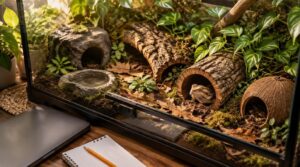
The smartest Bioactive reptile setup starts with a budget you control. Prices vary widely by material, so know your numbers before you shop.
Plastic and resin hides run $3.99 to $63.49, depending on size. Cork bark flats start at $14.95, and tubes begin at $19.95. Coconut caves hold steady at $9.79.
Stock moves fast. Exo Terra caves and NEHERP cork often show "Sold Out," so check availability before you plan your layout. Coconut hides stay reliably in stock.
Shopping for a Kages Formed PVC Reptile Hide Box? Compare retailers, watch for order limits, and grab it when it’s available. Stock won’t wait forever. Your PVC enclosure deserves a dependable Reptile shelter, and your Reptile habitat will thank you for it.
Position Warm, Cool, and Humid Hide Boxes
Place a hide at each end of your thermal gradient, and add a humid hide in between. Your snake shouldn’t have to pick warmth over security, so give it both. Use digital probes to check conditions at animal level, inside every hide.
The Kages Formed PVC Reptile Hide Box suits the warm side, where its heat retention keeps the interior steady without cooking the substrate in your bioactive setup.
Build these three zones:
- Warm hide: Set it at the hot end, away from direct fixture contact, targeting 86-90°F.
- Cool hide: Place it at 72-80°F to support reptile temperature regulation.
- Humid hide: Pack it with damp moss in the middle or cool side, where humidity retention stays high.
Recheck readings weekly.
Secure Hide Boxes in Bioactive Substrate
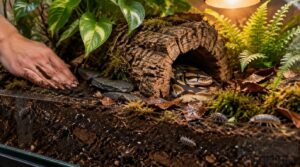
Think of your hide box as a ship’s anchor. Without it, the whole vessel drifts.
Build a secure retreat your snake can trust. Place each hide before planting, then press it firmly into the natural substrate so settling and cleanup crew tunneling can’t shift it.
Keep substrate 4 to 6 inches deep. Compact it lightly around the edges, and bury flat stones beside the base for extra ballast.
| Problem | Sign | Fix |
|---|---|---|
| Voids | Heavy burrowing underneath | Add substrate |
| Tipping | Rocking when touched | Bury flat stones |
Check stability weekly while your bioactive setup matures. Adjust right away by adding fresh substrate underneath, and your reptile shelter stays rock solid. Every hideaway you anchor well rewards you with a calmer, more confident snake.
Clean Hide Boxes Without Disrupting Bioactivity
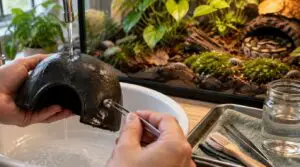
Picture a ball python’s favorite hideaway after three months in a bioactive tank. It looks fine, but a little mold has crept along one edge. Don’t panic, and don’t grab the soap.
Pull the hide out during your snake’s inactive hours and clean it outside the enclosure. Rinse it in dechlorinated water only. Soaps and disinfectants wipe out the springtails and isopods you’ve worked hard to build.
Hides with a nonporous matte finish clean up fast. If you’ve sealed seams with aquariumsafe silicone, check them for wear. Premium reptilesafe materials hold up to regular rinsing, so you stay in control.
Spot-treat mold with tweezers, and rinse hides every few months. Settle it back in, and your bioactive system keeps thriving.
Frequently Asked Questions (FAQs)
What to use for bioactive enclosure?
Picture damp soil, glossy leaves, and springtails drifting through shadow. Build your bioactive enclosure with drainage layer, terrariumsafe substrate, live plants, and a cleanup crew.
Add natural wood, a resin decoration, and a cozy hideaway.
How do I get rid of fungus gnats in my bioactive enclosure?
Fungus gnats can wreck your setup overnight, but you’ve got this. Let the top substrate layer dry, cut misting, and add beneficial nematodes or Bti. Trap adults with sticky cards, and clear leftover food daily.
Do bioactive enclosures need bugs?
Two bug types run your cleanup. Yes, your bioactive terrarium needs springtails and isopods.
They break down waste, stop mold, and feed your plants, so your reptile habitat stays clean, and you’re fully in control.
Do bioactive enclosures need a drainage layer?
A 5 to 3 inch layer is ideal for most bioactive terrarium builds. Tropical setups need a drainage layer with a mesh barrier. Arid reptile enclosures can usually skip it if you carefully avoid overwatering.
How many hide boxes does each reptile need?
Give every reptile at least two hides, one warm and one cool. Leopard geckos need a third, moist hideaway for shedding. Ball pythons do best with two identical hides. Your bioactive reptile habitat then offers real choice.
Do hide boxes affect springtails and isopods?
Hide boxes are the secret handshake of a thriving bioactive habitat. Yes, they affect springtails and isopods, and positively. Your cleanup crew gets shelter, moisture, and breeding space, so they work harder for you.
Can hide boxes help with shedding problems?
Yes, they can. A humid hideaway lined with damp sphagnum moss keeps skin soft during shedding, so old layers come off clean. Place it between warm and cool zones, and check the moss often.
Should hide boxes be replaced over time?
Your hides won’t last forever, and some will vanish faster than you’d believe! In a bioactive setup, natural wood and cork break down in 6-12 months, so swap them. PVC, resin, and ceramic stay put.
Are hide boxes necessary for every reptile species?
Most reptiles do need a hide, but not all. Chameleons and crested geckos feel safest up high in foliage. For nearly everything else in bioactive reptile habitats, add one. The Medium Rock Hideaway for Reptile Terrariums works well.
Conclusion
Picture your snake sliding into a snug, shadowed hide, ribs brushing the walls, springtails drifting across the damp substrate outside. That’s a settled animal in a thriving world.
Choose hide boxes for bioactive habitats that fit the body, shrug off moisture, and stay put in the substrate. Place them across the warm and cool zones. Clean them gently, sparing the colony.
Build it right once, and your enclosure runs itself. Your snake will thank you.