This site is supported by our readers. We may earn a commission, at no cost to you, if you purchase through links.

Here’s the bad news. That gap under your eaves, the one you never bothered to seal? A snake can probably reach it.
Yes, snakes can climb walls, and they’re better at it than most people expect. Rough brick, stucco, even weathered wood, all give a snake’s belly scales something to grip. Smooth glass or tile, on the other hand, stops them cold.
So what separates a wall a snake scales with ease from one that sends it sliding back down? The answer comes down to texture, muscle, and a little reptilian know-how.
Table Of Contents
- Key Takeaways
- Can Snakes Climb Walls? Yes—Sometimes
- How Do Snakes Climb Walls?
- Which Wall Surfaces Can Snakes Climb?
- Which Snakes Climb Walls—and Why?
- How to Prevent Wall-Climbing Snakes
- Frequently Asked Questions (FAQs)
- Can a snake climb a brick wall?
- Can snakes climb cement walls?
- Can snakes climb fences?
- How do snakes climb walls?
- Can rattlesnakes climb walls?
- Can snakes climb walls at night?
- Do snakes climb walls in cold weather?
- How high can a snake actually climb?
- Can baby snakes climb walls too?
- Do snakes climb walls in groups?
- Conclusion
Key Takeaways
- Snakes can climb rough surfaces like brick, stucco, and weathered wood by gripping tiny texture bumps with their belly scales, but smooth surfaces like glass, metal, and tile stop them cold.
- Climbing snakes rely on a push-anchor-pull rhythm called concertina movement, using muscle contraction and flexible bodies to build friction and inch upward.
- Smaller, slender snakes like corn snakes and garter snakes climb more easily than bulky species, since less body mass and more contact area per inch improve their grip.
- You can keep snakes off your walls by sealing entry gaps, installing smooth barriers with an overhang, and removing rodent food sources that attract them in the first place.
Can Snakes Climb Walls? Yes—Sometimes
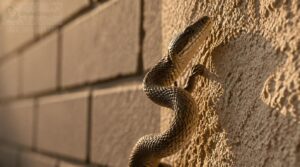
Yes, snakes can climb walls, but not every wall and not every snake. It comes down to texture, species, and body size working together. Here’s what actually decides whether a snake makes it to the top.
If you’re setting up a terrarium for a natural climber, choosing the right climbing branches for your snake’s enclosure can make all the difference in how confidently it grips and explores.
Rough Surfaces Provide Grip
Ever run your hand over a brick wall? Those gritty mortar joints are gold for a snake.
Rough surfaces provide grip through micro asperities, tiny bumps that snag ventral scales. This boosts the friction coefficient and creates micro interlocking resistance. Higher ridge density means better hold. Even sandy stucco offers that grainy roughness advantage snakes need to climb.
Explaining this mechanism clearly, much like researchers aim for clear scientific writing structure, helps readers grasp exactly why texture matters so much to a climbing snake.
Smooth Walls Prevent Traction
Glass and glazed tile flip the script. Zero microtexture means zero grip, and smooth wall friction drops near zero too.
- Glossy surface slip on polished stone
- Coating wear effect on anti-climb paint
- Indoor humidity building slick micro-films
Vertical surface navigation stalls fast once surface texture adhesion disappears. That’s your first real snake barrier, no ridges, no purchase.
Species and Body Shape Matter
Not every snake is built the same, and that matters here. A slender body advantage helps rat snakes wrap and grip. Arboreal species use tails as anchors. Burrow specialists, thick and short, struggle on vertical walls despite strong ventral scales. Flexible spines let some snakes bend around edges. Body shape decides who climbs and who can’t.
Smaller Snakes Climb More Easily
Size matters too. A size advantage helps small snakes pack more contact area per inch of body onto rough walls.
Weight efficiency cuts slip risk, less mass means less pull off the surface. Add flexibility, and their ventral scales lock into tiny ledges fast.
That grip enhancement, built from surface friction, makes climbing ability come almost naturally to smaller species.
How Do Snakes Climb Walls?
So how does a snake actually pull this off? It’s not magic, and it’s not one single trick. Here’s what’s really happening beneath those scales.
Belly Scales Grip Irregularities
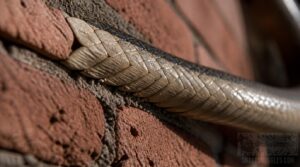
Look closely at a snake’s belly and you’ll see rows of tiny, overlapping plates, not one smooth sheet. Each ventral scale has micro ridges and slight edge serrations that snag rough texture.
Irregular scale patterns mean uneven contact, so grip concentrates where it counts. Ventral shield variation matters too:
- Larger scales spread pressure
- Serrated edges catch on brick
- Flat stretches risk shearing forces on contact
Muscles Anchor and Propel
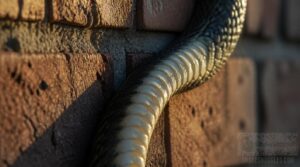
Grip alone won’t get a snake up a wall. It takes muscle contraction rippling along the spine, pulling ventral scales into brick or stucco. Tendons transmit that force outward, while joint mechanics lets each segment push at just the right angle.
That’s exactly why smooth, 24-inch barriers with buried edges defeat this climbing ability so effectively, denying snakes the texture their muscles need to grip—see tips for identifying common garden snake species to know which visitors you’re dealing with.
| Component | Role | Effect |
|---|---|---|
| Muscles | Contract | Propel forward |
| Tendons | Transmit force | Anchor grip |
| Scales | Contact surface | Increase friction |
Concertina Movement Prevents Slipping

Push, anchor, pull. That’s the rhythm behind concertina movement, and it’s what keeps a snake from sliding back down the brick.
Push, anchor, pull: concertina movement is the rhythm that keeps a snake from sliding back down the brick
- Ventral scales grip a crevice
- Muscles tense to hold the anchor
- The tail releases and slides forward
Each cycle rebuilds friction before the next push, turning tiny scale ridges into real climbing traction.
Flexible Bodies Follow Surface Contours
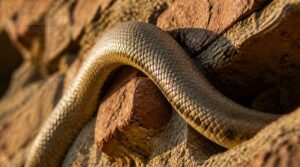
No spine, no problem. A snake’s body contour adaptation lets it bend up to 60 degrees, hugging bumps and dips through rib articulation and segmental bending.
| Wall Feature | Body Response | Result |
|---|---|---|
| Bulge | Curves around | Contact holds |
| Gap | Stretches slightly | No slip |
| Ridge | Presses in | Grip builds |
Ventral scales distribute pressure evenly, so surface adhesion never breaks.
Friction Supports Vertical Movement
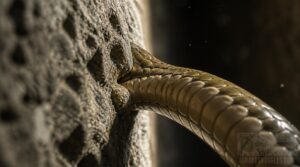
Every climb comes down to one force: friction. Static friction (resistance before sliding starts) has to beat gravity, and it does through scale adhesion against rough surface texture.
Muscle force adds steady pressure, snakes literally squeeze the wall. That normal force, paired with rougher surfaces, builds the grip needed for vertical climbing. No friction, no traction, no matter how flexible the body is.
Which Wall Surfaces Can Snakes Climb?
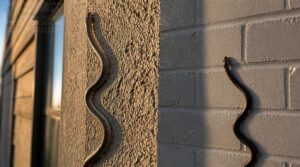
Not every wall gives a snake the same shot at climbing. Texture makes all the difference, and some surfaces might surprise you. Here’s how the most common wall types stack up.
Once you’ve picked the right wall material, decor choices that help reduce stress in pet snakes like snug hides and cover can make the whole enclosure feel safer.
Brick and Mortar Joints
That brick wall isn’t as friendly as it looks, but the mortar helps. Recessed joints (about 3/8 inch deep) give belly scales a ledge to grip. Running bond patterns add texture too.
Deeper, rougher joints mean better traction. Smooth, flush-tooled joints? Much harder.
Bottom line: joint profile and depth decide whether a snake climbs or slides.
Stucco and Rough Concrete
Mortar joints aren’t the only rough option. Stucco texture grip comes from sand mixed into the finish coat, especially sand-finish or skip-trowel styles.
Rough concrete works similarly, its micro-asperities (tiny surface bumps) and exposed aggregate giving belly scales something to press against. Weathering roughens both surfaces further over time, boosting grip where smooth new concrete once offered little traction.
Wood and Stone Walls
Wood offers a different kind of grip. Wood texture grip comes from rails, pickets, and gaps in wooden fencing, especially weathered cedar.
Stone walls work too. Stone ledges and dry stone technique create irregular footholds, though tight ashlar joints offer far less surface friction coefficient than random rubble stacking. Gapless wooden planking blocks climbing entirely.
Glass, Metal, and Tile
Now for the good news. Glass walls stop snakes cold, thanks to near-zero glass surface friction. Smooth metal and glazed ceramic tile grip work the same way: no texture, no traction.
- Glass: fused silica, basically frictionless
- Metal tile: brushed or polished finishes, 3-6mm thick
- Ceramic tile: sealed, low-porosity surface
These count as reliable smooth wall barriers against climbers.
Polished Stone and Plastic
Same story with polished stone and plastic panels. That glossy granite countertop look, once sealed, kills grip almost entirely.
Polished stone friction drops near zero after diamond-pad polishing. Plastic surface grip fails too, since PVC and polycarbonate stay smooth and moisture-resistant. Texture variation matters, though: matte-finish plastic offers slightly more traction than glossy panels, but rarely enough for a snake to climb.
Which Snakes Climb Walls—and Why?

Not every snake is built for wall climbing, but plenty are. Some do it by instinct, chasing food or warmth. Here’s a look at the usual suspects, and what pushes them upward.
Corn Snakes and Rat Snakes
Ever watched a corn snake scale a brick wall like it’s no big deal? That’s vertical hunting in action, chasing rodents and birds into tight corners.
Rat snakes share this skill, favoring rough concrete or stucco over anything slick. Both species overlap heavily with homes, which explains why smooth surfaces and snakeproof fencing work so well against them.
Garter Snakes
Don’t let the name fool you. Garter Snakes are common backyard visitors, but they’re also surprisingly agile climbers.
Their keeled scales grip brick walls and wood fencing well enough to reach siding.
Living near water, they hunt amphibians constantly and show real urban tolerance. Females give live birth nearby, so smooth surfaces and snakeproof fencing matter more than you’d think.
Green and Arboreal Snakes
Picture a leaf that suddenly moves. That’s leaf mimicry at work, and it’s the whole game for tree snakes.
Vertical branch locomotion relies on the same biomechanics of climbing as brick walls, gripping rough surfaces through muscle and scale.
- Canopy nesting behavior
- Humid microclimate preference
- Arboreal foraging strategies
Rarely wall-dwellers, but capable when bark-like texture invites them.
Pet Pythons and Boas
Your ball python or boa can climb too. Boas especially use concertina movement, bunching and anchoring their muscular bodies, on rough enclosure walls or branches.
That’s why enclosure setup matters: smooth glass terrariums limit escapes, but boas still need vertical climbing opportunities. Secure lids prevent surprise wall-climbing adventures around your home.
Food, Warmth, and Shelter
Why bother climbing at all? Three words: food, warmth, shelter. Snakes track rodent scent trails up walls toward prey, or chase warmth from indoor heat leaking through siding.
Cold nights push them toward thermoregulation, seeking warm crevices. Gaps near chimneys or vents mimic natural burrows, perfect nesting sites. Find one motive, and you’ll usually find all three working together.
How to Prevent Wall-Climbing Snakes
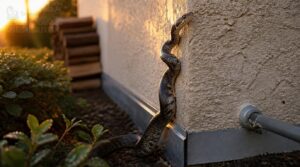
Now for the good news: keeping snakes off your walls isn’t complicated. Most of it comes down to a handful of simple, practical fixes. Here’s what actually works.
Seal Gaps and Entry Points
A snake can’t climb through a gap it can’t find. Caulk utility penetrations, seal pipe gaps with foam backer rod, and screen vent openings with fine mesh.
Repair foundation cracks over 1/8 inch with epoxy or polymer mortar. Install weather stripping on doors.
These small entry points matter more than brick groove depth ever will.
Install Smooth Snake Barriers
Sealing gaps stops sneaky entries, but a smooth snake barrier stops climbers cold. Install rigid panels 6-12 inches tall with a slight overhang, snakes can’t grip a lid with no edge.
Use tight joints and anchor panels into the foundation. Choose UV-resistant materials so your snake fence holds up season after season without warping.
Remove Rodent Food Sources
Barriers help, but rodents undo the work fast. Mice and rats draw hungry snakes right up your wall.
- Secure pet food in sealed bins
- Store harvested grain off the ground
- Clean pantry spills immediately
- Move compost bins away from the house
- Skip open bird feeders near walls
Trim branches, clear clutter, seal wall gaps. Fewer rodents means fewer reasons to climb.
Secure Pet Snake Enclosures
Your outdoor rodent control means nothing if your own snake enclosure has weak points. Escaped pets face the same vertical surface adaptation as wild snakes, testing every gap.
| Feature | Why It Matters |
|---|---|
| Locking lids | Stop pry escapes |
| Sealed door gaps | Block squeeze-throughs |
| Rigid materials | Resist bending |
| Anchored decor | Prevent injury |
| Tested latches | Survive pressure |
Handle Sightings Safely
Even a locked enclosure doesn’t help if you meet a snake face to face outside it. Observe from a safe distance, skip sudden movements, and note location details. Don’t attempt handling.
Call wildlife control or local professionals. Then check entry points, add smooth barriers, and clear yard clutter, solid wildlife exclusion methods for next time.
Frequently Asked Questions (FAQs)
Can a snake climb a brick wall?
Yes. Those mortar joints, usually 10-12 mm thick, give belly scales something to grip. Rough brick texture adds friction, letting overlapping scales push upward using concertina movement, though climbing height still depends on snake species and surface roughness.
Can snakes climb cement walls?
Smooth cement stops a snake cold, yet crack it just slightly and that same wall turns climbable. Surface texture impact matters most: rough, dry joints grip belly scales, while sealed or wet cement offers zero traction.
Can snakes climb fences?
Fences aren’t off limits. Wooden fences with rough grain give ventral scales grip, while smooth vinyl or metal panels stop most species.
Juvenile snakes and slimmer climbers, like garter or corn snakes, scale rough fencing far easier than bulky adults.
How do snakes climb walls?
No claws, no suction cups, yet it works. Ventral scale grip catches microtexture, while muscular propulsion and concertina motion push the body upward. Body flexibility and directional friction turn simple scales into a slow, deliberate climbing machine.
Can rattlesnakes climb walls?
Rattlesnakes climb rough walls like brick or stone using belly-scale grip. Smooth surfaces stop them cold. Bigger bodies lose stability, so juveniles climb more easily, and warm temperatures improve traction on textured walls.
Can snakes climb walls at night?
Funny thing, the same night shift that sends you to bed is prime time for a hunting snake. Darkness doesn’t slow it down. Nocturnal grip mechanics run on texture and touch, not eyesight, so rough walls stay climbable after sundown.
Do snakes climb walls in cold weather?
Cold slows things down fast. Most snakes settle into brumation, a low-energy dormant state, and skip climbing altogether. A sunny winter afternoon can warm brick or stucco enough to tempt a brief, short-lived ascent.
How high can a snake actually climb?
No superpowers here. Height depends entirely on grip. Arboreal species reach the canopy on rough bark, while ground snakes on a smooth brick wall rarely clear a few feet before surface texture limits their climb.
Can baby snakes climb walls too?
Yes. Hatchlings rely on the same ventral scale grip as adults, though smaller contact area means limited juvenile grip strength. On brick or stucco, texture compensates, letting tiny bodies push into ridges and climb steadily upward.
Do snakes climb walls in groups?
Don’t expect a slithering committee meeting. Snakes prefer solo missions, not synchronized ones. Multiple snakes on a brick wall means shared texture and opportunity, not teamwork, each one relying on its own concertina movement toward separate goals.
Conclusion
A wall is just a puzzle to a snake, and rough texture is the key that unlocks it. So, can snakes climb walls? Yes, given enough grip and a reason to bother.
Smooth siding, sealed gaps, and a rodent-free yard turn that puzzle into a dead end fast. Seal the cracks, skip the clutter, and most snakes move on. Your house doesn’t need to be a ladder. Just make it boring.