This site is supported by our readers. We may earn a commission, at no cost to you, if you purchase through links.
Your ball python’s eyes just turned milky blue overnight, and its once-vibrant pattern faded to a dusty gray. Don’t panic, and don’t reach for tweezers. What you’re watching unfold is one of nature’s most precise biological processes, a sequence your snake has run flawlessly since hatching.
The stages of snake shedding follow a predictable rhythm, from dulling skin to that final, satisfying slither out of last week’s coat. Each phase leaves clues about your snake’s health, its hydration, and whether trouble’s brewing beneath the surface.
Once you learn to read these signs, you’ll never look at a "blue" snake with worry again.
Table Of Contents
- Key Takeaways
- Why Snakes Shed Their Skin
- Shedding Frequency and Cycle Length
- Stage One: Early Pre-Shed Signs
- Stage Two: Cloudy Blue Phase
- Stage Three: Clear Phase Changes
- Stage Four: Active Skin Sloughing
- Stage Five: Post-Shed Recovery
- Preventing Problems During Every Stage
- Frequently Asked Questions (FAQs)
- How long does a snakes shedding process take?
- Do snakes eventually stop shedding?
- How do I know my snake is done shedding?
- How long after shedding can you handle a snake?
- Can you help a snake shed faster?
- Is it normal to shed while soaking?
- Why does a snake eat its shed skin?
- Can stress or handling delay a shed cycle?
- Should you bathe a snake during blue phase?
- Conclusion
Key Takeaways
- Because a snake’s skin can’t stretch to grow, it has to periodically shed the whole outer layer, moving through five distinct stages from dulling colors to a full-body slough.
- Watch for the telltale sequence of warning signs, dull skin and a pink belly, followed by milky blue eyes, then clearing eyes while the skin stays dull, before active peeling finally begins.
- Keeping humidity between 50-70% with a humid hide and rough rubbing surfaces is the single biggest factor in preventing stuck shed, retained eye caps, and other incomplete-shed problems.
- After shedding, give your snake 24 to 72 hours to drink, explore, and settle before resuming handling or feeding, and always check the discarded skin for intact eye caps and a clean tail tip to confirm a healthy shed.
Why Snakes Shed Their Skin

Skin doesn’t stretch the way yours does, so your snake has to shed it to grow. That single fact drives everything else about how these animals live and change. Here’s what’s really going on beneath that old, dulled-out layer of scales.
The shedding cycle also affects your snake’s behavior and stress levels, and understanding snake bites and what triggers defensive strikes can help you avoid getting nipped during that vulnerable in-between phase.
Since those rigid scales won’t budge, tracking your snake’s shedding frequency and growth patterns can help you spot whether it’s developing right on schedule.
A snake’s skin can’t stretch to grow, so it sheds the old layer to make room for the new
Natural Growth and Skin Renewal
Beneath every scale, your snake’s skin never stops working. Epidermal cell turnover replaces worn tissue as new cells migrate upward, driving keratin layer formation and melanocyte pigment distribution. This process relies on:
- Hydration-dependent elasticity
- Nutrient-driven renewal rate
- Consistent skin regeneration
- Regular skin inspection
Juvenile snakes renew faster than adults, shaping shedding frequency throughout life.
Lifelong Scale Replacement
That renewal never really stops. Your snake carries two scale systems working on different clocks: soft contact scales renewing yearly, and rigid plate scales replacing over multi-year cycles.
Growth zones push new keratin outward while melanocytes rebuild pigment patterns, and increased blood supply fuels each shedding cycle from the inside out.
Shedding as a Health Indicator
Watch how your snake sheds, not just when. A clean shed with intact eye caps and tail tip signals good health; incomplete sheds or retained skin often point to dehydration, low humidity, or dysecdysis.
Track these red flags:
- Retained eye caps past 48 hours
- Appetite loss beyond a week
- Dull skin lasting over 10 days
- Patchy, unshed skin near the tail
- Repeated incomplete sheds within one year
Providing a humid hide with damp substrate can really improve shedding success by maintaining proper moisture levels.
Shedding Frequency and Cycle Length
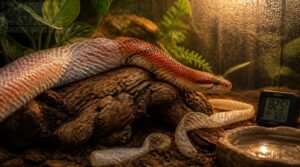
No two snakes shed on the same clock, and that’s by design, not accident. Several factors work together to speed up or slow down the cycle, from how fast your snake is growing to what’s happening in its enclosure. Here’s what actually drives the timeline.
Growth spurts alone can outpace even elite athletes—if you’re curious how a snake’s speed stacks up against a human sprinter, check out this breakdown of how fast snakes really move compared to Usain Bolt.
Age and Growth Rate
Age drives shedding speed more than almost anything else. Hatchlings and juvenile snakes shed every few weeks, fueled by rapid juvenile development and steady feeding frequency. Adult snakes slow considerably, shedding just a handful of times yearly.
Why? Annual size increments average 8-12%, so growth spurts taper as metabolic influence shifts from expansion to maintenance.
Species and Individual Variation
No two snakes read from the same shed schedule, even within one species. Ball pythons might slough every 6-8 weeks, while their cousins vary by geography and genetics.
You’ll notice color pattern variation, scale thickness differences, and eye color shifts between individuals. Shed duration itself ranges widely, hatchlings and juveniles finish faster than subadults or adults, whose thicker, tougher scales demand more time and effort to release completely.
Health and Nutrition Factors
What’s on your snake’s plate directly shapes shed quality. Diets need 30-50% crude protein for keratin production, with juveniles requiring the higher end to fuel rapid growth. Since proper nutrition depends on stress-free feeding, using appropriately sized feeding tongs helps your snake eat consistently and get the protein it needs for healthy sheds.
Vitamin A helps eye clarity and epithelial renewal, while a proper 2:1 calcium-phosphorus ratio prevents retained patches.
Poor nutritional status and dehydration remain leading causes of incomplete sheds.
Temperature and Humidity Effects
Think of your enclosure as a tiny weather system you control. Keep temperature around 28-32°C along a proper temperature gradient, and hold humidity between 50-70% using misting, moist substrate, and a humid hide. Sudden RH drops dry out skin fast, while readings above 75% invite mold. Stable microclimate conditions mean smoother, more predictable sheds.
Stage One: Early Pre-Shed Signs

Before your snake ever looks ready to shed, it starts dropping hints. Four to seven days out, its body sends up a handful of early warning signs, some obvious, some easy to miss. Here’s what to watch for.
Dull Skin and Faded Patterns
Look closely at your snake’s scales days before shedding, and you’ll notice the shine just isn’t there. Color intensity loss happens as fluid builds between skin layers, blurring pattern edges into grayish tones. Dry enclosures worsen this dulling, since low hydration robs scales of luster.
Older snakes fade more subtly, but pre-shed dulling always signals new skin forming underneath.
Pinkish Belly Coloration
A soft pink flush along the belly often shows up before any other sign. This comes from increased ventral blood flow as skin loosens, paired with a subtle pigment shift in ventral markings. It’s most visible in pale species and juveniles, where faster turnover makes scale patches easier to spot.
- Check belly scales in bright, diffuse light
- Compare against baseline glossiness assessment
- Note species differences in intensity
- Watch for pairing with dull patterns
- Track timing against your shed calendar
Reduced Activity and Appetite
Ever notice your snake ignoring food it normally devours? That’s a metabolic energy shift, redirecting resources toward skin biosynthesis instead of digestion or movement.
| Sign | Typical Onset | Duration |
|---|---|---|
| Food refusal | Day 1-2 pre-shed | Until shed completes |
| Sluggish movement | Day 2-3 | 4-7 days |
| Reduced feeding frequency | Immediate | Full pre-shed phase |
Juveniles show stronger behavioral suppression than adults, sometimes staying still for 48 hours.
Increased Hiding and Irritability
Alongside that appetite drop, your snake starts vanishing into hides for hours, seeking secure, dark spaces. Approach it and you’ll notice tighter coiling, quick head jerks, even tail vibration, all defensive posturing warning you off. This irritability stems from heightened stress sensitivity. Species vary: some flatten their bodies, others gape. Either way, limit handling now; forcing contact only escalates the stress response.
Stage Two: Cloudy Blue Phase

A few days after the dullness sets in, your snake’s eyes will fog over into a milky blue haze. This is the phase where handling gets tricky and instincts get sharper, so knowing what’s happening beneath the surface matters. Here’s what you need to watch for and how to handle your snake safely through it.
Blue-Tinted Cloudy Eyes
A milky curtain settles over your snake’s eyes now, turning them blue-tinted and opaque. This comes from eye lens hydration and fluid buildup between old and new skin. Expect:
- Reduced vision
- Increased defensiveness
- Sensitivity to handling
- Strike-ready posture
Keep humidity between 50-70%, use a humidity hide, and handle gently until clarity returns.
Fluid Beneath Old Skin
That cloudiness isn’t just eye deep. Beneath the old skin, fluid buildup separates layers, boosting elasticity so the shed peels off in one continuous sheet.
Hydration drives this: well-moisturized snakes show a pale, slightly puffy sheen, while dehydrated ones risk tearing.
As shedding nears completion, fluid layer reabsorption tightens new skin against the body, readying it for what’s next.
Limited Vision and Defensiveness
With fluid clouding both eyes, your snake’s world turns to blur, and its behavior shifts fast. Expect a rigid, coiled posture, tail flicks, and a shorter fuse than usual.
Blind spots breed defensiveness, not aggression. Approach slowly, avoid sudden motion near the head, and let hiding behavior run its course until vision sharpens again.
Safe Handling and Feeding
Restraint, not routine, guides you here. Handle only if necessary, keeping sessions brief and hands slow.
- Rigid, unresponsive coils
- Tongue flicks searching blindly
- Tense, guarded posture
- Reluctant, sluggish movement
Skip feeding now; appetite loss is normal during this window. If your snake strikes, use tongs, never fingers, and let the shed finish before resuming meals.
Stage Three: Clear Phase Changes
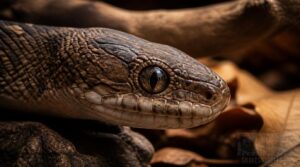
After a few days of that milky-eyed haze, something shifts, and your snake’s eyes clear up almost overnight. Don’t be fooled, though, the skin itself hasn’t caught up yet. Here’s what to watch for as your snake edges closer to the main event.
Eyes Return to Normal
That murky blue haze lifts almost overnight. Eye clarity restoration happens fast: your snake’s spectacles turn glassy and bright again as the old cap separates fully from the cornea beneath.
Pupils snap back to normal light response within hours. Watch closely and you’ll notice smoother, more deliberate eye movement, proof that vision has stabilized after days of blurred sight.
Skin Remains Dull
Even though your snake’s eyes have cleared, don’t expect matching skin. Dullness lingers because dead skin cells still coat the surface, blocking light reflection and flattening scale sheen.
Underneath, fresh tissue awaits skin separation. Poor hydration, cramped enclosure setup, or nutritional gaps can worsen that faded look, so keep humidity steady even after the blue phase fades. Patience pays off here.
Shedding is Approaching
Clear eyes don’t mean clear sailing. This final stretch of Clear Phase confirms sloughing is imminent, usually within days.
Dull skin patterns persist, appetite decrease continues, and reduced activity remains typical. Watch humidity levels closely now, since a successful shed depends heavily on adequate moisture. Your snake senses what’s coming, even if it can’t tell you outright.
Continued Hiding Behavior
Why does your snake keep vanishing into the same dark corner? Refuge fidelity runs strong now, driven by energy conservation and stress reduction.
Picture the pattern:
- Tight, dark hides shielding lowlight comfort
- Thermal refuge near steady heat
- Minimal movement, quiet body language
- Defensive posture if disturbed
- Same spot, visit after visit
Refuge duration stretches longer as shedding nears. Let it be.
Stage Four: Active Skin Sloughing
Now the real work begins, and your snake knows it. What started as loosening skin becomes a full-body effort, from the first rub against a rock to the final tug at the tail. Here’s what that process looks like, step by step.
Head Rubbing Begins

Once the Blue Phase clears, watch for your snake pressing its snout into rough decor. This head rubbing creates friction that loosens facial skin first, an irritation relief outlet during Shedding.
Rough bark or rock provides ideal rubbing surface texture. Keep humidity between 50-70% to ease head snout contact and prevent Stuck Shed from retained skin around the jaw.
Skin Rolls Inside-Out

With the snout loosened, the real work starts: inside-out rolling. Old skin peels back at the head and curls backward like a sleeve turning inward, exposing fresh scale texture beneath. Fluid buildup between layers eases this skin separation. Eye caps release naturally during the roll, detaching cleanly as muscular pushing drives the shed further down your snake’s body.
Muscular Body Undulations
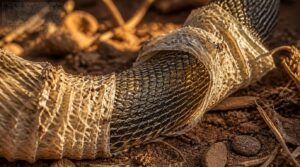
Peeling alone won’t finish the job. Rhythmic wave propagation drives the shed backward, muscle contraction cycles alternating along the spine.
- Skin separation accelerates with each wave
- Terrain interaction grips loose material
- Speed varies as amplitude shifts
- Directional stability keeps rolling straight
- Muscular pushing forces the sleeve free
This sloughing behavior, body language and all, sets up eye cap release next.
Eye Caps Shed Naturally
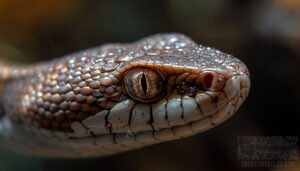
As that wave reaches the head, eye caps release right along with it, the thin scale simply lifting free once surrounding skin loosens. Natural shedding rarely leaves fragments behind, if humidity stayed in range.
| Sign | Meaning |
|---|---|
| Clear cap | Healthy release |
| Cloudy patch | Retained cap |
| Bright eye | Good eye health |
Tail Tip Detaches Last
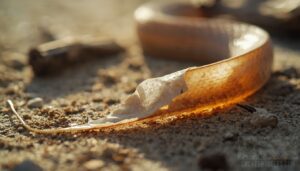
Last of all, the tail tip releases, often lagging behind in delayed color change and looking briefly pale before the final shedding seam parts.
- Preserves tail tip integrity
- Confirms complete inside-out shedding
- Useful for shed skin comparison
- Signals healthy scale health indicators
- Marks true shedding cycle phases end
Tail tip release timing tells you the slough finished cleanly, nothing retained.
Stage Five: Post-Shed Recovery

Once the last strip of skin drops away, your snake steps into a whole new chapter. The hard part’s over, but your job isn’t quite done yet. Here’s what to watch for and check as recovery unfolds.
Brighter Colors and Patterns
Ever notice how a freshly shed snake looks freshly painted? That’s no illusion: melanophores reorganize, sharpening dorsal contrast and scale margins.
| Before Shed | After Shed |
|---|---|
| Dull, faded | Vivid new scales |
| Blurred bands | Crisp pattern edges |
| Pale belly | Brighter belly coloration |
| Matte texture | Glossy scale texture |
Reds and yellows intensify within days as pigments mature and guanine crystals catch the light.
Increased Activity and Drinking
Once the skin’s off, watch your snake come alive. This post-shedding energy surge drives exploration and faster movement patterns.
Within 24 to 72 hours, water intake frequency climbs sharply, a hydration recovery period that restores tissue moisture and deepens skin color. Keep the water basin full and consider misting; a well-designed enclosure setup encourages this drinking behavior naturally.
Inspecting Eye Caps
Grab that discarded shed and check the head first: two clear, dome-shaped eye caps should sit intact within the skin. If your snake’s eyes look clouded or a fragment remains stuck over the cornea, you’re dealing with retained eye caps, a sign of incomplete shedding.
Gentle handling and a moist cloth resolve minor cases; persistent clouding warrants a reptile vet visit.
Checking The Tail Tip
The tail tip detaches last, so it deserves its own tail tip check. Look for a clean, dry edge with no clinging film. Retained shed here often looks translucent and sticky, a classic dysecdysis indicator. Healthy scales feel hard, glossy, and match surrounding color recovery. Any dullness, stuck fragments, or reduced mobility signals trouble worth monitoring.
Resuming Handling and Feeding
Patience pays off here. Wait until bright colors hold steady for three consecutive days before resuming daily handling, and offer that first meal 48-72 hours post-shed at 78-82°F.
- Confirm clear eyes
- Check active exploration
- Verify feeding response
- Limit sessions to 10 minutes
- Support the whole body
Preventing Problems During Every Stage
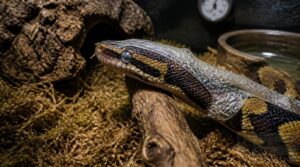
Knowing the five stages is one thing; keeping your snake healthy through all of them is another. Most shedding problems come down to a handful of preventable setup issues, not bad luck. Here’s what to check in your enclosure before trouble starts.
Maintaining Proper Humidity
Think of humidity as the WD-40 of shedding, without it, old skin grips tight instead of sliding free. Keep levels at 50-70%, checked twice daily with a calibrated hygrogrometer.
| Humidity | Result | Fix |
|---|---|---|
| Below 40% | Stuck shed | Mist, add moisture |
| 50-70% | Clean slough | Maintain steady |
| Above 80% | Mold risk | Increase airflow |
Providing a Humid Hide
A humid hide does more than a hygrometer reading ever could, it gives your snake a spot to sit inside the humidity it needs.
- Size hide 4-8" for body fit
- Layer damp coco coir 1-2" thick
- Place on warm side, elevated
- Mist daily, checking for mold
Adding Safe Rubbing Surfaces
Rough surfaces matter as much as humidity. Add cork board or 60-grit sandpaper panels near the humid hide, letting your snake initiate rubbing wherever it settles. Hardwood ramps and sisal rope also work.
| Material | Texture | Durability |
|---|---|---|
| Cork board | Rough | 6-12 months |
| Sandpaper | Coarse | Daily use |
| Ceramic tile | Textured | Long-lasting |
Recognizing Retained Shed
Rubbing surfaces help, but check the results. Run your fingers along the body: loose facial skin, whitish belly patches, or cloudy eye retention signal dysecdysis. Retained eye caps look like clouded discs long after the blue phase fades. Dull patches or an incomplete tail shed mean trouble too. This quick skin integrity check, paired with steady hydration, catches problems before they compound.
Seeking Reptile Veterinary Care
If home fixes fail, don’t wait. Persistent dysecdysis, retained eye caps, or skin infection signs (redness, discharge) warrant a reptile specialist, not a general vet. Book within two weeks of any red flag; bring a fresh fecal sample for parasite screening.
Respiratory distress, lethargy, or refusal to eat are emergency signs requiring immediate diagnostic testing and secure, temperature-stable transport.
Frequently Asked Questions (FAQs)
How long does a snakes shedding process take?
Expect the full cycle to run 7 to 14 days, with active sloughing wrapped up in just one to three days. Growth rate, humidity, and species all shift that timeline, and juveniles usually shed faster than adults.
Do snakes eventually stop shedding?
Like a snake’s own hourglass, its skin marks time itself. Snakes rarely stop entirely: lifelong shedding cycles persist, though age-related reduction slows the pace. Ultra-elders may pause shedding for long stretches as growth and metabolism wind down.
How do I know my snake is done shedding?
Check for clear vision restored, glossy smooth skin, and a clean tail tip with no dull patches. Compare shed skin for completeness. Active exploring and returning appetite confirm your snake’s finished, no eye cap retention lingering.
How long after shedding can you handle a snake?
Ironic, isn’t it? The snake that just spent a week hiding from you now needs more space. Wait 24 to 72 hours post-shed. Confirm bright eyes, calm posture, and stable appetite before resuming gentle handling.
Can you help a snake shed faster?
Yes. Keep humidity between 50-70%, offer a lukewarm soak, and provide rough surfaces for rubbing. Moisture-retaining substrates and steady hydration soften old skin, speeding a clean, complete shed naturally.
Is it normal to shed while soaking?
Picture a snake in a Victorian bathtub, easing skin loose like an old telegram peeling off its envelope. A lukewarm soak softens skin, aiding an already progressing shed, not triggering one. Hydration matters, but soaking alone won’t start the process.
Why does a snake eat its shed skin?
Eating shed skin helps nutrient recycling, reclaiming keratin and minerals, aids parasite removal, boosts hydration recovery, and limits scent trails for predator avoidance, all while conserving energy your snake needs during ecdysis and rapid growth.
Can stress or handling delay a shed cycle?
Absolutely. Cortisol elevation delays shed onset, and handling near the blue phase can stretch pre-shed by 1 to 4 days. Chronic stress compounds this, so gentle handling and a calm, low-stress environment keep your snake’s cycle on schedule.
Should you bathe a snake during blue phase?
Generally, no. Blue phase already stresses your snake, and bathing adds unfamiliar handling on top of that. Rely on humidity alternatives like a humid hide instead, unless shed is clearly stuck.
Conclusion
Your snake’s little wardrobe change is really a biological report card, one you now know how to read.
Each of the stages of snake shedding tells its own story, from cloudy eyes to that final papery husk left behind. Trust the process, watch for retained caps, and keep humidity steady.
Master this rhythm, and you’re not just a keeper anymore. You’re fluent in a language written in scales.