This site is supported by our readers. We may earn a commission, at no cost to you, if you purchase through links.
Somewhere between 5 and 6 million people get bitten by snakes every year. That number sits quietly in global health reports, largely ignored until it isn’t — until it’s you, or someone hiking three feet ahead of you on a trail. Snake bites kill up to 138,000 people annually, and leave another 400,000 with permanent disabilities, making this one of the most underestimated medical emergencies on the planet.
The tricky part isn’t identifying a rattlesnake in a zoo enclosure. It’s knowing what to do in the 60 seconds after a strike in the field, when panic hits faster than pain and bad instincts feel like good ones.
What you do immediately after a bite matters far more than what bit you. The symptoms, the first aid steps, the myths that can genuinely make things worse — it all connects. This is the complete picture.
Table Of Contents
- Key Takeaways
- Why Snake Bites Happen
- Venomous Vs. Nonvenomous Snake Bites
- Snake Bite Symptoms and Emergency Warning Signs
- Snake Bite First Aid, Treatment, and Recovery
- Snake Bite Prevention, Facts, and Videos
- Frequently Asked Questions (FAQs)
- What are the 7 principles of snake bite management?
- What part of the body do snakes bite most often?
- What are some of the most dangerous venomous snakes globally?
- How long can a snake go without eating?
- Why do snakes flick their tongues?
- How do snakes hear and smell?
- Why do snakes shed their skin?
- What should you do if you see a snake?
- Can all snakes climb trees or swim?
- How do you handle a snake safely?
- Conclusion
Key Takeaways
- Snake bites kill up to 138,000 people annually, yet most strikes happen because a snake felt cornered — back away fast and you eliminate most of the risk.
- What you do in the first 60 seconds matters more than identifying the snake: stop moving, call emergency services, and immobilize the limb at or below heart level.
- Skip the movie first aid — cutting, sucking, icing, or tourniqueting a bite wound actively makes things worse and can cause permanent damage.
- Antivenom is the only real defense against venom in your bloodstream, and it works best within 2 to 6 hours, so getting to a hospital fast isn’t optional — it’s everything.
Why Snake Bites Happen

Snakes don’t go looking for trouble — you just have to stumble into theirs. Nearly every bite comes down to a handful of predictable situations, most of them completely avoidable once you know what to watch for. Here’s what actually puts people at risk.
Understanding what triggers a snake to strike makes it much easier to recognize and sidestep the situations that lead to most bites.
Defensive Strikes and Warning Behavior
Snakes don’t want to bite you. Every strike is a last resort, triggered purely by fear. Before they do, most give clear warnings:
- Rattling or hissing means back off
- Coiled posture signals readiness to strike
- Mouth gaping is a bluff display
- Rapid retreat stops most bites cold
Their strike range is only 20 to 45 centimeters long. Step back fast.
Accidental Encounters in Hidden Spaces
Most bites happen not from aggression but from surprise. You step on one in overgrown brush, reach into a woodpile or garden edge, or open a basement box to find one coiled inside.
Crawl spaces, attic vents, and HVAC ducts give snakes easy indoor access. When you disturb stored items, you’re the surprise. That’s why careful, deliberate movement matters most. In fact, most wild snake bites occur when a person harasses, kills, or attempts to handle the snake rather than simply encountering it.
Seasonal, Habitat, and Weather Risks
Timing and temperature shape your risk more than most realize.
- Spring (March-April): snakes leave brumation sites, making up 22% of annual ER visits
- Summer heat above 90°F drives snakes nocturnal, shifting most encounters to evening hours
- Fall migration toward hibernacula creates crossing corridors, driving 26% of ER visits
- Temperature link: each 1°C rise correlates with roughly 6% more bite incidents
Handling and Provocation Risks
Most pet snake bites happen when you reach into a hiding spot unannounced or handle too soon after feeding. Snakes detect food scent on your skin, making unwashed hands a defensive trigger.
| Common Mistake | Safer Practice |
|---|---|
| Reaching into enclosure by hand | Use a snake hook first |
| Handling within 48 hours of feeding | Wait the full 48 hours |
| Gripping the head or tail | Support the entire body |
| Moving fast near an alert snake | Slow down, watch tongue flicks |
| Food scent on hands | Wash hands, use feeding tongs |
A calm approach and sessions two to three times a week build real trust over time. Outdoors, keep six feet of distance from any snake you spot.
If you ever come across a clutch while keeping your distance, remember that snake eggs tend to look more stretched, and this guide to snake eggs versus lizard eggs explains how to tell them apart.
High-Risk People and Environments
Risk concentrates wherever people and snakes share cover, food, or water.
- Landscapers face the highest occupational snakebite risk, 28% of cases.
- Zoo Workers experience 24% of venomous workplace bites.
- Arizona records 13 cases per 100,000 outdoor workers.
- Farmers face agricultural snakebite incidence in tall crops.
- Suburban Developments increase urban snake encroachment, habitat fragmentation snakes, monsoon snake activity. Stay alert outdoors.
Venomous Vs. Nonvenomous Snake Bites

Not every snake bite works the same way, and knowing the difference can change how you respond. A venomous bite and a nonvenomous one may look surprisingly similar at first — but what’s happening beneath the skin is a different story. Here’s what actually sets them apart.
Venomous bites often leave behind specific warning signs worth knowing before an emergency strikes.
Nonvenomous Injuries and Dry Bites
Not every venomous snake injects venom when it strikes. That’s the definition of a dry bite, and it happens more than you’d think.
| Type | What It Means |
|---|---|
| Nonvenomous bite | Puncture wounds only, no venom |
| Dry bite | Venomous snake; no venom injected |
| Envenomation | Venom injected; symptoms follow |
About 50% of venomous bites may be dry. Still, always seek medical monitoring, since you can’t confirm without testing.
Fang Marks and Bite Appearance
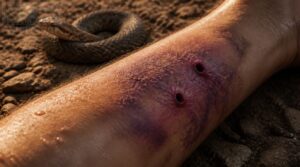
Two clean punctures, placed close together, signal an elapid bite. Vipers leave a wider gap, often over 10 mm. Fang shape drives puncture depth.
| Snake Type | Fang Pattern | First Signs |
|---|---|---|
| Elapid | Close, deep punctures | Round holes, redness |
| Viper | Wide-spaced marks | Tear-drop bruising |
| Nonvenomous | Horseshoe teeth row | Surface scratches only |
Redness, swelling, and pain arrive fast. Blistering can follow within hours.
Neurotoxic, Cytotoxic, and Hemotoxic Venom
Snake venom isn’t one simple thing. It’s a targeted cocktail of poisons. Neurotoxic venom shuts down nerve signaling, while cytotoxic venom destroys tissue at the bite site. Hemotoxic venom disrupts clotting and causes dangerous bleeding. Many venoms mix all three types.
| Venom Type | Primary Target | Key Risk |
|---|---|---|
| Neurotoxic | Nervous system | Paralysis |
| Cytotoxic | Cell membranes | Tissue death |
| Hemotoxic | Blood clotting | Hemorrhage |
How Venom Affects The Body
Venom doesn’t stay where it lands. Once it enters your bloodstream, it spreads fast and wide, attacking multiple body systems simultaneously. Cytotoxins destroy tissue right at the bite site, triggering necrosis and intense local swelling within minutes. Neurotoxins can paralyze breathing muscles, making respiratory failure a real, immediate, and life-threatening danger. Hemotoxins mess with blood clotting, triggering internal hemorrhage or abnormal coagulation throughout your entire body.
| Body System | Toxin Type | What Happens |
|---|---|---|
| Nervous system | Neurotoxic | Muscle weakness, paralysis |
| Blood and vessels | Hemotoxic | Clotting failure, bleeding |
| Tissue and cells | Cytotoxic | Necrosis, severe swelling |
That’s exactly why antivenom efficacy depends directly on reaching a hospital as quickly as possible.
Venomous Snakes by Region
Your geographic location defines your snake risk as much as what you actually wear in the field.
| Region | Key Species |
|---|---|
| Africa | Black mamba, puff adder |
| Asia | King cobra, Russell’s viper |
| Australia | Inland taipan, eastern brown |
| Central America | Fer-de-lance, coral snakes |
| South America | Bushmaster, terciopelo |
Snake habitat awareness starts here. Protective footwear effectiveness depends on knowing which species share your region.
Snake Bite Symptoms and Emergency Warning Signs
Snake bite symptoms don’t all show up at once — they unfold in stages, and knowing what to watch for can make a real difference. Some signs are local and obvious; others are subtle, systemic, and far more dangerous. Here’s what your body might tell you, from the first sting to the warning signs that mean it’s time to act fast.
Local Pain, Swelling, and Damage
When venom contacts tissue, the inflammatory response launches within seconds.
- Pain mediators like bradykinin and prostaglandins fire immediately
- Swelling progression begins in minutes as fluid accumulates
- Heat and redness confirm tissue damage spreading outward
- Cytotoxic and hemotoxic effects destroy cells, causing necrosis
- Unchecked swelling risks compartment syndrome, compressing nerves
Spreading swelling isn’t just uncomfortable. It can crush nerves and tissue.
Nausea, Dizziness, and Shock
The swelling doesn’t stay local. As venom enters circulation, nausea and dizziness strike fast, sometimes within minutes. Blood pressure drops and organs lose oxygen. That’s shock, and it’s life-threatening.
Dizziness can feel like spinning, lightheadedness, or sudden unsteadiness. Lie down to avoid falling. Don’t eat or drink anything, even if thirst hits. Stay still, stay calm, and wait for help.
Neurological and Breathing Symptoms
Beyond dizziness, neurotoxic venom hits your nervous system hard. Muscle weakness can spread from the bite upward, and drooping eyelids or sudden confusion often follow.
Breathing trouble comes next when nerve signals to respiratory muscles fail. Chest tightness and shallow breaths signal dropping oxygen, while carbon dioxide builds in your blood. Treat any breathing change as a full emergency.
Bleeding and Clotting Problems
Hemotoxic venom disrupts blood clotting fast. It damages vessel lining, impairs platelets, and strips away clotting factors, so wounds bleed far longer than normal.
Watch for these signs:
- Unexplained bruising from platelet dysfunction
- Oozing that won’t stop at the bite
- Clotting factor deficiency causing internal bleeding
- Blood in urine or dark stools
- Higher bleeding risk with blood-thinning medications
When Symptoms Require Emergency Care
Some symptoms won’t wait. Call emergency services the moment you notice breathing difficulty, sudden confusion, or uncontrolled bleeding, because these signal respiratory failure or systemic shock within minutes.
Spreading swelling, throat tightening, or hives point to a severe allergic reaction. Neurological symptoms like seizures or drooping eyelids are equally urgent. When in doubt, don’t wait to see if things improve.
Snake Bite First Aid, Treatment, and Recovery
What you do in the first few minutes after a snake bite can genuinely change the outcome. Getting it right — and avoiding the wrong moves — is what this section is all about. Here’s exactly what to do, from the moment of the bite through hospital treatment and beyond.
Immediate Emergency Response Steps

Stop moving and stay calm the moment a bite happens. Panic speeds your heart rate, moving venom faster.
- Call emergency services right away
- Immobilize the limb, keeping it at or below heart level
- Remove all constrictive items like tight jewelry or footwear
- Apply a pressure bandage, noting the bite time
Seek immediate medical care. Don’t wait for symptoms to worsen.
Region-Specific Pressure Bandaging Guidance
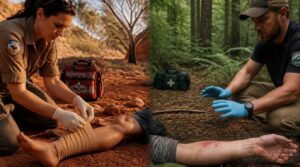
Where you are bitten matters as much as speed. Pressure immobilisation bandaging works well for Australian neurotoxic bites. Start at the fingers or toes and wrap firmly upward toward the body, like an ankle sprain, not a tourniquet. Note the application time.
In North America, skip it. Most venoms are cytotoxic or hemotoxic, and compression can worsen tissue damage a lot.
Tourniquets, Cutting, Ice, and Suction

Four "treatments" you’ve probably seen in movies will actually make things worse.
Don’t cut the wound or try to suck out venom, since infection risk spikes immediately and you’ll push toxins deeper into tissue. Ice constricts blood vessels, trapping venom locally rather than dispersing it. Tourniquets cut circulation entirely, risking permanent tissue damage.
These instincts, however well-meaning, cause real harm.
Antivenom and Hospital Monitoring

Antivenom is your strongest defense once venom enters your body. Given intravenously, it delivers neutralizing antibodies fast, ideally within 2 to 6 hours of the bite.
Hospital staff will track your signs closely and watch for reactions like anaphylaxis or serum sickness. IV fluids or epinephrine may help stabilize blood pressure while the antivenom takes effect.
Complications and Long-Term Rehabilitation

Recovery doesn’t end when you leave the hospital. Long-term snakebite sequelae can include chronic tissue necrosis, nerve damage, and PTSD, affecting victims for years.
Post-antivenom rehabilitation often involves:
- Physical therapy to restore limb movement
- Occupational therapy for fine motor recovery
- Wound care for necrotic tissue
- Psychological support for trauma and anxiety
Long-term monitoring of kidney function is essential for your recovery.
Snake Bite Prevention, Facts, and Videos

Most snake bites are preventable — and the right gear, habits, and awareness go a long way. Whether you’re hiking rocky trails, managing a backyard, or keeping a pet snake, a few targeted strategies can really cut your risk.
Here’s what you need to know, from protective clothing to real-world statistics and trusted educational videos.
Protective Clothing and Outdoor Gear
The right gear is your first shield. Sturdy boots and long pants block most fang strikes. Wear thick gloves when clearing brush.
| Gear | Benefit |
|---|---|
| Tall leather boots | Blocks fang penetration |
| UPF-rated shirt | Sun and insect shield |
| Snake gaiters | Leg defense in brush |
Layering for weather keeps you ready for any conditions. Choose material durability. Carry snake hooks for direct handling.
Trail, Yard, and Home Safety
Your boots cover you in the field, but a well-managed yard and trail do the heavy lifting at home. Clear trail edges 6 feet wide on each side to spot snakes early. Remove rock piles and log stacks from trail edges.
Seal door gaps, cover foundation vents with 1/8-inch mesh, and strip woodpiles from your yard to cut hiding spots.
Safe Handling for Pet Owners
A pet snake needs more than a secure enclosure. Wait 48 hours after feeding before any handling, or even a calm snake may strike.
Check these before reaching in:
- Slow tongue flicks and smooth movement
- Use a snake hook for first sessions
- Support the midsection with both hands
- Wash hands thoroughly before and after
- Keep door gaps under 5 mm
Global and U.S. Bite Statistics
Whether you keep pet snakes or simply spend time outdoors, the global snake bite burden is far bigger than most people realize. 5.4 million snake bites happen worldwide each year, with between 81,000 and 138,000 proving fatal and around 400,000 people left permanently disabled.
In the U.S., 7,000 to 8,000 venomous bites occur each year, yet deaths average only 5 to 10. That gap comes down to antivenom access. In low-income regions, mortality can reach 22%, a sobering reminder of how geography shapes survival.
In the U.S., up to 8,000 venomous bites strike each year, yet geography alone determines whether you survive
Vetted Educational Snake Bite Videos
Snake bite videos flood the internet, but not all deserve your trust. Research confirms that healthcare professionals and nonprofits produce the most reliable content. Look for these five quality markers:
- Correct pressure bandaging shown step by step
- Jewelry removal from the bite site
- No suction, cutting, or electric shocks
- Antivenom and hospital guidance included
- Prevention tips and protective clothing covered
Frequently Asked Questions (FAQs)
What are the 7 principles of snake bite management?
Like any solid trauma protocol, seven fundamental principles guide effective management: rapid emergency response, bite assessment, wound care, limb immobilization, timely antivenom administration, continuous hospital monitoring, and rejecting dangerous myths like cutting or suction.
What part of the body do snakes bite most often?
Your hands, feet, and ankles draw the most bites. Feet get struck when you step near a hidden snake; your hands when you reach into its space. Lower legs are frequent targets as well.
What are some of the most dangerous venomous snakes globally?
Inland taipan has extreme venom potency. Other deadliest snake species include the Black mamba, Russell’s viper, puff adder, king cobra, and coral snake.
Geographic snake danger varies, but neurotoxic and hemotoxic venom can rapidly paralyze, bleed, or destroy tissue.
How long can a snake go without eating?
The animal built to hunt doesn’t always need to eat. Most adult snakes survive several months without food by slowing their metabolism up to 70 percent. Larger pythons can comfortably manage six months between meals.
Of course, how long a given snake can fast depends on its species, age, and health, which is why this guide to how long snakes can go without food is worth a look.
Why do snakes flick their tongues?
That flicking motion is actually chemical signal detection in real time. The forked tongue collects scent particles and delivers them to the vomeronasal organ, enabling stereo smelling that pinpoints prey or predator direction with impressive accuracy.
How do snakes hear and smell?
Like a medieval scout pressing an ear to the ground, snakes sense vibrations through their jawbone rather than ears. Their forked tongue constantly samples air, carrying scent particles to the vomeronasal organ for chemical analysis.
Why do snakes shed their skin?
Snakes shed because their skin simply doesn’t grow with them. The skin renewal process strips parasites and damaged scales, revealing fresh skin beneath. Watch for cloudy eyes, the first clear sign a shed is near.
What should you do if you see a snake?
Stay calm and back away slowly, keeping at least six feet of safe distance. Watch its movement closely and give it room to retreat. Never reach in, provoke, or try to identify it up close.
Can all snakes climb trees or swim?
Not every species climbs or swims with equal skill. Most use lateral undulation to move through water, while arboreal adaptation gives slender species a real edge in trees. Heavy-bodied ground dwellers rarely venture above low shrubs.
How do you handle a snake safely?
Over 7,000 venomous snakebites occur in the U.S. each year, many from careless pet handling. Use a snake hook, approach from the side, fully support the body with both hands, and never grab the head.
Conclusion
Here’s a coincidence worth sitting with: the moment most people search for snake bites, everything you want to know with facts and videos, is usually right after a frighteningly close call on the trail. Don’t be that person. Know these steps cold before you ever need them.
Stay still, stay calm, and get to a hospital without delay. The snake only acts on pure instinct. You have the advantage of preparation right now. Use it.