This site is supported by our readers. We may earn a commission, at no cost to you, if you purchase through links.
A ball python constricts with up to 90 psi, enough force to subdue a rat. Its bite? A firm pinch that lasts a split second.
That contrast fuels a stubborn myth about these snakes. So, are ball python bites dangerous? For most keepers, the honest answer is no. Ball pythons lack venom glands and hollow fangs, so a bite delivers curved teeth and zero toxin. You’ll walk away with a crescent of small puncture marks, minor bleeding, and maybe some bruising.
The genuine risks sit elsewhere: oral bacteria, poor wound care, and the rare deep puncture near a joint. Once you know what a bite involves, the fear loses its grip.
Table Of Contents
- Key Takeaways
- Are Ball Python Bites Dangerous? Usually Not
- What Does a Ball Python Bite Feel Like?
- Why Do Ball Pythons Bite?
- What to Do After a Bite
- When to Seek Medical Care
- Frequently Asked Questions (FAQs)
- Are ball python bites dangerous?
- Are ball pythons venomous?
- Can a ball python bite a dog?
- What happens if a ball python bites you?
- Are ball pythons irritable?
- Can a ball python bite harm a cat?
- What happens if your ball python bites you?
- Do pet ball pythons carry diseases?
- Are python bites dangerous?
- Can you get an infection from a python bite?
- Conclusion
Key Takeaways
- Ball python bites aren’t dangerous for most people — they’re non-venomous, so you’ll end up with small puncture marks and maybe some brief bleeding, not a medical emergency.
- The real risk after a bite isn’t pain or venom, it’s bacterial infection, since snake mouths carry organisms like Pseudomonas that can cause serious trouble if you don’t clean the wound promptly and thoroughly.
- Most bites are preventable once you recognize the triggers: handling during a shed, skipping the 48-hour wait after feeding, or approaching with prey scent on your hands all dramatically increase your chances of getting bitten.
- Seek medical attention if you see redness spreading outward, red streaks moving up the limb, pus, or any fever — these are the signals that home care isn’t enough.
Are Ball Python Bites Dangerous? Usually Not

Ball python bites look scarier than they actually are — and that’s worth knowing before panic sets in. As a non-venomous species, they don’t pose the dramatic risks most people fear, though a few real concerns are still worth understanding.
For the full rundown on why ball pythons bite and how to respond, this guide to ball python bites and aftercare has you covered.
Here’s what the evidence actually shows about danger, severity, and when to take a bite seriously.
Ball Pythons Are Non-Venomous
Unlike venomous species, ball pythons are completely nonvenomous. They have no venom glands and no hollow fangs capable of injecting toxin. When ball python bites occur, nothing enters your bloodstream.
What this means in practice:
- No venom glands present
- No hollow, venom-delivering fangs
- Prey killed by constriction only
- Zero toxin injected during bites
- Wound care focuses on bacteria, not venom
Instead of venom, ball pythons rely on constriction force to subdue prey, with muscular squeezing capable of reaching up to 90 pounds per square inch.
Typical Bite Severity
Most ball python bites are minor. You’ll usually feel a firm pinch, then the snake releases almost immediately. Defensive bites leave small puncture marks arranged in a curved row, matching the jaw’s shape. Minimal bleeding is the norm, and any swelling usually stays localized to the bite area. The whole event often looks far worse than it actually is.
Infection and Tissue Damage
The bigger concern isn’t pain. It’s wound infection. Ball python mouths naturally harbor bacteria like Pseudomonas and Acinetobacter. Bacterial infection risk stays low with quick cleaning, but deeper puncture wounds raise it.
Watch for:
- Increasing redness or warmth
- Pus or foul odor
- Red streaks from the wound
- Fever or swollen lymph nodes
Reptile wound infection can sometimes warrant antibiotics use.
Rare Serious Complications
Serious complications are rare but they do happen. A deep bite near a joint can introduce bacteria into the joint space, causing septic arthritis.
Teeth can reach tendons or nerves, resulting in reduced finger movement or persistent numbness.
If you notice joint swelling or weakness that won’t resolve, seek medical consultation quickly. Anaphylaxis in sensitized individuals requires immediate emergency care.
What Does a Ball Python Bite Feel Like?

If you’ve been bitten by a ball python, you’re probably wondering what just happened — and what to expect next. The experience varies depending on how and why the snake bit, so it helps to know what’s normal. Here’s a closer look at the sensations, marks, and risks you might notice.
Those tiny, needle-like teeth explain a lot of what you just felt, and this guide to ball python teeth shows you exactly how they’re built.
Pain and Pinching Sensation
Most people describe a ball python bite as a firm pinch, sharp for a split second and gone almost as fast. The small puncture marks it leaves don’t bleed much, and the overall pain is genuinely mild.
Defensive biting is quick by nature. Your honest pain assessment will likely be: brief sting, maybe some tingling, then it fades.
Crescent-Shaped Puncture Marks
The marks left behind actually tell you something useful. Ball python bites create a crescent-shaped puncture pattern because multiple curved teeth contact skin simultaneously, not a single fang.
- Hatchlings produce tight arcs under 5mm; adults span up to 15mm
- Thin-skinned spots like fingers show the clearest marks
- Each point in the arc is a separate tooth contact, not one wound
Bleeding, Bruising, and Swelling
Bleeding after a ball python bite is usually minor. The small puncture wounds may ooze briefly, but light pressure stops most active bleeding quickly.
Bruising and some swelling around the site are fairly normal, especially on the hands and fingers. Keep the wound clean and watch carefully for signs of infection during the two weeks most bruises take to fade.
Risks From Prolonged Biting
Most bites release quickly. But if a ball python stays latched, the risks shift.
Recurved teeth can embed deeper with time and break off inside the wound. Longer contact also pushes more oral bacteria into the tissue, raising your infection risk. Bites to fingers or hands warrant medical evaluation when the snake holds on for more than a few seconds.
Why Do Ball Pythons Bite?
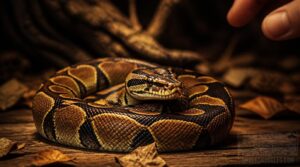
Ball pythons don’t bite without a reason — there’s almost always something specific that triggered it. Understanding those triggers is one of the most practical things you can do as an owner. Here are the main reasons a ball python might decide your hand looks like a problem worth solving.
Defensive Bites Versus Feeding Bites
Not all ball python bites are equal. Two types exist:
- Defensive bites happen when the snake feels threatened
- Feeding bites occur when it mistakes your hand for prey
- Defensive bites don’t release as fast; feeding bites grip harder
- Feeding bites tend to cause deeper punctures
- Proper handling and quick wound care reduce both risks
Stress and Warning Signs
Your snake signals discomfort before it bites. Rigid body tension and a head oriented toward you are active warnings.
| Warning Sign | What It Means |
|---|---|
| Tight defensive coil | Snake feels threatened |
| Rigid, stiff body | Preparing to strike |
| Head oriented toward you | Tracking a perceived threat |
| Frequent repositioning | Snake is unsettled |
Return the snake to its enclosure when these signs appear.
Food Scents on Hands
Your hands tell a story the snake reads instantly. Food scents on hands from garlic or raw meat can trigger a feeding response, and a ball python may bite simply because it mistakes your hand for prey.
Feeding strikes make a ball python bite hurt. Wash your hands with soap before proper handling to avoid any snake bite first aid.
Shedding and Reduced Vision
Shedding creates a different kind of problem. Cloudy, milky eyes develop as fluid builds between skin layers, cutting a ball python’s vision a lot. It can’t see your hand clearly, so defensive biting becomes more likely.
Signs your snake is in shed:
- Dull, grayish scales
- Milky or blue-tinted eyes
- Hiding more than usual
- Increased defensiveness
Avoid handling entirely during this window.
Handling Too Soon After Feeding
Feeding creates its own timing concern. When digesting, a ball python redirects blood flow to its gut. Disturbing this process triggers stress, and stress after feeding can prompt a defensive bite.
Wait at least 48 hours after feeding before you handle your snake. For larger meals, extend that to 72 hours. Good timing here reduces regurgitation risk and defensive bites.
What to Do After a Bite
Getting bitten isn’t fun, but how you respond in the next few minutes matters more than the bite itself. Ball pythons are non-venomous, so your main job is to stay calm and handle things methodically. Here’s exactly what to do, step by step.
Stay Calm and Avoid Pulling
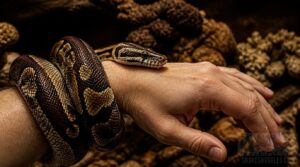
Your instinct when a ball python bites is to pull away fast. Don’t. Avoid pulling since ball python teeth curve inward, and yanking tears skin while risking broken tooth fragments in the wound. That complicates wound care.
When a ball python bites, resist the urge to pull away—its inward-curving teeth can tear skin and snap off inside the wound
Stay calm, breathe, and hold still. Panic causes sudden movements, which trigger tighter gripping. Proper handling at this moment keeps the damage minor.
Safely Release a Latched Snake
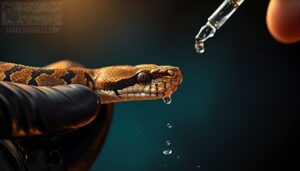
Most latched snakes let go within a minute. If yours doesn’t, trickle cold water over its snout. This works after a defensive strike or a feeding bite. Hand sanitizer near the mouth triggers release, though it stresses the snake.
Proper handling means never prying jaws open. Broken teeth and snake saliva bacteria complicate wound care and may require medical attention.
Wash and Disinfect Wounds
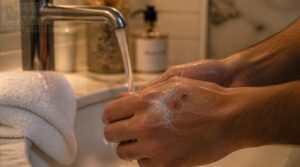
Once the snake releases, wash the bite with warm water and soap. Work suds gently around the punctures; scrubbing irritates tissue. Rinse well, then pat dry.
Snake mouths carry bacteria, so postbite wound care matters. Antiseptic is optional for shallow bites. Deep punctures, or bites that gape, need the wound assessed by a doctor before you apply a sterile bandage.
Cover With a Sterile Bandage

Good wound care ends with a cover. Once dry, apply a sterile bandage so the pad spans both punctures:
- Wash your hands first.
- Open the package without touching the pad.
- Cover the entire bite area.
- Secure with tape; don’t wrap tightly.
Antibiotic ointment is optional. Deep punctures need medical attention, so have the wound assessed by a doctor before wrapping.
Monitor Healing Closely
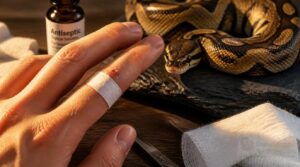
A bite tells two stories: healing, or infection. Typical healing time runs one to two weeks with daily wound care (wash, antibiotic ointment, fresh bandage). Watch for these signs:
| Sign | Healing Well | Warning Sign |
|---|---|---|
| Redness | Fading daily | Spreading |
| Drainage | Drying up | Pus, odor |
| Pain | Easing steadily | Throbbing worse |
| Fever | None | Any fever |
Any warning sign, especially fever, warrants medical attention.
When to Seek Medical Care
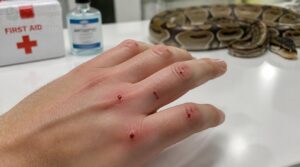
Most ball python bites heal at home within a few days. Even so, some wounds need a doctor’s attention, and it helps to know the difference before you’re standing at the sink with a freshly bitten hand.
Here are the specific signs that warrant medical care, plus a few habits that make future bites far less likely.
Signs of Wound Infection
Infections are uncommon after ball python bites, but they happen. Check your wound daily for:
- Redness spreading outward from the puncture
- Warmth, swelling, and increasing pain
- Cloudy, yellow, or green pus
- Foul odor or discolored tissue
- Red streaks moving up the limb
Streaks plus fever require urgent medical attention. Caught early, treatment is usually a wound cleaning procedure plus antibiotics.
Deep or Persistent Bleeding
How long should a ball python bite bleed? Usually a few minutes. Apply firm, direct pressure for 15-20 minutes. If bleeding continues past that, or the wound keeps oozing afterward, it may be deeper than it looks.
That’s when you need medical attention. Deep punctures can injure vessels or tendons, raise infection risk, and sometimes require cleaning, antibiotics, or repair.
Tetanus Booster Considerations
Puncture wounds like snakebites carry tetanus risk. If your last booster was over five years ago, get one after a deep or dirty bite. Otherwise, ten-year protection covers you.
Check these:
- More than 5 years since your shot
- Deep, dirty, or puncture wound
- Unknown vaccination history
Tetanus infection is rare but serious, so confirm your status with a vaccine provider.
High-Risk Bite Locations
Tetanus aside, location matters. When a snake showing defensive body language clamped down on your hand, those small puncture marks sit near tendons and joints, where infection spreads faster.
Bites on the hands, face, or joints need medical review even with minimal bleeding, since that firm pinch pushes bacteria deep. Get spreading redness or any stubborn wound checked promptly.
Preventing Future Ball Python Bites
Most bites on hands trace back to preventable mistakes. Wash your hands before handling, since prey scent on skin invites a feeding strike. Use feeding tongs instead of fingers so your snake never links hands with food.
Approach slowly, support the body fully, and skip handling during sheds or after meals. Calm, predictable routines lower stress and bites over time.
Frequently Asked Questions (FAQs)
Are ball python bites dangerous?
The theory that every snake bite is dangerous falls apart with ball pythons. These nonvenomous pets deliver a sharp pinch and shallow marks, not venom.
Wash the wound, bandage it, and monitor for infection.
Are ball pythons venomous?
No, ball pythons are a nonvenomous snake. They lack venom glands, so ball python bites inject nothing. Snake bite treatment here means basic first aid: wash the wound, apply pressure, and don’t worry about antivenom.
Can a ball python bite a dog?
Yes, your dog can get bitten, though ball python bites aren’t venomous. Most strikes are defensive reactions to stress or surprise. Keep pets separated and secure the enclosure, because careful bite prevention protects both animals.
What happens if a ball python bites you?
Getting bitten feels like a quick needle pinch. Ball python bites leave small puncture marks, mild pain, minimal bleeding, and slight swelling that fades within 12 hours.
With proper handling and prompt bite care, you’ll recover quickly.
Are ball pythons irritable?
Most ball pythons are naturally docile and calm. A ball python may bite only when threatened or poorly handled. Their body language usually signals discomfort from stress or hunger well before any strike occurs.
Can a ball python bite harm a cat?
Fur-tunately, the risk is low. A ball python bite can leave your cat with small puncture wounds, but won’t inject venom. The real concern is infection risk, so clean any wound and watch closely.
What happens if your ball python bites you?
Expect a firm pinch and small puncture marks when ball python bites occur. A ball python may bite out of stress or food cues, but the wounds stay minor. Start ball python bite care promptly.
Do pet ball pythons carry diseases?
Virtually every ball python carries Salmonella somewhere in its digestive tract. Good hygiene after handling is your first line of defense. Reptile health monitoring through routine vet visits targets pet safety and any medical concerns.
Are python bites dangerous?
Ball python bites aren’t life-threatening. You’ll feel pain and small puncture wounds right away, but prompt treatment keeps most wounds clean and healing quickly. Medical monitoring for infection is the real concern, not venom.
Can you get an infection from a python bite?
Yes, it’s possible. A python’s mouth carries bacteria that can enter broken skin, so prompt first aid matters. Clean the wound thoroughly with soap and water, then monitor for increased redness or swelling.
Conclusion
A barking dog seldom bites, and a ball python that postures is usually doing the same thing. So are ball python bites dangerous? For healthy adults who practice proper wound care, the honest answer is almost never. Bites happen for clear reasons, and those reasons are entirely preventable.
Clean the punctures well, disinfect them thoroughly, and monitor the site carefully over the next few days. Read your snake’s cues, and most bites simply won’t happen.