This site is supported by our readers. We may earn a commission, at no cost to you, if you purchase through links.

Most people picture a snake swallowing a mouse. Coral snakes have stranger tastes. Their preferred prey is often other snakes, including young venomous ones like hatchling copperheads, captured underground in earthworm tunnels and soil cracks. They manage this with fixed fangs and a neurotoxic bite that paralyzes prey without constriction.
That menu makes the question of what do coral snakes eat more interesting than it first appears. Diet shifts with age, habitat, and season, from slender skinks in dry scrub to frogs crowding pond margins after rain. Follow the details and you’ll find a predator far more specialized than its size suggests.
Table Of Contents
- Key Takeaways
- Are Coral Snakes Carnivores?
- Coral Snakes Eat Small Reptiles and Amphibians
- Why Coral Snakes Eat Other Snakes
- How Coral Snakes Hunt and Eat
- How Diet Varies by Age and Habitat
- Frequently Asked Questions (FAQs)
- Can a human survive a coral snake bite?
- How do I get rid of coral snakes in my yard?
- Which is deadlier, a rattlesnake or a coral snake?
- Do coral snakes stay in one area?
- How aggressive are coral snakes?
- What animal kills coral snakes?
- Where do coral snakes like to hide?
- How often do coral snakes need to eat?
- Can coral snakes eat other venomous snakes?
- Do coral snakes have any natural predators?
- Conclusion
Key Takeaways
- Coral snakes are strict carnivores that prefer elongated prey — especially other snakes, including venomous hatchlings like copperheads — which they hunt underground using chemical scent trails.
- Rather than constricting their meals, coral snakes bite and hold, pumping neurotoxic venom through fixed fangs until prey is fully paralyzed and safe to swallow headfirst.
- Their diet isn’t fixed: juveniles target small lizards and soft-bodied prey, while adults shift to snakes, skinks, frogs, and occasional small mammals depending on season and habitat.
- Cannibalism isn’t rare — when food is scarce, a larger coral snake will paralyze and swallow a smaller one whole, making even their own kind fair game.
Are Coral Snakes Carnivores?
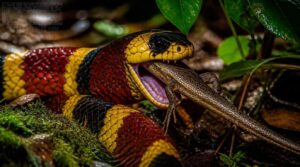
Yes, coral snakes are carnivores — in fact, they’re strict ones that never touch plant matter. Their feeding habits break down into a few clear patterns worth knowing. Here’s what you should understand about their meat-only diet, their preference for elongated prey, and just how opportunistic they can be when hunger strikes.
That opportunistic streak is shared by snakes everywhere, and offering a varied diet to pet snakes mirrors what they’d naturally hunt in the wild.
Meat-Only Diet
Every coral snake meal is meat, nothing else. These are strict carnivores, and their menu runs from small lizards and small snakes to small mice. Many are ophiophagous, meaning snake-eating, which explains part of this venomous snake diet diversity.
You won’t catch one nibbling berries or leaves. Protein and fat fuel them, from Florida all the way to South America.
Preference for Elongated Prey
Meat is only half the story. You’ll notice coral snakes favor prey shaped like themselves: long, narrow, easy to swallow. Their slender skulls handle elongated bodies best. Favorites include:
- Small snakes (many are ophiophagous)
- Small lizards like skinks
- Worm and blind snakes
- Legless amphibians
Fossorial prey detection happens underground, where these shapes dominate. Like other serpents, coral snakes rely on Jacobson’s organ for scent detection to pick up airborne chemical cues and follow scent trails to hidden prey. Elongated prey means faster swallowing, less risk.
Opportunistic Feeding Habits
That narrow menu comes with flexibility. Coral snakes practice opportunistic feeding habits, so the snake diet near you depends on what’s abundant, not preferred. Prey detection through chemical trails lets them switch between lizards, frogs, and smaller snakes seasonally.
Their fossorial behavior opens underground hunting grounds. When skinks boom after rains, skinks get eaten. Availability, not pickiness, rules the menu.
Coral Snakes Eat Small Reptiles and Amphibians

Coral snakes spend much of their favorite meals live in that same quiet world.
Small reptiles and amphibians form the heart of their diet, from sleek skinks to plump toads.
Here’s a closer look at each prey group, so you know exactly what ends up on the menu.
Skinks and Geckos
Skinks and geckos rank among coral snakes’ favorite prey. These ambush predators rely on chemical cue tracking to find lizards hiding under leaf litter. Many skinks are fossorial, so hunts don’t always happen above ground. Common targets include:
- Ground skinks
- Five-lined skinks
- Geckos
- Glass lizards
- Anoles
Your backyard lizard visitors might already be on the menu, especially in southern states.
It gets stranger, though—kingsnakes will even eat fellow snakes, a habit called ophiophagy, as this guide to snakes that eat other snakes explains.
Frogs and Toads
A frog’s moist skin makes it easy prey. Coral snakes, which are venomous snakes, eat amphibians like frogs and toads across their range.
You’ll find hunts near ponds or damp leaf litter, where toads sit still and get grabbed headfirst. Unlike skittish lizards, amphibians don’t fight back much. Smaller snakes may come next, but frogs often fill the menu first.
Other Small Snakes
Plenty of coral snakes eat smaller snakes, a habit scientists call ophiophagy. This snake-eating strategy helps explain their narrow heads and fixed fangs. They often swallow worm snakes and blind snakes whole.
Surprisingly, some turn cannibalistic. When prey runs scarce, they’ll even eat other coral snakes. A smaller serpent that wanders too close, as you might guess, quickly becomes dinner.
Occasional Mammals and Birds
Occasionally, coral snakes add warm-blooded meals to their menu. Small mammals like rodents and shrews sometimes cross their path, especially in open, sandy habitats. Nesting birds on the ground are vulnerable too.
Surprisingly, roles can reverse, since birds of prey hunt coral snakes rather than serve as dinner. As you’d guess, these vertebrate prey items remain rare treats, not staples.
Insects for Juveniles
Do hatchling coral snakes crunch on insects? Rarely. Even as juveniles, these venomous snakes stick to meat, though tiny prey like caterpillars may slip into early feeding habits. Insects aren’t a real target for their predatory behavior.
- Caterpillars and soft larvae
- Beetle grubs in soil
- Moth larvae under leaf litter
- Small crickets on occasion
Even so, such meals stay rare.
Why Coral Snakes Eat Other Snakes
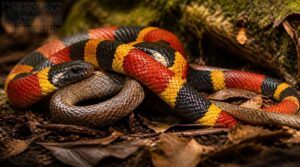
If you picture coral snakes as lizard specialists, their favorite prey may surprise you. These predators regularly hunt and swallow other snakes, a habit biologists call ophiophagy. Here’s why snake-eating works so well for them, and which species end up on the menu.
Ophiophagy Explained
Why would one snake eat another? The answer is ophiophagy, the habit of hunting and swallowing other snakes.
Coral snakes, including the venomous Micrurus fulvius, are true ophiophages. Their hunting strategies center on prey tracking. You can picture them following chemical trails left by passing serpents. Even other venomous snakes aren’t safe once a coral snake locks onto that scent.
Worm and Blind Snakes
Which snakes make the easiest meals? Worm snakes (Carphophis amoenus) and blind snakes (Indotyphlops braminus) top the list. These burrowers spend their lives eating ants and termites underground, yet coral snakes find them anyway.
Prey tracking works even in soil, where chemical trails linger along tunnels. Because worm and blind snakes are slender and nearly defenseless, ophiophagy becomes simple snake eating with little resistance.
Juvenile Venomous Snakes
Defenseless burrowers aren’t the only victims. Young venomous snakes, including hatchling copperheads, sometimes fall to ophiophagy. You might expect venomous snake behavior to protect them, but juvenile coral snakes carry potent venom from day one.
Their low feeding frequency makes each high-value meal count. Habitat adaptation lets them probe leaf litter where hatchlings hide, and newborn vipers make easy targets.
Cannibalistic Feeding
Even a fellow coral snake isn’t safe. Cannibalism in snakes occurs when hunger meets opportunity, especially in crowded burrows or dry seasons. A larger adult strikes, delivers a rapid paralytic bite, and swallows a smaller neighbor whole.
Even fellow coral snakes aren’t safe—when hunger meets opportunity, a larger adult paralyzes and swallows a smaller neighbor whole
You might wince, but such snake feeding habits aid prey population regulation, keeping numbers balanced. Venomous snake behavior rarely distinguishes kin from meal.
Prey Nearly Their Length
What you’ve just read about cannibalism isn’t even the most extreme part of their diet. As Elapid family members, coral snakes can consume elongated lizards reaching nearly their full body length, though frogs or rodents rarely approach that size.
Jaw ligaments stretch to open roughly 150 degrees, and venom rapidly immobilizes the animal before the slow, repositioning swallow even begins.
How Coral Snakes Hunt and Eat
Coral snakes are surprisingly methodical hunters, and their technique is nothing like what you might expect from a venomous snake. They rely on a specific sequence of behaviors — from detecting prey to delivering venom to finally swallowing it whole — that makes their hunting style unlike most other North American snakes.
Here’s how each step of that process actually works.
Tracking Chemical Trails

Your nose tells you when dinner is close. Coral snakes work the same way, but through their vomeronasal system, flicking a forked tongue to collect chemical particles from the air and ground. The Jacobson’s organ processes these cues instantly.
Humidity keeps prey scent trails potent longer, while rain washes them away, forcing the snake to rely on fainter residual signals near moist soil or leaf litter.
Active and Ambush Hunting
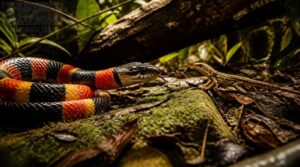
Coral snakes use two distinct hunting strategies. As active foragers, they thread through leaf litter, following chemical trails until prey is within striking range.
But sometimes staying still pays off. Near rockpiles or debris where small snakes and lizards travel, they coil and wait as patient ambush predators, striking the moment a target moves within reach.
Bite-and-Hold Venom Delivery
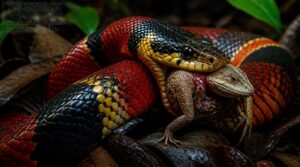
Unlike pit vipers that strike and release, coral snakes use a bite-and-hold approach. Their fixed fangs grip prey firmly, keeping the venom delivery mechanism active as jaw muscles pump more toxin with each passing second.
The longer the hold, the deeper that neurotoxic agent penetrates into muscle tissue. Prey struggle only makes things worse, pushing the venomous fangs further in.
Paralysis Without Constriction
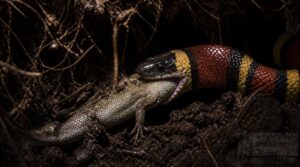
Once the venom delivery mechanism kicks in, prey simply stops moving. Coral snakes never wrap or squeeze their meals.
Their neurotoxic venom switches off nerve signals, so muscles go limp rather than rigid. That paralytic venom, paired with a short fang structure built for gripping, fits their underground feeding habits, where coiling around prey in tight burrows isn’t an option.
Swallowing Prey Headfirst
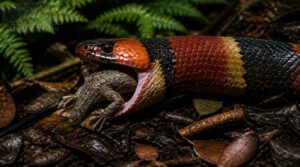
Ever wonder why a snake’s meal goes nose first? Coral snakes swallow prey headfirst for good reason. Lizards, frogs, and birds slide down smoother that way.
The head leads, so legs and wings can’t snag the throat. That grip keeps a stunned meal from slipping loose. You can see why straight lines travel best. The snake’s jaws do the rest.
How Diet Varies by Age and Habitat
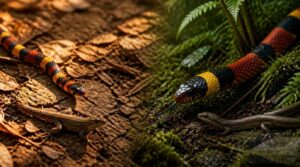
What a coral snake eats isn’t set in stone — it shifts as the snake grows and changes with the habitat it calls home. A hatchling hiding in dry leaf litter faces a very different menu than an adult prowling a humid forest floor.
As you’ll see below, both age and environment play a real part in shaping the coral snake’s diet.
Juvenile Diet Changes
A hatchling’s menu differs from an adult’s, and growth drives the difference. Young coral snakes target slender lizards, small snakes, and soft-bodied frogs, choosing prey narrow enough to swallow safely.
You’ll see them actively foraging under leaf litter rather than ambushing. Seasonal prey selection shifts as warm months bring hatchling lizards, and frequent small meals fuel their rapid juvenile development.
Adult Prey Selection
An adult coral snake hunts with purpose, and its choices reveal real strategy. Vertebrate prey selection favors elongated meals that fit the gape:
- Small snakes
- Slender lizards like skinks
- Frogs and toads
- Occasional small rodents
You’ll see both ambush predation tactics and active hunting strategies. Seasonal diet variation shifts the mix, so reptile feeding habits track rainfall and prey density.
Underground Foraging Opportunities
Much of that hunting happens out of sight. The coral snake’s fossorial lifestyle means underground hunting behavior dominates, following chemical trails through loose soil toward buried skinks and rodents.
| Underground Feature | Foraging Benefit |
|---|---|
| Earthworm tunnels | Easier travel |
| Root mats | Prey concentration |
| Soil cracks | Access corridors |
You’d rarely witness such hunts, since they combine sit-and-wait predation with active foraging strategies underground.
Amphibians Near Water
Above ground, water edges expand prey selection. Coral snakes patrol pond margins where frogs gather, their permeable skin offering little defense against neurotoxic venom.
Hunting strategies shift here too, since amphibians cluster in damp vegetation, making ambush easier than chasing skittish lizards. Even so, aquatic prey rarely dominates the diet, because coral snakes won’t swim to pursue tadpoles or fish.
Tropical Diet Variations
Across the tropics, prey selection shifts sharply with habitat. In dense rainforests, you’ll find coral snakes hunting geckos and small snakes beneath the leafy canopy. Drier zones steer feeding habits toward skinks that bask on exposed, sunlit ground.
Surprisingly, these tropical diet variations let the snakes work as both active hunters and ambush predators almost anywhere they happen to live.
Frequently Asked Questions (FAQs)
Can a human survive a coral snake bite?
The odds are in your favor here. Antivenom therapy and prompt snake bite treatment make survival very likely after a venomous coral snake bite, with only one U.S. death from neurotoxic venom documented since
How do I get rid of coral snakes in my yard?
Remove brush piles, tall grass, and debris at least 20 feet from your home, and seal foundation gaps wider than a quarter inch. Trim vegetation near walls. For persistent encounters, call a professional removal expert.
Which is deadlier, a rattlesnake or a coral snake?
Both are dangerous, but coral snakes carry more potent neurotoxic venom. Rattlesnakes bite more often. Envenomation from either requires immediate medical attention.
Do coral snakes stay in one area?
Yes, coral snakes tend to stay close to home. Micrurus fulvius usually keeps a small home range, moving only tens to a few hundred meters within a season unless habitat forces a shift.
How aggressive are coral snakes?
Coral snakes aren’t usually aggressive. As stealthy ambush hunters, their instinct is to avoid you rather than confront you. Bites almost always happen when someone touches or steps on one accidentally, so give them space.
What animal kills coral snakes?
Birds of prey like owls and hawks rank among the top coral snake predators, targeting them from above. Coyotes take them on the ground. King snakes constrict and eat them, and other coral snakes will cannibalize their own.
Where do coral snakes like to hide?
You’ll most often find them tucked under leaf litter or beneath decaying logs, where moisture and shade keep conditions stable. Sandy scrublands and hidden damp locations near stumps and rock crevices are reliable hideouts, too.
How often do coral snakes need to eat?
Adult coral snakes generally eat every 7 to 14 days, while younger snakes need feeding about twice a week. Keep a close eye on your snake’s weight and activity level to fine-tune its feeding schedule.
Can coral snakes eat other venomous snakes?
Venom doesn’t protect a snake from being eaten. Coral snakes, as members of the Elapidae family, use their own neurotoxic venom to overpower venomous snake prey, making snakeeating a documented part of their predatory behavior.
Do coral snakes have any natural predators?
Coral snakes have more natural predators than you’d expect.
Hawks, owls, raccoons, foxes, coyotes, and even large dogs track and target them in the wild, and won’t pass up a meal when the chance comes.
Conclusion
Don’t judge a book by its cover." Coral snakes look delicate, but what do coral snakes eat reveals a predator built for precision. They chase other snakes underground, track chemical trails through soil, and paralyze prey with neurotoxins, no constriction needed.
Diet shifts with age and habitat, from insects in youth to venomous hatchlings in adulthood. Small size doesn’t mean small ambition. This little snake earns its reputation one careful, precise bite at a time.