This site is supported by our readers. We may earn a commission, at no cost to you, if you purchase through links.

A healthy corn snake doesn’t follow a production schedule. In the wild, most females lay one clutch a year, timed to the warming days after spring breeding. Under captive care, a well-conditioned female may produce a second clutch, but more eggs don’t always mean better health.
If you’re asking how many times a year do corn snakes lay eggs, the honest answer depends on her age, body reserves, seasonal cues, and time to recover. Nutrition, temperature, light cycles, and post-laying care all shape the outcome. Knowing the difference between normal reproduction and overbreeding helps you protect the female long after the eggs hatch.
Table Of Contents
- Key Takeaways
- Corn Snakes Lay One to Three Clutches Yearly
- When Do Corn Snakes Lay Eggs?
- What Affects Annual Clutch Frequency?
- Can Corn Snakes Lay Without Mating?
- Are Multiple Clutches Safe?
- Frequently Asked Questions (FAQs)
- How many eggs should a corn snake lay?
- How often can a snake lay eggs?
- How many times does a baby corn snake shed?
- What time of year do corn snakes breed?
- What should you do if the baby corn snakes have difficulties hatching out of their eggs?
- How long do corn snake eggs take to hatch?
- What incubation temperature is best for corn snake eggs?
- Do corn snake eggs need turning during incubation?
- Can corn snake eggs hatch without an incubator?
- What should newly hatched corn snakes eat first?
- Conclusion
Key Takeaways
- Wild corn snakes usually lay one clutch each year, while healthy captive females may lay one or two, with a third clutch being rare and more physically demanding.
- Egg laying typically follows spring breeding and occurs from May through early July, guided by warmer temperatures, longer daylight, and successful brumation.
- A female’s age, size, nutrition, body condition, stress level, nesting setup, and recovery time determine whether repeat clutches are safe.
- Protect the female’s long-term health by monitoring her weight and behavior, supporting hydration and feeding after laying, and seeking urgent reptile veterinary care for signs of egg binding.
Corn Snakes Lay One to Three Clutches Yearly

Corn snakes usually produce one clutch each year in the wild. With strong nutrition and careful breeding conditions, captive females may lay one or two clutches. A third clutch is possible, but it’s uncommon and demands close attention to your snake’s condition.
For guidance on timing and recovery, review this corn snake breeding and genetics guide before attempting repeat pairings.
Wild Snakes: One Clutch
In most habitats, wild corn snakes produce one clutch per year. Spring emergence, longer days, and warming temperatures trigger breeding, then females usually lay from May through early July. A clutch commonly holds 6–20 leathery, cream-colored eggs, tucked beneath leaf litter, rotting wood, or similar sheltered sites. Afterward, she needs months to rebuild energy, so another clutch is uncommon.
Wild corn snakes usually lay one sheltered clutch of 6–20 eggs each spring, then spend months recovering
Like other reptiles, corn snakes are part of a specialized lizard lineage that evolved with highly adapted bodies.
Captive Snakes: One or Two
In captivity, many healthy adult females produce one or two clutches each year, rather than the single clutch typical outdoors. Eggs usually arrive in late spring or early summer, and clutch timing intervals vary with ovulation and recovery.
- steady photoperiod consistency
- ample enclosure space
- nutritional support needs
A second clutch demands a meaningful recovery period. Careful feeding protects future breeding.
Rare Third Clutches
After a second clutch, a rare third clutch can occur in exceptionally well-conditioned females during one breeding season. These eggs usually arrive weeks or months later, often in a smaller clutch, but nutritional demands rise sharply.
Watch for renewed nesting behavior and give your female a real recovery period. Follow careful captive breeding protocols, offer nutrient-dense meals, and arrange veterinary monitoring if she seems depleted or retains eggs.
When Do Corn Snakes Lay Eggs?
Corn snakes usually lay their eggs in late spring to early summer, after seasonal breeding cues have done their work. Timing can shift slightly between wild and captive snakes. The key influences are outlined below.
Spring Mating Season

Spring is the trigger. After brumation ends, rising day length and warmer temperatures spark hormonal shifts in your female corn snake, waking her ovaries from seasonal dormancy. Her metabolism climbs, appetite returns, and courtship behavior begins, with males tracking females through tactile contact and visual displays. Greater food availability then fuels the energy demands of ovulation and early clutch development.
For timing, this beginner’s guide to breeding corn snakes explains how winter cooling supports fertility and healthier clutches.
May Through Early July

Most corn snakes reach peak egg-laying between May and early July. During this window, egg deposition timing is shaped by warm nights and photoperiod influence, both signaling your female to finalize nesting site selection before laying.
Keeping incubation temperatures around 80 to 90°F helps healthy development. After the clutch arrives, expect a post-laying recovery period while her body slowly rebuilds.
Brumation and Seasonal Triggers

Before your corn snake even thinks about eggs, her body reads a set of environmental cues. Temperature drop signals the start of brumation, while day length shortens to strengthen the seasonal shift.
Food scarcity and gut clearance follow naturally. Miss these cues, and breeding frequency drops. Even handling stress disrupts this rhythm, so keep disturbances minimal during brumation prep.
What Affects Annual Clutch Frequency?

Not every corn snake hits the same rhythm for laying. Several factors quietly shape how many clutches your female produces in a season — and understanding them helps you give her the best shot at consistent, healthy breeding. Here’s what actually makes the difference.
Female Age and Size
Your female won’t reach sexual maturity until two to three years, and young breeders often lay smaller first clutches, sometimes skipping a full season entirely.
As she grows, both breeding frequency and clutch size rise with her**. Females past four to five years, with greater girth and proven size, consistently produce more eggs, sometimes hitting 20 to 30 per clutch.
Nutrition and Body Condition
Breeding draws on fat reserves, so use body condition scoring for feeding decisions. Aim for 3 to 3.5 out of 5, with visible muscle tone and slight tail fullness, not a rounded look.
Choose nutrient-rich, appropriately sized mice, occasionally small rats, and feed adults every four to eight weeks. Fresh water and humid hides support shedding, maternal nutrition, clutch frequency.
Temperature and Photoperiod
Think of temperature and photoperiod as your snake’s internal clock. Warm ambient temps above 28°C, combined with longer spring daylight, trigger the hormone surges that drive seasonal breeding.
Key cues your female reads:
- Stable ambient warmth between 75–85°F
- Basking spots reaching 88–92°F
- Increasing daily light hours each spring
- Brumation reset before each breeding season
Thermal gradient effects and light cycle regulation directly shape clutch frequency.
Stress and Nesting Conditions
A quiet nesting area can make or break laying. Honor her nest box preference with a dark hide away from heat and feeding traffic. Fresh, clean, damp substrate, 3–6 inches deep, helps nesting behavior.
| Stressor | Adjustment | Result |
|---|---|---|
| Handling stress | Leave her | Calm |
| Light disruption | Preserve environmental triggers | Fewer delays |
| Humidity impact | Mist nearby | Stressfree environment |
| Thermal gradient | Stable nest | Breeding frequency |
Recovery Between Clutches
Once she has a secure nest, recovery between clutches determines breeding frequency. Electrolyte Balance Restoration, Calcium Level Rebound, and Hydration Status Stabilization usually occur within two weeks.
- Support Fat Reserve Recovery with meals every 7–10 days.
- Allow Ovarian Tissue Repair for 4–6 weeks.
- Minimize handling after firsttime breeding; experienced females also need rest.
Her body cannot produce eggs safely forever.
Can Corn Snakes Lay Without Mating?

Yes, a female corn snake can lay eggs even if no recent mating was observed. Those eggs may be infertile, or they may reflect sperm retained from an earlier pairing. The points below will help you tell the difference and know what to expect.
Infertile Eggs and Slugs
A female corn snake can produce infertile eggs without mating. These unfertilized eggs, often called slugs, may be white, cream, or pale yellow and can appear smaller or unevenly shaped within a dud clutch.
Candle them after laying. Fertile eggs develop veins and a darkening embryo; slugs stay clear or pale, with no yolk development or internal structures. Over time, infertile eggs shrink, dry, or mold rather than growing.
Retained Sperm After Mating
A corn snake may lay fertile eggs long after a male is gone. Her oviduct has sperm-storage sites that can keep sperm viable for days or weeks, then release it as ovulation occurs. This timing can fertilize later eggs during reproductive cycling.
Temperature, pH, nutrition, and stress affect viability. Females may also favor one male’s sperm over another, shaping paternity.
Identifying Fertile Eggs
Stored sperm can make a clutch fertile, so check eggs rather than guessing. Germinal disc visibility on the yolk suggests fertilization; after several incubation days, a bullseye pattern may form.
Candle eggs at 5–7 days: fertile eggs show radiating blood vessels, a dark embryo mass, and increasing internal movement. Handle gently and return eggs in their original orientation, protecting viability.
Are Multiple Clutches Safe?
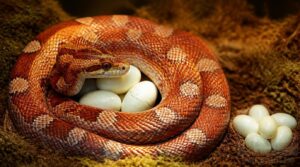
Multiple clutches can be safe, but each one places real nutritional and physical demands on the female. Your focus should be her body condition, recovery, and any warning signs after laying. Keep these care priorities in mind as you review the key factors below.
Maternal Nutrient Depletion
Each clutch draws heavily on the mother’s body. Maternal investment begins during vitellogenesis, when yolks form, and continues through egg production.
- Energy reserves decline as fat and protein support developing eggs.
- Calcium loss can weaken skeletal stores.
- Iron deficiency may impair blood health.
- Water balance and micronutrient depletion can reduce reproductive success.
Post-Laying Recovery Care
Immediately after laying, your snake needs careful rebuilding. Postoviposition care covers hydration, calcium supplementation, feeding, and reptile enclosure adjustments.
| Care Area | Guideline |
|---|---|
| Hydration protocols | Electrolyte soaks at 85°F, 20-30 min daily for 5-7 days |
| Feeding schedule | Offer first small meal after 14-21 days |
| Temperature regulation | Keep the warm side at 80-85°F |
Health monitoring weekly ensures full return to reptile health.
Signs of Egg Binding
Sometimes a gravid female shows her distress clearly. Watch for these five signs:
- Lethargy and weakness – she barely moves
- Straining behavior – pushing without result
- Tail pumping signs – repetitive bobbing near the vent
- Swollen abdomen – swollen in the mid section
- Vent protrusion – visible tissue at the vent
She may refuse food while actively searching her enclosure. Egg binding demands urgent attention.
When Veterinary Care is Needed
Seek reptile veterinary care if your gravid female strains for more than 36 hours after her pre-lay shed, becomes weak, develops vent protrusion, or remains visibly eggbound. A veterinarian should also assess nesting complications, retained infertile egg risks, or egg production problems.
Post-laying care helps with maternal recovery needs, but refusal to pass eggs, feces, or urine requires help. Don’t wait.
Frequently Asked Questions (FAQs)
How many eggs should a corn snake lay?
A healthy female commonly lays 10 to 30 eggs per clutch. Size reflects age, body condition, and nesting setup. Provide damp moss, then restore nutrition after laying as eggs enter the incubation period.
How often can a snake lay eggs?
Most corn snakes lay once per year, though well-conditioned captive females may produce two, rarely three, clutches.
Seasonal breeding cues, nutrition, egg development, and recovery shape egglaying patterns; monitor weight, nesting, and egg-binding breeding season.
How many times does a baby corn snake shed?
Fast as a weed, baby corn snakes shed every 4–6 weeks, sometimes 3–4 during rapid growth. Watch blue-eye cycle, humidity, appetite. Prelay sheds, breeding-season follicular development, nesting behavior, and egglaying don’t apply to babies.
Skip the vitamins—whole prey covers baby corn snakes’ needs, as explained in this guide to shedding supplements for corn snakes.
What time of year do corn snakes breed?
Breeding begins after brumation ends in winter, when spring temperatures rise and daylight increases. Courtship lasts weeks, shaped by pair behavior. Snakes aged 2 to 4 follow once-yearly egglaying habits in spring or early summer.
What should you do if the baby corn snakes have difficulties hatching out of their eggs?
Opening eggs appears helpful, but egg tooth use during incubation period needs patience.
Monitor humidity levels, check egg positioning, avoid excessive handling.
Assist hatchling emergence; seek reptile vet.
Check damp sphagnum moss in nest box.
How long do corn snake eggs take to hatch?
Expect 55–70 days of incubation. At 80–85°F and about 85% humidity with ventilation, fertile eggs often pip by day 55–60; 78°F may take 65– Hatchlings usually emerge within 24–48 hours after pipping.
What incubation temperature is best for corn snake eggs?
Keep incubation temperature at 78–82°F (26–28°C) for steady egg development. Maintain humidity near 80–100%, use accurate dual thermometers, and avoid swings. A 76–84°F gradient can stagger hatching, easing attentive hatchling care afterward.
Pairing these temperature and humidity basics with guidance on eastern milk snake egg incubation and hatching care helps ensure nothing gets overlooked from setup to the first signs of pipping.
Do corn snake eggs need turning during incubation?
By coincidence, the safest approach is also the simplest: do not turn eggs. Mark each top, set it upright, and minimize handling. Stable temperature and humidity protect egg development and viability far better than rotation.
Can corn snake eggs hatch without an incubator?
Corn snake eggs can hatch without an incubator, but incubation success is unreliable. You must maintain 78–82°F, 85–95% humidity, ventilation, and stable substrate moisture. Home setups often cause drying, overheating, mold, and reduced egg viability.
What should newly hatched corn snakes eat first?
Once a tiny newcomer leaves incubation, after temperature and humidity support egg viability and embryonic development, offer thawed pinky mouse at room temperature, 5 times its girth or smaller, every 5–7 days, with fresh water.
Conclusion
Ironically, the healthiest breeding plan often produces fewer eggs, not more. When you ask how many times a year do corn snakes lay eggs, remember that one strong clutch can be preferable to repeated clutches that drain a female’s reserves.
Watch her weight, appetite, behavior, and recovery after laying. Give her time, warmth, clean water, and reliable nutrition. Eggs may be the visible result, but your female’s lasting health is the real measure of success.