This site is supported by our readers. We may earn a commission, at no cost to you, if you purchase through links.
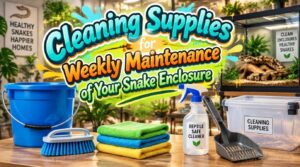
Your snake’s enclosure can look spotless and still carry a film of waste and bacteria that you can’t see. Cheap sponges and household sprays often leave exactly that behind.
Weekly upkeep protects your animal’s health, and the right cleaning supplies for weekly maintenance make the job faster and safer. We’ve seen one dedicated bucket, a nylon scrub brush, and a stack of snake-only microfiber cloths turn a messy chore into a ten-minute routine.
Here’s your shopping list, from reusable tools and reptile-safe disinfectants to waste scoops and storage totes, so you can restock with confidence.
Table Of Contents
- Key Takeaways
- Reusable Tools for Weekly Snake-Enclosure Cleaning
- Cleaners and Disinfectants for Snake-Enclosure Maintenance
- Floor and Glass Cleaning Supplies for Snake Rooms
- Waste-Removal Supplies for Weekly Enclosure Maintenance
- Safe Storage for Your Weekly Cleaning Kit
- Frequently Asked Questions (FAQs)
- What are 10 things I should clean weekly in my home?
- What is the 5-5-5 rule for cleaning?
- What should I include in my weekly cleaning schedule?
- What needs to be cleaned every week?
- How often should mattresses and upholstery be vacuumed?
- Which natural ingredients safely deodorize kitchen spaces?
- How do you prevent mildew in bathroom grout?
- Why choose microfiber mop pads over cotton ones?
- Conclusion
Key Takeaways
- Clean first with a reptile-safe cleaner, then disinfect with a product like F10 or Zoo Med Wipe Out, keeping it wet for the full label contact time, because skipping the cleaning step weakens the disinfectant.
- Skip ammonia, phenols, citrus oils, and heavily scented sprays, since your snake breathes fumes fast, and rinse everything until no smell remains before it goes back in.
- Keep a dedicated set of tools just for the snake room, including buckets, nylon brushes, microfiber cloths, a waste scoop, and spray bottles, so household germs never reach your animal.
- Seal waste in a lidded container right away, wear gloves, and store your kit in a labeled, sealed tote away from food and kids, never keeping bleach near ammonia products.
Reusable Tools for Weekly Snake-Enclosure Cleaning
A good weekly clean starts with the right gear, and we’ve got you covered. Reusable tools save money, cut waste, and give you full control over what touches your snake’s home. Here’s what to keep on your cleaning shelf so every session runs smoothly.
For a step-by-step walkthrough of deep cleaning, substrate changes, and disinfecting, see this guide to cleaning and maintaining your snake’s habitat.
Dedicated Brushes and Scrapers
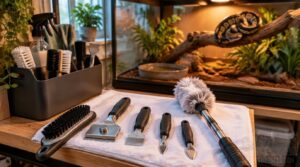
You’ll want brushes and scrapers that never leave the snake room. Dedicated tools keep household germs out and your animal safe.
- Scrub brushes with nylon bristles clean glass without scratching.
- A glass stovetop scraper lifts stuck waste.
- An extendable duster reaches tight corners.
- A cleaning caddy keeps everything together.
Rinse, then air-dry them. For tubs with rounded edges, a cleaning scraper set with chisel, pointed, and rounded radius tips can reach tight corners and remove animal waste without marring surfaces.
Washable Microfiber Cloths
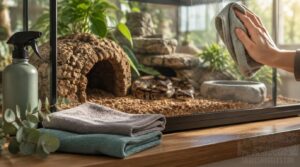
are the workhorse of your weekly routine. Use them dry for dusting hides and decor, then damp for glass and plastic. They lift urate stains without smearing and leave no lint behind.
If you’re still weighing materials, this comparison of natural vs. artificial hides for snakes explains why easy-clean options suit busy keepers.
Wash them hot, up to 60°C (140°F), with no softener or bleach. Keep a separate stack for the snake room. Ecofriendly cleaning products work fine with them.
Buckets and Spray Bottles
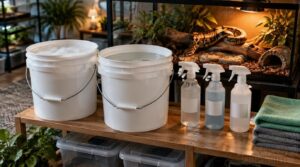
Once your cloths are sorted, grab your buckets and spray bottles. Keep them just for the snake room, never for your home cleaning routine. A 5gallon bucket with food-grade plastic works well, and you’ll want two: one for soapy water, one for rinse.
Choose HDPE or polypropylene spray bottles, label everything clearly, and replace worn ones every few months.
Cleaners and Disinfectants for Snake-Enclosure Maintenance
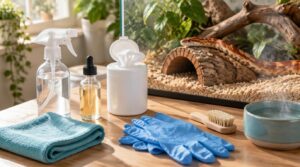
Now that your tools are ready, let’s talk about what goes on them. The right products keep your snake’s home clean and safe, and we’ll cover three key areas below. You’ll know what to buy, how to choose it, and how to use it with confidence.
Cleaning Versus Disinfecting Products
Cleaning wipes dirt away. Disinfecting kills what’s left behind. They’re different jobs, and you need both.
Snake owners can apply the same two-step approach using this guide to cleaning a snake enclosure without risking their pet’s health.
Cleaning wipes away the dirt and disinfecting kills what remains, so you need both to keep things truly safe
Start with surface-specific cleaners and a clean cloth to lift waste and grime. Then apply a disinfectant for disinfecting surfaces, keeping them wet for the full contact time on the label. Skip the cleaning step, and leftover organic matter can weaken the disinfectant.
Reptile-Specific Product Selection
A smart Reptile-Specific Product Selection starts with Toxic chemical avoidance. Skip ammonia, phenols, and heavily scented sprays, because snakes breathe fumes in fast.
Ecofriendly cleaning products and natural cleaning agents, like diluted Dawn, handle everyday grime. For disinfecting, try F10 or Zoo Med Wipe Out. Both are made for reptiles. Surface-specific cleaners suit glass, wood, and plastic. You’ve got this.
Label Directions and Rinsing Requirements
A product’s label directions tell you exactly how much to dilute it and how long it needs to sit wet. Follow them every time, and never mix cleaners.
Then comes the step people skip: rinse until no smell remains, especially on wood and water dishes. Strong rinsing requirements protect your snake.
Let everything air dry fully before it goes back.
Floor and Glass Cleaning Supplies for Snake Rooms
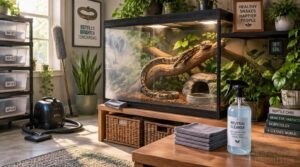
Imagine this: you wipe down a rack of tubs, step back, and spot a cloudy smear across the glass front of your ball python’s enclosure. Annoying, right? We’ve all been there.
Keep three basics on hand:
- Glass cleaner that’s ammonia-free and neutral in pH
- Clean microfiber cloths, kept separate from substrate tools
- A vacuum with a hose attachment for floors and corners
Spray the cleaner onto your cloth, never the glass, then wipe vertically and horizontally. Remove every trace of residue, because leftovers can irritate scales.
For the rest of the room, an extendable duster clears cobwebs and dust from shelves, and a reptile-safe all-purpose cleaner takes care of floors. Always skip any cleaner with phenols or citrus oils. You’ve got this.
Waste-Removal Supplies for Weekly Enclosure Maintenance
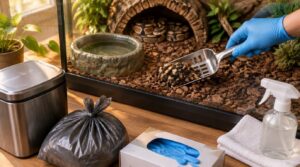
Imagine this: it’s Saturday morning, you open the enclosure, and a fresh mess sits right by the water bowl. You don’t have to panic or grab whatever’s nearby. You just need the right kit.
Start with a dedicated waste scoop made of non-porous plastic or metal. Keep it only for waste so it never touches your other tools. Pull on nitrile or latex gloves before you reach in. They keep germs off your hands, and that’s a win for your safety.
Next, bag it up. Drop the waste and soiled substrate into a lidded waste container or tie it off in sealed trash bags. Sealing it fast is your best odor control method. A small lidded trash can sitting right beside the enclosure makes cleanup quick and keeps smells from drifting through the room.
Finish by wiping the spot for surface sanitization. Easy, right?
Safe Storage for Your Weekly Cleaning Kit
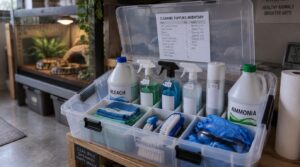
Your cleaning kit only works if it’s safe and ready when you are. Safe storage takes about ten minutes to set up, and it pays you back every week.
Pick a cool, dry spot away from sunlight and food prep areas. Keep it easy for you to reach but out of range of pets and kids. Place it below eye level, away from heat.
Use a sealed tote as your cleaning caddy. Keep every product in its original packaging with labels intact, and date anything you’ve opened or mixed yourself. Never store bleach near ammonia products.
Rinse and dry brushes and cloths before they go back. Add gloves and other protective equipment to their own compartment. Tape an inventory list inside the lid, and check it monthly. Follow these storage safety guidelines and you’ll stay in control.
Frequently Asked Questions (FAQs)
What are 10 things I should clean weekly in my home?
Ready for a spotless home? Wear disposable gloves, then use scrubbing sponges, disinfecting wipes, paper towels, and natural cleaning agents on your counters, microwave, sink, toilet, shower, mirrors, floors, bedding, towels, and all dusty surfaces.
What is the 5-5-5 rule for cleaning?
Most of us don’t need a deep clean, just a starting point. The 5-5-5 rule is simple: toss five items, donate five, and put five back where they belong. That’s fifteen items, then you’re done.
What should I include in my weekly cleaning schedule?
Each week, spot-clean your snake enclosure substrate, wipe surfaces with a damp microfiber cloth, and scrub water and food dishes. Use a reptile-safe, ecofriendly cleaner, rinse well, and dry everything before your snake returns.
What needs to be cleaned every week?
Your enclosure’s a tiny city needing weekly sweeps. Scrub the water dish, decor, and glass with microfiber cloths, white vinegar, and baking soda. Swap soiled substrate, wipe with disinfecting wipes, use grout and tile cleaner.
How often should mattresses and upholstery be vacuumed?
In one clinical study, daily vacuuming for eight weeks cut dust mite allergens by 85%. You don’t need to go that far. Vacuum your mattress and upholstery weekly with a HEPA filter vacuum.
Which natural ingredients safely deodorize kitchen spaces?
You’ve got safe options right in your pantry. Baking soda absorbs odors, so tuck a box in the fridge. Distilled white vinegar and lemon cut lingering smells, and they pair well with your all-purpose cleaner.
How do you prevent mildew in bathroom grout?
Keep grout dry, and mildew can’t settle in. Run the fan 15-20 minutes after showers, then squeegee the walls. Weekly, scrub with white vinegar and a grout brush. Seal grout yearly.
Why choose microfiber mop pads over cotton ones?
Cotton mops are sponges with bad habits.
A microfiber mop traps more dirt, dries faster, and outlasts cotton by a wide margin. Add a microfiber cloth, dusting tools, and ecofriendly cleaning products for allergen reduction.
Conclusion
Last Sunday, Maria wiped her ball python’s tank with a kitchen sponge and called it done. By Wednesday, the glass was cloudy and the smell was back. She swapped in a dedicated bucket and a snake-only cloth.
The right cleaning supplies for weekly maintenance make that difference. Keep reptile-safe disinfectant handy, rinse everything, and store your kit away from food. You’re not just scrubbing glass. You’re protecting your snake, one tidy Sunday at a time.