This site is supported by our readers. We may earn a commission, at no cost to you, if you purchase through links.

Your snake’s eyes turn milky blue, and panic sets in. Is she sick? Blind? About to die? Take a breath: that cloudy look is one of the most reliable signs of a normal shed cycle, not a crisis.
Knowing how long shedding takes turns that panic into patience. A full cycle runs 9 to 14 days for most snakes, moving through predictable stages you can actually track on a calendar. Hatchlings blow through it faster; adults take their time.
Once you know the timeline, spotting trouble becomes second nature.
Table Of Contents
- Key Takeaways
- How Long Snake Shedding Takes
- Snake Shed Stages Timeline
- Timing by Age and Species
- Factors That Slow Shedding
- Stuck Shed Warning Signs
- Top 5 Shedding Products to Consider
- Frequently Asked Questions (FAQs)
- How long does shedding usually take?
- Can minoxidil shedding start immediately?
- How long should hair shedding last?
- How do I know if I’m shedding too much?
- How many hairs is it normal to shed daily?
- When does postpartum hair shedding typically peak?
- How long does telogen effluvium last without treatment?
- Why does human skin shed faster in dry climates?
- Conclusion
Key Takeaways
- A full shed cycle normally takes 9 to 14 days, moving through dull skin, blue opaque eyes, eye clearing, and final peeling before coming off in one piece.
- Milky blue eyes are a normal mid-shed sign caused by fluid buildup under the old skin, not an illness or vision emergency.
- Humidity below 60%, unstable temperature gradients, poor hydration, illness, and lack of rough surfaces are the main causes of delayed or patchy sheds.
- A shed lagging past 14 days, retained eye caps or tail skin after two to three tries, or repeated patchy sheds signal it’s time to check husbandry or call a vet.
How Long Snake Shedding Takes
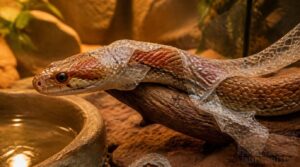
Shedding follows a predictable rhythm once you know what drives it. Timing depends on age, species, and the conditions inside the enclosure. Here’s what shapes that 9 to 14 day window and when a shed should actually worry you.
If your snake’s shed cycle suddenly speeds up, stalls out, or leaves patches behind, it’s worth learning what irregular shedding patterns reveal about your snake’s health before assuming it’s nothing.
Typical 9–14 Day Timeline
Nine to fourteen days: that’s your baseline window for a full shed cycle. It starts with dull, loosened skin and ends with one intact piece. Three factors drive completion time:
Temperature, humidity, and hydration all play a role, so knowing the signs of a healthy ball python shedding helps you spot when things are on track.
- Humidity levels in the enclosure
- Temperature gradient stability
- Individual hydration status
The opaque eye phase signals mid-cycle progress. This desquamation process—epidermis shedding via the stratum corneum—normally finishes as a single-piece exfoliation.
Younger Snakes Shed Faster
Hatchlings can shed every 1 to 3 weeks, driven by rapid growth that outpaces adult skin cell turnover.
Check the tail tip carefully, and follow post-shed snake care steps if a dry skin ring remains.
Faster metabolism speeds epidermis renewal under the stratum corneum. Hydration matters most here: low humidity causes patchy, incomplete desquamation in fast-growing juveniles.
Smaller species like corn snakes hit these juvenile cycles earlier, so don’t handle young snakes heavily right before a shed.
Juvenile snakes shed more frequently than adults across species juvenile shedding frequency
Adults Shed Less Often
Once growth slows, adults commonly shed every 4 to 8 weeks instead of every few weeks. Lower metabolic rate means slower skin cell turnover, so the epidermis renews less often. Larger body size also means more surface area per shed, so complete exfoliation simply takes longer.
Stable humidity around 50-60% still helps efficient skin renewal.
Normal Variation by Snake
No two snakes shed on identical schedules. Size variation alone can shift timing, since larger-bodied individuals need more surface area exfoliated.
Color morphs, scale quality, and even activity levels play a role, too. Snakes with sluggish metabolisms show slower keratinocyte turnover in the epidermis.
Health differences and hydration status also factor in, so mild variation between two healthy snakes is completely normal.
When Timing Becomes Concerning
A shed lagging past 14 days signals trouble, not patience. Low humidity below 60% slows keratinocyte turnover in the epidermis, leaving dry skin at the edges.
Extension beyond 21 days often reflects illness—skin infections or metabolic issues. Poor hydration and temperature gradient problems compound delays. Recurring lag across multiple cycles? That’s chronic stress, not coincidence—time to consult a veterinarian.
Snake Shed Stages Timeline
Shedding, or ecdysis, isn’t one single event—it moves through five distinct stages, each with its own visible signs. Knowing what your snake looks like at each point helps you tell normal progress from a problem in the making. Here’s the breakdown, stage by stage.
Dull Skin Begins

Your snake’s skin loses its glossy sheen first, turning dull and faded as the old outer layer separates from fresh skin underneath. This barrier function shift increases trans epidermal water loss, so skin hydration and elasticity both drop.
Offer a humid hide now. Gentle misting helps skin brightness during this phase, prepping tissue for the shed ahead.
Blue Opaque Eye Phase
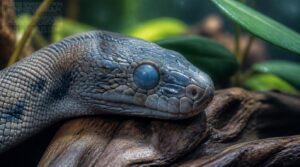
Eye fluid buildup between old and new skin gives your snake’s eyes a milky blue cast next, a hallmark of desquamation, keratinocytes lifting from the epidermis below.
Vision drops for several days to two weeks. Your snake relies on smell and touch instead.
- Reduced appetite
- Hiding more
- Skittish movement
- Handling avoidance
- Sensitivity to noise
Humidity between 50-70% and smooth surfaces ease stress during this vulnerable phase.
Eyes Clear Again
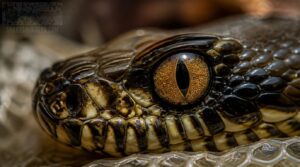
That milky blue haze fades within a day or two, and it’s your clearest sign the shed is close. Fluid resorbs, restoring corneal epithelium renewal and ocular surface smoothness. Tear film stability returns to normal, supporting visual acuity recovery.
Pupillary response normalization follows quickly. Your snake regains full vision, appetite often returns, and confidence replaces that skittish hiding behavior almost overnight.
Final Shed Starts

Once vision clears, the outer skin loosens at the lips and starts peeling backward like a sock turning inside out. Eye cap release happens first, freeing the old lenses before the rest follows.
Humidity impact matters most here—low moisture stiffens the epidermis and stalls progress. Proper hydration keeps skin elasticity high, letting keratinization finish smoothly as your snake rubs against rough surfaces to work it loose.
Complete One-piece Shed

A healthy shed peels off in one continuous piece, from lip to tail tip, like a sock turning right-side out. This confirms proper epidermis exfoliation, not patchy dry skin.
A healthy shed peels off in one continuous piece, from lip to tail tip, like a sock turning right-side out
Adequate hydration and correct humidity function like weather resistance for your snake’s exterior. Rough décor provides the "foundation" for friction, while consistent moisture is your maintenance tip: it keeps skin flexible enough to shed intact.
Timing by Age and Species
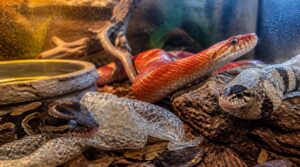
Shed timing isn’t universal across every snake you might keep. Species, age, and growth rate all shift the schedule in predictable ways. Here’s what to expect from some of the most common pet snakes.
Ball Python Shedding Timeline
Ball pythons run a predictable clock: 9 to 14 days from pre-shed dullness to a clean, one-piece shed, including the eye phase’s 2-4 day cloudy window.
- Hatchlings: every 3-4 weeks
- Juveniles: 4-6 weeks
- Adults: 6-8 weeks
- Growth spurts shorten intervals
- Humidity stabilizes timing
Consistent husbandry keeps this rhythm reliable across your snake’s life.
Corn Snake Shedding Timeline
Corn snakes shed on a growth-driven clock, not a calendar. Hatchlings and juveniles molt every 4 to 6 weeks, fueling rapid cell regeneration and skin barrier repair. Adults slow to roughly every 3 months once growth plateaus.
Shedding happens year-round, without seasonal variation, as long as humidity and moisture balance stay adequate. Expect 4 to 12 sheds annually depending on age.
Boa Constrictor Shedding Timeline
Boa constrictors follow a slower clock than corn snakes, shedding every 4 to 12 weeks depending on age and growth rate. Juvenile growth rate drives frequency early on.
- Shed cycle: 1–2 weeks
- Frequency: 4–12 weeks
- Humidity: 60–70%
- Single-piece sheds typical
- Age slows the pace
Humidity influence matters here — dry enclosures disrupt cell regeneration and collagen production, slowing complete sheds.
Hatchlings Versus Adults
Age changes everything about a snake’s shedding schedule. Hatchlings shed every few weeks due to rapid growth rate, while adults slow to monthly or longer cycles once body size stabilizes.
Younger snakes carry higher health vulnerability, needing tighter humidity control and smaller enclosures. Adults tolerate minor environmental swings better, thanks to broader physiological reserves built up over time.
Growth-related Shed Frequency
Every shed is a growth report written on skin. Juveniles cycle every 3-4 weeks; adults stretch to 6-8 as growth rate slows.
- Rapid growth: shed every 2-4 weeks
- Steady adult growth: 6-8 week gaps
- Feeding spurts: temporary frequency spikes
- Gravid females: earlier, metabolism-driven sheds
Keep humidity at 50-60%, and track intervals—it’s your clearest window into overall growth health.
Factors That Slow Shedding
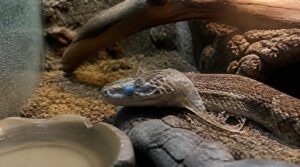
A 9 to 14 day shed can stretch well past that window, and the reason usually traces back to the enclosure, not the snake. Five setup mistakes account for most delayed or incomplete sheds you’ll encounter. Here’s what to check first.
Low Enclosure Humidity
Dry air is the number one reason sheds go patchy. Keep enclosure humidity in the 40–60% range, since low moisture prevents the skin from softening properly, causing dry, incomplete sheds. Since ideal humidity varies by species, check this guide on causes and fixes for snake dry skin and humidity problems to dial in the right target for your snake.
Mist regularly, add a water dish or damp substrate, and use moisture-retention substrates like sphagnum moss. Raise humidity gradually — sudden spikes stress your snake’s respiratory system.
Incorrect Temperature Gradient
Gradient accuracy matters as much as humidity. Aim for a stable 5–8°C difference between basking and cool zones — uneven heat mats placement creates thermal deserts that melt shed skin in hot spots while cooler pockets stall it.
This disrupts the normal 4–8 week rhythm, delays epidermal loosening, and undermines consistent shedding conditions your snake depends on.
Poor Hydration
Moisture is what turns rigid old skin into something pliable enough to slide off in one piece. Poor hydration dries the outer layer before the crawl-out finishes, causing patchy, fragmented sheds instead of a clean tube.
Soaking sessions and a clean, appropriately-sized water bowl raise humidity and rehydrate stuck sections. Without adequate moisture, skin elasticity drops and dryness progresses toward the tail tip first.
Illness or Stress
Sickness pulls resources away from routine skin turnover, since the immune system takes priority during active infection. That’s immune strain, and it stalls shedding for weeks.
Behavioral stress works similarly. Handling, relocation, or a new enclosure can trigger cortisol spikes that reduce feeding and drinking, causing hydration loss and unpredictable, stress-induced shedding delays.
Rough Surfaces Missing
Snakes need something to snag old skin against — smooth glass alone won’t do it. Without rough branches, rocks, or textured backgrounds, your snake can’t create the friction needed to peel skin free, disrupting the natural shed process the way poor surface texture disrupts predictive modeling in engineering.
Add textured décor to your enclosure; it’s as essential as correct humidity for a complete, one-piece shed.
Stuck Shed Warning Signs

A normal shed comes off in one clean piece, but not every shed goes as planned. When it doesn’t, your snake’s body leaves specific clues you can spot early. Here are the five warning signs worth knowing.
Retained Eye Caps
Cloudy eyes after a "complete" shed usually mean the old spectacle scale never let go. Low humidity is the top culprit—dry skin sticks fast.
Watch for milky eyes, redness, or rubbing against branches. Rehydrate gently with a damp cloth; never scrape.
If clarity doesn’t return within one shed cycle, veterinary care is needed to prevent corneal damage.
Tail Tip Stuck Shed
Eyes aren’t the only spot where old skin overstays its welcome. The tail tip sheds last, and its taper makes it prone to retained skin.
Watch for:
- Thin, translucent edge at the tip
- Duller, darker tail coloring
- Edge resists gentle friction
- Repeated sticking each cycle
- Brittle, stiff skin buildup
Rehydrate gently; never force removal. Persistent cases need veterinary consultation.
Patchy Incomplete Shed
Sometimes the shed doesn’t come off in one clean piece — it tears into several fragments instead. That’s a patchy incomplete shed, usually tied to low humidity or dehydration disrupting normal cellular turnover.
Fragmented skin often leaves patches on the body, not just eyes or tail. Inspect thoroughly, then raise humidity and offer a warm soak to rehydrate remaining skin before gently assisting removal.
Repeated Bad Sheds
One patchy shed rarely means much. Two or three in a row does — that’s a pattern, not bad luck.
Common repeat triggers:
- Chronic humidity under 40%
- Uneven enclosure temperature
- Poor hydration or diet gaps
Smooth substrate, consistent misting, and a weekly health check break the cycle. Left unaddressed, repeated sheds raise the odds of eye cap retention and skin thickening over time.
When to Call a Vet
Home fixes only go so far. If a shed stays stuck through two or three attempts, or you spot skin infection symptoms like redness, swelling, or discharge, it’s time for a vet visit.
Refusal to eat or drink, lethargy, or other behavioral changes alongside persistent shedding issues also warrant prompt care rather than waiting another cycle out.
Top 5 Shedding Products to Consider
Choosing the right products makes snake shedding smoother and safer for your pet. You’ll want options that support humidity, comfort, and healthy skin turnover. Here are five reliable choices worth considering for your enclosure.
Adding a few well-chosen live plants for snake enclosures can naturally boost humidity while giving your snake a cozy spot to hide during shedding.
1. PetSafe Sliding Glass Pet Door Medium
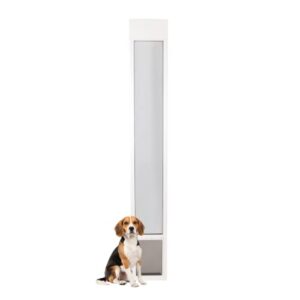
A snake’s shedding cycle has nothing to do with your reptile room’s door, but if you keep an outdoor enclosure near a sliding glass exit, the PetSafe Sliding Glass Pet Door Medium deserves a mention for household organization.
It installs into tracks measuring 75 7/8" to 80 11/16" with no cutting required, fits pets up to 40 lbs, and uses a magnetic flap with weather-resistant aluminum framing.
Handy for multi-pet households managing dogs or cats while you monitor a snake’s opaque-eye phase indoors.
| Best For | Households with dogs or cats up to 40 lbs who want independent pet access through a sliding glass door without permanent modifications, especially renters or apartment dwellers. |
|---|---|
| Weight | 40 lbs |
| Ease of Use | No-cut DIY install |
| Maintenance Required | Occasional cleaning |
| Safety Certification | Shatter-resistant glass |
| Application Area | Sliding door track |
| Results Duration | Immediate access |
| Additional Features |
|
- No-cut installation fits directly into existing sliding door tracks, ideal for rentals
- Magnetic flap and weather-resistant aluminum frame with tempered glass provide durable, secure access
- Includes a locking human door kit and closing panel for added security when not in use
- Not suitable for pets over 40 lbs or larger breeds that exceed the flap dimensions
- Requires a track with at least 1-inch depth, so it won’t work with every sliding door
- Panel extends 1 3/8 inches into the doorway, which can slightly reduce the clear opening width
2. Nestl Dark Grey Microfiber Queen Sheet Set

Bedding has nothing to do with ecdysis, but a queen-size sheet swap matters if your snake’s tank sits in your bedroom radiating extra humidity or heat overnight.
The Nestl set uses double-brushed microfiber, OEKO-TEX certified free of over 1,000 harmful substances, with deep pockets fitting mattresses up to 18 inches. It resists fading and wrinkling through repeated washing, staying breathable enough to avoid overheating your sleep space while enclosure humidity climbs during your snake’s shedding cycle nearby.
| Best For | Sleepers who want a soft, easy-care queen sheet set that fits thicker mattresses and helps keep a warm bedroom feeling breathable overnight. |
|---|---|
| Weight | 1.36 kg |
| Ease of Use | No break-in needed |
| Maintenance Required | Regular washing |
| Safety Certification | OEKO-TEX certified |
| Application Area | Mattress up to 18in |
| Results Duration | Immediate softness |
| Additional Features |
|
- Double-brushed microfiber feels soft right away, no need to wash it first
- Deep pockets with all-around elastic fit mattresses up to 18 inches for a snug, stay-put fit
- OEKO-TEX certified, so it’s free of over 1,000 harmful substances and safe against skin
- Microfiber can trap more heat than natural fibers like cotton in warm rooms
- Not ideal if you prefer the feel of natural fabrics like cotton or linen
- On mattresses thinner than 8 inches, the deep pockets may leave extra fabric that bunches up
3. Long Needle Pine Straw Mulch 240 Sq Ft
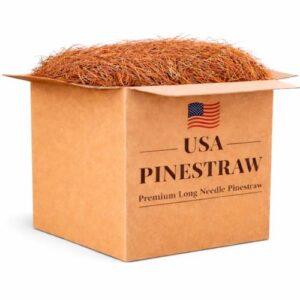
Not every product on this list touches your snake directly, and pine straw mulch is a good example: it’s for the terrarium’s surroundings, not the shed itself.
If your enclosure sits in an outdoor reptile room or greenhouse setup, this 240-square-foot coverage helps control ground moisture and temperature swings nearby, indirectly stabilizing the microclimate your snake sheds in. It suppresses weed growth around outdoor setups and retains soil moisture, but reapply every 1 to 3 years since it breaks down and won’t affect ecdysis on its own.
| Best For | Homeowners and gardeners looking for a natural, budget-friendly way to control weeds and erosion on slopes and around outdoor plant beds, including those with an outdoor reptile room or greenhouse setup nearby. |
|---|---|
| Weight | Lightweight |
| Ease of Use | Easy to spread |
| Maintenance Required | Periodic reapplication |
| Safety Certification | Organic material |
| Application Area | Slopes and plant beds |
| Results Duration | Temporary ground cover |
| Additional Features |
|
- Covers a generous 240 square feet per set, making it easy to treat large areas in one go
- Naturally interlocking needles hold soil in place on slopes while retaining moisture and suppressing weeds
- Lightweight and simple to spread without heavy lifting or special tools
- Breaks down over time, so it needs reapplying every 1 to 3 years
- Can blow away in high-wind areas unless properly anchored
- Adds little to no nutrients back into the soil as it decomposes
4. Women’s 5% Minoxidil Hair Growth Spray
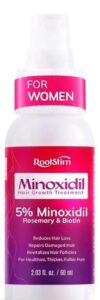
Yes, this one’s for you, not your reptile — a reasonable question given the list so far.
This spray delivers 5% minoxidil, the FDA-approved concentration for female pattern thinning, alongside rosemary extract and biotin for scalp support. Expect visible results only after 3–6 months of twice-daily use, with some early shedding first as follicles reset. Discontinuing treatment risks losing new growth. It won’t help your snake shed, but if you’re managing your own hair loss between terrarium chores, it’s a legitimate option worth researching separately.
| Best For | Women experiencing hereditary hair thinning who want a clinically-backed, daily treatment option and are willing to commit to consistent long-term use. |
|---|---|
| Weight | 5.29 oz |
| Ease of Use | Simple daily spray |
| Maintenance Required | Consistent daily use |
| Safety Certification | FDA-approved concentration |
| Application Area | Thinning scalp areas |
| Results Duration | 3-6 months for results |
| Additional Features |
|
- Contains 5% minoxidil, the FDA-approved concentration specifically for female pattern hair loss
- Formulated with rosemary extract and biotin to support overall scalp health and hair strength
- Precision spray design allows targeted application directly to thinning areas
- Visible results can take 3–6 months of consistent, twice-daily use to appear
- Stopping treatment may cause newly grown hair to be lost
- May cause scalp irritation, dryness, or unwanted facial hair growth in some users
5. Mens Rogaine Hair Regrowth Treatment Foam
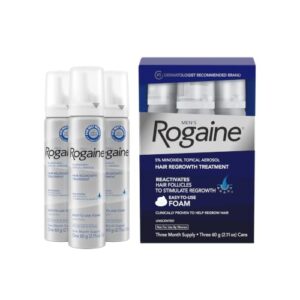
Rounding out this list, this one’s strictly for the human keeping the terrarium warm. It delivers 5% minoxidil in an unscented foam, applied twice daily to the crown. Expect an initial shedding phase as dormant follicles cycle out, then visible regrowth over several months.
No connection to reptile biology whatsoever — but if thinning hair is on your radar while you’re monitoring your snake’s shed cycle, it’s a dermatologist-recommended option worth discussing with your own doctor, not your reptile vet.
| Best For | Men noticing early thinning or a receding hairline who want a straightforward, twice-daily addition to their grooming routine. |
|---|---|
| Weight | 6.33 oz |
| Ease of Use | Quick twice-daily foam |
| Maintenance Required | Consistent daily use |
| Safety Certification | Dermatologist-recommended |
| Application Area | Scalp thinning areas |
| Results Duration | Requires ongoing use |
| Additional Features |
|
- Contains clinically proven 5% Minoxidil to help regrow hair and slow further loss
- Unscented, fast-absorbing foam that’s non-greasy and easy to apply
- Formulated with botanical extracts and glycerin to help keep the scalp conditioned
- Requires consistent twice-daily use, so results depend on sticking to the routine
- May trigger a temporary shedding phase before improvement shows
- Results fade if treatment stops, and side effects like scalp irritation or unwanted hair growth are possible
Frequently Asked Questions (FAQs)
How long does shedding usually take?
Most healthy snakes complete a shed in 9 to 14 days. Younger animals often finish closer to nine, while adults take up to Anything stretching past three weeks warrants a closer look at humidity and health.
Can minoxidil shedding start immediately?
Not usually. Minoxidil shedding usually starts 2 to 6 weeks in, not within days. Follicles need time to shift cycles before shedding shows. Increased fallout within 24-72 hours isn’t the standard pattern dermatologists expect from treatment onset.
How long should hair shedding last?
Most shedding resolves within three to six months, peaking around eight to twelve weeks post-trigger. If density hasn’t improved by nine months, or worsens, that’s your cue for bloodwork checking thyroid function and ferritin, the iron-storage protein, levels.
How do I know if I’m shedding too much?
Watch for patchy thinning or a widening part rather than daily strand counts. Losing 50–150 hairs is normal; concerning shedding brings visible density loss, tender scalp, or miniaturized hairs persisting past several months.
How many hairs is it normal to shed daily?
Most people lose 50 to 100 hairs daily without issue. Wash days can push counts higher temporarily.
That range represents a tiny fraction of your total follicles, so don’t panic over strands in the shower drain.
When does postpartum hair shedding typically peak?
The rug gets pulled out from under new mothers around month four to six, when estrogen drops trigger synchronized follicle shedding. Datasets peg the average peak near 1 months, tapering off by month eight as follicles resume normal growth cycles.
How long does telogen effluvium last without treatment?
Without treatment, telogen effluvium usually resolves within 3 to 6 months once the trigger passes. Most cases clear naturally, with 95% recovering within 2-3 months after the stressor ends and hair cycling resumes.
Why does human skin shed faster in dry climates?
Dry air raises transepidermal water loss, pulling moisture out faster than the barrier can hold it. Ceramide levels drop, corneocyte bonding weakens, and desquamation speeds up as compromised cells shed prematurely, similar to how low humidity dehydrates a snake’s shedding skin.
Conclusion
The slower your snake sheds, the faster trouble reveals itself. That’s the paradox: patience is your best diagnostic tool.
Once you know how long shedding takes, a delayed cycle stops feeling random and starts looking like data. Nine days or fourteen, dull skin or blue eyes, each stage tells you something specific.
Trust the timeline, watch for retained caps, and act only when the pattern breaks. Calm, informed watching keeps your snake healthy, shed after shed.