This site is supported by our readers. We may earn a commission, at no cost to you, if you purchase through links.

A bare glass tank keeps a snake alive, but it doesn’t feel like home. Add the right greenery, and shy species start using every inch of space, climbing, hiding, and exploring like they would in the wild.
That’s the real payoff of live plants. They’re not just decoration. The right plants for snake tank setups raise humidity, hold substrate in place, and give your snake somewhere to disappear when it wants privacy.
Not every plant earns a spot, though. Some grow too fast, some carry irritating sap, and some just don’t hold up to a snake’s weight or curiosity. Here’s what actually works, and how to get it ready before it goes in.
Table Of Contents
- Key Takeaways
- Best Plants for Snake Tanks
- How to Choose Snake-Safe Plants
- Benefits of Live Tank Plants
- Preparing Plants for Snake Enclosures
- Plant Placement and Ongoing Care
- Frequently Asked Questions (FAQs)
- What live plants can I put in a snake tank?
- Do snake plants like small or big pots?
- Which plants are toxic to snakes?
- What are the rules for snake plants?
- How often should I replace the plants in my snake’s habitat?
- Should I use live or artificial plants for my snake tank?
- What types of plants are unsafe or toxic for snakes?
- How can I clean and disinfect plants before adding them to my snake’s enclosure?
- Can snakes eat or chew on plants?
- Are fake plants better than live ones?
- Conclusion
Key Takeaways
- Live plants like golden pothos, snake plant, Boston fern, bromeliads, and peperomia raise humidity, help shedding, and give your snake real places to hide and climb.
- Before adding any plant, you need to quarantine it for four to six weeks, rinse the leaves, strip off nursery soil, and check closely for pests. Once your plants are clean, check this list of ball python-safe plants for your vivarium so you only bring home species that won’t harm your snake.
- Avoid plants with thorns, spines, or irritating sap like euphorbia, since these can hurt your snake or irritate your own skin.
- Once plants are in the tank, you have to keep heat gradients, airflow, and substrate moisture balanced so the setup stays safe and stable long term.
Best Plants for Snake Tanks
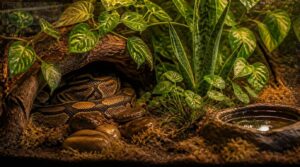
Picking plants for your snake tank doesn’t have to be hard. Some species handle low light, humidity, and the occasional bump better than others. Here are five solid options to get your enclosure looking and feeling right.
If you’re setting up for a more specific species, this guide on caring for green tree pythons as pets breaks down the humidity and foliage needs that shape the best plant choices.
Golden Pothos
If you want a vine that just won’t quit, Golden Pothos is a solid pick. Its heart shaped leaves show gold, cream, and green patterns that vary by plant.
Aerial roots grow along the stem, gripping bark or wood inside your reptile enclosure. New growth starts light green before variegation kicks in fully. Since damp enclosure substrate can encourage issues, watch for symptoms of overwatering like yellowing leaves or mushy stems.
Snake Plant
If pothos is the vine, the Snake Plant is the backbone. Its stiff, sword shaped leaves grow upright, no trailing needed.
Leaf height ranges 12 inches to 4 feet by cultivar. Growth stays slow to moderate, picking up with light and warmth. It tolerates low light and irregular watering, and forms clumps through offsets over time.
Boston Fern
Snake Plants stay tough and dry. Boston Fern flips the script, needing high humidity and steady moisture to thrive.
Its arching fronds can reach four feet, giving tropical vivariums lush, full coverage. Keep soil moist, not soggy, and mist fronds often. Bright indirect light keeps growth strong. This fern rewards attentive watering schedules with real jungle texture.
Tank-Safe Bromeliads
Ferns love water in soil. Bromeliads store it up top instead.
Their central leaf cups form small water tanks, adding humidity without soaking roots. Guzmania and Neoregelia handle bright indirect light well.
- Guzmania with colorful bracts
- Neoregelia’s compact rosette
- Tillandsia air plants needing no soil
- Cryptanthus earth stars hugging the ground
Use well-draining bark mix and anchor firmly to cork or branches for stability.
Peperomia Varieties
Round leaves and thick, succulent-like foliage make peperomia a low-fuss pick for any reptile enclosure. These nontoxic plants tolerate low to medium light and only need water every 1 to 3 weeks.
Try watermelon peperomia or peperomia caperata for leaf shape variety. Both root easily from cuttings, so propagation is simple. Use well-draining soil, and don’t let pots sit in standing water.
How to Choose Snake-Safe Plants

Not every plant is safe for your snake’s tank. You need to check a few key things before you buy one. Here’s what to look for.
Live plants aren’t the only thing worth researching before setup—pairing them with a moisture-retentive substrate like coco coir helps keep humidity steady and your snake’s tank truly thriving.
Match Humidity Requirements
Not every plant likes the same air. Tropical species need 50-60% RH for easy shedding, while dryland snakes do fine at 40-50%.
Match your plant to your snake’s humidity gradient setup. Use plant grouping microclimates, ventilation, and mist frequency control to keep substrate moisture balanced without soaking leaves.
Check Mature Plant Size
A young pothos vine looks harmless until it stretches 6 to 10 feet long. Plant height estimation matters before you buy.
Snake Plant grows 1 to 4 feet tall, Boston Fern (Nephrolepis exaltata) stays around 2 to 3 feet, and Peperomia caperata or Pilea involucrata rarely top 12 inches. Match size to your enclosure’s space.
Avoid Thorns and Spines
A single thorn can tear soft snake scales in seconds. That’s why spine-free plant selection matters for any reptile enclosure.
Skip cactus-like species or anything with sharp points on stems or leaves. Choose smooth-leaf species instead. Check new plants closely, hidden spines snag decor and skin during movement, even on sturdy, drought-tolerant types.
Avoid Irritating Plant Sap
Some plant sap can hurt your skin more than a snake bite ever could. Milky sap from plants like euphorbia causes redness, swelling, and blisters within a day or two.
Some plant sap, like euphorbia’s milky discharge, can irritate skin worse than a snake bite, causing redness and blisters within a day
Wear gloves when handling reptile-safe plants for your vivarium background. Wash skin right away if sap touches you, since it can transfer from clothing too.
Choose Sturdy Root Systems
A snake can push against soil without warning. That’s why sturdy root systems matter in a naturalistic planted vivarium.
Look for deep tap roots reaching 12 to 24 centimeters, plus dense fine root networks for a water-retentive substrate. Root mat strength and thickened root strength resist bumps, while uniform root spread keeps plants upright near hardscape branches.
Benefits of Live Tank Plants
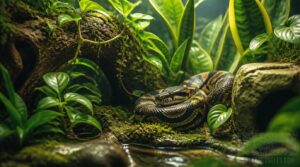
Live plants do more than decorate your snake’s tank. They can shape your snake’s health, behavior, and comfort in real ways. Here are five benefits worth knowing before you plant anything.
Improved Humidity and Shedding
Golden pothos and Boston fern release moisture through their leaves, raising humidity by up to 10 percent in small tanks. This keeps shed skin supple and helps snakes molt cleanly.
Bromeliad cups add extra water storage for dry nights.
Steady humidity means fewer stuck sheds and smoother molts, especially during those twilight shedding windows.
Additional Hiding Places
Moisture isn’t the only comfort plants bring. Dense undergrowth and leaf litter shelters give your snake a spot to curl up, away from bright light.
Vine network hides work along branches, while bromeliad cup retreats suit smaller snakes. Root crown cavities and ground cover dens add even more choices, so your reptile-safe plants double as hideouts, not just decoration.
Better Substrate Stability
Hideouts aren’t the only perk hiding underground. Root anchoring keeps loose particles locked in place, cutting down on shifting during exploration.
Layered substrate design, with drainage below and bioactive mix on top, spreads weight evenly. Inert substrate options like coco coir resist breakdown. Moisture balance control stops mud pools, so gentle substrate agitation during cleanups keeps everything even and stable.
Natural Climbing Opportunities
A stable floor sets the stage, but climbing is where your tank comes alive. Vertical vine networks from pothos, plus bromeliad canopy perches and peperomia props, give arboreal species real routes to explore.
Add climbing fern fronds and air plant tendrils, and your enclosure turns into a layered gym built for natural movement.
More Enriching Snake Habitats
Because snakes explore with their whole body, texture matters as much as layout. Rough bark on hardscape branches, smooth pothos leaves, and fuzzy fern fronds all add tactile interaction your snake will investigate.
Variegated bromeliads bring visual contrast, while hanging plants and seasonal growth keep the habitat changing. Safe leafy greens tucked into hides add simple foraging opportunities, turning feeding time into real enrichment.
Preparing Plants for Snake Enclosures
A new plant can’t just go straight into your snake’s tank. It needs a few steps first to make it safe. Here’s what to do before it earns a spot inside the enclosure.
Quarantine New Plants
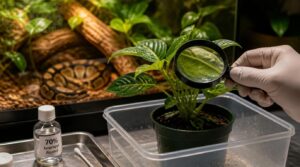
A new plant can carry hidden pests, even from trusted sources. Keep it separate for four to separate for four to six weeks. Check weekly for mites or eggs. Wipe tools with alcohol between plants. Skip fertilizer during this time. Only add reptile-safe plants to the tank once they pass inspection clean.
Rinse Leaves Thoroughly
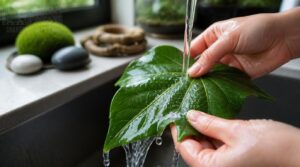
Grab your plant before it ever touches the tank, dirt and residue hide on every leaf.
Rinse under cool running water for 20-30 seconds. Rub leaf surfaces gently to loosen grime. For hairy or textured leaves, clean both sides.
Dry leaves fully before placing them in your terrarium to avoid excess moisture.
Remove Nursery Soil
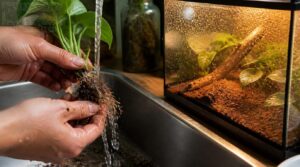
That plastic pot your plant came in holds more than dirt. It’s often packed with fertilizers and wetting agents that throw off pH and salinity once inside your tank.
Soil sterilization risks and salt buildup can irritate skin, so knock all nursery soil off the roots.
Swap it for coconut coir or a water-retentive substrate that works with your humidity gradient setup and blocks mold.
Repot Without Fertilizers
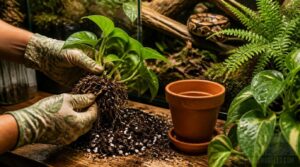
Fresh soil keeps chemicals out of your snake’s tank. Mix equal parts peat moss and perlite, choose a pot with drainage holes and a saucer, and skip fertilizer completely.
- Tease roots gently before repotting
- Water thoroughly after repotting
- Let topsoil dry between waterings
- Watch for yellowing leaves
This works for pothos, ferns, and other reptile-safe plants in humid terrarium setups.
Inspect for Plant Pests

Bugs hide well, so check every plant before it enters the tank.
Turn leaves over and look closely, since leaf underside inspection often reveals mealybugs or scale first. Watch for sticky residue, pest eggs, or stunted new growth. Check the soil too.
| Sign | Likely Pest |
|---|---|
| Sticky spots | Sap suckers |
| Webbing | Spider mites |
Only use reptile-safe, nontoxic plants once cleared.
Plant Placement and Ongoing Care

Picking safe plants is only half the job. Where you put them, and how you care for them, matters just as much. Here’s what to keep in mind once your plants are in the tank.
Preserve Heat Gradients
Because snakes can’t move to a thermostat, your plant setup has to protect the gradient for them. Place heat-loving plants on the warm side and add shade-casting foliage near the cool zone.
- Comfort: your snake finds its perfect spot
- Safety: no overheating or getting chilled
- Trust: you’ve built a home that just works
Keep Ventilation Open
Once the gradient is set, air still needs to move. Good airflow balance stops damp pockets and mold on leaves.
Keep vents clear of dense undergrowth or hanging plant vines. Check screens monthly for dust, and make sure ventilation placement never blocks your heat source or humidity control.
Anchor Vines and Roots
Airflow matters, but vines need a job too. Golden pothos grips with aerial roots that grasp bark within days.
- Watch roots take hold and know your setup is working
- Feel confident your snake has real climbing paths
- Trust sturdy anchors to hold steady under weight
- Enjoy a tank that grows fuller each season
Trim aerial roots every 6 to 8 weeks. Keep root zones away from vents.
Use Reptile-Safe Lighting
Your pothos vines need light too, not just heat. Mount UVB fixtures 12 to 18 inches from the basking spot, angled so leaves don’t block the beam.
Choose bulbs near 5000K to 6500K. Run a 12 to 14 hour photoperiod, then dim things down for dusk.
Check bulb output monthly and swap aging lamps.
Prevent Soggy Substrate
Wet soil causes more problems than most people expect. Add a drainage layer of gravel below your substrate, then a loose top layer for evaporation.
Water only when the top inch feels dry. Check daily for pooling. A hanging plant near vents also helps moisture escape before it settles.
Frequently Asked Questions (FAQs)
What live plants can I put in a snake tank?
Think of a jungle floor, quiet and alive. That’s the goal for your tank. Good choices include golden pothos, snake plant, Boston fern, tank-safe bromeliads, and peperomia, all hardy and reptile-safe.
Do snake plants like small or big pots?
Snake plants prefer small, snug pots over big ones. A pot only slightly larger than the roots keeps growth slow and steady, cuts rot risk, and helps healthy root bound growth patterns.
Which plants are toxic to snakes?
Golden pothos, dieffenbachia, and euphorbia top the list. Their milky sap causes irritation, and ingestion brings vomiting, appetite loss, and lethargy. Oleander and sago palm are far worse, since both carry compounds that damage organs if chewed or swallowed.
What are the rules for snake plants?
Give this reptile-safe plant low to bright indirect light, water only when soil dries 2-3 inches down, and keep well-draining soil. Maintain temperatures between 60-85°F for sturdy, physically hardy growth in your terrarium.
How often should I replace the plants in my snake’s habitat?
Plan on replacing plants every 6 to 12 months. Swap sooner if you spot yellowing leaves, root rot, mold, or slowed growth, usually within 2 to 4 weeks of noticing the problem.
Should I use live or artificial plants for my snake tank?
Real greenery breathes life into a tank the way plastic never can. Choose live plants over artificial ones. They boost humidity, aid shedding, and cut injury risk, so pick hardy, reptile-safe species suited to your setup.
What types of plants are unsafe or toxic for snakes?
Dieffenbachia, oleander, sago cycas, and croton are unsafe. They cause mouth swelling, heart trouble, liver failure, or gut bleeding. Skip these for reptile-safe plants like ferns, pothos, or peperomia instead.
How can I clean and disinfect plants before adding them to my snake’s enclosure?
Rinse leaves under running water, then wipe stems with a bleach-free reptile-safe disinfectant. Rinse again fully. Check roots and soil for pests, then let plants dry completely before placing them in the enclosure.
Can snakes eat or chew on plants?
Your snake might take a curious bite, yet it won’t truly eat plants. Snakes are obligate carnivores, so pothos, ferns, or peperomia offer no nutrition, just harmless texture exploration during shedding or stress.
Are fake plants better than live ones?
Neither wins outright. Bulletproof plants win on maintenance effort and safety risks, but reptile-safe live plants boost humidity control and aesthetic authenticity with real, lush green foliage instead of a static imitation.
Conclusion
A tank with plants breathes like a small jungle, alive instead of empty. That’s the difference good plants for snake tank choices make.
You’ve learned which species thrive, which ones to skip, and how to prep roots and leaves the right way. Your snake gets cover, humidity, and something to explore.
You get a tank that looks good and works even better. Get the setup right once, and it keeps paying off for years.