This site is supported by our readers. We may earn a commission, at no cost to you, if you purchase through links.

Ball pythons don’t need plants to thrive, but a bare enclosure won’t do their instincts any favors. In the wild, these snakes move through leaf litter and low brush, using foliage to feel secure while hunting or resting. Drop live plants into that same setup, and you’ll watch shy behavior fade fast.
The right greenery does more than look good in a tank. It raises humidity, breaks sightlines for a nervous snake, and even helps a self-cleaning bioactive substrate.
Picking the best plants for ball pythons means balancing safety, sturdiness, and care needs, so here’s where to start.
Table Of Contents
- Key Takeaways
- 10 Best Live Plants for Ball Python Enclosures
- How to Choose Ball Python-Safe Plants
- Benefits of Live Plants for Ball Pythons
- How to Plant and Maintain Live Plants
- Plants to Avoid in Ball Python Enclosures
- Frequently Asked Questions (FAQs)
- What plants can I put in with my ball python?
- Do ball pythons need real plants?
- What plants are toxic to ball pythons?
- What are the best plants to add to a snake tank?
- How often should I water the plants in my ball python enclosure?
- Can ball pythons eat plants in their enclosure?
- How often should I replace live plants?
- Do plants need special substrate for ball pythons?
- Can I use artificial plants instead of live?
- What temperature range do terrarium plants need?
- Conclusion
Key Takeaways
- Live plants aren’t required for a ball python’s health, but they boost humidity, block sightlines, and let your snake feel secure enough to relax and explore.
- Stick with sturdy, nontoxic options like spider plant, Boston fern, snake plant, or ZZ plant, and always give new additions a full two-week quarantine before they go anywhere near your enclosure.
- Steer clear of dangerous species such as dieffenbachia, oleander, croton, and pencil cactus, since their sap or toxins can cause real harm, from skin irritation to organ damage.
- Match plant size and light needs to your enclosure’s footprint, then prune every 4-6 weeks so growth never crowds your python’s basking spots or hides.
10 Best Live Plants for Ball Python Enclosures
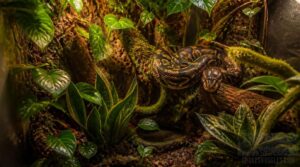
Picking the right plants can turn a plain enclosure into a thriving, naturalistic home for your ball python. Not every houseplant makes the cut, though, since safety and hardiness matter just as much as looks. Here are ten tried-and-true options worth planting.
If you’re starting from scratch, this guide to setting up a bioactive ball python enclosure walks through pairing these plants with the right substrate and cleanup crew.
Spider Plant and Boston Fern
Two easy, nontoxic plants for beginners: Spider Plant and Boston Fern.
Spider Plant tolerates bright to low light and dries slightly between waterings. It grows fast, sending out plantlets you can propagate easily.
Boston Fern needs 60-80% humidity and consistently moist soil, perfect for a bioactive enclosure setup. Trim browning fronds regularly, and place both away from direct basking heat.
Snake Plant and ZZ Plant
If low-maintenance is your goal, Snake Plant and ZZ Plant deliver. Both tolerate bright to low light and thrive on neglect, drying out completely between waterings.
Snake Plant reaches 1-4 feet; ZZ Plant stays compact at 2-3 feet. Use well-draining soil for both.
One caution: they’re mildly toxic if ingested, so keep them out of reach.
Syngonium and Alocasia Polly
Want something greener and lusher? Syngonium Podophyllum brings arrowhead leaves that shift from green to pink under different light, growing fast into ground cover up to 48 inches.
Alocasia Polly prefers partial shade, needs a larger enclosure, and offers dense hiding space. Both are nontoxic plants for reptiles, thriving in high humidity setups your python will appreciate.
Prayer Plant and Peperomia
For a bit of quiet magic, Prayer Plant folds its leaves upward at night, showing a deep maroon underside, then flattens by morning.
It needs bright indirect light and 60-80% humidity, pairing well with Peperomia’s thick, water-storing leaves. Both are nontoxic plants for reptiles, tolerate brief drought, and prefer well-drained soil that dries slightly between waterings, making them low-fuss additions to any bioactive setup.
It also helps improve enclosure air quality by absorbs airborne toxins.
Pink Polka Dot and Dracaena
Color is the draw here. Pink Polka Dot brings irregular pink splashes on green leaves, thriving in bright indirect light and moist soil.
Dracaena Fragrans tolerates lower light, storing water in its stems.
- Pink Polka Dot sap can irritate skin
- Keep humidity moderate, 40-60%
- Propagate Polka Dot from stem cuttings
- Dracaena aids air quality
- Both stay nontoxic if pythons avoid direct contact
How to Choose Ball Python-Safe Plants
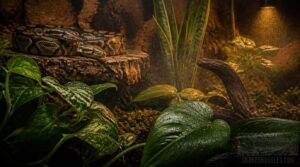
Picking the right plant takes more than just liking how it looks. Your ball python’s size, habits, and enclosure setup all play a part in what will actually thrive. Here’s what to check before you plant anything.
Since these snakes aren’t exactly gentle with foliage, this guide to ball python bioactive setup plants breaks down which species can handle the wear and tear.
Match Plants to Enclosure Size
Foliage should mirror your enclosure’s footprint, not fight it. Small tanks call for compact groundcover, medium setups suit mid-height climbers, and large enclosures handle tall planters creating microhabitats.
Match plant height to enclosure height so leaves never block hides. Space 2-3 plants small, 4-6 medium, 6-10 large, keeping corridors clear for movement and airflow between hides and water bowls.
Choose Sturdy, Weight-Tolerant Foliage
A ball python’s body weight tests every stem it crosses, so leaf strength and durability matter as much as color. Look for thick midribs and rigid petioles that resist sagging.
Sturdy plant selection means checking foliage density too. Plants with tough leaf surfaces handle nibbling and substrate blending better, keeping their shape after daily enclosure activity.
Check Toxicity Before Planting
One wrong leaf can turn a display tank into an emergency vet visit. Verify plant safety before anything goes near substrate.
- Oleander: cardiac arrhythmias
- Dieffenbachia: oral and kidney damage
- Croton: GI bleeding
- Sago palm: liver failure in 24-48 hours
Review toxicity databases like ASPCA’s, consult an exotic vet, and hold new plants through a full quarantine period. Maintain safety records for every species you introduce.
Match Light and Humidity Needs
A snake plant in low light and a pink polka dot craving humidity can’t share the same shelf.
Check each species’ needs against your enclosure’s conditions, then group humidity-loving plants near warm, moist zones and lowlight tolerant plants elsewhere.
Use a light meter for accuracy, keep photoperiods consistent at 12-14 hours, and monitor weekly to fine-tune placement.
Plan for Growth and Pruning
Plants keep growing, so build a plan before you plant. Set yearly growth targets, schedule pruning every 4-6 weeks, and reserve 10% of planter space as a safety margin.
Log new shoots and root spread biweekly. This tracking method flags overcrowding early, letting you prune or repot before roots or foliage crowd your python’s basking spots.
Benefits of Live Plants for Ball Pythons
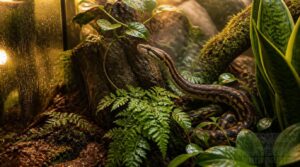
Live plants do a lot more than decorate your ball python’s enclosure. They shape humidity, offer cover, and give your snake room to move and explore. Here’s what a well-planted habitat actually does for its resident.
Visual Barriers and Hiding Cover
Coverage is safety, in a ball python’s mind. Foliage density blocks sightlines, letting your snake feel hidden rather than exposed.
Pairing dense plants with sturdy hides is easy once you browse these ball python cage decoration ideas, as long as everything stays secure and wobble-free.
Layer tall plants at corners, cluster mid-height pots along the back wall, and add ground cover near the warm hide. Irregular branch spacing creates microhabitats snakes actually explore and settle into, not just decorative fluff.
Humidity Support and Microclimates
Good foliage does more than hide your snake, it breathes moisture into the air. Transpiration-driven humidity builds evaporative moisture pockets around dense leaves, nudging levels toward that 50-70% shedding sweet spot.
Cluster humidity-loving plants near hides, keep substrate moisture balance steady underneath, and you’ve built a real enclosure microclimate, not just a humid corner that dries out by afternoon.
Climbing and Exploration Opportunities
Beyond humidity, foliage gives your python somewhere to go. Vertical climbing paths on sturdy stems, broad straplike leaves for secure grip surfaces, and root zones forming humid microhabitats all encourage natural movement.
- Branching stems support 18-inch investigative climbs
- Vines create 12-inch horizontal traverses
- Dense foliage builds 12×12 inch micro routes
These naturalistic exploration routes keep a bioactive setup engaging, not just decorative.
Bioactive Substrate Support
A root system doesn’t just anchor a plant, it powers the whole bioactive substrate engine underneath. Roots feed beneficial fungi, isopods and springtails break down waste, and moisture stays balanced across 2 to 4 inch substrate layers.
That microbial substrate balance keeps humidity steady and mold at bay, turning your enclosure floor into a living, self-cleaning drainage system.
Naturalistic Enclosure Design
Once your substrate layering, drainage layer, and foliage cover come together, you’ve built more than a tank, you’ve built a naturalistic terrarium.
Coarse bark over a shallow drainage base creates humidity pockets, while rooted plants add hiding places and depth. This bioactive microhabitat mimics a real forest floor, giving your ball python cover, comfort, and a setup that just feels alive.
A bioactive microhabitat mimics a real forest floor, giving your ball python cover, comfort, and a setup that feels alive
How to Plant and Maintain Live Plants
Picking safe plants is only half the job; keeping them alive in a bioactive setup is the real test. Your ball python’s enclosure isn’t a windowsill garden, so planting and care need their own approach. Here’s how to get plants settled in and thriving, step by step.
Quarantine and Inspect New Plants
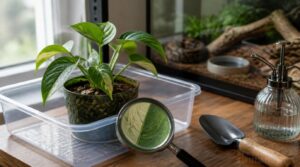
New plants can carry hidden pests that spread fast in a closed enclosure. Give every plant a 14-day isolation period in a separate tray with its own tools, marked with the start date.
Run daily symptom checks: leaves for webbing, stems for soft rot, soil for gnats. Only after two-week clearance with no issues should the plant move into your python’s habitat.
Rinse Roots and Replace Soil
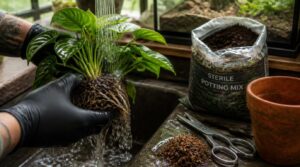
Once your plant clears quarantine, give it a gentle rinse before repotting. Soak the root ball, loosen soil with light agitation, and skip high pressure to protect fine feeder roots.
Trim mushy or gnarled roots with clean shears, then repot using a sterile, well-draining mix. Good soil drainage prevents root rot and keeps your python’s enclosure healthy.
Choose Potted or Bioactive Planting
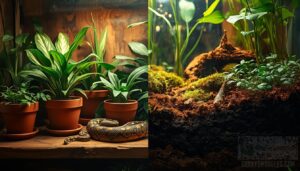
Two paths lead to a thriving enclosure: potted arrangements or a full bioactive setup.
Pots offer simplicity, easy plant swaps, and flexible rearranging during cleaning.
Bioactive substrate mixes, layered 4-6 inches deep with microfauna, create a self-cleaning cycle but demand more setup complexity.
Choose based on your maintenance effort tolerance, space requirements, and how much control you want over each plant’s roots.
Balance Lighting, Watering, and Drainage
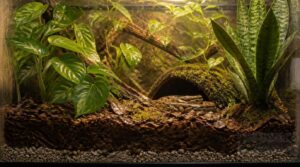
Get lighting, water, and drainage working together, and your plants practically take care of themselves.
Run overhead lights 12-14 hours daily with 30-50% shade for lower zones. Water only when the top inch feels dry, using room temperature water for bright indirect light lovers.
Build a well-drained enclosure with coco coir, orchid bark, and gravel beneath roots. Weekly substrate moisture checks keep humidity between 50-70% without waterlogging.
Prune Growth and Monitor Pests
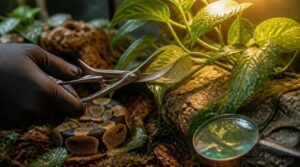
Left unchecked, foliage crowds your snake’s basking spots fast.
Prune monthly with sterile shears, cutting at an angle above leaf nodes. Check leaf undersides weekly for webbing or stippling.
Quick pest checklist:
- Inspect new growth for aphids
- Watch for sticky honeydew
- Check soil for gnats
- Note yellowing leaves
- Log pruning dates
Disinfect tools between plants. Early pest detection keeps your enclosure thriving.
Plants to Avoid in Ball Python Enclosures
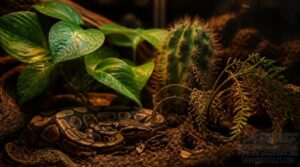
Not every plant belongs in a ball python enclosure, no matter how nice it looks. Some carry toxic sap, sharp edges, or fragile stems that can hurt your snake or wreck your setup. Here’s what to keep off your shopping list.
Toxic Plants and Irritating Sap
Some plants defend themselves with harmful sap defense, snapping branches to spray irritating latex. Pencil cactus causes burns, swelling, even blindness on contact.
Airborne latex particles trigger coughing and pulmonary edema, worse in tight enclosures. Watch for plant toxicity symptoms like drooling or lethargy. Skip sap-heavy species entirely for enclosure safety, and keep plant toxicity awareness sharp during every setup check.
Dieffenbachia, Oleander, Croton, Umbrella Plant
Sap defense isn’t the only hazard. Dieffenbachia earns its "dumb cane" nickname from raphides that irritate skin and swell the mouth if chewed. Oleander, croton, and umbrella plant carry similar toxicity risks.
Watch for drooling or lethargy, classic symptom recognition cues. Skip these for nontoxic plants like pothos or peperomia, keeping plant safety for snakes central to every enclosure placement guide.
Thorny or Spine-Covered Plants
Toxicity isn’t the only enclosure hazard worth watching. Some plants defend themselves with protective leaf adaptations like spines, or stem-based thorns that snag skin on contact.
Prickles brush off easily, but rigid thorns can puncture liners and injure your snake during exploration. Skip these entirely. Thorn safety in enclosures matters more than aesthetics, especially with ball pythons.
Fragile, Top-Heavy Plant Choices
Sharp thorns aren’t the only physical hazard. Some plants simply can’t handle a ball python’s weight or movement, snapping at the stem or toppling over.
Stem strength and root depth matter most for stability. Watch for:
- Weak stems prone to breaking
- Shallow roots that tip easily
- Leggy, uneven growth
- Minimal hiding value from sparse foliage
Regular pruning and sturdy frames keep fragile varieties upright and enclosure-safe.
Chemically Treated Nursery Plants
That fresh nursery tag doesn’t guarantee safety. Many plants carry pesticide residue from soil drenches or foliar sprays, sometimes systemic, moving through tissue for weeks.
| Risk | Action |
|---|---|
| Coated leaves | Rinse thoroughly |
| Systemic drench | Quarantine 2-4 weeks |
| Root residue | Replace soil |
| Skin exposure | Wear gloves |
| Unknown source | Choose nontoxic plants |
Frequently Asked Questions (FAQs)
What plants can I put in with my ball python?
Green doesn’t always mean danger, even in a predator’s home.
Nontoxic plants like spider plant, pothos alternatives, and Boston fern work well, offering hiding places, humidity support, and safe plant placement without risking irritation or toxicity to your snake.
Do ball pythons need real plants?
No, they don’t. Live plants fall under enrichment, not essential care, since ball pythons thrive without them. If you’d rather skip watering and pest checks, artificial plants offer easy humidity control and hiding cover without the maintenance.
What plants are toxic to ball pythons?
Snake plant, dieffenbachia, oleander, croton, and umbrella plants top the toxicity risks list. Saponin effects and calcium oxalate damage cause vomiting, mouth swelling, and drooling, so keep these toxic plants far from your enclosure.
What are the best plants to add to a snake tank?
Funny how a "low-maintenance" pet still needs a tiny jungle. Spider plant, Boston fern, snake plant, ZZ plant, and syngonium top the list, each offering foliage cover, humidity support, and safe root systems for your enclosure.
How often should I water the plants in my ball python enclosure?
Check the top inch of soil weekly. Water snake plants every 2-3 weeks, ferns and spider plants weekly, and philodendrons every 7-10 days. Adjust for humidity levels, drier enclosures need more frequent watering than humid ones.
Can ball pythons eat plants in their enclosure?
Your python won’t treat foliage as food. They’re strictly carnivorous, so chewing or nudging leaves is exploration, not appetite. Accidental nibbles rarely cause issues if plants are nontoxic, but sturdy anchoring and species selection still matter for genuine enclosure safety.
How often should I replace live plants?
Like a garden that cycles through seasons, your vivarium’s greenery needs updating too. Replace plants every 1 to 3 years, or sooner if growth rate slows, roots rot, or leaves show persistent yellowing despite good care.
Do plants need special substrate for ball pythons?
Yes. Roots need loose, moisture retaining substrate with a drainage layer underneath to prevent rot. Coconut fiber or cypress mulch work well, keeping humidity steady at 60-80% while supporting both plant and snake health.
Can I use artificial plants instead of live?
A keeper swapping a molting Alocasia for a silk fern found zero difference in hides used. Realistic artificial plants cut maintenance and toxicity risks entirely, but skip humidity buffering, so pair them with solid substrate moisture control instead.
What temperature range do terrarium plants need?
Most terrarium plants do best at 65 to 85°F, with basking zones running warmer. Nighttime should drop 5 to 10°F for healthy cycles. Use a thermostat and check gradients often, since matching microclimates to species keeps roots and foliage thriving.
Conclusion
Right plant, right placement, right pace of growth: that’s the formula for a thriving enclosure. The best plants for ball pythons aren’t the flashiest ones, but the sturdiest, safest, and easiest to maintain. Choose foliage that matches your snake’s humidity needs, and prune it before it becomes a hazard.
A well-planted tank isn’t just decoration. It’s a small, living world that helps your snake feel safe enough to be itself.