This site is supported by our readers. We may earn a commission, at no cost to you, if you purchase through links.

Most snake bites don’t come from venom. They come from bad judgment, a hand moving too fast, a grip that squeezes when it should slide, a species picked for looks instead of temperament. That gap between confidence and competence is where handlers get hurt, and where snakes get stressed enough to strike.
Safe snake species handling starts long before your fingers touch scales. It begins with picking the right animal for your skill level, reading its body before it moves, and building habits that hold up even on a bad day.
Get the fundamentals right, and handling stops feeling like a gamble. It becomes a skill you can trust.
Table Of Contents
- Key Takeaways
- Choose a Snake Species You Can Handle Safely
- Prepare a Secure Snake Handling Area
- Read Snake Body Language Before Handling
- Follow Safe Snake Handling Techniques
- Prevent Handling Mistakes and Manage Bites
- Frequently Asked Questions (FAQs)
- What snakes are best for handling?
- Do any snakes enjoy handling?
- What is the friendliest snake to get as a pet?
- Are snakes safe to handle?
- How to handle a snake safely?
- How to handle a snake ethically?
- Why is safety equipment important when handling large snakes?
- What makes a good snake handler?
- Is snake handling a good experience?
- Why should you learn snake handling techniques?
- Conclusion
Key Takeaways
- Picking a species that matches your actual skill level—like corn snakes, ball pythons, or kingsnakes—matters more than confidence alone, and venomous species should stay off-limits without formal training.
- Reading a snake’s body language, from loose coils to hissing and tail vibration, tells you what it will tolerate before it ever strikes.
- Proper technique—approaching from the side, lifting without squeezing, and supporting the full body—keeps handling sessions calm and prevents defensive reactions.
- Knowing how to respond to bites, especially treating any suspected venomous bite as an emergency and keeping contacts like Poison Control ready, can make the difference in a real crisis.
Choose a Snake Species You Can Handle Safely

Before you ever reach for a hook or lift a snake from its enclosure, you need to be honest about where your skills actually stand. Not every species belongs in a beginner’s hands, and picking the wrong one can turn a calm session into a stressful one fast. Here’s what to weigh before you choose.
Once you’ve matched your experience to the right species, keeping tabs on its health becomes just as important, and this guide to tracking your snake’s healthy weight makes that easier from day one.
Evaluate Your Experience and Confidence
Before picking a species, take an honest look at your skills. Count how many snakes you’ve handled without incident this past year, rate your confidence as high, medium, or low, and note comfort with lifting and resettling. Seek supervision when unsure.
Build a practice plan with scheduled sessions and clear goals, developing patience as your skill evaluation improves.
Compare Size, Strength, and Temperament
Once you’ve rated your confidence, weigh the animal itself. Size ranges from 1.5 to 6 feet, weight from 150 to 1200 grams, and larger girth means stronger grip force against your hands and tools. Muscle distribution favors quick strikes in bigger individuals.
Match strength evaluation with temperament assessment: a calm, predictable species forgives beginner mistakes far better than a defensive one.
When documenting these assessments, following clear writing for naive readers ensures handlers of any experience level can understand and apply your notes accurately.
Corn Snakes, Ball Pythons, Kingsnakes
Three species stand out for beginners, and each earns that spot through predictable temperament. Corn snakes stay slender, active, and curious, exploring by day. Ball pythons run stockier, calm, curling tight rather than striking. Kingsnakes, bold and muscular, investigate new hands with interest. All three tolerate handling well once socialized young, forgiving the learning curve every new handler needs.
Avoid Venomous Species Without Training
That calm confidence you’re building with corn snakes and kingsnakes doesn’t transfer to cobras or rattlesnakes. Venomous species carry risks no beginner instinct can offset, requiring formal training, supervised practice, and proper equipment beyond a hook and gloves.
Without certified bite avoidance skills and professional supervision, you’re gambling with envenomation. Leave venomous handling to trained specialists until risk assessments and real credentials back your species selection.
Build Skills Through Short Sessions
Rather than marathon handling sessions, work in short bursts of 10-15 minutes, once daily. This builds muscle memory without triggering stress signals like coiling or hissing.
Keep a simple checklist: one sub-skill per session, reviewed briefly before starting fresh. Rate your confidence before and after. Small, repeated wins beat one long, risky session every time.
Prepare a Secure Snake Handling Area

Before a snake ever touches your hands, the room around you needs to earn your trust. A single unlatched door or a curious dog wandering in can turn a calm session into a chase in seconds. Here’s what that setup actually requires.
Secure Doors, Lids, and Gaps
A single loose lid has ended more escape-proof enclosure dreams than any bite ever will.
Check door seal integrity monthly, gaps beyond 2mm demand attention. Confirm lid latch reliability with tension clasps, and verify frames sit square within 1/16 inch.
Reinforced seals, brush pile barriers, and quick gap monitoring maintenance checks keep your snake contained, not corridor-bound.
Remove Pets and Distractions
Before your snake ever leaves its enclosure, clear the room of anything on four legs. A Pet Separation Protocol keeps cats and dogs behind a gated door, since scent and sudden barking startle even calm corn snakes.
Kill the TV, silence phones, and hold foot traffic for fifteen minutes. That’s distraction-free handling, plain and simple.
Wash Hands Before and After
Salmonella lives on healthy-looking scales, so wash for a full 20 seconds with warm water and soap before and after every session. Scrub nails and between fingers, then dry with a clean towel.
Skip sanitizer unless soap’s unavailable, and always rinse again after touching enclosures, feces, or shed skin, since this single habit cuts transmission risk by up to 90%.
Choose Species-Appropriate Handling Tools
Grabbing a snake bare-handed is like tackling a job without the right wrench. Match your hook size to the snake’s diameter (12–18 inches, stainless or fiberglass), pair it with grippy gloves, and add a cradle for enclosure transfers.
- Snake hook, curved end
- Puncture-resistant gloves
- Snake cradle or net
- Restraint sleeve
- Escape-proof transfer mat
Clean and Inspect Equipment
Dirty gear spreads disease faster than any bite ever will. After each session, sanitize tools with veterinary-grade disinfectant, checking seals on solutions for cracks or leaks.
Inspect gear weekly: soft bristles, frayed cords, worn hinges all mean replacement time. Dry equipment fully before storing, then log maintenance dates. These cleaning protocols aren’t optional extras, they’re what keeps your reptile room safe.
Read Snake Body Language Before Handling

Before your hands ever touch a snake, your eyes need to do the work. A snake’s body tells you exactly what it’s willing to tolerate, long before it strikes or slips away. Here’s what to watch for, and what each signal actually means for your next move.
Pay close attention to the mouth especially — subtle differences like dark crusts or jaw swelling often signal trouble, and knowing the visual differences between mouth rot and normal shedding can help you tell a routine shed from something that needs attention.
If your snake seems calm during those first short sessions, you can gradually work up to longer visits by following this guide to safe snake handling frequency.
Calm Versus Defensive Postures
Before your hands ever touch scales, learn to read what the body is already telling you. A calm posture shows loose coils, level head, and slow tongue flicks. Defensive snakes tighten into short coils, brace their head upward, and tense visibly. Confinement or unfamiliar objects can flip that switch fast, so read the room before you reach in.
Hissing, Coiling, and Tail Vibrations
Once posture shifts defensive, listen and watch closely. A hiss is forced air through the glottis, sharp and toneless, often paired with tight coiling for protection. Tail vibrations, rapid muscle flexing against substrate, add a rattling warning even without a true rattle.
- Rising hiss volume signals mounting stress
- Tight coils reduce strike angles
- Faster tail vibration means higher threat
These combined signals demand immediate space.
Species-Specific Warning Behaviors
No two species warn the same way. Ball pythons coil tight and freeze; corn snakes dart or vibrate their tails against substrate. Cottonmouths flash white mouths, a stark defensive posture.
Watch for head flattening signals, body puffing display, rising tongue flicking increase, or a sudden S-curve threat posture. Learning these species-specific stress signals sharpens your body language interpretation fast.
Temperature and Humidity Effects
Cold snakes turn defensive fast. Below 70°F, expect rigid posture and reluctance to move. Check your thermal gradient balance: 26°C basking, 22°C retreat zones.
- Keep humidity 40-60% for shedding health
- Watch for mold above 70% humidity
- Recheck temperature control if stress signals appear
- Adjust before resuming, not after
Handling timing effects matter. Stable readings mean calmer sessions.
Feeding, Shedding, and Illness Cues
Before you even reach for your snake, ask what its stomach and skin are telling you. Appetite changes and refusal signal shedding or illness, lasting 1-3 weeks. Watch for dull eyes or reluctant prey response.
| Cue | Likely Cause | Your Action |
|---|---|---|
| Refusing food | Pre-shed | Wait it out |
| Cloudy eyes | Shedding | Skip handling |
| Head shaking | Stress feeding | Postpone 48 hrs |
Follow Safe Snake Handling Techniques
Reading body language only gets you so far — once the snake’s calm, technique takes over. Every motion you make from this point on either builds trust or breaks it, so precision matters more than speed. Here’s exactly how to approach, lift, and hold a snake without triggering a defensive strike.
Approach Slowly From The Side
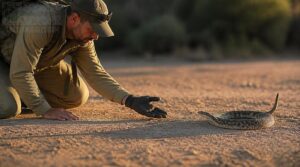
Snakes read a squared-off body as a threat, so stay close to the body axis and let your shoulders track theirs as you move in. Slow, deliberate steps beat rushing every time. Watch for:
- Muscles tightening into a coil
- A tail beginning to vibrate
- Sudden stillness or a hard stare
Pause. Let it settle before continuing.
Lift Without Grabbing or Squeezing

Grip matters as much as timing. Slide your hand beneath the midsection using a gentle lift method, letting the snake glide onto a flat, non-slip surface rather than squeezing it upward.
Keep hands 8–12 inches apart, tucking the body into its natural S-curve. This pressure-free handling approach, paired with slow, predictable movements, keeps the animal calm during the transfer.
Support The Snake’s Entire Body

A dangling snake is a stressed snake, so distribute the weight before it distributes itself onto the floor.
- Slide one hand under the midsection, cradling ventral scales against your skin
- Stabilize the tail base while your other hand holds mid-body
- Support at least one-third of the body length at all times
That forearm cradle isn’t optional; it’s what keeps the animal straight, calm, and yours to control.
Allow Gentle, Controlled Movement

Picture water flowing around a stone: that’s the pace you want. Move in smooth arcs, never straight lines, keeping fingers flat along the body to avoid pinch points.
| Do | Avoid |
|---|---|
| Slow S-curve motion | Sudden jerks |
| Support full body | Grabbing the tail |
| Stay clear of the head | Rapid repositioning |
| Pause between moves | Constant motion |
Let the snake dictate rhythm, not your nerves.
Limit Handling Time and Frequency

Even calm snakes need downtime. Limit sessions to 10-15 minutes, respecting fatigue signs like restlessness or retreat attempts.
Wait 48 hours post-feeding before handling, and skip interaction during shed cycles when vision’s impaired. Brief handling sessions with proper interaction recovery periods build trust. Monitor behavior throughout; frequency matters as much as duration for avoiding stress and injury.
Prevent Handling Mistakes and Manage Bites

Even careful handlers make mistakes, and knowing how to respond separates a minor scare from a real emergency.
Bites happen for specific reasons, and how you react in the first few seconds matters as much as anything you did beforehand.
Here’s what you need to know to prevent common errors and handle bites the right way.
Avoid Forceful Restraint
Since fear often drives the urge to grip harder, resist it. Squeezing or pinning raises injury risk for both of you.
Use calm, nonrestrictive holds instead:
- Support the body, don’t clamp it
- Keep fingers loose, not clenched
- Increase distance before contact
- Stop at the first stress signal
Practice on captive-bred snakes to build confidence without ever applying pressure.
Handle One Snake at Once
Loose grip discipline works best with focused attention, and that means one snake, one handler, no exceptions.
| Risk | One Snake | Multiple Snakes |
|---|---|---|
| Focus | High | Divided |
| Strike Response | Manageable | Delayed |
| Emergency Readiness | Immediate | Compromised |
| Bite Odds | Lower | Higher |
Single-snake practice keeps supervised handling controlled, deliberate, and safe.
Respond to Nonvenomous Bites
A single-snake rule keeps focus sharp, but bites still happen. Clean gently with soap and water, skip scrubbing, and cover with sterile gauze. Watch for infection warning signs: redness, warmth, pus, or fever within 72 hours.
- Swelling that spreads slowly
- Small puncture marks
- Mild oozing
- Localized pain
- No systemic symptoms
Confirm tetanus protection is current.
Treat Suspected Envenomation Immediately
Two puncture marks with rapid swelling mean a venomous snake bite until proven otherwise.
Rapid swelling around two puncture marks should always be treated as a venomous bite until proven otherwise
Immobilize the affected limb below heart level and get to emergency medical triage now. Don’t wash aggressively, apply ice, or attempt suction. Confirm antivenom access at the receiving hospital.
Clinicians weigh antivenom administration timing against coagulation abnormalities, watching airway breathing support needs and continuous monitoring complications until stable.
Keep Emergency Contacts Ready
Before any snake leaves its enclosure, your emergency contacts should already be set. Post Poison Control (1-800-222-1222), local Emergency Services, and your medical provider where you can see them.
Include contact details, locations, and allergies. Build an accessibility plan: laminate it, keep a QR backup. Stock first aid kits, save local hospital numbers, and drill your response teams twice yearly.
Frequently Asked Questions (FAQs)
What snakes are best for handling?
The calmest snakes often look the most intimidating at first glance. Ball pythons, corn snakes, and California kingsnakes top the list, staying under 5 feet with predictable, docile temperaments ideal for beginner-friendly snake species handling.
Do any snakes enjoy handling?
Enjoyment is a stretch, but relaxed muscles during handling, calm posture, and steady tolerance in corn snakes, ball pythons, and kingsnakes suggest genuine comfort, especially after consistent short sessions build trust between you and the snake.
What is the friendliest snake to get as a pet?
Steady temperament, manageable size, easy care: these three traits make corn snakes the friendliest pet choice.
Reaching just 4 to 5 feet, captive-bred corn snakes tolerate regular handling calmly, making them ideal beginner species for gentle, confident handling.
Are snakes safe to handle?
Yes, with the right approach. Choosing a beginner-friendly species, reading body language, using proper tools, and limiting sessions to 10-15 minutes keeps both you and your snake safe and calm.
How to handle a snake safely?
Picture a hand moving like water around stone: slow, deliberate, unhurried. Support the body fully, read its posture first, then lift with a hook, never a grab, keeping movements gentle and confident throughout.
How to handle a snake ethically?
Ethical handling means gentle restraint, not control. Minimize handling time, read behavior calmly, avoid excessive force, and return your snake to its enclosure promptly, understanding that reduced stress reflects true respect for the animal’s welfare.
Why is safety equipment important when handling large snakes?
A large constrictor can overpower you fast, which is why puncture-resistant gloves, sturdy boots, and snake hooks matter. This proper equipment, paired with a stocked first aid kit, reduces bite risk and keeps handling large reptiles safer for everyone.
What makes a good snake handler?
Funny thing: the calmest handlers were often the most nervous beginners once. What changed was patience, sharp species knowledge, steady grip and body support, and constant behavior observation, paired with real emergency preparedness for the moments instinct wants to take over.
Is snake handling a good experience?
Yes, done with a gentle management approach, it builds genuine trust, sharpens emotional regulation, and rewards patient sensory engagement. You’ll gain confidence, mindfulness, and a deeper understanding of snake behavior through consistent technique and sensible session duration limits.
Why should you learn snake handling techniques?
A calm handler reads a snake’s posture before it ever strikes, that’s the whole game. These techniques build confidence, reduce fear, and prevent accidents, giving you proper grip, body support, and quick stress reduction through brief, controlled sessions.
Conclusion
A calm snake moves like water finding its level, steady and unhurried when nothing threatens it. That’s the standard you’re working toward.
Safe snake species handling isn’t about erasing risk, it’s about stacking small, correct choices until confidence becomes habit. Choose wisely, read the signals, and move with purpose instead of haste. Do this consistently, and the snake in your hands stops feeling like a gamble. It becomes proof of your growing skill.