This site is supported by our readers. We may earn a commission, at no cost to you, if you purchase through links.
A corn snake can sit in a tank that reads 80°F on the wall thermometer while its belly rests on substrate that never tops 70°F. The snake looks fine, then refuses its next meal and regurgitates the one after that.
Digestion runs on heat, and a few degrees decide whether your snake thrives or slowly struggles. Poor corn snake temperature control causes more feeding trouble than almost anything else in the hobby, and it’s entirely fixable.
You’ll learn the exact temperature targets, how to build a true gradient, which heat sources and thermostats keep it stable, and how to catch problems early.
Table Of Contents
- Key Takeaways
- What Temperature Does a Corn Snake Need?
- How to Set Up a Temperature Gradient
- Best Heat Sources and Thermostat Types
- Top 6 Products for Corn Snake Temperature Control
- How to Monitor and Prevent Temperature Problems
- Frequently Asked Questions (FAQs)
- How hot is too hot for a cornsnake?
- What is the lowest temperature a corn snake can tolerate?
- Is 90 degrees too hot for a snake?
- Should I turn my corn snakes heat lamp off at night?
- How often should I calibrate my thermometer?
- Can room temperature affect enclosure heating costs?
- What backup heating options work during power outages?
- Do hatchlings need different temperatures than adults?
- How do I transition between seasonal temperature settings?
- How often should a corn snakes thermometer be replaced?
- Conclusion
Key Takeaways
- Measure temperature at the substrate surface where your snake actually rests, because air readings can be off by up to 10°F and hide a cold floor that causes refused meals and regurgitation.
- Build a gradient with an 88–92°F basking spot, an 85–88°F warm side, a 72–78°F cool side, and a nighttime drop to 68–72°F, and never let it stay above 90°F in the enclosure or below 65°F for long.
- Use overhead radiant heat like a halogen bulb or ceramic emitter, keep under-tank heaters as backup only, and put every heat source on a matching thermostat (dimming for halogen, pulse proportional for ceramic) with the probe at basking surface level.
- Check a probe thermometer on each side every morning and evening, verify your thermostat probe against a second thermometer every quarter, and adjust right away if your snake is constantly basking, hiding from heat, lethargic, or breathing with its mouth open.
What Temperature Does a Corn Snake Need?
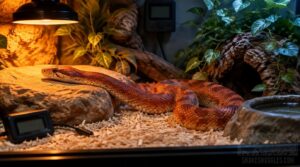
You’re keeping a cold-blooded animal, so the right temperature range is essential, not optional. Corn snakes rely on outside heat to digest, move, and shed.
A warm side around 85°F with a cooler end near 75°F lets your snake regulate itself, and this corn snake habitat guide shows how to set that gradient up.
Aim for 85–88°F (29–31°C) on the warm side and 72–78°F (22–25°C) on the cool side. Your basking spot should reach 88–92°F (31–33°C), which is essential for digestion. Measure at the substrate surface, because air readings can run 10°F off. Together, these zones form your temperature gradient, which lets your snake choose the heat it needs daily.
Under-tank heat mats should cover roughly one-third of the floor on the warm side so the cool side stays available.
At night, let temperatures drop to 68–72°F (20–22°C), but never below 65°F (18°C) for long. After a meal, keep the warm side steady for 24–48 hours. A reliable thermostat on every heat source is essential for holding these numbers.
How to Set Up a Temperature Gradient
Now that you know your numbers, it’s time to build them into the enclosure. Start by placing your heat source at one far end so your snake gets a clear warm zone and a cool retreat on the opposite side.
Three steps get you there:
- Mount the heat source at one end, with an under-tank heater covering about one-third of the floor.
- Place a hide directly over the warm spot and an identical one at the cool end.
- Measure surface readings at both ends where your snake rests.
Skip air readings. Ambient temperature can differ from the substrate by up to 10°F, so use a temperature gun or probe thermometer on the surface.
Keep the slope gentle, with no sudden jumps, so your snake can move easily. Adjust your thermostat until each zone holds steady.
Best Heat Sources and Thermostat Types
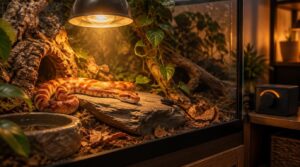
Now that your temperature gradient has a warm end, let’s pick the right heat source for your enclosure setup. Corn snakes do best with overhead radiant heat, which mimics the sun and gives your snake a natural basking spot. Under-tank heaters create a weak gradient and carry burn risks, so keep them as backup at most.
Halogen bulbs give you light and heat together, which suits daytime use. If you’d rather keep nights dark, a ceramic heat emitter or deep heat projector works well.
Match your thermostat to the heat source. Halogen bulbs need a dimming thermostat, while ceramic emitters pair with a pulse proportional thermostat. Place the probe at basking surface level, and never run any heat source unregulated.
Top 6 Products for Corn Snake Temperature Control
Once you know which heat sources and thermostats suit your setup, you need gear you can trust. The six products below cover heating, dimming, and monitoring, so you can control every part of your corn snake’s temperature and UV exposure. Each one is practical and safe, and it’s essential to match them to your enclosure.
If you ever keep a hatchling python alongside your corn snake, this children’s python care guide explains how its temperature and humidity needs differ.
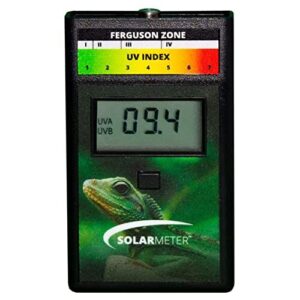
1. Solarmeter Model 6.5R UV Index Meter
A keeper I know swapped her UV bulb after six months just to be safe, then learned it was still putting out plenty. That’s money wasted, and a meter would’ve told her.
The Solarmeter Model 6.5R is a handheld UV Index meter that reads 0 to 199.9 across 280-400 nm. It’s important for checking basking levels, tracking bulb aging, and testing UV passing through acrylic or glass. It runs on one included 9-volt battery. Some users report mixed accuracy feedback.
| Best For | Reptile keepers who want to check basking-spot UVB levels, track bulb aging, and avoid replacing lighting too early. |
|---|---|
| Power Source | 9V battery |
| Rated Power | N/A |
| Reptile Use | Monitors UVB lighting |
| Brightness Control | N/A |
| Reliability Concerns | Mixed accuracy feedback |
| Cord/Connection | N/A |
| Additional Features |
|
- Reads UV Index from 0 to 199.9 across 280-400 nm, with a response matched to the vitamin-D action spectrum in reptiles
- Single-button handheld operation, plus NIST traceable accuracy with a calibration reference card
- Also tests UV passing through acrylic, window film, and glass
- Some users report mixed feedback on accuracy and value for money
- Requires a 9-volt battery, and the device may fail to power on if the internal battery depletes
- At 4.5 ounces and about 4.25 inches long, it is a dedicated tool rather than a pocket-sized extra
2. Vinaco PAR30 Halogen Flood Light Bulb
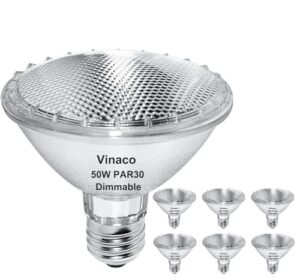
Halogen heat is a solid choice for corn snakes, and the Vinaco PAR30 delivers it in a 50W, 120V package with a standard E26 screw base. It’s dimmable from 10% to 100%, which is key for dialing in a basking surface of 88–92°F.
Pair it with a proportional or dimming thermostat, and add a lamp guard. Both are essential.
Lifespan is the catch. It’s rated for 3000 hours, but reviews range from weeks to four years, so stock a spare.
| Best For | Reptile keepers, such as corn snake owners, who want an adjustable, warm-toned halogen heat source and are willing to pair it with a dimming thermostat and a lamp guard. |
|---|---|
| Power Source | 120V AC |
| Rated Power | 50W |
| Reptile Use | N/A |
| Brightness Control | Dimmable 10-100% |
| Reliability Concerns | Inconsistent lifespan |
| Cord/Connection | E26 screw base |
| Additional Features |
|
- Dimmable from 10% to 100%, which makes it easier to dial in the right basking temperature
- Puts out 650 lumens of 3000K warm white light with a CRI up to 100 and no lead, mercury, UV, or IR emissions
- Fits standard E26 sockets and works in 5" or 6" recessed cans, track lighting, and pendants
- Lifespan is inconsistent, with reports ranging from a few weeks to 4 years despite the 3000-hour rating
- Some buyers say it burned out within days or weeks, so a spare is a good idea
- Quality and durability get mixed feedback across reviews
3. REPTI ZOO 2 Pack 75W Heat Lamp
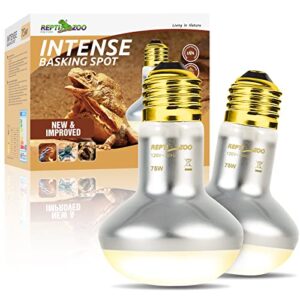
A basking lamp gives your corn snake a warm spot to retreat to, and this 75W two-pack fits standard E26 sockets, so it drops right into most reptile fixtures. Its flat bottom focuses 35% more light and heat into the beam than a typical reflector bulb, and it runs quietly, with no buzzing or flickering.
You should pair it with a thermostat and a cage guard. Keep it dry at all times, since water exposure can cause failure. Lifespan reviews are mixed, so keep a spare handy.
| Best For | Reptile and amphibian owners, such as those with bearded dragons, geckos, turtles, or tortoises, as well as chicken brooder keepers, who want a quiet, focused basking heat source that fits standard E26 sockets. |
|---|---|
| Power Source | 120V AC (E26) |
| Rated Power | 75W |
| Reptile Use | Heat lamp for reptiles |
| Brightness Control | N/A |
| Reliability Concerns | Inconsistent longevity |
| Cord/Connection | E26 socket |
| Additional Features |
|
- Flat bottom shape focuses 35% more light and heat into the beam than standard reflector bulbs
- Runs quietly with no buzzing or flickering
- Provides UVA to support appetite and healthy, natural growth, and fits standard E26 sockets
- Some users report a lifespan of only about 1400 hours, or as little as 2 months, despite claims of over 2000 hours
- Must be kept dry, since water exposure can cause failure
- Reviews on longevity are mixed, so a spare bulb is a good idea
4. Lutron Credenza Plug-In Lamp Dimmer
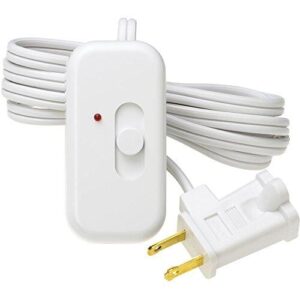
Say you’ve got a basking bulb that runs too hot, and your corn snake’s hot spot reads 95°F instead of 88°F. A dimmer can fix that fast.
The Lutron Credenza lets you adjust incandescent and halogen bulbs with a simple slide control, no rewiring needed. It’s rated for 300 watts maximum, and the red locator light helps you find it in the dark.
It’s important to know it won’t work with LED, CFL, or fluorescent bulbs, and some fail early.
| Best For | Anyone with an incandescent or halogen lamp or basking bulb, such as a reptile keeper trying to lower a hot spot, who wants adjustable brightness or heat without any rewiring. |
|---|---|
| Power Source | Wall outlet |
| Rated Power | 300W max |
| Reptile Use | N/A |
| Brightness Control | Slide dimmer |
| Reliability Concerns | Variable durability |
| Cord/Connection | 6-foot cord |
| Additional Features |
|
- Slide control makes it easy to adjust brightness or heat output
- Plugs in with no rewiring, and the 6-foot cord gives you room to place it
- Soft-glow LED locator light helps you find it in the dark
- Doesn’t work with LED, CFL, or fluorescent bulbs
- May produce an audible buzz with some bulbs at low settings
- Durability varies, with some units failing within months
5. Herpstat Intro+ Thermostat with Probe
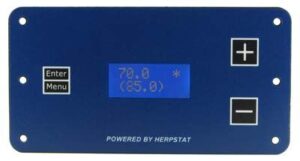
Imagine this: your corn snake’s tank hits 88°F at noon, then drops to 75°F overnight, all without you touching a dial. That’s the Herpstat Intro+. It’s necessary to understand its true proportional heating, which adjusts output in 100 steps instead of flipping on and off. It’s essential that you use the steel-tipped probe, and the safety relay protects against solid-state failure.
You can ramp temperatures up to 10 hours, and two-prong cords work fine. Keep in mind it’s non-returnable.
| Best For | Reptile keepers and small-animal or incubator owners who want steady, adjustable heat with smooth day-to-night temperature changes. |
|---|---|
| Power Source | AC power |
| Rated Power | N/A |
| Reptile Use | Reptile habitat temps |
| Brightness Control | Dimming-style control |
| Reliability Concerns | N/A |
| Cord/Connection | Two-prong compatible |
| Additional Features |
|
- True proportional heating adjusts power in 100 steps instead of switching on and off, which keeps temperatures stable.
- A built-in safety relay protects against solid-state failure, and soft startup with ramping of up to 10 hours allows gradual changes.
- The upgraded steel-tipped probe and compatibility with two-prong cords make setup simple.
- The product is non-returnable, and repairs go through the manufacturer warranty only.
- No waterproofing or ingress protection rating is mentioned, so moisture resistance is unclear.
- Power input voltage and maximum load capacity are not listed, so you can’t confirm it fits your heating device.
6. Inkbird ITC-306T Heating Thermostat Controller
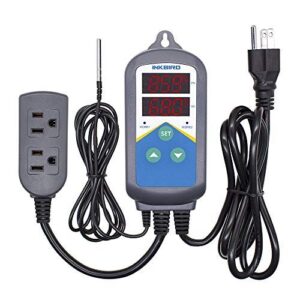
Want simple, dependable heat control? The Inkbird ITC-306T is plug-and-play, so you plug in your heat mat or lamp and go. Its dual display shows measured and set temperatures together, which is essential for confident adjustments. You can switch between Celsius and Fahrenheit, too. It controls 1200W at 120V and automates day/night cycles. Calibration is essential for accuracy.
It only heats, though, with no cooling, and the instructions can confuse you, so read them carefully before your snake moves in.
| Best For | Reptile keepers, seed starters, and hobbyists who want a simple plug-and-play way to hold a steady temperature for heat mats, lamps, incubators, or fermentation setups. |
|---|---|
| Power Source | 120V/110V AC |
| Rated Power | 1200W max |
| Reptile Use | Reptile enclosure control |
| Brightness Control | N/A |
| Reliability Concerns | Unclear instructions |
| Cord/Connection | Dual outlets |
| Additional Features |
|
- Plug-and-play design with dual outlets, so you can plug in a heating device and start right away
- Dual display shows the measured and set temperatures together, making adjustments easy
- Supports Celsius and Fahrenheit, with temperature calibration and a 0.1°F resolution
- Heating-only control, so it cannot cool an enclosure or setup
- Over/under-temperature alarm triggers at fixed limits (-50°C/-58°F to 99°C/210°F) that you can’t adjust
- Instructions may be unclear or difficult to follow for some users
How to Monitor and Prevent Temperature Problems
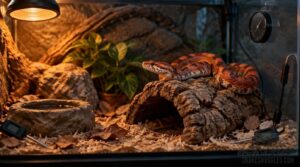
Your corn snake can’t tell you it’s too cold, so your temperature monitoring tools have to do the talking.
Your corn snake can’t say when it’s cold, so your thermometers must speak for it
Check two digital probe thermometers every morning and evening, one on each side of the enclosure, placed where your snake actually rests. Your thermostat probe belongs on the warm side substrate, and it’s important to verify it against a separate thermometer every quarter. Add a hygrometer too, since humidity swings often travel with heat problems.
Once a week, confirm your temperature gradient still holds:
- Warm side substrate at 85–88°F
- Cool side at 72–78°F
- At least 10°F between the two
Watch your snake as well. Constant basking, hiding from heat, lethargy, or open-mouth breathing all mean you should adjust your setup today.
Frequently Asked Questions (FAQs)
How hot is too hot for a cornsnake?
Anything above 90°F (32°C) is too hot for your corn snake, and prolonged exposure can be fatal. Keep the basking spot below that. Use a thermostat on every heat source to protect your thermal gradient.
What is the lowest temperature a corn snake can tolerate?
Most cold-related losses happen within days. Your temperature range bottoms out at 65°F. Keep the cool side of 72–78°F, allow a night drop to 68–72°F, and avoid sustained temps below 65°F across your temperature gradient.
Is 90 degrees too hot for a snake?
It depends on where you’re measuring. For a corn snake, 90°F is the top of the safe temperature range, so it works for a basking spot but not for the whole enclosure. Keep the rest cooler.
Should I turn my corn snakes heat lamp off at night?
Why would you keep a heat lamp burning when your corn snake doesn’t need it? Yes, turn it off. Nocturnal cooling to 68–72°F is perfectly healthy, and it’s an important temperature fluctuation. Keep a thermostat connected.
How often should I calibrate my thermometer?
Your thermometer is a lantern guiding your snake.
Calibrate your digital probe thermometer every three months, and after any drop. Use temperature logging to spot drift, then confirm probe placement accuracy and recoil thermostat calibration.
Can room temperature affect enclosure heating costs?
Yes, it can. A cooler room temperature forces your enclosure heating to work harder, so you’ll need higher heat source wattage in winter. Using an automated temperature control thermostat keeps your thermal gradient stable.
What backup heating options work during power outages?
Picture the room going quiet as the heater clicks off. Wrap your enclosure in blankets, then add wrapped hand warmers or hot water bottles. They’ll hold your corn snake’s warm side steady until power returns.
Do hatchlings need different temperatures than adults?
Not really. Your hatchling needs the same thermal gradient as an adult, warm side at 85-88°F and cool side at 72-78°F. The difference is precision, since a small body can’t handle extremes. Skip brumation too.
How do I transition between seasonal temperature settings?
To start brumation, fast your snake two weeks, then drop your thermostat settings 5-10°F over 2-3 weeks until the whole enclosure holds 60-65°F. To end it, raise temperatures 5-10°F over 24-48 hours.
How often should a corn snakes thermometer be replaced?
Your thermometer says everything’s perfect, up until it isn’t.
Replace a digital probe thermometer every 1-2 years, or sooner if drifting. Verify with an infrared temperature gun, check probe placement accuracy, and use remote monitoring.
Conclusion
Picture a corn snake stretched across a warm hide, belly pressed to a floor that holds steady at 88°F, then drifting toward the cool side when it’s ready to rest. That’s the whole goal.
Good corn snake temperature control isn’t complicated, but it demands a thermostat, a probe at belly level, and a daily glance at your readings. Set it once, check it often, and your snake will repay you with hearty appetites and digestion.