This site is supported by our readers. We may earn a commission, at no cost to you, if you purchase through links.

Your corn snake stops eating, paces the enclosure at night, and sheds a few days earlier than expected. She isn’t sick. She’s gravid, and the next few weeks will test how well you’ve prepared.
Caring for pregnant snakes properly starts with noticing these small shifts early. A rounder lower body, a refused meal, or an ovulation bump behind a ball python’s stomach may signal what’s coming. Small missteps in heat, humidity, or handling can strain her, and egg binding becomes a real risk.
Here’s how to build the right enclosure, feed her through gestation, and recognize trouble before it turns serious.
Table Of Contents
- Key Takeaways
- Spot The Signs of a Gravid Snake
- Set Up The Ideal Gravid Enclosure
- Feed and Support a Pregnant Snake
- Handle Gravid Snakes Safely and Gently
- Recognize Complications and Care After Birth
- Frequently Asked Questions (FAQs)
- How long do snakes stay pregnant?
- Do mother snakes love their babies?
- Can I handle my pet snake while pregnant?
- How to tell when a snake is pregnant?
- What supplements help pregnant snake health?
- Can pregnant snakes be housed together safely?
- How often should gravid snakes be weighed?
- What signs indicate impending labor or laying?
- Should lighting schedules change during snake pregnancy?
- How long do snakes stay pregnant before giving birth?
- Conclusion
Key Takeaways
- Spot a gravid snake early by watching for a rounder lower body, a refused meal, restless pacing, and a prelay shed, and weigh her weekly to track the changes.
- Give her a warm-side lay box filled with damp sphagnum moss about two weeks before laying, and keep humidity steady without going over 80%.
- Offer smaller, calorie-dense meals while she’s gravid, handle her only when you must (once a week at most, and never within 48 hours of a meal), and keep her housed alone to limit stress.
- Straining with nothing produced, swelling near the vent, labored breathing, or going a week past her expected laying date is an emergency, so call a reptile vet right away instead of trying home fixes.
Spot The Signs of a Gravid Snake

Watch your snake’s body closely, because abdominal swelling is the clearest sign she’s gravid.
Along with swelling, you may notice reduced appetite and more time spent basking, so these signs of successful snake breeding can help you confirm she’s gravid.
In ball pythons, you may spot a small ovulation bump behind the stomach within a day of ovulation. Over the following weeks, look for steady weight gain and a rounder, thicker lower body. A lump that stays put after she defecates points to developing eggs, not a meal.
Track behavioral cues too. She’ll likely cruise her enclosure restlessly, refuse food, and favor cooler spots. Expect a prelay shed roughly 8 to 14 days before laying in corn snakes, or 18 to 28 days in pythons.
Late in gravidity, her droppings may turn chalky, and cloacal swelling may appear. Weigh and photograph her weekly to track changes.
Set Up The Ideal Gravid Enclosure
Your gravid snake’s enclosure may shape how comfortably she carries her clutch or litter. The right gravid snake enclosure depends on two main areas, and you’ll want to get both right. Let’s walk through each one so you can set things up with confidence.
Temperature and Humidity Control

Consistency matters when humidity control and hydration needs shape a gravid snake’s health. Build a temperature gradient so your snake can manage her own thermal regulation, and keep environmental stability high all season.
Even with a well-built gradient, a gravid female can still become constipated or backed up, so it helps to know the signs of an impacted snake and how to treat them.
- Check probes at snake level on both ends daily
- Raise humidity 10-15% above her usual baseline from mid-gravidity
- Never exceed 80%; droplets on walls mean ventilate immediately
Hides, Privacy, and Lay Box

Once humidity holds steady, add a lay box on the warm side. Use a 14 by 10 inch container with one entry hole slightly wider than her body, filled with damp sphagnum moss. That substrate choice holds moisture and lets her dig.
If the moss becomes soggy or condensation builds up, adding ventilation holes increases airflow and helps prevent bacterial or fungal growth.
Place it two weeks before laying, near any hiding spots, in a quiet space. Make enclosure adjustments early.
Once she has settled in, follow these ball python handling frequency guidelines so you can ease into contact without stressing her before laying.
Feed and Support a Pregnant Snake

Once her enclosure is dialed in, your attention can turn to what goes into her belly. A gravid snake often needs more energy, so you may need to adjust her feeding frequency before she stops eating near the end of gestation. Many keepers offer slightly more frequent meals, depending on species and body condition.
Choose a smaller prey size than usual. Big meals can crowd a body already packed with eggs or young, and a snake that regurgitates loses precious calories.
Focus on these three points:
- Pick prey with higher caloric density, such as well-fed rodents, rather than lean options.
- Rotate prey types for diet diversity when your species accepts it.
- Offer calcium and vitamin D3, ideally under your reptile vet’s direction.
Check her weight and body condition weekly, and make enclosure adjustments if she seems stressed.
Handle Gravid Snakes Safely and Gently
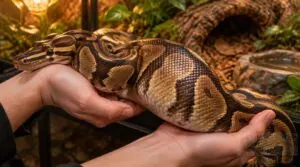
Limit handling to once a week, and only when you truly need to move her. Gravid snakes tolerate far less than usual, so handling stress can ripple into poor appetite and even trouble with the clutch.
Handle a gravid snake only once a week and only when necessary, because stress can quickly cost her appetite and endanger her clutch
Approach slowly from the side, then slide one hand under her mid-body and the other further back. Never grab the head or tail. Let her flow across your hands like a branch. If she seems skittish, a gentle snake hook can help you guide her onto your hands without pressing on her swollen midsection.
Keep her in separate housing away from other snakes, which helps stress reduction. Don’t handle her within 48 hours of a meal, even if her feeding frequency or prey size shifts during gestation, because regurgitation is a real risk. If she hisses, coils, or strikes, return her to the enclosure right away.
Recognize Complications and Care After Birth

Even a well-prepared gravid snake may run into trouble, so it helps to know what to watch for before the big day arrives.
Below, you’ll find the emergency signs of egg binding and how to support your snake’s recovery and feeding once she’s delivered.
If anything seems off, contact your reptile veterinarian right away.
Egg Binding and Emergency Signs
Is your snake straining but producing nothing? That’s the classic mark of egg binding, and it can’t wait.
If she passes her expected gestation period by about a week, or you see swelling near the vent, labored breathing, or refusal of food, seek veterinary intervention immediately.
Skip home fixes, limit handling stress, and keep her in dark, quiet hiding spots.
Post-Delivery Recovery and Feeding
Most females eat again within one to three weeks of giving birth.
Good postdelivery care starts with patience. Wait until she’s defecated, then offer a small meal, ideally after her first shed. Expect appetite fluctuations and feeding refusal. Watch behavioral cues like alert tongue flicking, and track weight gain. Losing over 15% of her pre-gestation mass means calling your vet.
Frequently Asked Questions (FAQs)
How long do snakes stay pregnant?
Snake gestation usually runs two to nine months, depending on species. Garter snakes finish in two to three months, while viviparous species like boas take five to eight.
Egg layers skip gestation; egg incubation adds roughly two months.
Do mother snakes love their babies?
You might’ve seen a python coiled around hatchlings and assumed it’s affection. It isn’t. Maternal care in snakes is instinct, not love. It’s species-specific biology. Offspring care usually ends within two weeks, then she leaves.
Can I handle my pet snake while pregnant?
Yes, you can, with care. Wash your hands before and after every session, and have someone else clean the enclosure. Shower afterward, keep snakes out of the kitchen, and ask your OB-GYN what’s actually safe.
How to tell when a snake is pregnant?
Look for an ovulation bump low in your snake’s body, unlike a food lump. A gravid reptile also refuses meals, with activity shifts and behavioural cues like restlessness, hiding, or nesting.
Keep enclosure hygiene strict.
What supplements help pregnant snake health?
Many gravid snakes thrive without extras, since whole prey usually meets nutritional requirements. Your vet may add calcium and vitamin D3 after reviewing husbandry practices, reptile health monitoring, and your reptile enclosure’s actual UVB exposure.
Can pregnant snakes be housed together safely?
No reliable statistic shows housing pregnant snakes together is safe, so you shouldn’t gamble. Give each gravid snake her own separate enclosure, since stress, heat competition, and feeding mistakes may harm her. Ask a vet.
How often should gravid snakes be weighed?
Wondering how often to check the scale? Weigh your gravid reptile weekly, and twice weekly near birth. This weight monitoring, paired with record keeping, may show body condition and metabolic strain trends.
Ask your vet.
What signs indicate impending labor or laying?
Your snake’s body becomes a coiled clock winding down.
After the prelay shed, appetite changes and nesting behavior mean your gravid reptile’s close. Watch for tight coiling over the warm spot, keeping temperature management steady.
Should lighting schedules change during snake pregnancy?
Ironically, the biggest change in a pregnant snake needs no change at all: keep your lighting schedule steady through the gestation period. Put your effort into temperature management, the temperature range, and humidity levels instead.
How long do snakes stay pregnant before giving birth?
Picture a slow, quiet countdown inside your snake.
Her gestation period lasts two to seven months, though copperheads can reach nine. Viviparous species and ovoviviparous species differ, and her reproductive cycle and fetal development vary.
Conclusion
Watch her closely, warm her gently, and feed her patiently. Those three habits carry most of the work when caring for pregnant snakes properly.
Straining without progress, a lifeless lump, or sudden lethargy means call your vet immediately. Reptile vets would rather see you early than late.
Once the eggs are laid, give her quiet, a small meal, and weeks to rebuild. Then enjoy the reward: a healthy clutch and a snake who trusts you.