This site is supported by our readers. We may earn a commission, at no cost to you, if you purchase through links.

A boa can survive weeks without food. Two hours at 95°F, and organ dysfunction begins. Most keepers understand the danger of overheating in abstract terms, but underheating kills more quietly, degrading immune function long before the first visible symptom appears.
Boa habitat temperature control isn’t a single setting. It’s a gradient your animal navigates constantly, using heat to digest, cool zones to recover, and specific ranges to keep enzymatic processes running at full capacity.
Get it right and your boa thrives. Get it wrong and you’re treating respiratory infections that didn’t have to happen.
Table Of Contents
- Key Takeaways
- Why Temperature Control Keeps Your Boa Healthy
- Choosing The Right Enclosure for Temperature Stability
- How to Set Up a Temperature Gradient
- Best Heating Equipment for Boa Enclosures
- Daily Monitoring and Temperature Troubleshooting Tips
- Frequently Asked Questions (FAQs)
- How do nighttime temperatures differ from daytime?
- Can under-tank heaters replace overhead heating sources?
- What backup heating options work during power outages?
- Should temperatures change for gravid female boas?
- Can I use multiple heat sources simultaneously?
- How does humidity interact with enclosure temperature?
- What temperatures are safe during boa breeding season?
- How do power outages affect boa temperature safety?
- Conclusion
Key Takeaways
- A boa can’t generate its own body heat, so a proper thermal gradient — hot zone at 88–92°F, cool zone at 78–82°F — isn’t optional; it’s what keeps digestion, immunity, and enzyme function running.
- Temperatures below 75°F quietly suppress your boa’s immune system long before any visible symptoms appear, while anything above 95°F can trigger organ dysfunction within 30 minutes.
- Your enclosure’s size and material directly shape how well the gradient holds — tanks under 4 feet lose heat 1.7 times faster, and no thermostat fully compensates for a poorly chosen setup.
- Daily temperature logging and seasonal thermostat adjustments aren’t optional maintenance — they’re how you catch equipment drift and gradient collapse before your boa pays the price.
Why Temperature Control Keeps Your Boa Healthy
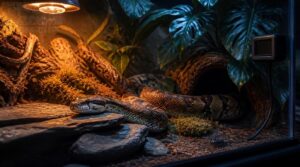
Temperature isn’t just a comfort setting for your boa — it’s the engine behind nearly every biological process keeping your snake alive and thriving. Get it wrong, and digestion stalls, immunity drops, and organ damage can set in faster than most keepers expect.
Understanding how snakes use radiation, convection, and substrate contact to regulate body heat reveals why mimicking those layered heat pathways in captivity is so critical.
Temperature is not a comfort setting for your boa — it is the engine behind every biological process keeping it alive
Here’s what you need to understand about why temperature control matters so much.
Thermal Gradients and Boa Health
Your boa can’t produce its own body heat, so a thermal gradient isn’t optional. It uses the basking area to warm up and the cool zone to recover, managing body temperature through thermoregulation. Providing overhead heat source placement mimics natural solar warmth from above, aligning with your boa’s evolutionary adaptation.
A proper gradient delivers:
- Warm-end digestion support
- Natural basking behavior cycles
- Cool zone recovery after heat exposure
- Reduced thermal stress signs
- Fewer temperature fluctuation health impacts
Risks of Incorrect Temperatures
Getting the gradient wrong carries real consequences. Below 75°F, your boa’s immune system weakens, inviting bacterial respiratory infections, wheezing, and nasal discharge. Heat above 95°F triggers organ dysfunction within 30 minutes.
Between those extremes, expect lethargy, incomplete sheds, and retained eye caps. Chronic temperature stress suppresses immune function, making opportunistic infections far harder to treat.
Temperature’s Role in Digestion
Those immune risks don’t stop there. Temperature directly controls digestion too. When your boa uses the basking area, heat increases abdominal blood flow, fueling enzyme activity and proper secretion timing in the gut.
Drop below 75°F and gut motility slows, stretching transit time by up to 10 days. Your thermostat and temperature gradient aren’t optional; they run your boa’s metabolism.
Choosing The Right Enclosure for Temperature Stability
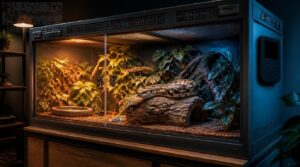
The enclosure you choose sets the foundation for everything else — get it wrong, and no thermostat or heating equipment will fully compensate. Size, material, and construction all directly shape how well your heat gradient holds across the space. Here’s what you need to know before picking one.
Recommended Sizes From Neonates to Adults
Enclosure size determines every heating decision you’ll make.
Whether you’re working with a compact tub or a sprawling terrarium, understanding under-tank heater vs. overhead heat for snakes helps you pick the right method before you ever plug anything in.
- Neonates (to 18 in): 2 x 1.5 x 1 ft minimum
- Juveniles (12-24 in): 4 x 2 x 2 ft
- Subadults (2-4 ft): 40-80 gallons
- Adults (4+ ft): 6 x 3 x 3 ft minimum
- Tanks under 4 ft lose heat 1.7 times faster
Properly sized vivariums stabilize your thermal gradient.
Best Enclosure Types and Materials
The material your enclosure is built from determines how well it retains heat in a humid vivarium.
| Material | Key Benefit |
|---|---|
| Stainless steel | Corrosion-resistant, long-lasting |
| Polypropylene | Lightweight, impact-resistant |
| Fiberglass | UV-stable, outdoor-suitable |
| Powder-coated steel | Durable finish, heat-stable |
| Glass-reinforced polymer | Stiff, lightweight, strong |
Stainless steel and aluminum resist corrosion best. If portability matters, polypropylene cuts weight without sacrificing heat retention. For outdoor setups, fiberglass controls UV exposure reliably. Powder-coated steel holds up through years of temperature cycling, while glass-reinforced polymer balances stiffness with reduced weight.
How Enclosure Size Affects Heat Distribution
Size dictates everything about thermal gradient stability.
- Heat loss rate climbs sharply in enclosures under 4 feet
- Heater placement effects determine where hot zones concentrate
- Airflow influence drives cold pockets in larger builds
- Thermal mass buffering smooths overnight drops in temperature zones
- Enclosure size shapes overall heat distribution and source count
Larger setups demand careful temperature monitoring across all zones.
How to Set Up a Temperature Gradient
Getting the temperature gradient right is where good boa husbandry actually begins. You’re not just picking numbers — you’re building a functional thermal environment your boa can actively use to regulate its own body. Here’s exactly what that setup looks like, broken down into three key areas.
Ideal Hot Zone and Cool Zone Ranges
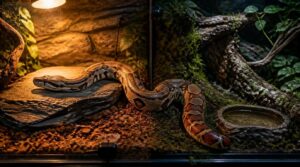
Your boa reads temperature the way a navigator reads a map. Keep the hot zone between 88 and 92°F, with surface temperatures around 92°F to drive digestion. The cool zone needs 78 to be 78 to 82°F, never dropping below 75°F for extended periods. That 10°F spread gives your boa the thermal gradient it needs to self-regulate throughout the day.
Placing Thermometers in The Right Spots
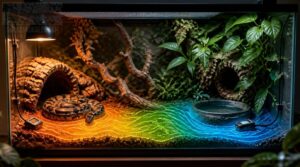
Thermometer placement determines what you measure. A temperature probe floating above substrate reads ambient air, not the surface temperature your boa contacts.
- Press the hot zone probe against the substrate
- Keep the cool end sensor away from ventilation gaps
- Secure wires so cleaning won’t shift the sensor position
- Avoid pinching probes under hides or decorations
- Recheck readings after rearranging decor
Mimicking Natural Nighttime Temperature Drops

Wild boas experience gradual nighttime drops, and your thermostat should replicate that. Program a gradual 6-10°F drop over one to two hours, letting ambient temperature settle near 70-75°F overnight. Dense substrate or stone adds thermal mass, buffering sudden temperature fluctuations across the gradient.
Keep humidity stable during cooling, and check overnight temps with a dual-zone thermometer to catch drift early.
Best Heating Equipment for Boa Enclosures
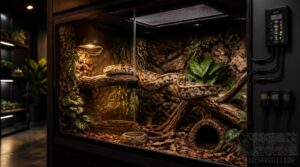
Getting the temperature right means nothing if your heat sources can’t hold it steady. The equipment you choose — and how you set it up — determines whether your boa thrives or just survives. Here’s what actually works.
Under-Tank Heaters Vs. Ceramic Heat Emitters
Two tools dominate this decision. Under-tank heaters deliver consistent belly heat through direct substrate contact, supporting digestion without producing glare that disrupts nighttime cycles. Ceramic heat emitters radiate infrared warmth with zero light output, making them ideal for 24/7 ambient temperature maintenance.
Both require a reliable thermostat, no exceptions. Skip that step, and you risk dangerous temperature spikes within minutes.
Heat Panels for Larger Enclosures
For enclosures 6 feet or longer, heat panels deliver uniform radiant heat across the floor, building a stable thermal gradient without hot spots.
Five essentials:
- Size panels to cover 60–70% of the floor
- Mount 4 inches above substrate
- Target 25–100 watts per 36 panel inches
- Cap surface temps at 90–110°F
- Pair with a thermostat; inspect cords monthly
Choosing and Installing a Reliable Thermostat
A heat panel without a thermostat is a liability. Always do a thermostat compatibility check first: confirm wiring type and power requirements for your specific heat source to protect your temperature gradient.
Smart thermostat features like adaptive scheduling let you manage ambient control remotely. Choose a reputable brand with regular firmware updates to keep your temperature monitoring tools accurate.
Using Infrared Guns for Spot Checks
Your thermostat sets the target. An infrared gun confirms it. Point at the basking surface, set emissivity to 0.95, and pull the trigger.
Quick spot-check routine:
- Aim at the hottest visible point
- Sweep multiple zones to map the gradient
- Keep a consistent distance
- Compare readings to target ranges
- Log with timestamps
IR guns measure surface temperature, not internal body temperature.
Daily Monitoring and Temperature Troubleshooting Tips
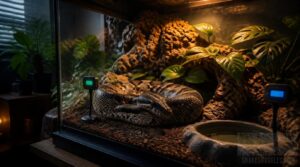
Getting your boa’s temperature right doesn’t stop at setup — it’s a daily commitment.
Small shifts in ambient room temperature, failing equipment, or seasonal changes can quietly throw your gradient off before your snake shows any visible signs of stress.
Here’s what to check, fix, and watch for to stay ahead of problems.
Performing Simple Daily Temperature Checks
Check hot and cool zones at the same time each day so patterns stay readable. Give the probe 10 to 20 seconds to stabilize, then log both values immediately to avoid capturing a falsely cooled reading. An infrared gun speeds up surface spot checks.
A daily temperature log catches sensor drift early, before your boa’s thermoregulation suffers.
Fixing Common Heating Problems
When your hot zone reads low, start with the thermostat sensor placement. A loose or mispositioned probe gives false readings and lets the heat source run cold.
Thick substrate over a heat pad insulates the floor and chokes heat transfer. Moisture on probe wiring causes unreliable readings, so inspect electrical connections and dry damp areas before assuming equipment failure.
Managing Temperatures Through Seasonal Changes
Your enclosure doesn’t exist in a vacuum — ambient room conditions shift with the seasons, and your boa’s gradient has to shift with them. Use a programmable thermostat to schedule a controlled drop of 6 to 8 degrees Fahrenheit at night, easing the change gradually over several days rather than abruptly.
Thermal mass from ceramic or rock surfaces stores daytime warmth and releases it slowly after lights out, reducing overnight dips without forcing your heater to compensate with continuous on-cycles. A well-sealed enclosure cuts drafts that can swing temperatures by 2 to 5 degrees unexpectedly.
Track daily max and min readings for at least two weeks after any seasonal adjustment to confirm your gradient holds within a 4-degree band.
When to Seek Veterinary Advice
Some symptoms go beyond what any thermostat fix can solve:
- Respiratory distress signs like wheezing or open-mouth breathing
- Neurological symptoms such as stargazing or loss of coordination
- Persistent appetite changes or regurgitation lasting over two months
Never ignore physical abnormalities or shedding complications either. If your temperature gradient is dialed in correctly and symptoms still persist, call a reptile vet.
Frequently Asked Questions (FAQs)
How do nighttime temperatures differ from daytime?
Like a fire dying down after dark, nighttime temperatures fall steadily as surfaces shed heat through radiational cooling, reaching their lowest before sunrise. Without a solar heat source, ground air cools faster than air above.
Can under-tank heaters replace overhead heating sources?
Under-tank heaters excel at substrate heating and belly heat efficiency, but they can’t produce the ambient warmth overhead sources deliver. For a stable temperature gradient, you need both, each controlled by a thermostat.
What backup heating options work during power outages?
Battery-powered heat pads offer the fastest fix, slipping under substrate for localized warmth. Propane portable heaters work with ventilation. Generators on a dedicated circuit can keep your existing heating running safely throughout any outage.
Should temperatures change for gravid female boas?
Gravid female boas benefit from a dedicated warm zone of 88-92°F during late gestation. Apply belly heat directly to the midsection, maintain thermal stability throughout the day, and keep nighttime temperature drops gradual rather than abrupt.
Can I use multiple heat sources simultaneously?
Yes, you can. One source covers the basics, but two coordinated sources give you a real safety margin when one device fails. Run each on its own thermostat circuit to prevent interference and dangerous overheating.
How does humidity interact with enclosure temperature?
Moisture in the air slows evaporative skin cooling, meaning your boa perceives temperature changes less dramatically in a humid enclosure. Low humidity amplifies heat stress and quickly accelerates dehydration when basking temperatures are running high.
What temperatures are safe during boa breeding season?
Sustained, stable seasonal temperatures are the backbone of successful boa breeding. Keep daytime temps at 80-85°F with a basking hotspot consistently reaching 90-95°F, then let nights drop to 70-75°F to encourage natural reproductive cycles.
How do power outages affect boa temperature safety?
When power cuts out, your thermostat stops functioning and the thermal gradient collapses within hours. Without backup heat sources, digestion stalls and cold stress escalates quickly, particularly when outage duration stretches beyond a few hours.
Conclusion
Your boa isn’t cold-blooded about its needs. Boa habitat temperature control isn’t a background task you set up once and then forget about. It’s an active, living system your snake reads and navigates every single day, using heat for digestion, cool zones to recover, and precise ranges to keep enzymatic function running.
Learn those numbers, trust your thermometer, and respond quickly when readings drift. Your boa’s health carries no hidden symptoms. It just has consequences.