This site is supported by our readers. We may earn a commission, at no cost to you, if you purchase through links.
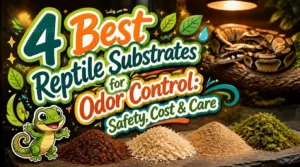
That ammonia smell hitting you every time you open the enclosure isn’t a cleaning failure. It’s a substrate failure. Bedding that stays wet, compacts, or can’t hold waste turns a healthy setup into a gas chamber within days.
Your snake breathes that air constantly, so odor is also a warning sign. Bacteria in soggy pockets break down waste into ammonia, and the wrong reptile substrate for odor control only makes it worse. Sand, moss, coir, and aspen each manage moisture and waste differently, and each suits different species.
Here’s how four popular options perform, what they cost, and which one fits your snake.
Table Of Contents
- Key Takeaways
- How Reptile Substrates Control Odor
- 4 Reptile Substrates Compared for Odor Control
- Match Substrate to Your Snake’s Habitat
- Compare Substrate Safety and Long-Term Costs
- Maintain Substrate for Lasting Odor Control
- Frequently Asked Questions (FAQs)
- Why does my reptile enclosure smell like ammonia?
- What causes rotten egg smells in reptile tanks?
- Can bioactive isopods and springtails fully control odor?
- Can zeolite additives reduce ammonia in enclosures?
- Do ventilation holes actually reduce odor in plastic tub setups?
- How much drainage layer do bioactive tanks need?
- Conclusion
Key Takeaways
- Odor starts with the substrate, because wet, compacted bedding creates low-oxygen pockets where bacteria turn waste into ammonia, which also irritates your snake’s airways.
- Match the bedding to your snake’s native habitat: sand for desert species, coir for humidity-loving snakes like ball pythons, aspen for corn snakes and kingsnakes, and moss only as a thin layer or in a humid hide.
- Skip cedar and pine because their oils irritate lungs and liver, and be careful with calcium sand, which can cause blockages, especially in juveniles.
- No substrate works without routine care, so spot clean daily, fluff or check bedding every few days, deep clean monthly, and replace anything that smells musty or sour.
How Reptile Substrates Control Odor
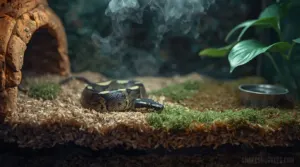
How does a bedding material actually keep a snake enclosure from smelling? Mostly through three jobs: adsorbing odor molecules, managing moisture, and letting air move.
Aspen, cypress mulch, and paper-based options each handle those three jobs a little differently, so comparing the best snake bedding choices can help you pick one that fits your routine.
Adsorption is the first. Ammonia and other smelly compounds cling to the surface of the substrate through weak forces rather than soaking into it. Porous, fibrous materials like coconut coir and sphagnum moss offer more surface area, so they catch more. Plain sand has less, though pairing it with clay or zeolite helps. Be realistic about limits, though. Physical adsorption controls sulfur compounds and amines well but struggles with ammonia on its own. That gap matters because ammonia damages airway linings and raises the risk of respiratory infection in reptiles.
Moisture matters more than most keepers expect. Soggy bedding creates anaerobic pockets where bacteria turn waste into ammonia. Keep substrate damp enough for your species, never waterlogged.
Bedding that stays too wet breeds bacteria in oxygen-starved pockets, so a healthy enclosure needs humidity balanced carefully against drainage
Loose bedding breathes. Compacted material traps gas, so turn it regularly and keep ventilation working alongside it.
4 Reptile Substrates Compared for Odor Control
Each of the four substrates below controls smell in a different way, and none of them works the same in every enclosure. You’ll see how each one performs on odor control, so you can judge which suits your setup. Keep in mind that results shift with your humidity, cleaning habits, and snake.
1. Sukh Natural Desert Sand Substrate
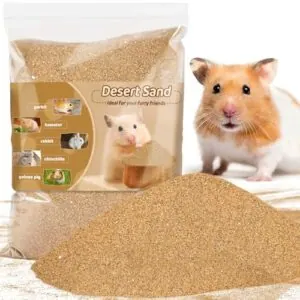
A fine, dust-treated desert sand can work for odor control, but only in the right setup. It absorbs moisture and waste, and it comes in brown, white, and grey. The pack measures 8.11 x 7.09 x 0.75 inches and weighs 15.5 ounces, so it’s a small amount.
It suits small pets and certain reptiles or amphibians, not aquatic animals or anything needing water baths. Keep it dry, since moisture ruins absorption and invites mold.
The listing gives no grain size or pH, so check before you buy.
| Best For | Owners of small pets and suitable reptiles or amphibians who want a dry, dust-treated sand for digging, bathing, and a more natural habitat. |
|---|---|
| Material | Fine desert sand |
| Reptile Suitability | Reptiles and amphibians |
| Odor Control | N/A |
| Dust Level | Dust-treated |
| Weight | 15.5 ounces |
| Maintenance Needs | N/A |
| Additional Features |
|
- Dust-treated to reduce respiratory and eye irritation
- Helps remove excess grease and dirt from pet fur while giving small animals a place to dig and bathe
- Comes in brown, white, and grey, and helps restore a naturalistic habitat for reptiles and amphibians
- Small pack size (15.5 ounces), so it won’t go far in a larger enclosure
- Not suitable for aquatic pets or animals that need water baths, and it only works for specific small pets and reptile/amphibian species
- Listing gives no grain size or pH level, and moisture can ruin absorption and invite mold
2. Legigo Natural Sphagnum Moss Bedding
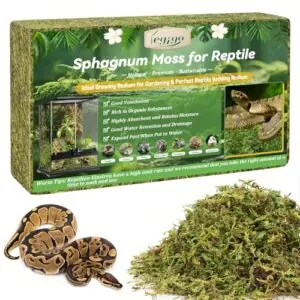
If sand’s dryness limits you, moss goes the other way. This compressed 400-gram brick needs a 10-15 minute warm water soak before use, then holds moisture and releases it slowly. Its porous fibers also absorb and neutralize odors from waste and food residue.
Since moss typically runs about $8-12 per bag, it helps to factor it into your overall ball python cost of ownership before stocking up.
That makes it a fit for frogs, geckos, snakes, salamanders, and other high-humidity species.
Reviews are split, though. Some keepers get 6+ weeks of use, others see it break down sooner, and opinions on odor control over time disagree. Plan on regular spot cleaning and full replacement every 1-2 weeks.
| Best For | Keepers of frogs, geckos, snakes, salamanders, and other high-humidity reptiles and amphibians who want a natural substrate that holds moisture and releases it slowly. |
|---|---|
| Material | Natural sphagnum moss |
| Reptile Suitability | Frogs, geckos, snakes, turtles |
| Odor Control | Porous fibers neutralize odors |
| Dust Level | N/A |
| Weight | 400 grams |
| Maintenance Needs | Replace every 1-2 weeks |
| Additional Features |
|
- Made from 100% natural forest sphagnum moss with no dyes or artificial additives
- Absorbs moisture and releases it slowly to keep humidity at a good level
- Porous fibers absorb and neutralize odors from waste and food residue
- Durability is mixed, with some keepers getting 6 weeks and others seeing it break down sooner
- Reviewers disagree on how well it controls odor over time
- Needs a 10-15 minute warm water soak before use, plus regular spot cleaning and full replacement every 1-2 weeks
3. Coir Wonder Coconut Coir Animal Bedding
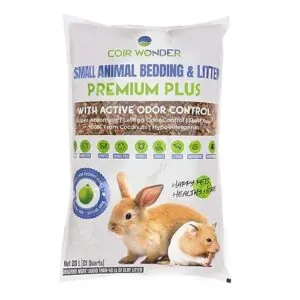
Coir takes a simpler route than moss. It’s made from 100% natural coconut husk chips, so it’s dust-free, chemical-free, and biodegradable. A pouch of steam-activated coconut charcoal adds odor control, and the bedding absorbs moisture and smells quickly.
Expect some tradeoffs. Like moss, coir breaks down over time, so you’ll still need to replace it periodically. Its loose texture can scatter outside the enclosure unless you contain it. If your reptile has a habit of swallowing substrate while feeding, pick something else.
| Best For | Owners of rabbits, guinea pigs, hamsters, reptiles, or backyard chickens who want a dust-free, natural bedding that controls moisture and odor. |
|---|---|
| Material | Coconut husk chips |
| Reptile Suitability | Reptiles included |
| Odor Control | Steam-activated coconut charcoal |
| Dust Level | Dust-free |
| Weight | 4.44 pounds |
| Maintenance Needs | Periodic replacement |
| Additional Features |
|
- Made from 100% natural coconut husk chips, so it’s dust-free, chemical-free, and biodegradable
- Steam-activated coconut charcoal helps control odor
- Absorbs moisture and smells quickly
- Breaks down over time, so it needs to be replaced periodically
- Loose texture can scatter outside the enclosure unless contained
- Not a good fit for pets that swallow substrate while feeding
4. Premium Natural Aspen Pet Bedding
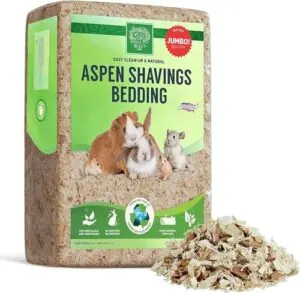
A 11.75-pound bale of aspen shavings gives you a dry, low-dust base that controls odor without added scents. It absorbs moisture fast, which limits the ammonia and bacteria behind most smells. Because aspen has no aromatic oils, it suits snakes better than pine or cedar.
It works best in moderate-humidity setups. Damp bedding can cause urine scald, so check it often. Fluff the shavings, spot clean soiled areas, and replace damp bedding every one to two days. Store the bale somewhere dry.
| Best For | Owners of rabbits, guinea pigs, hamsters, rats, snakes, and other small pets who want a low-dust, unscented bedding and are willing to check and spot clean it every day or two. |
|---|---|
| Material | Heat-dried aspen shavings |
| Reptile Suitability | Snakes and reptiles |
| Odor Control | Super absorbent, optimal odor control |
| Dust Level | Very low-dust |
| Weight | 11.75 pounds |
| Maintenance Needs | Spot clean, replace every 1-2 days |
| Additional Features |
|
- Low-dust, heat-dried aspen with no added artificial scents, made in the USA
- Absorbs moisture fast, which helps control odor and limits the ammonia and bacteria behind most smells
- Breaks down easily, so used bedding can go in the garden, compost, or organic waste bin
- Damp bedding can cause urine scald, so it needs frequent monitoring
- Needs regular fluffing or spot cleaning, with damp bedding replaced every one to two days
- Must be stored in a dry place to keep its quality
Match Substrate to Your Snake’s Habitat
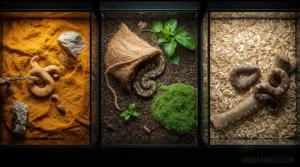
Start with your snake’s native environment, because it decides which bedding keeps the enclosure clean and healthy. Desert species like sand boas do best on dry sand, such as Sukh Natural Desert Sand, which allows burrowing and keeps moisture low. Tropical snakes like ball pythons need coconut coir for steady humidity retention, and Coir Wonder fits that role. Corn snakes and kingsnakes do well on aspen, which stays dry and absorbs waste.
Use Legigo sphagnum moss sparingly. It belongs in a humid hide or a thin top layer, not across the whole floor, where it can oversaturate and cause skin problems.
Hognose snakes need 4 to 6 inches of loose substrate, so choose a mixture rather than fine sand alone.
Compare Substrate Safety and Long-Term Costs
The cheapest substrate isn’t always the cheapest to live with. Aspen runs $0.10 to $0.30 per square foot, while coir starts at $0.25 to $0.50, but replacement schedules matter more.
Substrate safety comes first. Avoid cedar and pine, since their aromatic oils irritate lungs and livers. Calcium sand can still cause blockages, especially in juveniles.
Your long-term cost then depends on four factors:
- Replacement frequency: loose sand or soil needs changing every two to three months.
- Depth: hognose snakes need at least three inches, which raises material use.
- Bioactive substrate compatibility: coir with microfauna can last beyond a year.
- Solid surfaces: tile or carpet lasts six to twelve months.
Reptile enclosure hygiene helps odor control, and quickly fouled bedding costs more.
Maintain Substrate for Lasting Odor Control
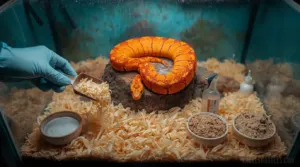
Say you keep a corn snake on aspen, and by week three the tank smells faintly of ammonia. The shavings have been soaking up waste you can’t see.
Routine care prevents that. Handle spot cleaning reptile tanks daily by removing feces, urates, and uneaten food. Sift sand daily and check loose substrates every 2-3 days. Plan monthly deep cleans for most setups, and replace bedding if it smells musty or sour, regardless of schedule.
Watch substrate compaction over time, especially with coconut fiber or moss. Compacted, soggy bedding holds waste and moisture, so substrate replacement frequency should follow what you see. Add airflow, keep humidity right for your species, and don’t crowd the tank with decorations that trap damp pockets.
Frequently Asked Questions (FAQs)
Why does my reptile enclosure smell like ammonia?
That sharp smell is a warning flare, not a flaw in your care.
Bacteria break down urates and feces in damp, airless substrate, and anaerobic pockets speed bacterial growth. Spot-clean daily and aerate the bedding.
What causes rotten egg smells in reptile tanks?
That smell is hydrogen sulfide, produced when anaerobic bacteria break down feces, urates, and uneaten food in low-oxygen pockets of your substrate. Compacted sand, soggy bedding, and poor ventilation make it worse.
Can bioactive isopods and springtails fully control odor?
A well-run bioactive enclosure can cut odor sharply, but it won’t erase it. Isopods and springtails handle waste and mold, yet poor airflow, soggy substrate, or too many reptiles will still produce foul smells.
Can zeolite additives reduce ammonia in enclosures?
Yes, they can. Zeolite traps ammonium ions inside its crystal structure, and studies show cuts of up to 90% in manure tests. Mix it into your substrate, but keep spot-cleaning, since it saturates fast.
Do ventilation holes actually reduce odor in plastic tub setups?
Picture a ball python tub that smells sour by day three. The owner adds ten holes per side, and the smell barely changes. Ventilation does help, but only when you pair it with regular spot cleaning.
How much drainage layer do bioactive tanks need?
Picture a 20-gallon front-opening tank for a tropical snake. You’d use about 5 inches of drainage layer, keeping it below the door edge, with mesh above and a few inches of soil on top.
Conclusion
Cleaning hides odor, but substrate prevents it. The best reptile substrate for odor control matches your snake’s humidity needs, absorbs waste instead of trapping it, and stays safe if swallowed.
Pick the option that fits your species, then commit to spot cleaning daily and full changes on schedule. No product can make up for neglect, and your own testing matters more than any claim.
Get the substrate right, and the enclosure finally smells like nothing.