Skip to Content

Snake Hunger Strike Causes: Why Your Snake Won’t Eat & How to Fix It (2026)

This site is supported by our readers. We may earn a commission, at no cost to you, if you purchase through links.

snake hunger strike causes

A snake that stops eating can send even experienced keepers into a quiet panic—and understandably so. Unlike a dog skipping breakfast, a snake refusing meals for weeks or months carries a different kind of weight, one that sits somewhere between "perfectly normal" and call your vet immediately.

The tricky part is knowing which side you’re on.

Snake hunger strike causes range from something as fixable as a slightly cool basking spot to something as serious as a hidden parasitic infection or viral disease.

Temperature gradients, shedding cycles, prey scent, handling routines, and a dozen other variables all speak directly to whether your snake eats or turns away.

Working through each one systematically is how you find the answer.

Key Takeaways

  • Most feeding strikes trace back to environmental issues like wrong temperatures, humidity, or lack of secure hides, so check your setup before assuming the worst.
  • Shedding, brumation, and reproductive cycles are normal biological reasons your snake might skip meals for weeks or even months without anything being wrong.
  • Serious medical causes like mouth rot, respiratory infections, parasites, or impaction need a reptile vet’s attention, especially if paired with weight loss or breathing trouble.
  • Give your snake 48-72 hours of rest after eating, double-check prey size and temperature, and avoid force-feeding since patience usually solves the problem.

Environmental Causes of Snake Hunger Strikes

environmental causes of snake hunger strikes

Your snake’s enclosure does more than just house it — it regulates nearly every biological process that keeps your snake eating. When something’s off in the environment, a hunger strike is often the first sign you’ll notice. Here are the most common enclosure-related triggers to check.

Before tweaking anything, it helps to know what a content snake actually looks like — signs your snake is ready to eat give you a useful baseline for spotting when something’s genuinely off.

Incorrect Temperature Gradients

Getting temperature gradients right is one of the most overlooked reasons a snake refuses food. Your snake’s enclosure needs a warm side of 88–92°F and a cool side around 80–85°F.

If those ranges drift — due to radiant heat bias from lamps, poor sensor placement, or airflow gradients disrupting readings — your snake can’t regulate digestion properly and simply stops eating.

Improper Humidity Levels

Just like temperature, humidity levels can quietly derail your snake’s appetite before you realize anything is wrong.

  • Low humidity below 40% dries mucous membranes, reducing appetite
  • Ideal range sits between 50–60% relative humidity for most species
  • High humidity above 60% promotes respiratory irritation and mold
  • Inconsistent humidity stresses snakes during shedding cycles
  • A damp hide creates a safe microclimate during pre-shed days

Inadequate Hiding Spots

Humidity isn’t the only silent stressor hiding in your enclosure. Inadequate hiding spots can push a snake into a full feeding strike, because without a secure retreat, your snake stays in constant vigilance mode — too anxious to eat.

Think of it this way: a snake that can’t feel hidden doesn’t feel safe. Providing various types of hides can help promote natural, secretive behaviors.

Stress From Enclosure Changes

Snakes are creatures of habit, and enclosure changes can quietly unravel that stability. When you rearrange hides, switch heat sources, or relocate the tank entirely, you’re dismantling the scent map and thermal landmarks your snake relies on.

This environmental relocation stress often triggers an immediate feeding strike — sometimes lasting weeks — as your snake recalibrates to its new surroundings.

Noise and Vibration Disturbances

Often overlooked, noise and vibration can be just as disruptive as temperature swings. Snakes sense ground-level vibrations acutely, so HVAC rumble at 31–125 Hz, elevator hum, or traffic noise spilling 5–15 dB into nearby rooms registers as a constant threat.

That persistent sensory stress signals danger, suppressing your snake’s appetite and keeping it permanently on edge.

Biological and Seasonal Appetite Suppression

biological and seasonal appetite suppression

Sometimes a snake refuses food for reasons that have nothing to do with its enclosure. Its own biology—hormones, seasons, reproductive cycles—can quietly hit the brakes on appetite. Here are the main biological and seasonal factors that might explain why your snake is turning its nose up at dinner.

Shedding Cycles and Blue Phase

Every shed cycle brings a predictable window of appetite loss — and understanding why makes it far less alarming.

During this time, symptoms like drooling or swelling can look alarming, but knowing how to tell shed-related appetite loss from mouth rot keeps you from panicking unnecessarily.

During ecdysis (shedding), your snake enters the "blue phase": fluid separates the old and new skin layers, turning the eyes cloudy. Vision impairs feeding behavior directly. This preshed stage commonly lasts 3–7 days, after which appetite reliably returns once the fresh skin emerges.

Brumation and Light Changes

When the days grow shorter outside, your snake notices — even indoors. Seasonal light cycles trigger brumation, a seasonal dormancy where metabolism slows by up to 70%, and feeding strikes become expected.

Simulate photoperiod changes gradually using dimmable lighting to avoid startling your snake. Monitor weight during this period, and never force-feed unless a reptile veterinarian advises it.

Reproductive Fasting in Males and Females

Reproductive fasting is one of the most misunderstood reasons a snake refuses to eat. During breeding season, male ball pythons can experience testosterone decline and voluntarily fast for three to five months. Females, especially gravid ones, redirect energy allocation toward developing eggs, leaving little biological drive for feeding.

This metabolic slowdown is purposeful — not a problem you can simply fix by switching prey.

Hormonal Fluctuations

Hormones are the quiet conductors of your snake’s appetite, and when they shift, feeding behavior follows. Cortisol appetite suppression kicks in during environmental stress, redirecting energy away from digestion entirely. Thyroid metabolic shifts reduce how much fuel the body needs — so feeding drive weakens. Key hormonal drivers include:

  • Sex hormone reward pathways that reduce dopamine-linked prey appeal during breeding season
  • Gut hormone feedback disruptions that dampen the hunger signals sent between stomach and brain
  • Thyroid hormones that slow gastric motility during the shedding cycle or brumation
  • Dopamine feeding drive reductions that cause snakes to ignore prey even when it’s offered correctly

This isn’t a training failure — it’s biology doing its job.

Medical Issues Leading to Feeding Strikes

medical issues leading to feeding strikes

Sometimes the problem isn’t the environment or the season — it’s your snake’s health. A number of medical conditions can make eating painful, uncomfortable, or simply impossible, and they’re easy to miss if you don’t know what to look for. Here are the most common ones worth checking.

Stomatitis and Oral Pain

Stomatitis — often called mouth rot — is one of the more painful medical reasons a snake will flat-out refuse food. When infectious stomatitis takes hold, the mouth lining becomes inflamed, swollen, and ulcerated, making swallowing feel impossible.

You may notice mouth discharge, redness along the gumline, or a cheesy, cottage-cheese-like buildup. That level of oral pain leaves your snake with no appetite whatsoever — see a reptile veterinarian promptly.

Respiratory Infections

Mouth rot isn’t the only painful condition that shuts down a snake’s appetite. Respiratory infections can be just as serious — and easy to miss early on.

When a snake develops a respiratory infection, its airway defense system, including mucociliary clearance (the process that moves mucus and trapped bacteria out of the airways), breaks down. You’ll notice wheezing, open-mouth breathing, or mucus pooling around the nostrils and mouth. A compromised cough reflex means your snake can’t clear its airway properly, and that physical discomfort alone is enough to trigger complete feeding refusal.

Respiratory infections in snakes can develop quickly and escalate, so watch for these warning signs:

  1. Labored or audible breathing between feeding attempts
  2. Mucus discharge around the nostrils or inside the mouth
  3. Lethargy paired with a tilted head posture
  4. Persistent respiratory problems even after enclosure corrections

Unlike influenza virus or pneumonia management challenges in mammals, snakes can’t cough effectively or signal distress clearly. Don’t wait — see a reptile vet immediately.

Parasite Infestations

Respiratory infections can weaken your snake considerably — but parasites work more quietly, draining energy from the inside out. Mite skin irritation is often the first visible clue: tiny moving specks around the eyes, chin, and scales, causing frantic rubbing and restless movement that makes normal feeding nearly impossible. Mites become more active when your snake is warm, so their peak activity often coincides with feeding time — the worst possible timing.

Internally, nematode worm burdens steal nutrients directly from the digestive tract, leaving your snake physically unable to process food efficiently. You may notice gradual weight loss, abnormal feces, or soft, undigested-looking stools even when feeding attempts seem successful. Protozoan gut damage compounds this further — these microscopic organisms irritate the gut lining, reduce absorption, and trigger a nausea-like discomfort that suppresses appetite reliably.

Nematode worms steal nutrients from within, while protozoan organisms inflame the gut, ensuring your snake stays too uncomfortable to eat

Blood-feeding parasites are perhaps the most insidious. They reduce red blood cell function, cause pale coloration, and sap your snake’s stamina so completely that hunting instinct fades even with prey directly offered. Symptoms can fluctuate — some days better, some worse — which makes diagnosis feel confusing without a veterinary fecal exam.

Reinfestation prevention matters just as much as treatment. Clean bedding, disinfected hides, and quarantined new animals protect your snake’s immune system long-term. If parasites are suspected, prioritize veterinary care immediately.

Intestinal Impaction

Parasites drain gradually — intestinal impaction stops digestion cold. Hardened stool blockage traps material that normal movement can’t clear, triggering immediate feeding refusal.

Watch for five warning signs:

  1. Bloating and straining without defecation
  2. Fecaloma development — a hardened colon mass
  3. Mucosal injury under pressure
  4. Pressure colitis in the bowel
  5. Obstruction symptoms threatening reptile health

A reptile veterinarian must assess digestive health urgently.

Viral Diseases

Viral diseases — including paramyxovirus and inclusion body disease — attack multiple body systems at once, causing oral lesions, respiratory distress, gut inflammation, and nerve dysfunction. Your snake’s immune system diverts energy away from digestion entirely.

You may notice weight loss, labored breathing, or uncoordinated striking. A reptile vet should assess any suspected viral illness immediately.

Handling, Acclimation, and Stress Factors

handling, acclimation, and stress factors

Sometimes the problem isn’t the enclosure or a hidden illness — it’s you, or more precisely, how your snake is being handled and settled into its space. Stress is one of the most underestimated reasons snakes go off food, and it sneaks up in ways that aren’t always obvious. Here are the most common handling and acclimation factors that could be shutting down your snake’s appetite.

Frequent Handling After Feeding

Handling your snake right after a meal is one of the most common — and easily avoided — causes of a feeding strike. Post-feeding rest isn’t optional; it’s essential. A snake’s digestive system kicks into high gear immediately after eating, and any disruption during that window can trigger a stress response serious enough to cause regurgitation.

Here’s what frequent post-meal handling actually does:

  1. Regurgitation risk increases when lifting shifts the meal’s position inside the gut before early digestion stabilizes it.
  2. Repeated removal from the enclosure creates a sudden environmental change that puts the snake on high alert.
  3. Incorrect handling techniques — like failing to support the body evenly — add abdominal pressure that worsens digestive disruption.
  4. Stress triggers like hissing, freezing, or retreating signal the snake isn’t settled enough to digest properly.
  5. Scent transfer from unwashed hands can disturb the snake’s normal hiding and settling behavior.

Most experienced keepers follow a simple rule: wait 48–72 hours after feeding before any handling resumes. If your snake has already regurgitated, extend that rest window and observe quietly before trying again. Consistent feeding schedules paired with hands-off rest periods make a measurable difference over time.

New Arrival Acclimation Period

When a new snake arrives, its stress response is already elevated from transport. Transport recovery takes priority over feeding. Focus on temperature stabilization, humidity calibration, and correct hide placement before offering prey. Only once the snake explores confidently and stress triggers subside should you attempt the first meal — usually after one to two weeks of enclosure familiarization.

Acclimation Phase Key Focus Timeline
Days 1–3 Temperature gradient, hide placement Settle quietly; no feeding
Days 4–7 Humidity calibration, enclosure familiarization Monitor exploratory behavior
Days 8–14 Watch for stress triggers Attempt first feeding

Habitat stability during this window is non-negotiable — environmental stressors like enclosure rearrangements or inconsistent temperatures reliably extend feeding strikes.

Lack of Resting Time

Even the calmest snake can refuse food when it never gets a true break. Undisturbed rest periods aren’t optional — they’re when your snake resets, digests, and builds the confidence to strike again. Without them, stress compounds quietly.

Watch for these warning signs:

  • Restless pacing along enclosure walls
  • Repeated refusal despite correct temperatures
  • Visible tension during scheduled feeding times

Secure resting areas — reliable, covered hides on both sides of the thermal gradient — give your snake the low-stimulation downtime it needs to maintain habitat stability and feeding consistency.

Substrate and Scent Disruptions

Your snake’s nose is its entire world — and the wrong smell can shut feeding down completely.

Substrate odor retention is a common but overlooked culprit: cocoa-fiber, bark, and peat substrates gradually absorb food residue and shed skin oils, quietly masking the prey scent your snake depends on. Strong cleaning products compound this further, leaving chemical residues that distort familiar scent cues even after surfaces appear clean.

Prey and Feeding Technique Problems

Sometimes the problem has nothing to do with your snake and everything to do with what you’re offering — and how. Prey size, temperature, freshness, and presentation all play a bigger role than most keepers expect. Here’s what to check before assuming something is seriously wrong.

Incorrect Prey Size

incorrect prey size

Prey that’s too large isn’t just hard to swallow — it can trigger an immediate feeding strike refusal. Your snake’s gape limitation, meaning the maximum width its jaws can physically stretch, sets a hard upper limit on what it’ll attempt. If the prey exceeds roughly 1 to 1.5 times your snake’s thickest body point, it may simply refuse to eat.

Improper Prey Temperature

improper prey temperature

Temperature is one of the sneakiest reasons a snake refuses prey. Frozen-thawed prey must reach 98–100°F internally — not just on the surface. A warm exterior with a cold core sends confusing thermal signals, often triggering a feeding strike refusal.

Five things to verify every feeding:

  1. Use a thermometer, not your finger — touch is unreliable
  2. Check surface vs core temperature separately on larger prey
  3. Allow proper heating duration before offering
  4. Offer prey promptly — waiting lets temperature drop
  5. Log your results to catch temperature fluctuations across sessions

Spoiled or Freezer-burned Prey

spoiled or freezer-burned prey

Even perfect reheating can’t save prey that’s already compromised. Freezer-burned prey loses moisture, developing gray patches, leathery textures, and off odors — all red flags your snake detects instantly.

Packaging air exposure drives this damage, so always check seals before freezing. If prey smells stale or shows dry, discolored spots, discard it. Questionable prey causes feeding refusal, not curiosity.

Lack of Movement or Scent

lack of movement or scent

Spoiled prey is one issue, but even fresh prey can be ignored if your snake can’t detect it properly. Snakes rely on scent trail movement to locate food — stationary prey emits weaker, shorter scent plumes, reducing detection range by roughly 40 percent. Without that drifting scent signal, your snake may simply not register that food is there.

Humidity scent stability matters more than most keepers realize. At humidity levels above 60 percent, scent molecules stay airborne longer, improving your snake’s ability to locate prey. Drop below that threshold, and those chemical signals fade fast.

Here’s what weak prey stimulation looks like in practice:

  1. Your snake approaches, pauses, then retreats without striking
  2. Tongue-flicking increases but no commit to the target
  3. The snake circles prey without engaging
  4. Feeding attempts become shorter and less frequent over time

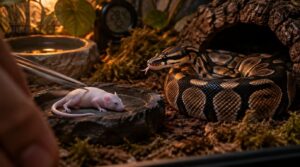
To sharpen scent cues, try "braining" the prey item — lightly scoring the skull to release fresh tissue odors. You can also gently wiggle the prey using feeding tongs to simulate movement, which meaningfully shortens strike hesitation. Enrichment training benefits accumulate over time too; consistent scent-and-movement pairing conditions your snake to respond more reliably. If responses remain sluggish, consider an ambush strategy shift — place warmed prey near a hide entrance overnight, letting the snake hunt on its own terms.

Sudden Prey Type Changes

sudden prey type changes

Scent and movement get your snake’s attention — but if the prey type suddenly changes, even a perfect presentation can fall flat. Olfactory cue override only works when the new prey’s scent profile is strong enough to replace what your snake already expects.

Introduce changes gradually, pairing familiar scent with the new prey item.

Frequently Asked Questions (FAQs)

How long do snake hunger strikes last?

Most feeding refusal length runs 2–6 weeks, depending on the cause. Environmental stressors or poor temperature control can stretch this further, while metabolic slowdown from brumation may push the recovery timeline to several months before normal appetite returns.

How long can a snake safely go without eating?

Healthy adults can fast weeks to months, drawing on metabolic reserves, depending on species, body condition, and metabolic rate.

Watch hydration, monitor weight loss, and check for malnutrition signs—if appetite loss persists alongside environmental stressors or possible underlying health issues, consult your vet.

When should I worry about my snake not eating?

Worry sets in when the writing’s on the wall: weight loss, sunken eyes, lethargy, or dehydration alongside appetite loss. These signs suggest underlying health issues needing veterinary intervention—don’t wait if behavioral changes persist beyond a stable environment.

Should I take my snake to a vet?

Yes, if refusal lasts beyond a few weeks or pairs with breathing changes, weight loss, abnormal stool, or skin lesions. A reptile veterinarian can run diagnostic tests to rule out underlying health conditions before you wait any longer.

Can I force-feed a snake thats refusing food?

Please don’t—forcefeeding can be riskier than the refusal itself. As a reptile veterinarian, I’d try stress reduction techniques first; if your snake genuinely needs nutrition, ask about gentler feeding tube methods or nutritional supplement protocols for safe recovery.

How do I get a stubborn snake eating again?

Fix the basics first: dial in temperature regulation, humidity levels, and enclosure layout with secure hides.

Stick to schedule consistency, dim lighting timing, follow an acclimation protocol for new arrivals, then retry with the right prey type—track weight monitoring to confirm recovery.

Conclusion

Before you panic, check the clock—most snakes can fast far longer than you think, and time alone often reveals the answer. Walk through temperatures, sheds, scents, and stress first; those fixes cost nothing but patience.

If weeks pass with weight loss, lethargy, or odd stool, that’s your line in the sand—call your vet.

Snake hunger strike causes usually have a logical thread. Pull it gently, and your snake eats again.

Avatar for Mutasim Sweileh

Mutasim Sweileh

Mutasim is a passionate author in the snake pet niche, with a deep love for these scaly companions. With years of firsthand experience and extensive knowledge in snake care, Mutasim dedicates his time to sharing valuable insights and tips on SnakeSnuggles.com. His warm and engaging writing style aims to bridge the gap between snake enthusiasts and their beloved pets, providing guidance on creating a nurturing environment, fostering bonds, and ensuring the well-being of these fascinating creatures. Join Mutasim on a journey of snake snuggles and discover the joys of snake companionship.